Some scifi world-building ramblings on the expansion of the universe; a failed go at time-travel.
I like thinking about science, even fields of science I don't have any formal education in. As a fiction author, thinking about science, giving it a bit of a twist and seeing if anything comes out that makes sense in a story, is a great way to do world-building. It is what got me the concept of brane-folding that I used in my Ragnarok Conspiracy novel. My brane-folding idea arose from the idea that "what if quantum entanglement acts by folding a huge Dirichlet-membrane like brane in on itself". To the string theory folks the concept is clearly nonsense, but for sci-fi, it makes just enough sense for the story to work for everyone who isn't a super string theory expert.
Recently I've been trying to think in similar ways about the expansion of the universe. I was looking for an expansion loophole to time travel for my fiction. The results of my thought patterns don't quite seem to be useful for fiction at the moment, as it is so abundantly clear the effects on time will be visual only, that I don't see any way to use these ideas in a way that could carry a story. Nevertheless, I would like to share my thought patterns.
Imagine a galaxy far far away. No, we aren't going to be discussing Star-Wars! Imagine a real galaxy that is really far away from us. So far away that the light we see today came from that galaxy took many billions of years to reach us. There has been a question in my mind that has been growing for years, ever since I first started reading about an inflationary universe and about quasars. A "what if" question, that until now I never took the time to properly formulate. Today I want to try and formulate that question by using a thought experiment with our far far away galaxy.
Let us pick two points in time. Both billions and billions of years ago. Let's call these pints in time T1 and T2. Let us also say, that while both billions and billions of years ago, these two points in time are only roughly thirty-two years apart, let us say a a billion seconds.
The first question now is: if the light sent out by some star, any star in this galaxy at T1 reaches us today, when will the light sent out by this galaxy at T2 reach us?
Will it reach us (close to) a billion seconds after the light from T1? Would it be possible the light will take to a trillion seconds after now to reach us? Or maybe could the light from T2 be in our telescope in just a million seconds? To answer that question, let's see what it would mean if we assumed each of these scenarios.
Let's start off with the most intuitive scenario. A scenario with a universe expanding at a constant rate by means of what basically boils down to more space being created all the time. So at T1, the star and the location where our planet currently resides where D light-seconds apart. Our quant of light departs at the speed of lights towards our location. The remaining travel distance decreases with the speed of light yet also increases with an expansion parameter E(t) times the remaining distance. If we assume the expansion parameter to be constant through time, and if we act as if time proceeds in concrete steps, we roughly get something like for the remaining distance through time:
For the light: d(t) = d(t-1)( 1+ E(t-1)) - c
For the remote object: d(t) = d(t-1)( 1+ E(t-1))
If we take a remote light source that was at distance D at t=0, that object will be at D+D*E(0) at t=1. If at t=1, the light source emits a second photon, the two photons will be racing towards their destination both at the speed of light, through an expanding universe. With the intermediate part of the universe initially expanding at almost the same speed as the light is traveling, the pseudo speed measured using the remaining distance starts off at close to nothing, slowly accelerating to the speed of light. This means if it took the light from a very very distant galaxy over thirteen billion years to reach us, the two photons will have been chasing each other for exactly that long.
Meanwhile, the relatively small space between the two photons has been expanding as well for thirteen billion years. The interesting thing is, that if the distance between the two photons was one light-seconds at the moment the second photon was created, through the modest but constant expansion of space for this small distance over the cause of 13 billion years, we should expect the distance between the two photons to have grown from just one light second to a number much much higher.
If the space between points is expanding at a speed of 72 kilometers per second per megaparsec or one unit of space per 4.2861111e+17 units of space per second. This means, after 13 billion years (4,09968e+17 seconds), the space between our two photons should be described by :
(1+2.3331173e-18)^4,09968e+17
or
1.0000000000000000023331173^409968000000000000
What ends up being 2.6 light seconds for our example.
This means the energy from our object should be faded and spread out over time as if the remote galaxy was being watched in slow motion, slowed down by a factor of two and a half, also apparently giving off two and a half times less energy than it actually does ass the energy is spread out over time.
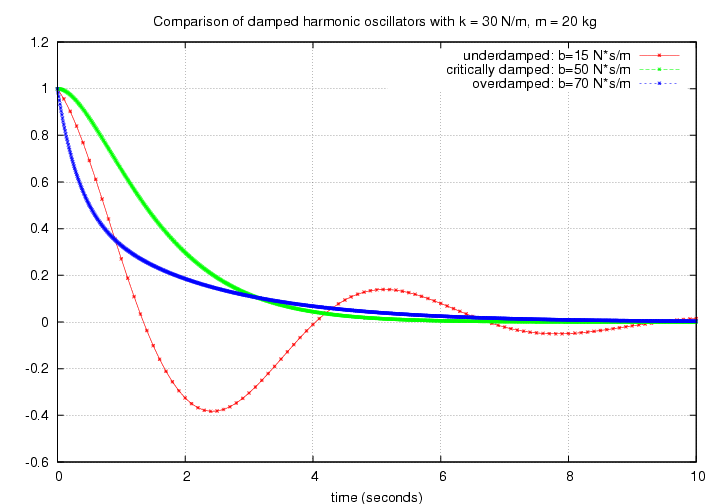
So much for the simplest model where E(t) is constant. But we know there are reasons to believe in the early universe the expansion rate was much higher. Did we go smoothly from higher expansion to lower expansion like an overdamped electronics circuit? Or maybe, did we go through some sort of underdamped scenario with fluctuations that at times made the universe contract for a while to then go back to expanding. If our inflation is just a peek in an underdamped inflation function, we should be seeing ripples as we look further back in time to things further away. Some galaxies faded and moving in slow motion, other galaxies brighter and moving at normal speed, and then maybe, just maybe, some rare galaxies at just the right distances from us for shrinkage throughs to show up like extremely bright fast-forward galaxies. As we don't seem to be seeing any super bright galaxies, other than quasars that apparently already have accepted explanations for their brightness, it seems clear that if inflation is non-constant and under critically dampened from an early inflationary value, then the lows haven't been so deep into actual shrinkage as to create the illusion of flashing fast-forward galaxies. But still, inflation rate dampening ripples could be there staring us in the face right now if no one is looking for them.
I know there are just the clueless ramblings of a fiction author and software/data guy armed with control feedback theory, who doesn't have a background in astrophysics, so there might be well-understood reasons for believing the universe has moved from inflationary to its current expansion rate smoothly like an overcritically dampened circuit. I still think though it is interesting to think about an under-critical dampened expansion of the universe.
Wow! You are incredibly detailed! Thanks for visiting my blog.