Art Explained by a Writer: For of such is the Kingdom of Heaven (1891)
I don’t want to be here, but Mum says it’s important. We have to say goodbye…
And very soon it’ll be my turn.
Luckily, I don’t have to sing.
I wonder if I’ll get flowers like these on my grave too.
I wish Dad would stop sobbing. He’s never around and used to get absolutely fed up with my little sister. He doesn’t like sick children.
This isn’t a funeral procession, but a procession out of necessity, to force the gates of heaven to let us in, because we’re doing everything right, says Dad, who’ll never give a penny to the poor and avoids me like the plague.
Soon she’ll be forgotten, just like me. Death doesn’t care how you’re dressed.
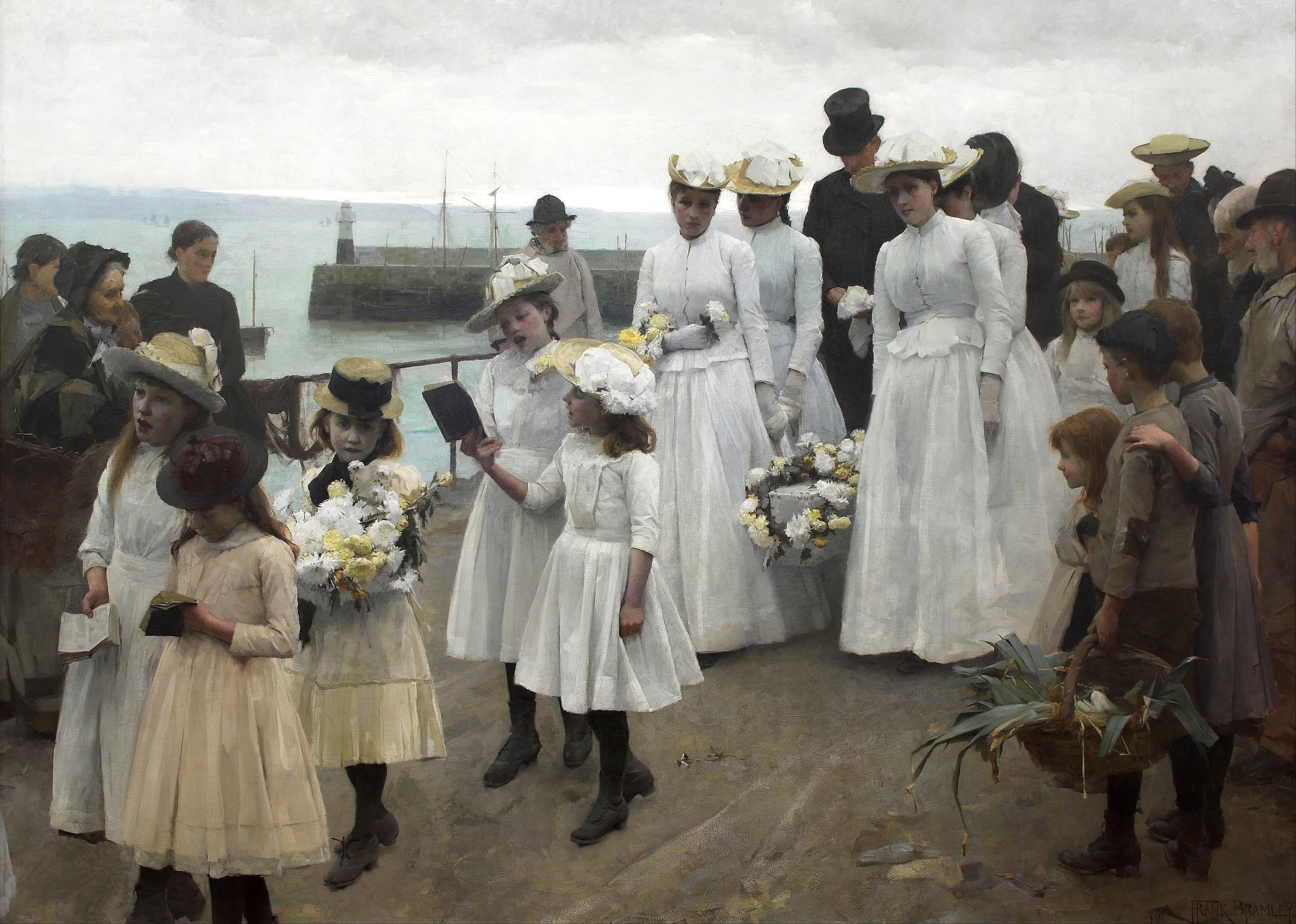
Just look at those children standing there. Rosy-cheeked, lively and healthy, yet fascinated by death.
I should never have accepted his marriage proposal. It’s quite clear that his family is far from healthy. This is already the fourth child I’ve lost, and Sarah isn’t destined to live long either.
Suffer little children... as if I hear Epstein talking.
It’s all a sham, a disgraceful spectacle.
Entering the kingdom is a pitiful straw to cling to in the hope to carry on living.
Matthew (19: 14): ‘But Jesus said, Suffer little children, and forbid them not to come unto me: for of such is the kingdom of heaven.’
Painter: Frank Bramley
Painting: For of such is the Kingdom of Heaven.
Oil on canvas 1829 x 2540mm - social-realism painting - public domain
11-7-2026
The contest Art & Writing is hosted by @solperez
Se siente un gran pesar que reflejan tus palabras con profunda tristeza y desencanto.
No es un cortejo fúnebre sino una procesión obligatoria para encontrar un pase al cielo, es una ironía clavada en el resentimiento de una hija por las fallas de su padre.
Hasta los niños suelen parecer irónicos fascinados con la muerte en medio de una farsa y espectáculo vergonzoso.
¡Saludos y un fuerte abrazo..!
Los niños ven más de lo que los padres creen, incluso en aquella época, lo cual no es nada extraño si pensamos en lo jóvenes que eran cuando empezaban a trabajar y se les preparaba para casarse o para asumir las responsabilidades de los padres.
Los pensamientos de la niña son sin duda muy reales. Está enferma, condenada a morir, y este año no le irá mejor que a su hermana. Dada la influencia de la Iglesia, vestir de blanco es un signo de inocencia y con ello se pretende ganarse el favor de Dios, aunque sirva de poco, ya que los hijos de los trabajadores gozan de una salud mucho mejor. En aquella época, desde luego, no era el dinero lo que te mantenía sano.
Gracias por leerme y por dejar un comentario.
❤️🍀
Children see more than parents realise, even back then – which is certainly not surprising when we consider how young children were when they started working and were prepared for marriage or to take over their parents’ responsibilities.
The girl’s thoughts are certainly realistic. She is ill, doomed to die, and this year will be no different for her than it was for her sister. Given the influence of the church, wearing white is a sign of innocence and is meant to win God’s favour, even though it will be of little use, given that the children of labourers are far healthier. In those days, it certainly wasn’t the case that money kept you healthier.
Thank you for reading this and leaving a comment.
Everyone is dressed in white... that's unusual for us.
It's sad, yet at the same time bright—as if they were truly carrying a child to the gates of paradise.
I remember a former queen of the Netherlands also wanted everyone to wear white. Today many just wear what they like same for weddings. I don't like that.
Around here, it’s actually the opposite—lots of people are making a big deal out of dress codes these days, planning weddings with themes like pink, blue, or white. They send out invitations specifying the color, and the guests show up in outfits to match.
Thank you so much for your supporting art. It is highly appreciated. I wish you a great, creative week/end.
❤️
This text is full of ironies, the kind that life itself presents: While some children accompany the deceased, who is presumed to be a child himself, other children watch the funeral procession and seem to be laughing.
There's no doubt that when someone dies, most people display a kind of grief, even if they never showed us a gesture of sympathy while we were alive.
Este texto está cargado de ironías, las propias de la vida: Mientras unos niños acompañan al fallecido, que se presume es un niño también; otros niños contemplan el cortejo fúnebre y parecen reírse.
No hay dudas de que cuando uno fallece, la mayoría de las personas exhiben una especie de dolor, aunque nunca en vida nos hayan mostrado un gesto de simpatía.
Interesting isn't it? I remember the funeral of a general. I lived in his house. No one except his Boot attendant, wife and I ever visited him. At the funeral the entire city and wide area was present to peep through the hedge. I doubt he would have liked that.
If it comes to the painting the child holding the flowers is ill which is clear if you look at the unhealthy colour of the face plus she looks you straight into the face, the same counts for one woman and the children of the workers look more healthy...
Funerals turn into village carnivals. Many attendees dress up to make them look like mourners, and even family members sometimes mask their true feelings.
It's true, everything suggests there's a plague in that town.
Los funerables se vuelven Carnavales de pueblo. Muchos de los que asisten, se colocan atuendos que los hagan ver como dolientes del fallecido, y hasta los familiares enmascaran, en ocasiones, sus verdaderos sentimientos.
Cierto, que todo hace suponer que ese pueblo hay una peste.
That's exactly how it goes. Shameful if you ask me. And if it comes to hiding the real feelings there's no need either. I would never go to a funeral if someone I don't know or like.
I totally agree, death doesn't care how you're dressed
Death just stops by to collect no matter if you have time or not.
I totally agree with you