Space missions Guide for Beginners
Exploring the Final Frontier: The Rise and Promise of Modern Space Missions
The vastness of outer space has always captivated human imagination. From early myths about celestial wanderers to today’s sequence of robotic explorers, the spirit of discovery has propelled humanity to launch missions that cross planetary boundaries, probe the edges of our solar system, and even reach for the potential habitable worlds beyond. Modern space missions—whether they are robotic probes, crewed spacecraft, or ambitious multi‑agency initiatives—are redefining what we know about the cosmos and setting the stage for a new era of scientific, technological, and even economic breakthroughs.
At the core of these missions lies a shared goal: to answer fundamental questions that have eluded science for centuries. NASA’s Voyager 1 and 2 were pioneers, slipping past the outer gas giants into interstellar space and delivering a coronal snapshot of humanity’s first star‑system‑wide measurements. More recent ventures such as the Mars 2020 Perseverance rover and the upcoming Europa Clipper show a clear shift toward probing potentially life‑bearing environments. Beyond our solar system, the James Webb Space Telescope has already begun to unveil exoplanetary atmospheres, hinting at chemical fingerprints that could suggest habitability.
What makes modern missions truly remarkable is the convergence of cutting‑edge technology and collaborative international effort. Low‑cost launch vehicles, such as SpaceX’s Falcon 9 and the upcoming Starship, enable deep‑space exploration at a fraction of the expense that would have been required in the Apollo era. At the same time, partnerships across nations—NASA’s collaboration with ESA on the Artemis lunar program, the joint NASA–Roscosmos Soyuz and ISS operations, and the growing participation of private entities—are accelerating progress and sharing risk. New automated systems, machine learning algorithms for navigation, and robotic sampling techniques allow missions to execute complex tasks autonomously, which is essential when communication delays stretch into hours or days.
Beyond pure science, the economic and societal impacts of space missions are profound. The rapid expansion of the global space economy—encompassing satellite manufacturing, data services, and space‑derived materials—has already spurred billions in investment and created thousands of skilled jobs worldwide. Furthermore, missions that monitor Earth’s weather, monitor natural disasters, and help manage resources from orbit are becoming indispensable tools for global sustainability. The more we understand Mars’ climate, the better we comprehend Earth’s own climate dynamics.
As we look ahead, the AUM and the milestones that have yet to be achieved promise an even more exciting frontier. The Artemis program seeks to return humans to the Moon and establish a sustainable presence by the late 2020s. Plans for crewed missions to Mars, whether via NASA’s Mars Exploration Architecture or Starship’s Mars Project, could transform humanity into a multi‑planetary species. Meanwhile, ambitious private ventures such as mission‑specific planetary crowd‑funded projects and lunar lander services signal a democratization of space access, widening who can participate in space exploration and who benefits from its discoveries.
Conclusion
Modern space missions represent a synergy of vision, technology, and collaboration. From the earliest robotic legions landing on distant worlds to the ambitious crewed returns to the Moon, each mission builds on an increasingly sophisticated toolbox of science, engineering, and partnership. As we dig deeper into our solar system and beyond, the knowledge and inspiration gained from these missions will shape the future of humanity—shifting our perspective from a planet‑centric view to one that recognizes our place within an interconnected, dynamic universe. The excitement alone is enough to keep the starry skies as our long‑term horizon.
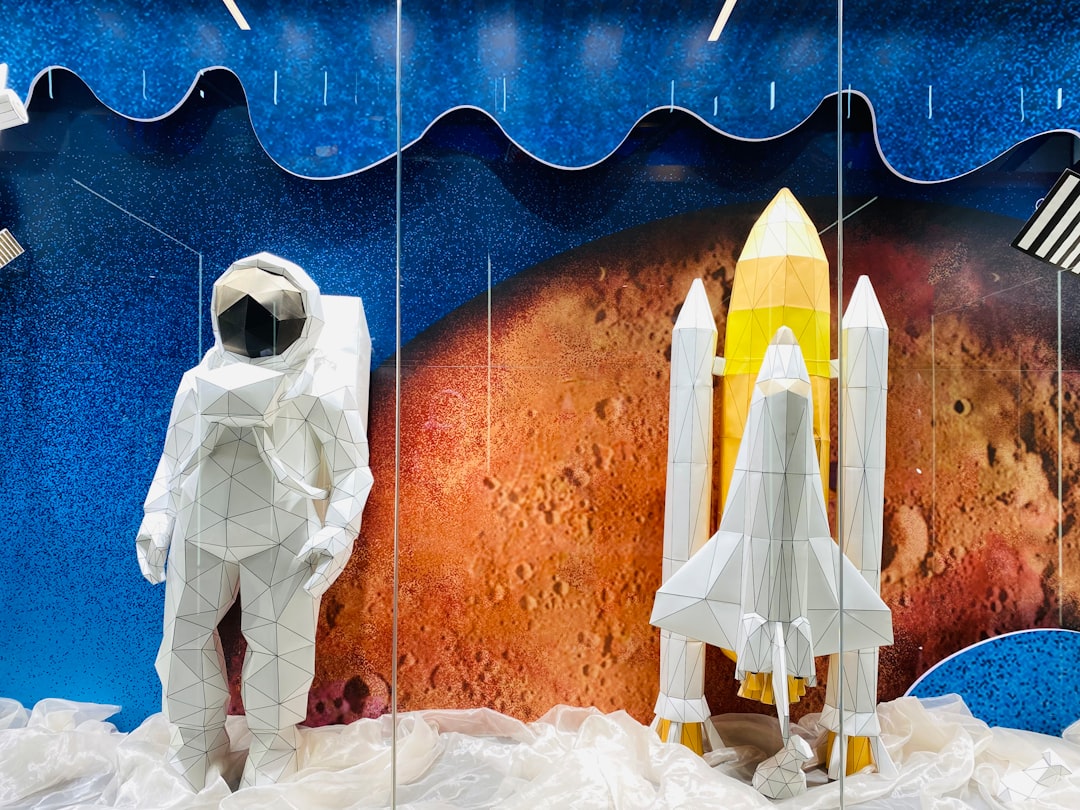
Photo by Robert Chen on Unsplash