Beyond the Screen: How Digital Content Creators Can Build Real Value in 2026
Beyond the Screen: How Digital Content
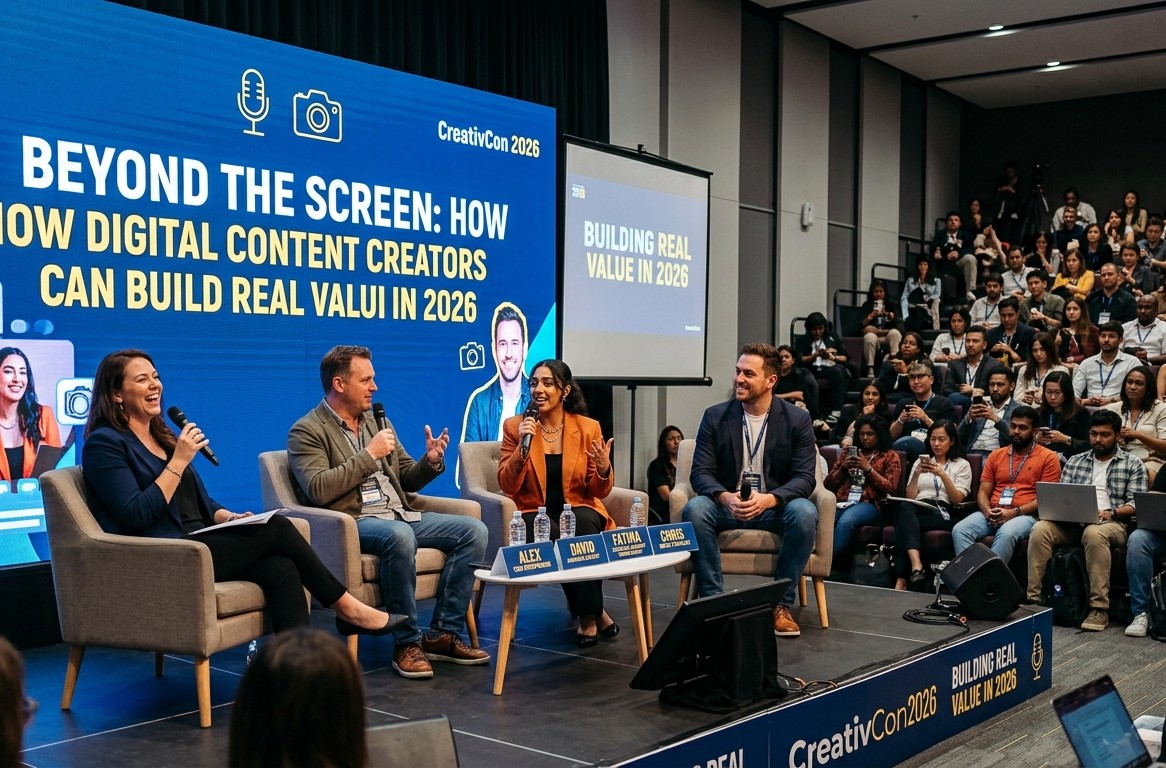
Creators Can Build Real Value in 2026

Let’s be completely honest for a second: the internet is lying to you about what it takes to survive and thrive as a digital content creator today.
Every single day, your feed is probably flooded with polished lifestyle influencers shouting about how "easy" it is to film a viral short, watch the algorithmic views pile up, and instantly secure passive wealth from basic platform ad-revenue splits. I used to fall for those exact surface-level narratives. But if you are currently staring at a analytics dashboard, watching your organic reach fluctuate wildly based on an algorithmic tweak you cannot control, or wondering why millions of aggregate views translate to pennies in real, withdrawable income, this exhaustive breakdown is your reality check.
We need to peel back the curtain on why relying exclusively on rent-seeking social platforms is a losing game. The era of pure algorithmic dependency is officially over. To build an unshakeable business, digital builders must transition away from superficial "vanity metrics" and hand themselves a practical, step-by-step framework designed to extract attention from public feeds and convert it into high-margin, self-contained financial assets.
Part 1: The Cold, Hard Truth About the "Algorithmic Monetization" Lie
When the modern creator economy first exploded, creators treated third-party platforms like a permanent corporate home base. We genuinely believed that if we put in the grueling hours, optimized our video hooks, and stayed consistent on the publishing treadmill, the platform's native ad-revenue sharing programs would take care of our financial future.
Instead, the entire industry ran face-first into a wall of platform structural friction.
The reality of the landscape is incredibly brutal. Creators globally have watched their native distribution channels transform into pay-to-play ecosystems. You can spend years nurturing a community, only to hit a wall where an overnight algorithmic re-indexing cuts your organic impressions in half, forcing you to chase new short-form trends just to maintain baseline visibility. Relying strictly on programmatic ad layouts or platform creator pools leaves your entire business model fragile, exposed, and fundamentally un-monetized relative to the true market value of your labor.
Here is what the slick tech commercials never tell you: platform traffic is a borrowed asset, not an owned business. When your entire financial pipeline relies on an external algorithmic black box, you do not own a media company—you are working an un-unionized, piece-rate gig for a centralized database. If you are a digital content creator trying to build real-world wealth, your biggest enemy isn't a lack of creative talent. It is the absolute trap of opportunity cost—leaving your core community inside a closed garden where you cannot access their direct contact information, analyze their deep consumer behaviors, or offer them customized, high-value products.
Part 2: The Trap of the Vanity Metric (And the Shift to First-Party Wealth)
I will never forget tracking the performance of an independent creator who was pulling in millions of video views monthly but actively struggling to clear basic operational overhead. On paper, their digital presence looked massive—the comment sections were flooded, saves were high, and their follower count was climbing.
Nobody cared when the bills came due. Because they had no backend sales funnel, no standalone products, and no direct communication lines to their audience off social media, their actual cash flow was completely choked. They were trapped on a content treadmill, printing free engagement for a tech platform while their personal capital efficiency sat at zero.
That was the exact moment the lightbulb finally went off, and it is the single most important rule of creator business design: Owned asset velocity beats borrowed platform metrics every single day of the week.
[Algorithmic Dependency] --> High Views --> Platform Changes Code --> Income Collapses
[Sovereign Creator Model] --> Targeted Views --> Direct Owned Funnel  --> High-Margin Real Value
The second you strip away the desire to look popular on an app and focus entirely on building sovereign, first-party digital assets, the entire game shifts. According to recent macroeconomic data, creators who intentionally monetize via their own digital products or direct-to-consumer models see a massive premium in income stability compared to those relying on platform creator funds or ad splits alone.
If you want to protect your career and build an enterprise that outlasts shifting social media trends, you must anchor your business model across the three core pillars of sovereign asset management:
- Owned Infrastructure Sovereignty: Migrating your core audience out of third-party feeds and nesting them directly into first-party data channels—such as premium standalone websites or self-curated email newsletters.
- High-Margin Value Extraction: Moving past generic brand sponsorships and creating your own intellectual property—including reusable asset kits, specialized toolkits, digital guides, and interactive curriculum layers.
- Deep Communal Moating: Fostering highly closed, premium micro-communities where value is exchanged through peer-to-peer depth rather than shallow, public algorithmic engagement.
Part 3: The Micro-Framework: How to Build Independent Asset Kits
Let's get completely tactical. To break out of the platform dependency loop and turn your creative insights into a highly scalable on-chain or off-chain asset library, you need an immediate shift in your operational workflow. This is the exact micro-framework used to systematically package human knowledge into high-value digital products.
Step 1: Stress-Test for True Market Demand
The biggest mistake beginner creators make is building a digital product based solely on personal passion, without verifying if a target audience is actively looking to buy a solution to that specific problem. Before you design a single page, run a definitive demand audit:
- Audit Search and Save Signals: Analyze your existing library. Identify the topics where users are actively saving your content or clicking your profile links rather than just dropping a superficial like. High saves mean the information is structurally useful.
- Identify the Practical Outcome: Your product cannot be abstract. It must target a highly specific, repeatable real-world outcome (e.g., "How to land freelance writing clients," "The ultimate meal-prep organizational blueprint," or "Automated financial trackers").
- Verify Existing Market Proof: Look at digital marketplaces. If other creators are successfully selling similar blueprints, templates, or guides within your niche, it is not a sign of saturation—it is validation that the market possesses an active budget for that solution.
Step 2: Build and Enforce Your Starter Asset Kit
Instead of trying to launch an over-engineered, multi-month course on your first attempt, focus on shipping a lightweight, high-utility digital asset that can be launched fast and optimized over time.
- The Modular Format Selection: Package your core insights into a highly actionable digital wrapper. This can be a structured Notion template, a reusable checklist, a mini-ebook download, or an intuitive spreadsheet kit.
- The Single Storefront Architecture: Do not confuse your audience with multiple external web links. Establish one central, professional landing page (using standalone distribution tools or an independent digital storefront) and pin that exact URL across every single bio and caption channel you control.
- The Instant Delivery Engine: Ensure your fulfillment process is completely automated. The moment a member of your community inputs their information or completes a transaction, the digital asset must land in their inbox immediately without any manual effort on your part.
Step 3: Implement the Three-Tier Creator Sizing Grid
To guarantee that your digital business model remains highly resilient across all economic cycles, categorize your content distribution and asset allocation into three distinct tranches:
- The Discovery and Top-of-Funnel Engine (50% Focus): Utilize high-impact short-form videos, carousels, or public blog posts strictly to catch attention, establish authority, and signal-boost your presence across search networks.
- The First-Party Nurture Layer (30% Focus): Route that attention directly into an owned email newsletter or premium long-form publication. This is your core relationship vault, where you can speak directly to your audience without an algorithm filtering your voice.
- The Owned Asset Monetization Core (20% Focus): Dedicate the final slice of your creative engine to managing and scaling your premium digital products, consulting tiers, or private memberships, converting your top-tier fans into direct business revenue.
Part 4: The 7-Day Creative Sovereignty Plan
To take this structural philosophy and apply it to your digital creator journey starting this week, follow this exact 7-day action sequence:
- Day 1–2: The Platform Fragility Audit. Review your analytics metrics from the past month. Calculate your exact total income generated purely from platform creator funds or variable ad views, and divide it by your total hours worked to reveal your true platform wage.
- Day 3–4: Identify Your Core Monetizable Asset. Look at your community's most frequently asked questions or your highest-saved content pieces. Pinpoint the single most valuable framework, template, or guide you can package to solve that specific friction point.
- Day 5–6: Build Your Minimum Viable Product (MVP). Draft a clean, high-utility 5-page digital guide, compile your specialized spreadsheet tracker, or build out an intuitive workspace template. Keep it hyper-focused on executing one major outcome cleanly.
- Day 7: Launch Your Sovereign Link. Set up a simple independent digital storefront, link it directly in your primary social profile bio channels, and release your first piece of intentional, asset-driven content directing your audience to your new owned digital home.
Final Thoughts: The Future Belongs to the Asset Owners
The digital landscape doesn't need another generic article telling creators to chase short-term algorithmic trends or dance for views on a feed. The web is already drowning in that low-tier noise. What serious builders, professional writers, and digital content creators are looking for on platforms like Medium and Publish0x is a raw, unvarnished blueprint that shows exactly how to break free from corporate platform gatekeepers, reclaim absolute custody of their audience data, and build an independent business that lasts.
Stop letting restrictive platform rules dictate the absolute ceiling of your professional growth. Stop trying to look popular by prioritizing shallow view metrics over deep capital efficiency. Focus entirely on clear textual visibility, sub-penny transaction rails, direct first-party audience access, and high-value digital asset creation. That is how you survive the ongoing algorithmic transitions, and that is how you permanently scale your business beyond the screen.
What to Do Next
**If this granular strategic breakdown opened your eyes to the massive opportunity cost of relying strictly on platform algorithms, make sure to hit that follow button right here and leave a clap. Let’s turn the comments section into an open creator boardroom: What specific digital product, template, or owned newsletter channel are you actively building this week to take your business off-platform? Drop your game plan below, and let's optimize your capital efficiency parameters together.