[Citizen Science] The Raptors of March in South-Eastern Pennsylvania
It's time for the next post in my wildlife photography series. Of all the animals I was able to photograph in March, the most engaging are the raptors. I saw three different types of raptors in March and saved about 177 photographs (mostly bad). The raptors that I photographed included: Turkey Vultures, Red-tailed Hawks, and an American Bald Eagle.
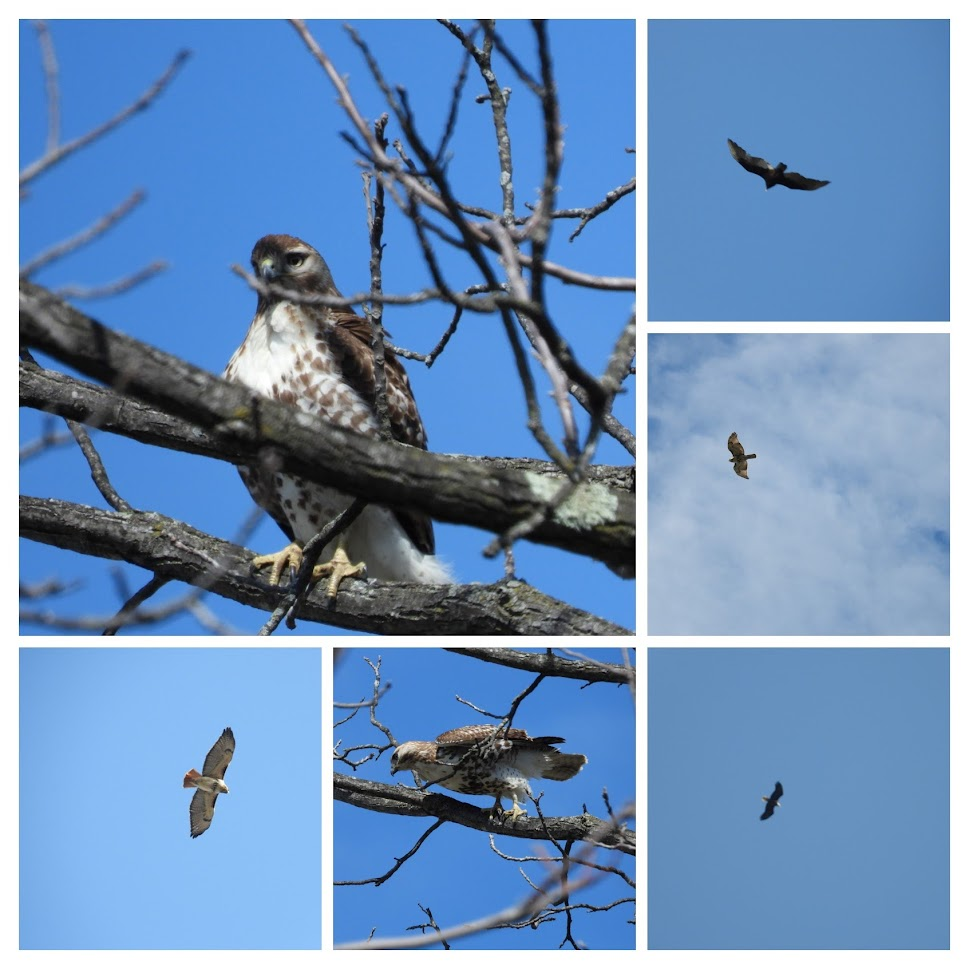
Top-right: Turkey Vulture; Bottom-right: American Bald Eagle; All others are Red-tailed hawks
The Turkey Vultures were the most common, followed by Red-tailed Hawks, and I think I only saw one Bald Eagle. I also submitted 10 iNaturalist observations of raptors.
I'm still a novice photographer, and I don't have expensive gear, but I've found that wildlife photography in my own yard has been a good way to practice. The meta-concept that I'm pursuing here is that I think it's possible to connect Steem to the Citizen Science ecosystem by participating in existing initiatives and then blogging about them here on Steem.
During early March, I wasn't taking many walks. My frequency increased in mid-March, and by the end of the month I was practicing photography almost daily. My early-March photography started out using the Nikon P1000's "bird watch" mode, but by the end of the month I was trying to control some of the settings independently (which has continued in April).
In the discussion at the end of the post, I also have some thoughts about harnessing Steem as a tool for citizen science and free market environmentalism. Also make sure you notice the livestream links in the Bald Eagle section. They are date-sensitive (baby birds eventually grow up.)
For links in previous posts in this series, please see the end of this post. Some of these may also appear on the iNaturalist web site and on my personal Facebook page. Now, let's get on to the photos.
Turkey Vulture
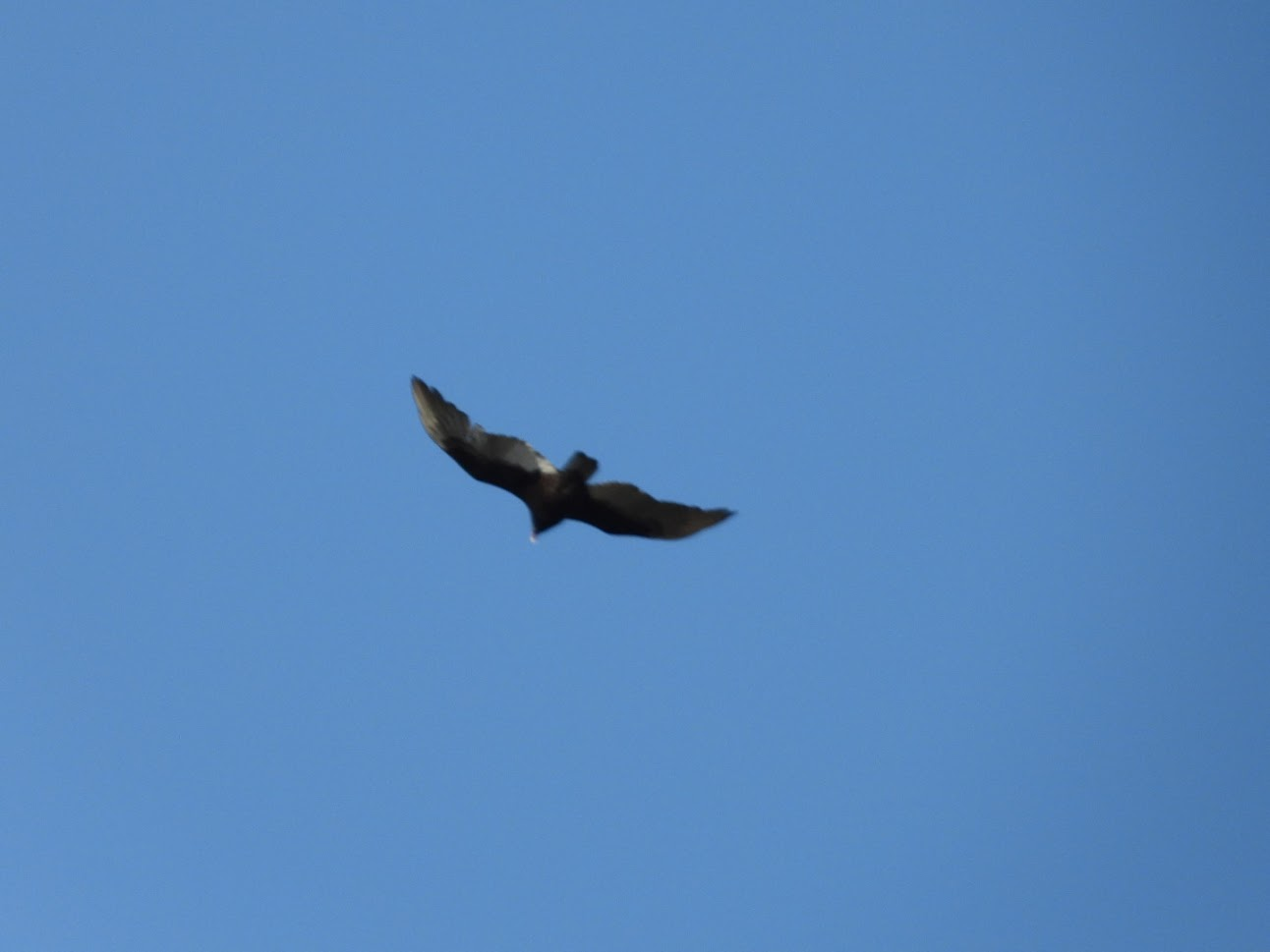
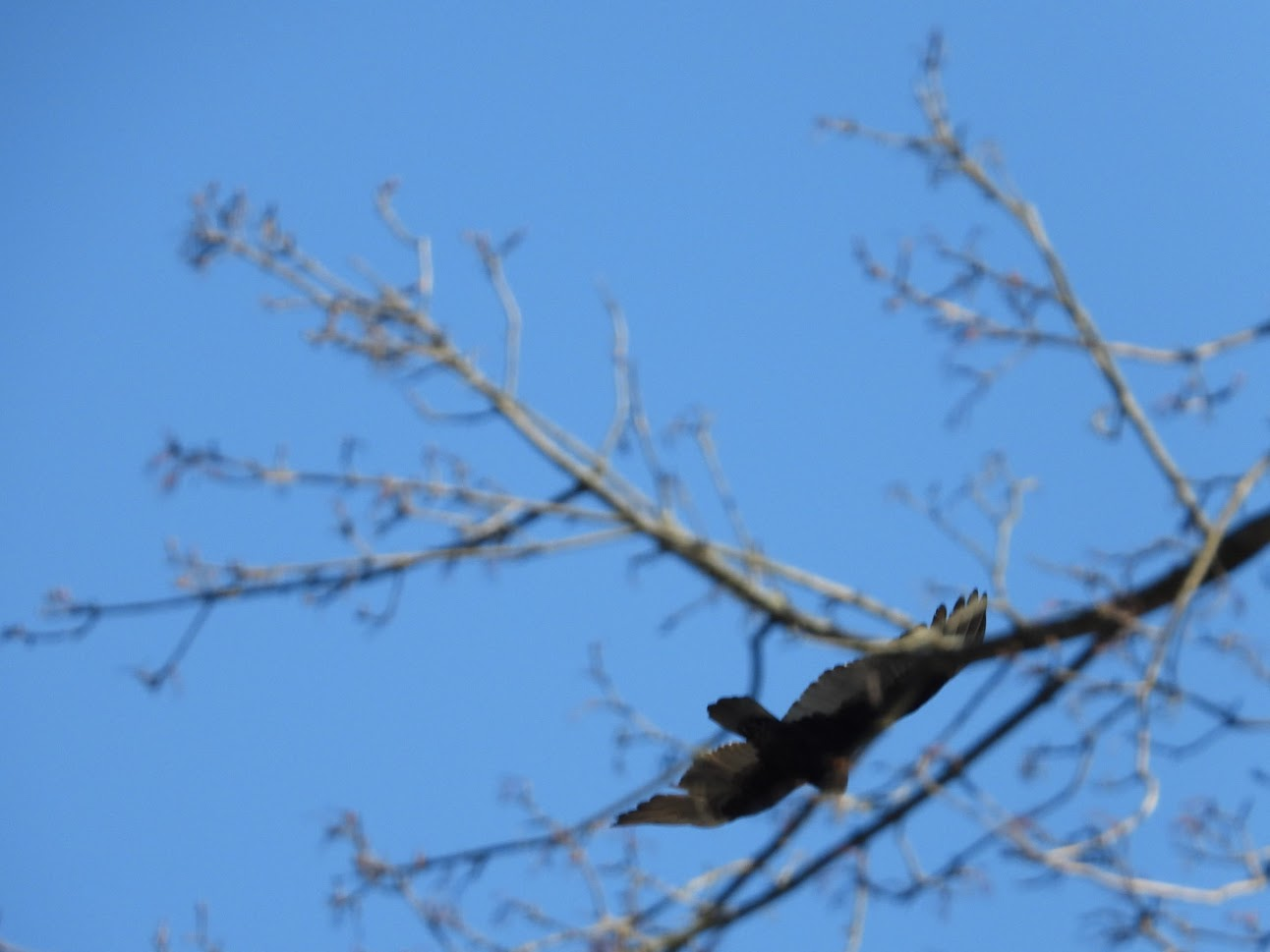
The Turkey Vultures have definitely been the most common raptors flying through the area. They are also somewhat difficult to photograph because of their dark coloring and propensity for flying behind trees, so I didn't get very many good photos of them. Many of my Turkey Vulture photos turn out just as dark silhouettes or screened by tree branches.
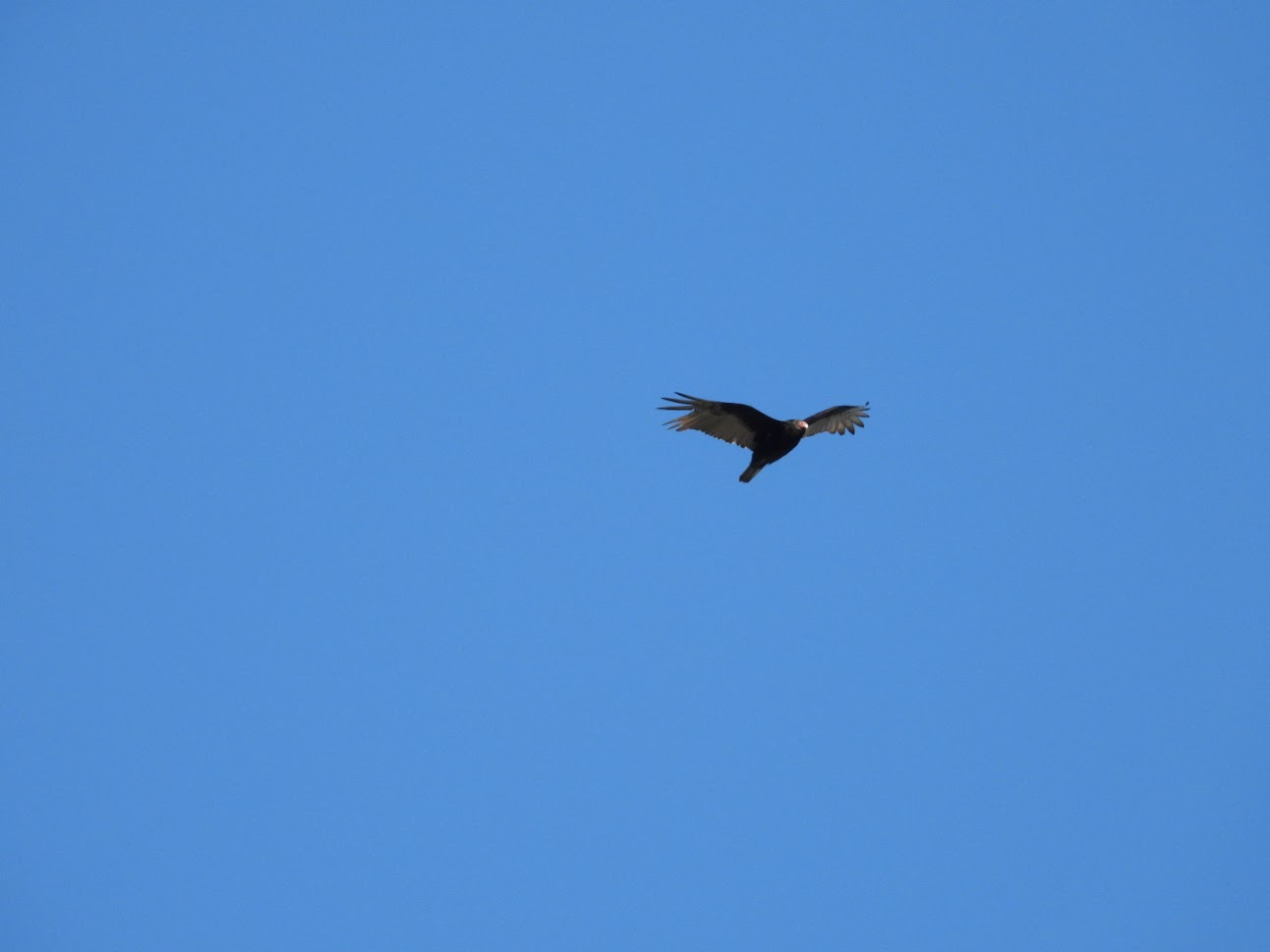
Until I began my photography practice, I had always thought that Turkey Vultures have only black feathering. During March, however, I learned that they have whitish feathering on the underside that can be seen with the right magnification and lighting. It turns out that this is one of the "field marks" for identifying them.
Here are a few photos where I managed to get some detail.
| March 17 ƒ/5.6; 1/1250; 216mm(50X, 1202 mm equivalent for 35mm); ISO280 |
March 17 ƒ/5.6; 1/800; 180mm(42X, 1002 mm equivalent for 35mm); ISO250 |
](https://cdn.steemitimages.com/DQmdsJzo8LddcwP23EAeboJi7H6rXY456TfwHiHBXVSuWCL/image.png) |
](https://cdn.steemitimages.com/DQmdbY5r8RSLHe3apRUpiz5Fzp1rps8ePkqnuCxiL3zgMBb/image.png) |
| March 24 ƒ/5.6; 1/800; 144mm (33X, 801mm equivalent for 35mm); ISO250 |
March 25 ƒ/4.5; 1/800; 53.9mm (12.5X, 300 mm equivalent for 35mm); ISO110 |
](https://cdn.steemitimages.com/DQmbRNDvpPrN1a3eUw77DtGu21bCpvUzVbkLSNkb1h3g77o/image.png) |
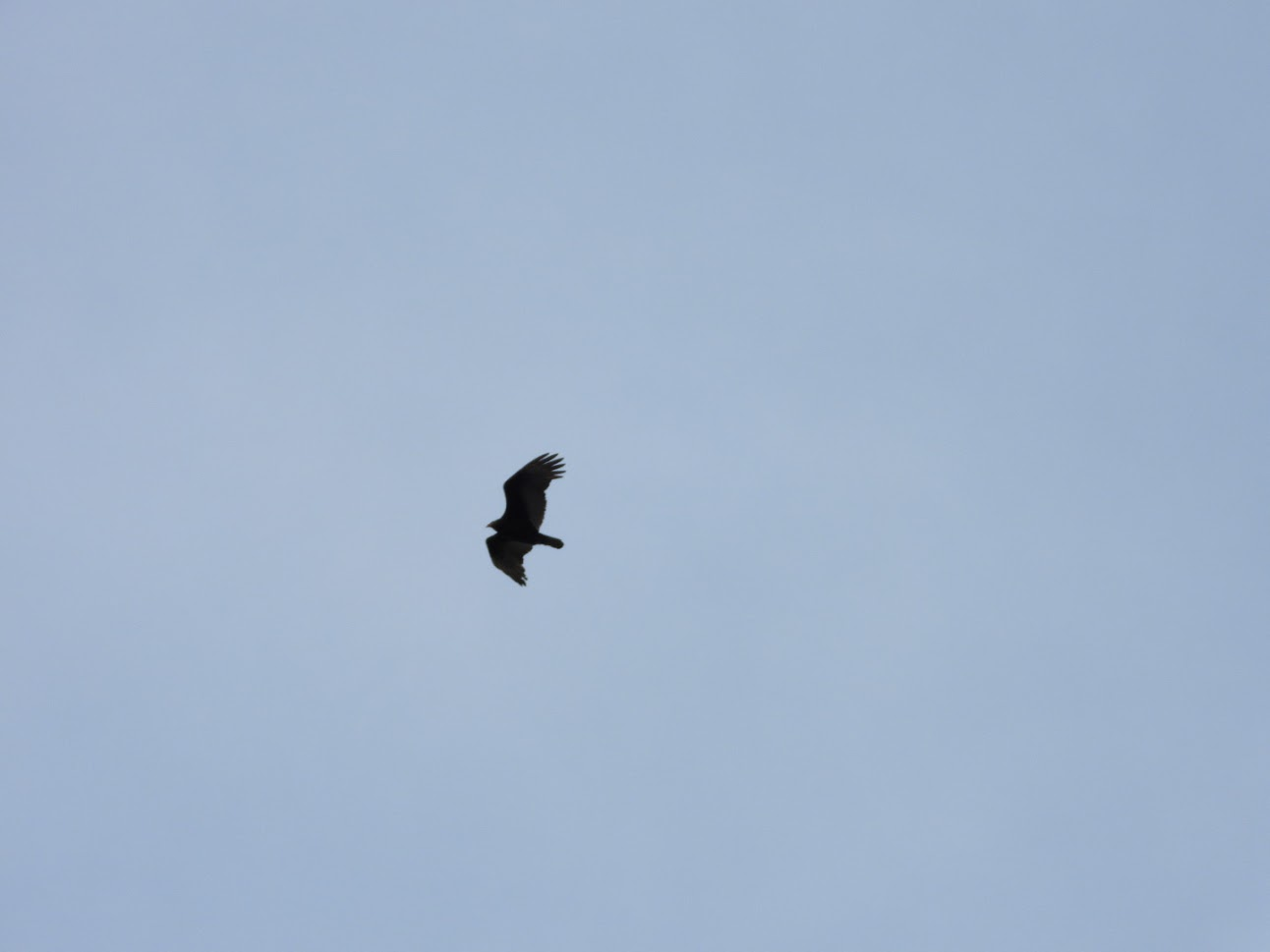](https://cdn.steemitimages.com/DQmStGgGofePzRwzDFyGagZexvTN4S4JvckGv9DP4aXR6WK/image.png) |
| March 26 ƒ/5.6; 1/1250; 216mm(50X, 1202 mm equivalent for 35mm); ISO280 |
March 29 ƒ/4; 1/500; 22.5mm(5X, 125mm equivalent for 35mm); ISO100 |
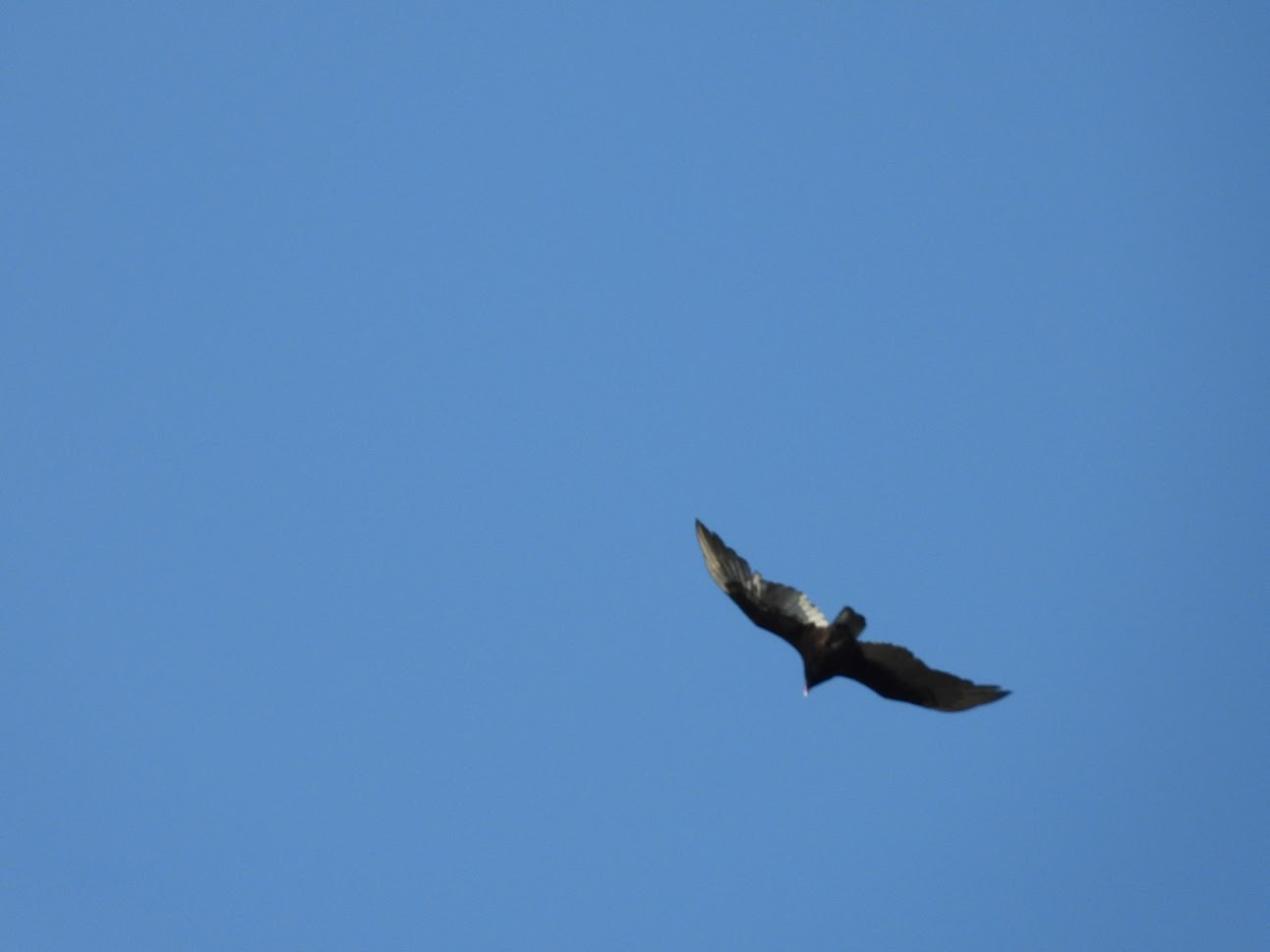](https://cdn.steemitimages.com/DQmb6vM31bERiWRY12AFMVbf1JYZfPLTNqviH7RcVEk7RYb/image.png) |
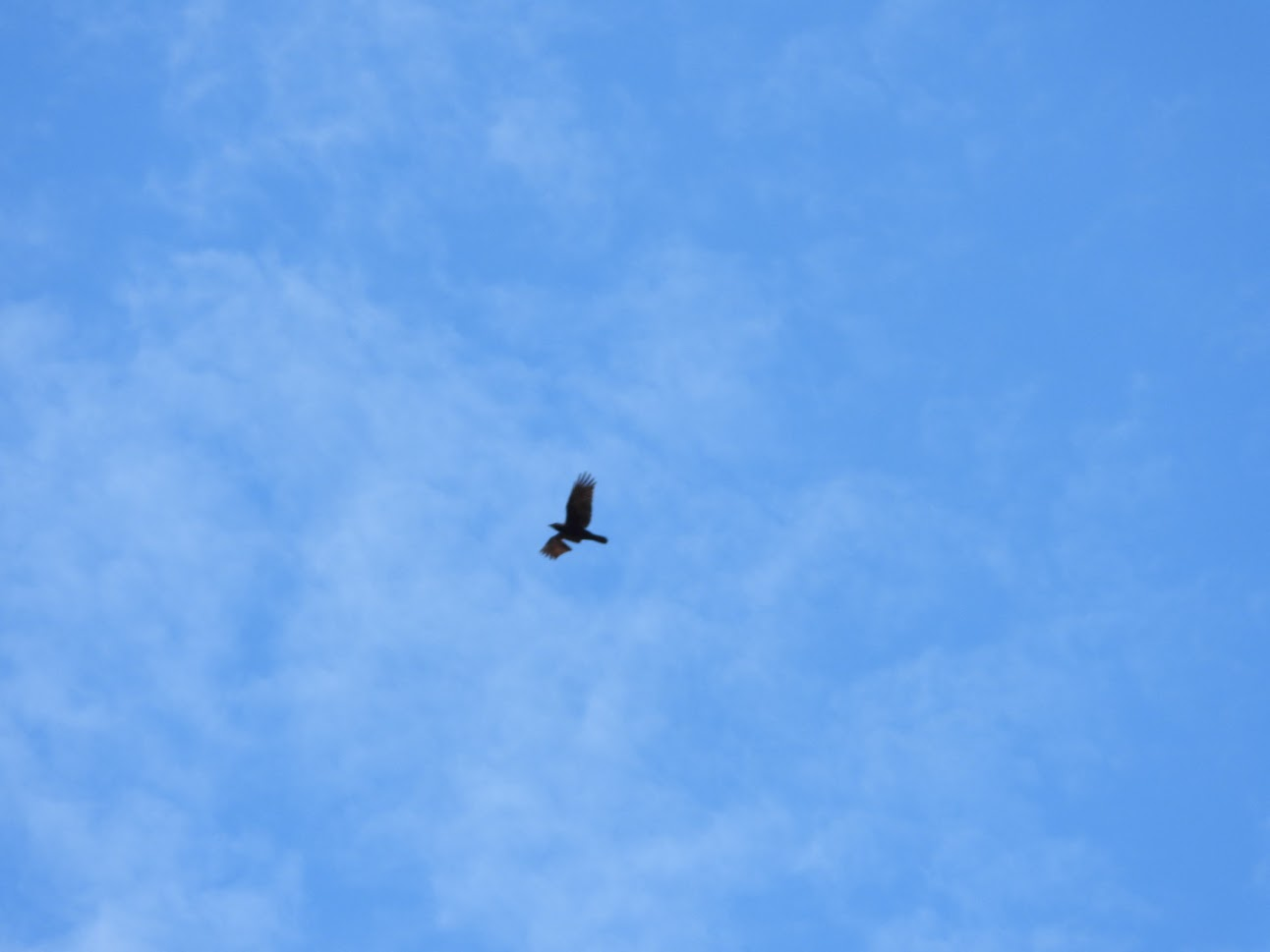](https://cdn.steemitimages.com/DQmeu9EqBmXChuhvYiqGGW8TXS5VCVJg6fztGfN7rhsVyqf/image.png) |
Red-tailed Hawk
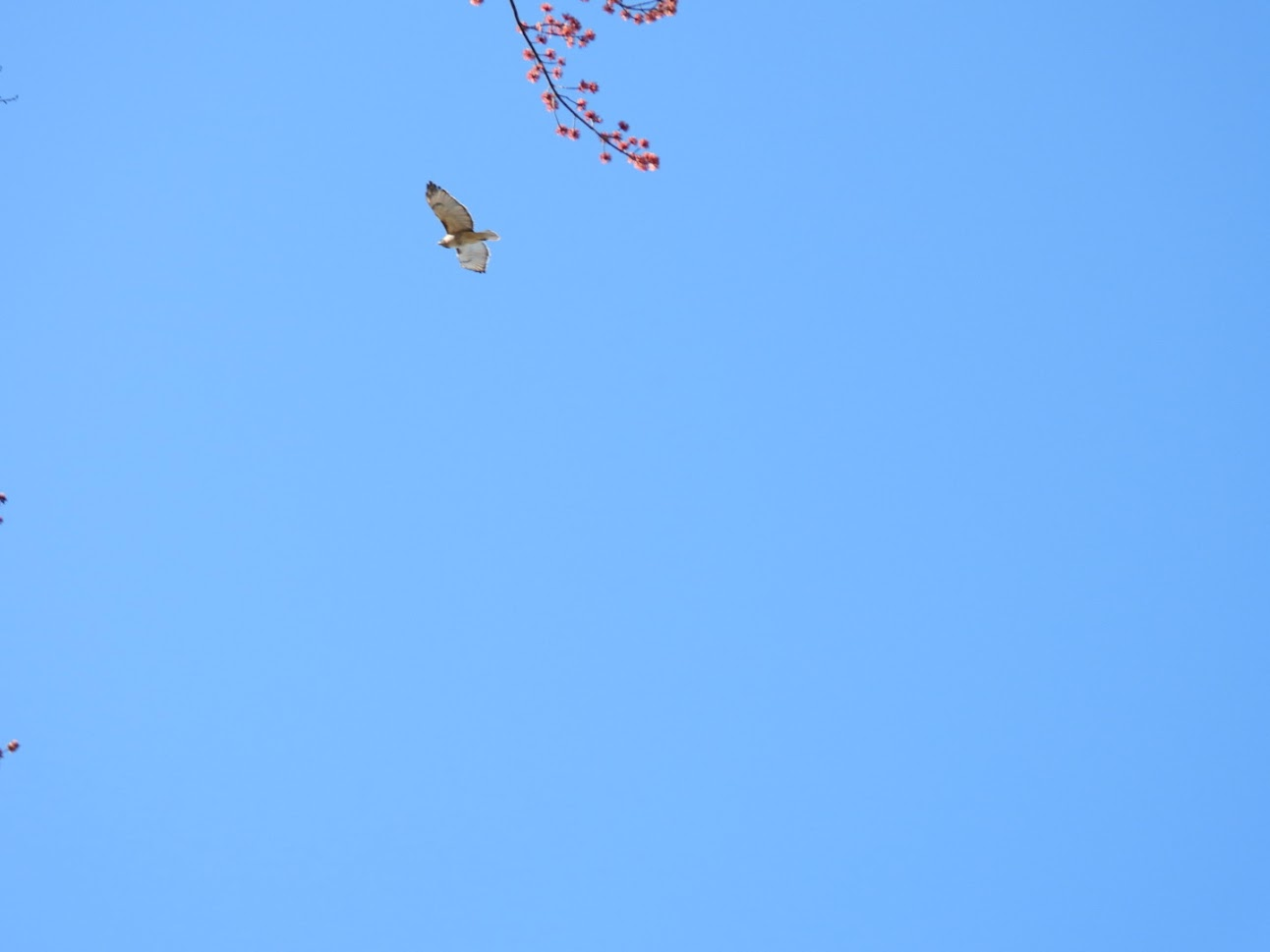
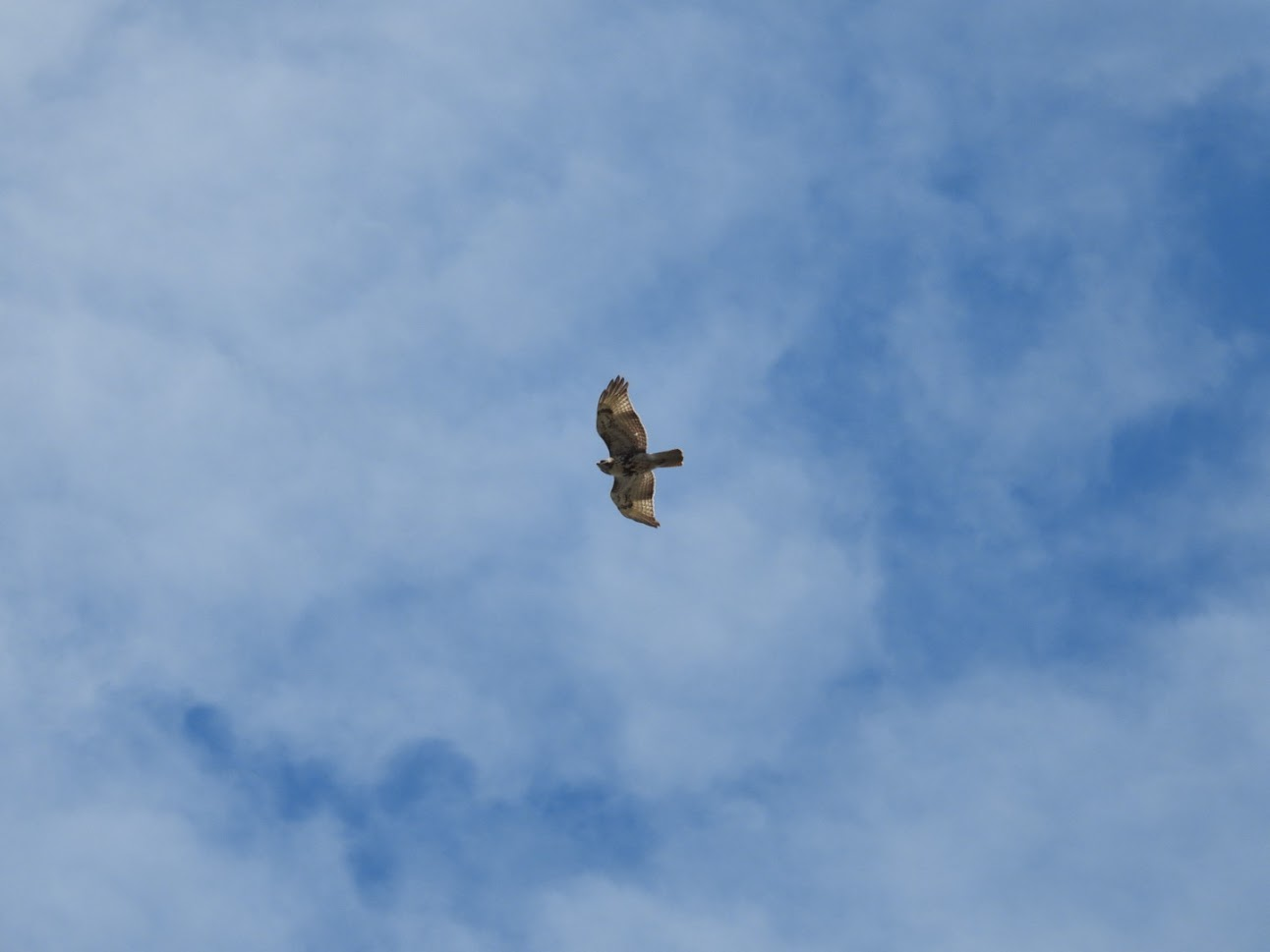
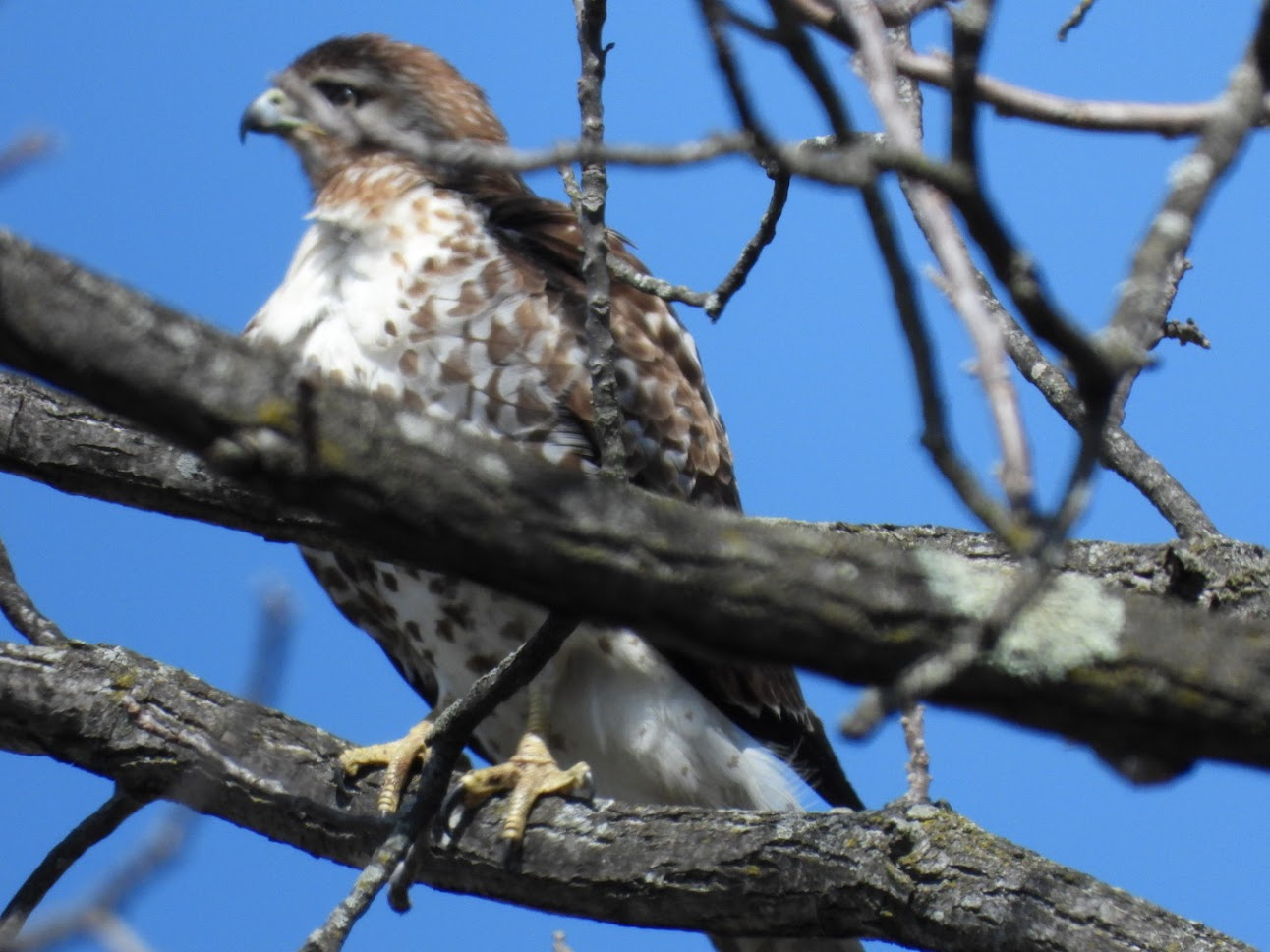
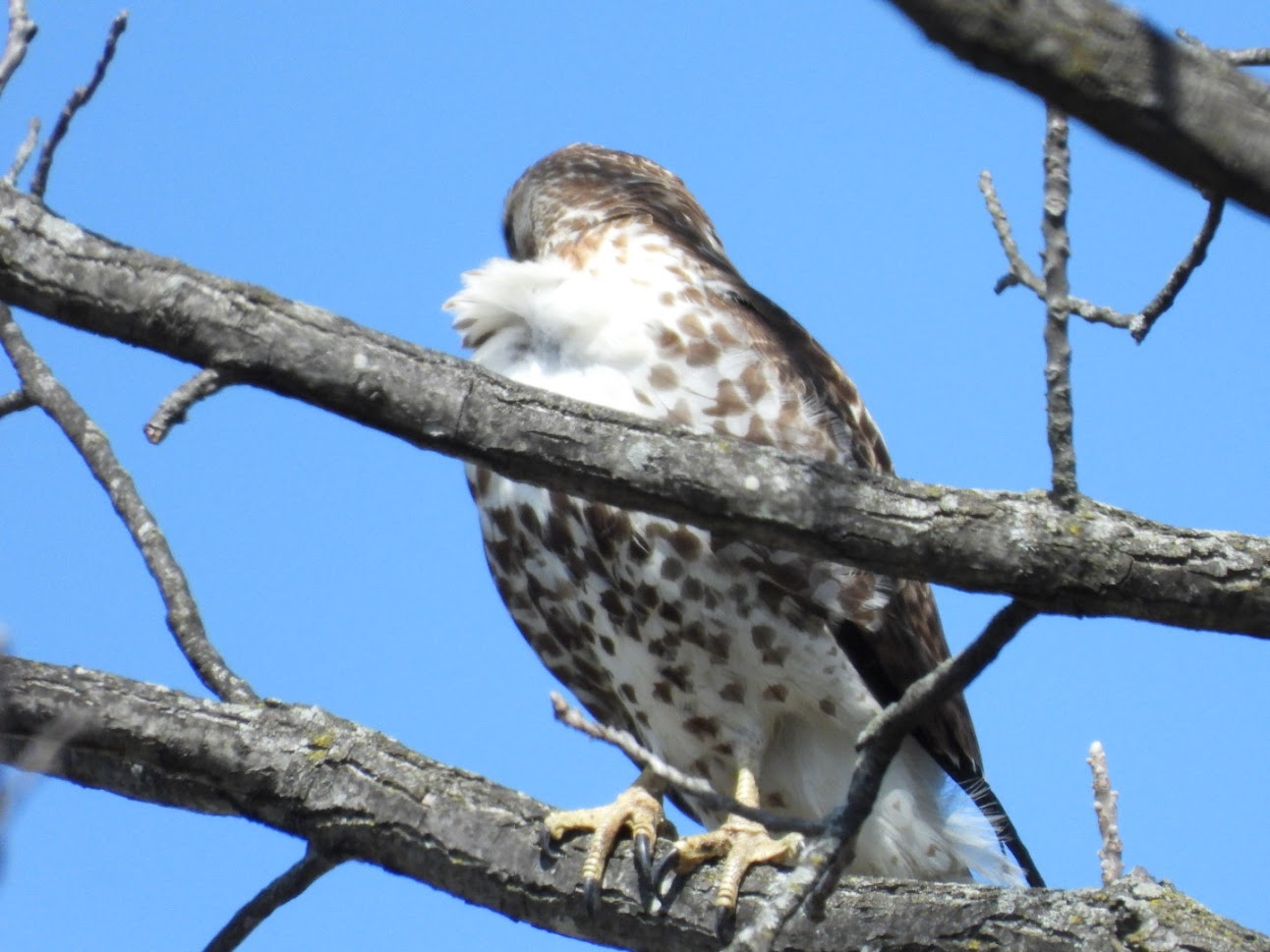
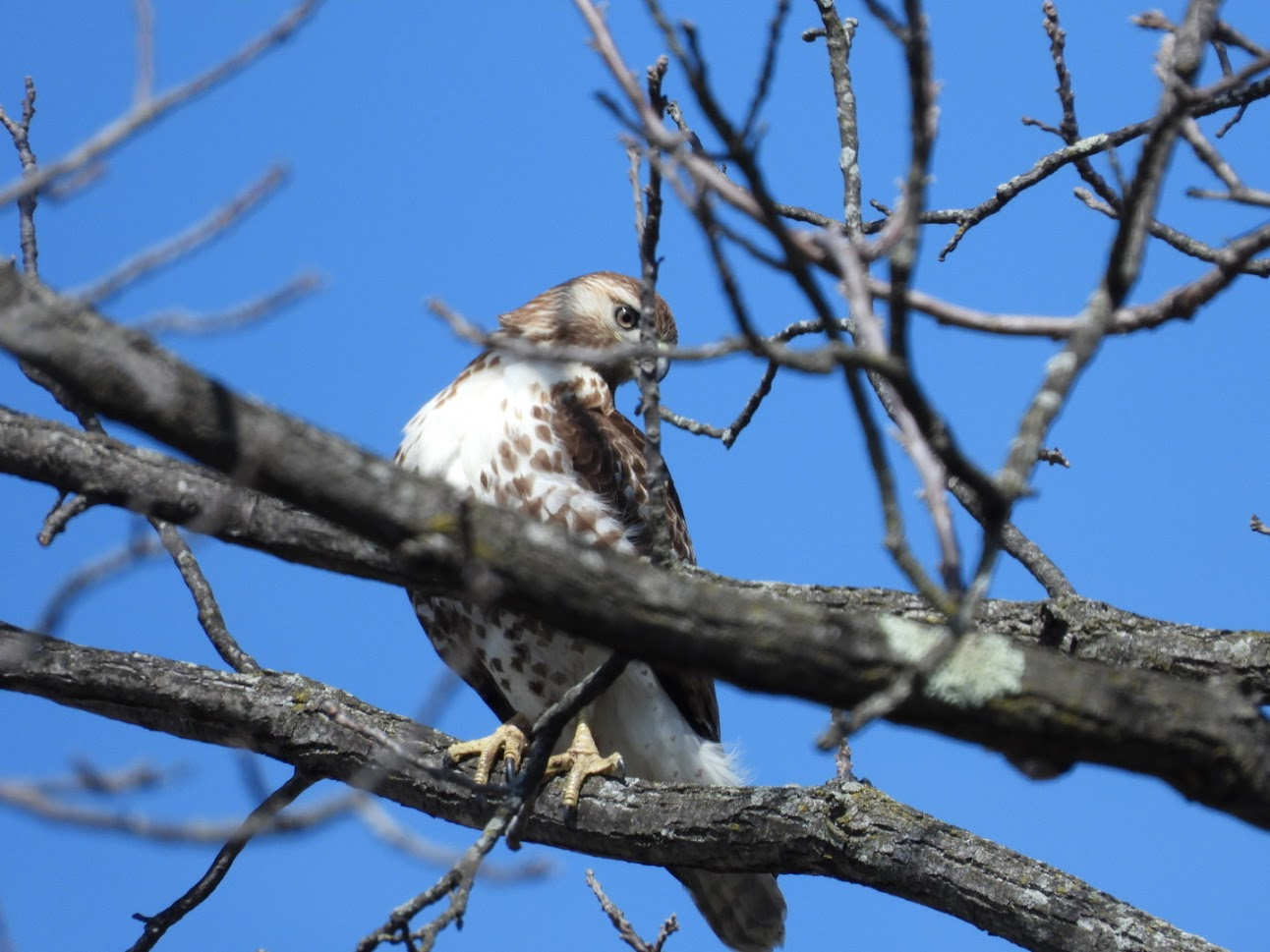
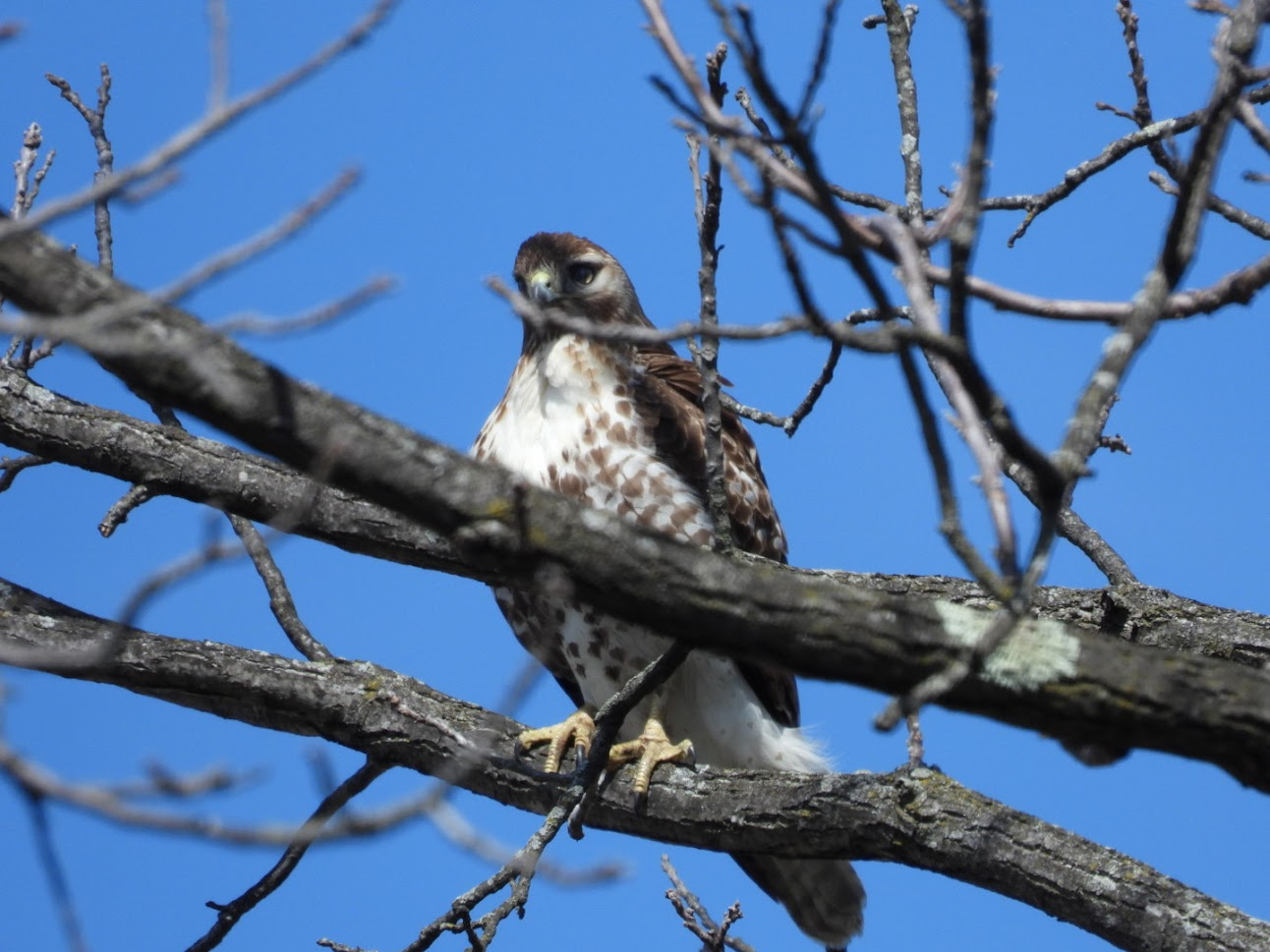
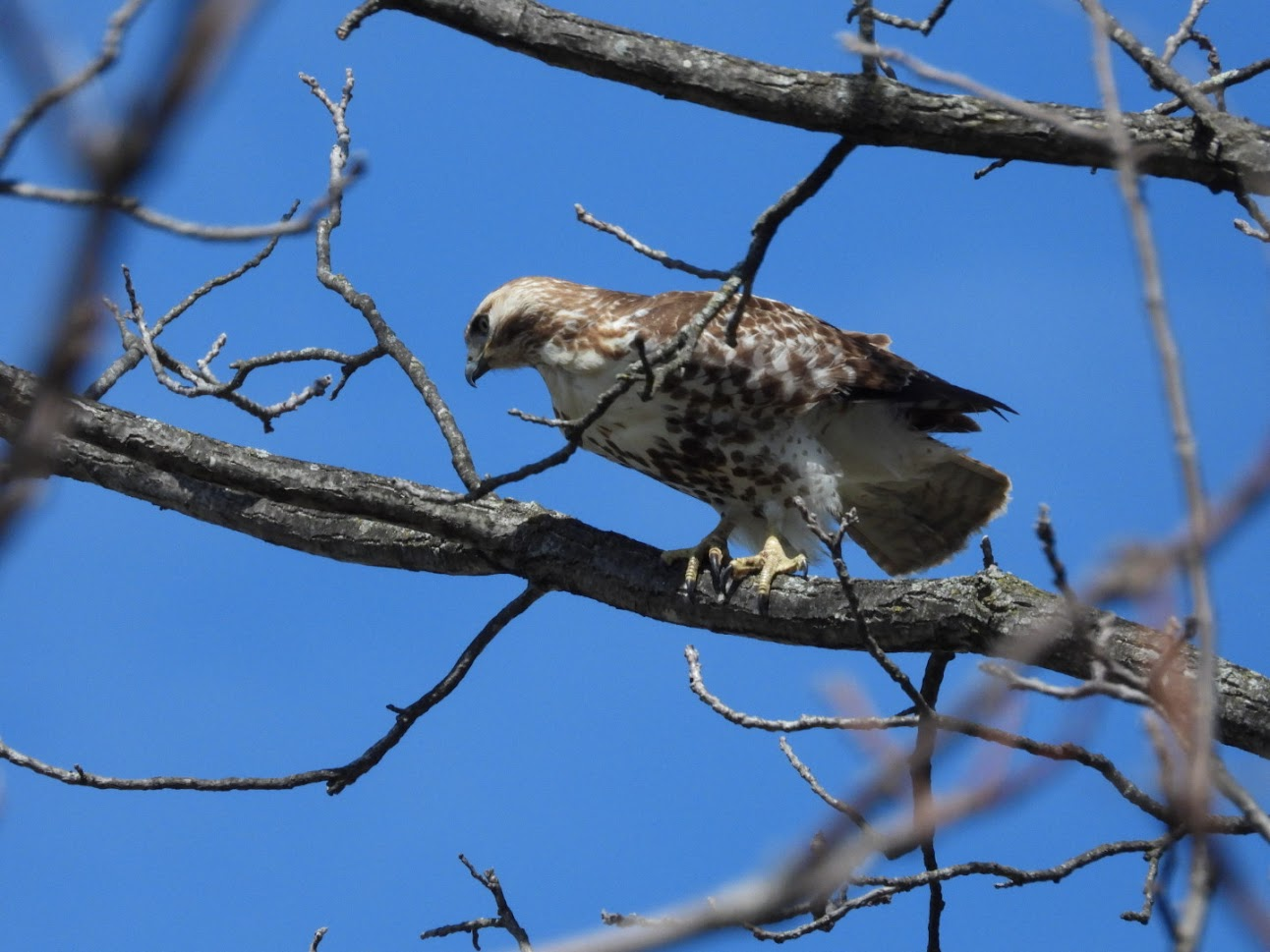
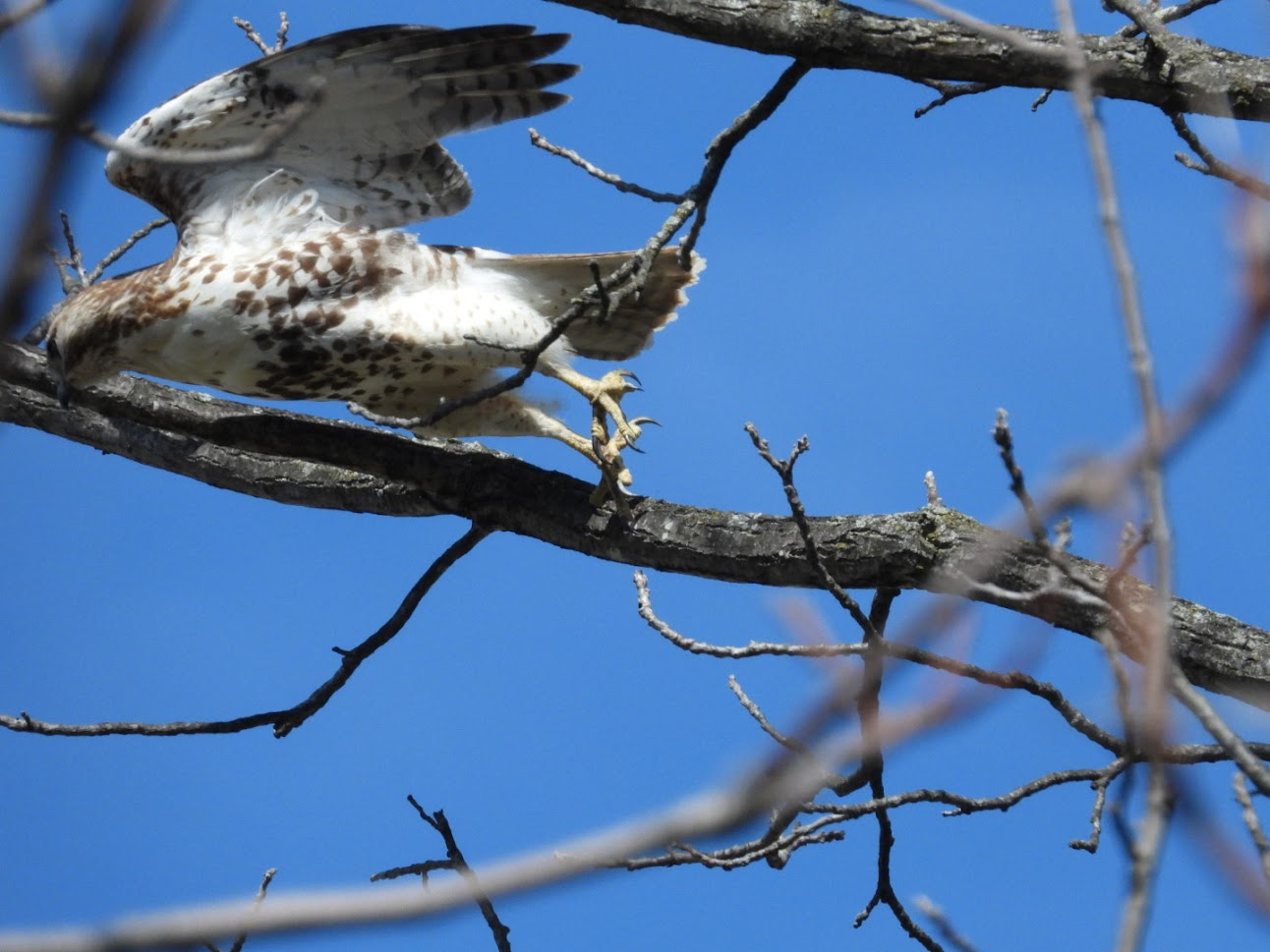
In comparison to other raptors, I've definitely had the best luck photographing the Red-tailed hawks. One - a juvenile - landed in a tree, so I had plenty of time to experiment and adjust camera settings in order to get a good close-up view. A couple of them flew low enough in plain sight that I could get decent photos of them in flight.
To get ahead of myself a bit, in April, I learned that they may not always have red tails, but the dash comma pattern on the leading edge of the wing is a very strong field mark for identifying them in flight (the dash is the "patagial mark" in the linked diagram), and the white chest and streaked belly bands make a good way to identify them when perched.
| March 19 ƒ/5.6; 1/500; 234mm (54X, 1302mm equivalent for 35mm); ISO320 |
March 28 ƒ/4; 1/250; 26.1mm (6X, 145mm equivalent for 35mm); ISO100 |
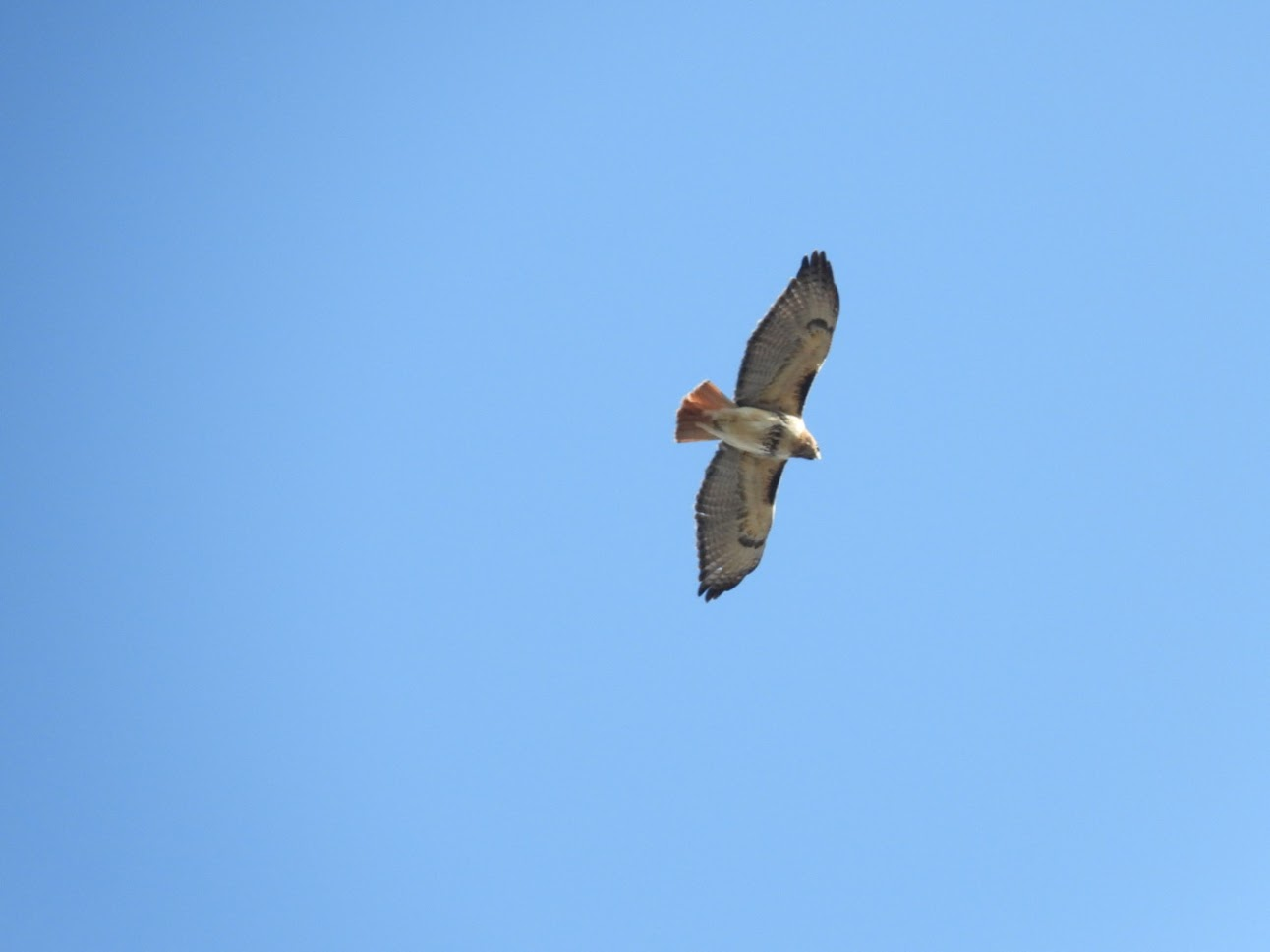](https://cdn.steemitimages.com/DQmPx5zBxVEAdPB34bPTSRkm6GDJFomVSHQ3WVwwB9aPQaX/image.png) |
](https://cdn.steemitimages.com/DQmeE6rgMme4dL1G2YUdNTEQr6g31WPnCKJVyWxVBpycarY/image.png) |
| March 29 ƒ/5; 1/800; 62.1mm (14X, 345 mm for 35mm equivalent) ISO125 |
March 29 ƒ/8; 1/800; 539mm (125X, 3000mm for 35mm equivalent) ISO360 |
](https://cdn.steemitimages.com/DQmRSwhTiSAni3bJTY6gnbQhnTcCCyckzDJXUmB32EkYoau/image.png) |
](https://cdn.steemitimages.com/DQmZRPi8bS965YgdUdQ6dE698GbSdcUw81bu47UJZDgp2B4/image.png) |
| March 29 ƒ/8; 1/1250; 539mm (125X, 3000mm for 35mm equivalent) ISO800 |
March 29 ƒ/6.3; 1/800; 359mm (83X, 1998mm for 35mm equivalent) ISO200 |
](https://cdn.steemitimages.com/DQmToFw5AJCawPqh4EQKowRPKKijnAVVh5CLp5TCQYW8k1y/image.png) |
](https://cdn.steemitimages.com/DQmdp8Vn8F5GZkuCuc6XibLETTR5cNK2iPnJvu7S6PH8tzS/image.png) |
| March 29 ƒ/6.3; 1/800; 359mm (83X, 1998mm for 35mm equivalent); ISO180 |
March 29 ƒ/5.6; 1/2000; 252mm (58X, 1402mm for 35mm equivalent); ISO450 |
](https://cdn.steemitimages.com/DQmUmeoVvqfbf2ZWEMiMNqemxbZKjbgQTQUQtnMWyKFJDm4/image.png) |
](https://cdn.steemitimages.com/DQmPGso89MPFKNKKEVUPxuPyrfs7DKcZ77FGHiB6LskWpfM/image.png) |
ƒ/5.6; 1/2000;
252mm (58X, 1402mm for 35mm equivalent); ISO450
](https://cdn.steemitimages.com/DQma7817d39jbzpjTKvoJkTsuRxnkxA2eevNVqZMvx7MPTY/image.png)
American Bald Eagle
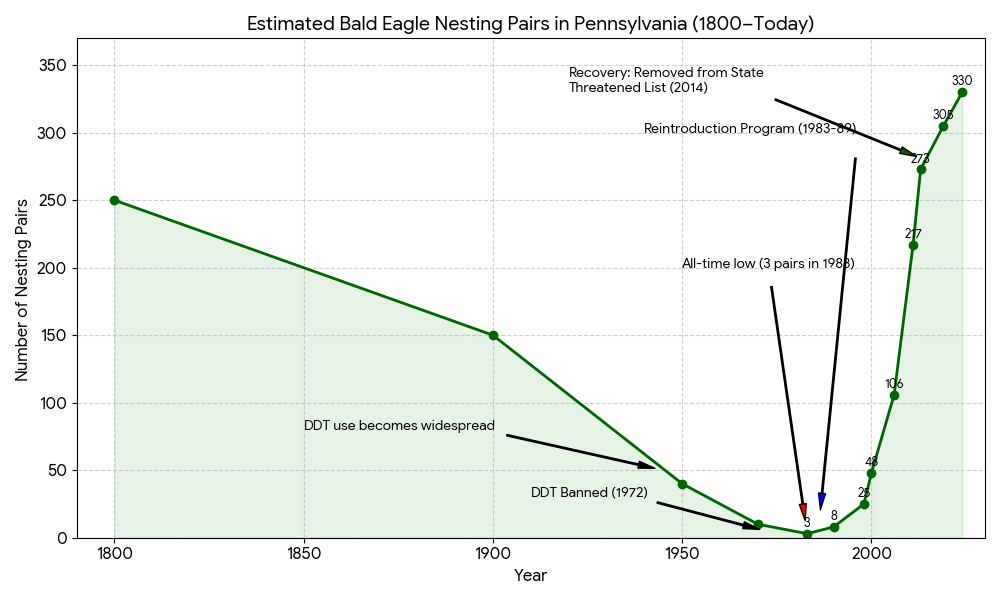
The Bald Eagle is still the most exciting bird for me to see. The bird had been in severe decline, and is apparently making a strong comeback. According to Gemini, this graph represents the Bald Eagle population count over time in the state of Pennsylvania. I can't verify the numbers, but it's consistent with what I've read from other sources. If anything, I think the current number of breeding pairs is probably even higher, maybe above four or five hundred. However, when I was growing up the numbers were very low. As a result, I still think of the Bald Eagle as an exotic bird, even as the numbers recover. It simply amazes me that I can see one from my back yard now.
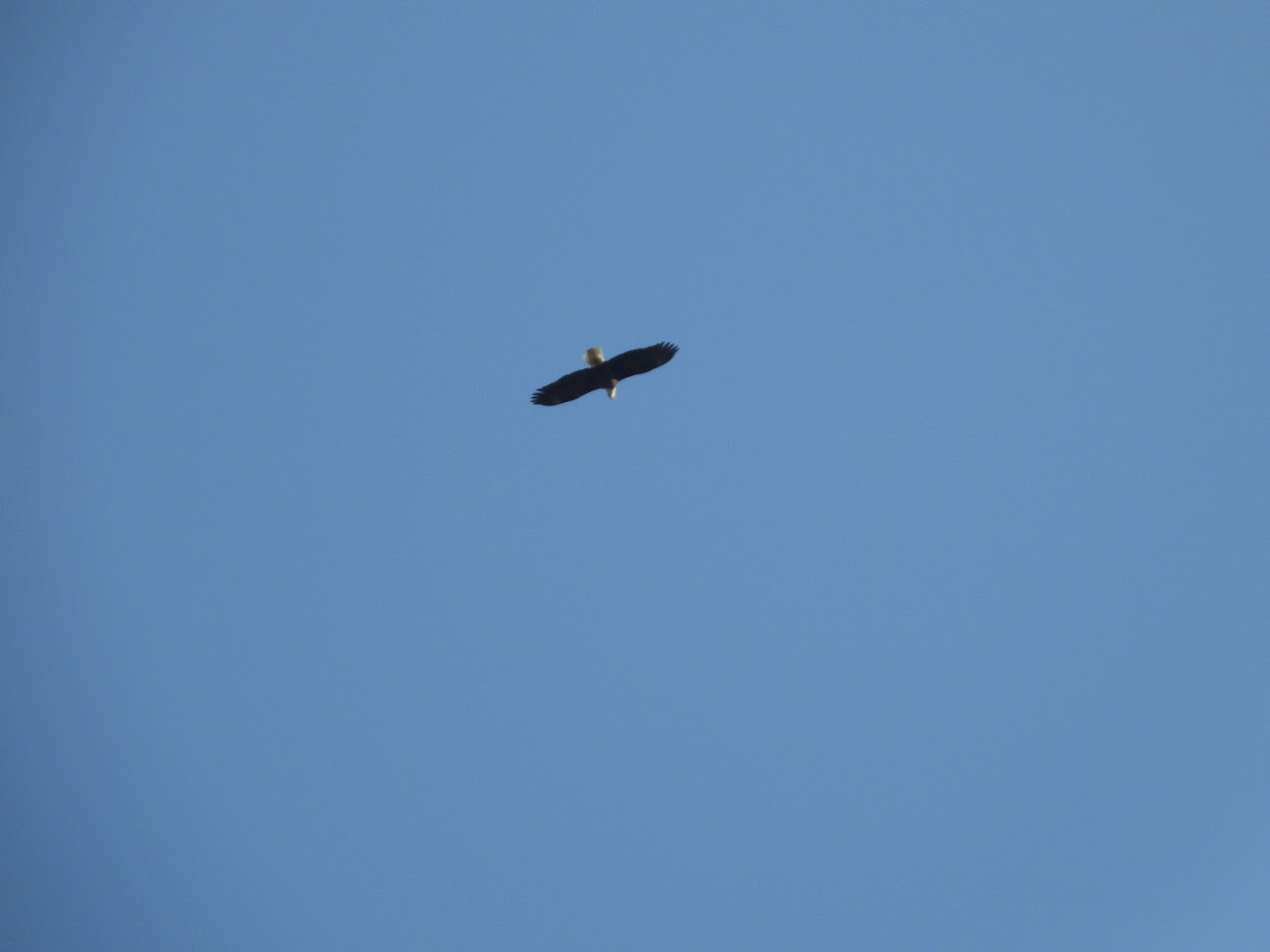
Unfortunately, they generally seem to fly much higher and faster than the other birds, so I haven't managed to get a good shot of one, yet (away from the Conowingo Dam which is what started all this photography practice). During March, I took a few photos in a single burst, and they all look basically the same, so I'm just posting one of them. Even at that distance and with a little blur, you can recognize the bird's distinctive white head and tail.
](https://cdn.steemitimages.com/DQmcA2zbABDNL2jG6Xnj848UfASznazzzf5dRMPot9oV3Sj/image.png)
If you want to see what Bald Eagle chicks look like, you might want to take a quick trip to one of these eagle cams:
As of today, April 18, both nests in those livestreams have young birds that can't fly yet. The ones in Hanover look really young, and you can hear their chirps for food.
Discussion and Conclusion
So, that's it for the birds of March - maybe. I recently learned how to make a collage in Google Photos, so maybe I'll do one more post next week with a few collages to create a quick visual summary of the month. We'll see. If not, the birds of April will be coming in May.
Before I go, I want to start a quick discussion on the role of Steem in this. As you may recall, I have been interested in Steem as a tool for free market environmentalism for a number of years. With this series of posts, I'm trying to push that thread.
What I'm noticing as I go through this exercise is that I've posted just a handful of Steem posts in the same timeframe that I recorded 58 observations on iNaturalist. The reason for this is clear. A Steem post takes hours, whereas an iNaturalist observation takes a few seconds or - at most - minutes.
Steem has tried high-velocity applications, but the problem always comes back to abuse. It's too easy for high-volume content creators with multiple accounts to abuse the rewards system. As long as 80% of the SP is controlled by, maybe one or two hundred accounts, I don't think that's going to change. Moderating for abuse is just too time consuming to be feasible for high-velocity content.
However, it occurs to me that high-velocity Steem activity can be separated from the rewards system by making use of custom_json transactions. Maybe the right recipe is to use a custom_json layer for high-velocity microblogging and use reward-eligible posts/comments for the low-velocity layer? I think SteemX is already doing something like this, but I don't know if the high-velocity stuff is fully disconnected from rewards and how prone it is to abuse.
Finally, I want to point out that iNaturalist seems to be decently good at photo verification, which is something that Steem has always struggled with. It might be useful for Steem's developers and community curators to look at that web site and check out their methods, even if you're not interested in wildlife science.
That's it for today.
Links to previous posts
- [Citizen Science] Another way that Steem photographers and bloggers can help to advance science and protect wildlife
- Six lessons from backyard wildlife walks in the month of March
- [Citizen Science] Overview of Backyard Wildlife Observations in South-eastern Pennsylvania During March 2026
- Backyard Photography in Chester County, Pennsylvania during March 2026: Warm-up Shots
- [Citizen Science] Observations of Small Birds and Animals in South-eastern Pennsylvania from March of 2026
We also visited Conowingo Dam and took photographs there.
Thank you for your attention!
All photos above were taken by me with a Nikon P1000 camera. I'm sharing them under the CC BY 4.0 license (share & adapt freely with attribution to the original source).
Thank you for sharing on steem! I'm witness fuli, and I've given you a free upvote. If you'd like to support me, please consider voting at https://steemitwallet.com/~witnesses 🌟