🏙️ Self-Repairing Cities: The Future of Urban Infrastructure with Distributed Intelligence 🧠🔧 [ENG/GER/KOR]
ENGLISH VERSION:
🏙️ Self-Repairing Cities: The Future of Urban Infrastructure with Distributed Intelligence 🧠🔧
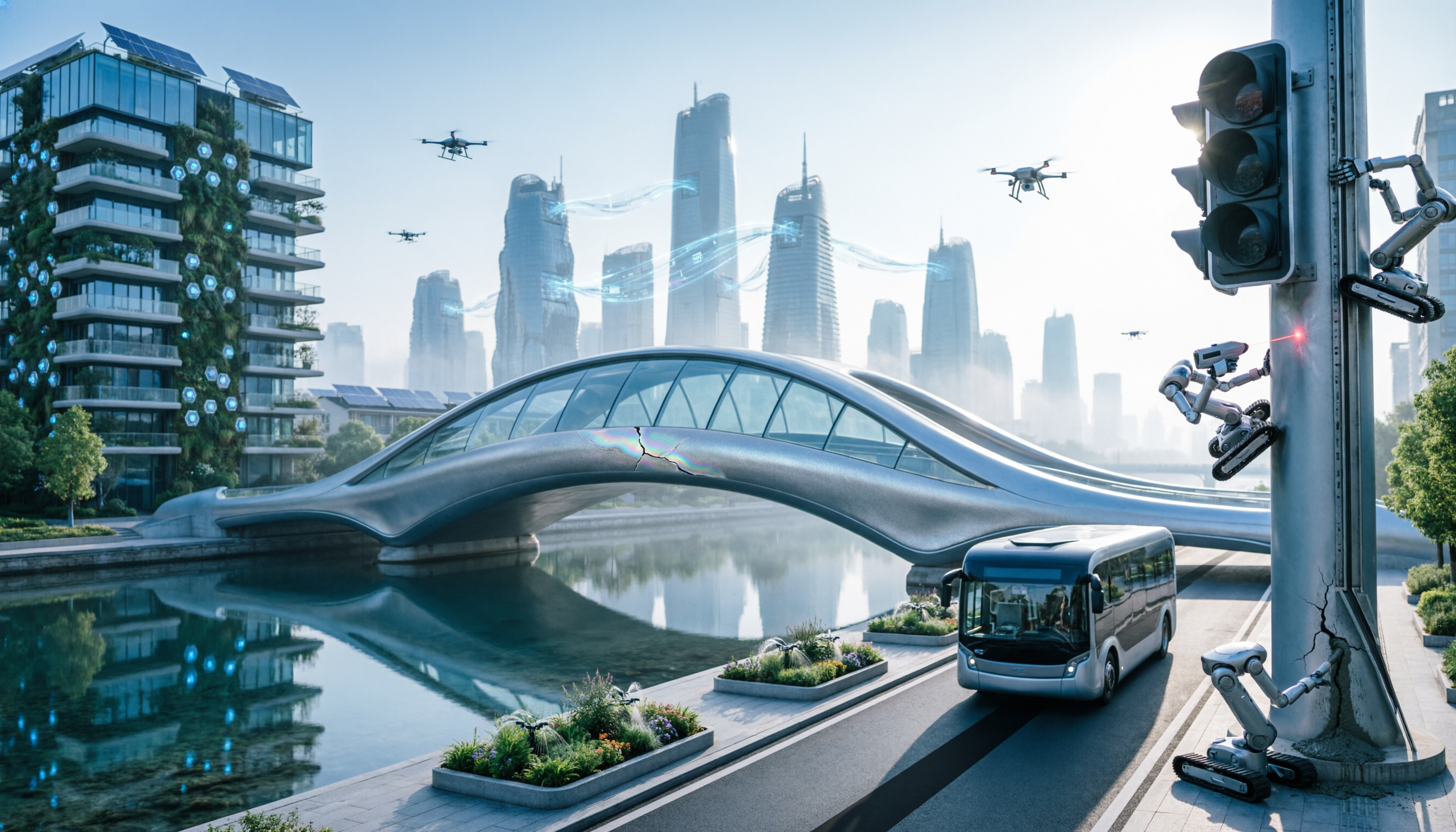
Imagine waking up on a Monday morning and, instead of facing that huge pothole in the street that has been causing traffic jams for weeks, you see a team of discreet robots that have already filled the gap overnight. Or perhaps your water pipes detect a tiny leak and "heal" themselves before you even notice a higher bill. 💧🚫
Does it sound like science fiction? Well, we are closer to this than we imagine. Welcome to the era of Self-Repairing Cities. 👋
🤖 What is Distributed Intelligence?
Forget the idea of a "central brain" controlling everything. Distributed intelligence works like the human immune system or an ant colony. 🐜 Each component of the infrastructure—whether it’s a sensor on a bridge, a chip in a sewage pipe, or an algorithm in a traffic light—has local processing capacity.
They don’t need to wait for a central command to act. They sense, analyze, and act in real time.
- IoT Sensors (Internet of Things): Spread throughout the city, monitoring vibration, temperature, pressure, and structural integrity. 📡
- Smart Materials: Concrete containing bacteria capable of producing limestone to automatically seal cracks. 🧱✨
- Predictive Algorithms: AI that analyzes wear patterns and predicts failures before they happen. 🔮
🛠️ How Does It Work in Practice?
- Instant Detection: A sensor in an underground pipeline detects an abnormal pressure change. 📉
- Local Analysis: The nearby microprocessor evaluates whether it is a real leak or just a temporary fluctuation. ✅
- Autonomous Action: If confirmed, smart valves isolate the affected section to minimize waste, while drones or maintenance robots are automatically dispatched to the exact location. 🚁
- Active Repair: In advanced cases, self-healing materials kick in, or mobile 3D printers perform immediate structural repairs. 🖨️
🌍 Why Does This Matter?
- Public Safety: Bridges and buildings monitored 24/7 drastically reduce the risk of structural collapses. 🏗️🛡️
- Resource Economy: Less waste of water, energy, and construction materials. 💰💧
- Sustainability: Precise and preventive repairs generate less debris and CO₂ emissions compared to traditional large-scale corrective works. 🌱
- Quality of Life: Fewer street closures, less construction noise, and more efficient urban services. 😌🚗
⚠️ The Challenges Are Not Small
Of course, it’s not all smooth sailing. 🌸 We need to talk about:
- Cybersecurity: A connected city is an attractive target for hackers. Protecting this distributed network is crucial. 🔒💻
- Privacy: Where does infrastructure monitoring end and citizen surveillance begin? 🕵️♂️
- Initial Cost: Implementation requires heavy investment in technology and updates to technical standards. 💸
🔮 The Future Is Now
Cities like Singapore, Tokyo, and Amsterdam are already testing pilots of these technologies. The trend is that, in the coming decades, urban maintenance will shift from being reactive ("fix it when it breaks") to being proactive and autonomous.
The city of the future will not just be smart; it will be resilient and alive. 🌆❤️
And you? Would you live in a city that repairs itself? What concerns would you have? Leave your opinion in the comments! 👇💬
#SmartCities #IntelligentInfrastructure #AI #UrbanTechnology #Sustainability #Innovation #FutureOfCities #CivilEngineering
GERMAN VERSION:
🏙️ Selbstreparierende Städte: Die Zukunft der städtischen Infrastruktur mit verteilter Intelligenz 🧠🔧
Stellen Sie sich vor, Sie wachen an einem Montagmorgen auf und statt des riesigen Schlaglochs auf der Straße, das seit Wochen für Staus sorgt, sehen Sie ein Team diskreter Roboter, das die Lücke bereits über Nacht gefüllt hat. Oder Ihre Wasserleitungen erkennen ein winziges Leck und „heilen“ sich selbst, bevor Sie überhaupt eine höhere Rechnung bemerken. 💧🚫
Klingt nach Science-Fiction? Nun, wir sind näher dran, als wir denken. Willkommen im Zeitalter der selbstreparierenden Städte. 👋
🤖 Was ist verteilte Intelligenz?
Vergessen Sie die Idee eines „zentralen Gehirns“, das alles kontrolliert. Verteilte Intelligenz funktioniert wie das menschliche Immunsystem oder eine Ameisenkolonie. 🐜 Jede Komponente der Infrastruktur – sei es ein Sensor an einer Brücke, ein Chip in einem Abwasserrohr oder ein Algorithmus in einer Ampel – verfügt über lokale Verarbeitungskapazitäten.
Sie müssen nicht auf einen zentralen Befehl warten, um zu handeln. Sie erfassen, analysieren und handeln in Echtzeit.
- IoT-Sensoren (Internet der Dinge): Über die ganze Stadt verteilt, überwachen sie Vibrationen, Temperatur, Druck und strukturelle Integrität. 📡
- Intelligente Materialien: Beton, der Bakterien enthält, die Kalkstein produzieren können, um Risse automatisch zu versiegeln. 🧱✨
- Prädiktive Algorithmen: KI, die Verschleißmuster analysiert und Ausfälle vorhersagt, bevor sie eintreten. 🔮
🛠️ Wie funktioniert das in der Praxis?
- Sofortige Erkennung: Ein Sensor in einer unterirdischen Leitung erkennt eine anomale Druckänderung. 📉
- Lokale Analyse: Der nahegelegene Mikroprozessor bewertet, ob es sich um ein echtes Leck oder nur um eine vorübergehende Schwankung handelt. ✅
- Autonomes Handeln: Bei Bestätigung isolieren intelligente Ventile den betroffenen Abschnitt, um Verschwendung zu minimieren, während Drohnen oder Wartungsroboter automatisch zum genauen Ort entsandt werden. 🚁
- Aktive Reparatur: In fortgeschrittenen Fällen kommen selbstheilende Materialien zum Einsatz, oder mobile 3D-Drucker führen sofortige Strukturreparaturen durch. 🖨️
🌍 Warum ist das wichtig?
- Öffentliche Sicherheit: Brücken und Gebäude, die rund um die Uhr überwacht werden, reduzieren das Risiko von Struktureinstürzen drastisch. 🏗️🛡️
- Ressourceneffizienz: Weniger Verschwendung von Wasser, Energie und Baumaterialien. 💰💧
- Nachhaltigkeit: Präzise und vorbeugende Reparaturen erzeugen weniger Schutt und CO₂-Emissionen im Vergleich zu traditionellen, groß angelegten Korrekturmaßnahmen. 🌱
- Lebensqualität: Weniger Straßensperrungen, weniger Baulärm und effizientere städtische Dienstleistungen. 😌🚗
⚠️ Die Herausforderungen sind nicht gering
Natürlich ist nicht alles eitel Sonnenschein. 🌸 Wir müssen über Folgendes sprechen:
- Cybersicherheit: Eine vernetzte Stadt ist ein attraktives Ziel für Hacker. Der Schutz dieses verteilten Netzwerks ist entscheidend. 🔒💻
- Datenschutz: Wo endet die Überwachung der Infrastruktur und beginnt die Überwachung der Bürger? 🕵️♂️
- Anfangskosten: Die Implementierung erfordert hohe Investitionen in Technologie und die Aktualisierung technischer Standards. 💸
🔮 Die Zukunft ist jetzt
Städte wie Singapur, Tokio und Amsterdam testen bereits Pilotprojekte mit diesen Technologien. Der Trend geht dahin, dass die städtische Instandhaltung in den kommenden Jahrzehnten von reaktiv („reparieren, wenn es kaputt ist“) zu proaktiv und autonom wechseln wird.
Die Stadt der Zukunft wird nicht nur intelligent sein; sie wird resilient und lebendig sein. 🌆❤️
Und Sie? Würden Sie in einer Stadt leben, die sich selbst repariert? Welche Bedenken hätten Sie? Hinterlassen Sie Ihre Meinung in den Kommentaren! 👇💬
#SmartCities #IntelligenteInfrastruktur #KI #UrbaneTechnologie #Nachhaltigkeit #Innovation #ZukunftDerStädte #Bauingenieurwesen
KOREAN VERSION:
🏙️ 자가 수리 도시: 분산 지능을 갖춘 도시 인프라의 미래 🧠🔧
월요일 아침, 몇 주 동안 교통 체증을 유발하던 거대한 포트홀(도로 파임) 때문에 스트레스받는 대신, 밤새 그 틈을 이미 메워둔 소규모 로봇 팀을 본다고 상상해 보세요. 아니면 수도관이 미세한 누수를 감지하고 요금이 더 나오기 전에 스스로 '상처'를 치유하는 모습을요. 💧🚫
공상과학 영화 같나요? 글쎄요, 우리는 생각보다 그 시대에 가까이 와 있습니다. 자가 수리 도시(Self-Repairing Cities)의 시대에 오신 것을 환영합니다. 👋
🤖 분산 지능(Distributed Intelligence)이란 무엇일까?
모든 것을 통제하는 '중앙 뇌'가 있다는 개념은 잊으세요. 분산 지능은 인간의 면역 체계나 개미 군집처럼 작동합니다. 🐜 교량의 센서, 하수관의 칩, 신호등의 알고리즘 등 인프라의 각 구성 요소는 자체적인 로컬 처리 능력을 갖추고 있습니다.
이들은 행동하기 위해 중앙의 명령을 기다릴 필요가 없습니다. 실시간으로 감지하고, 분석하며, 행동합니다.
- IoT 센서(사물인터넷): 도시 전반에 배치되어 진동, 온도, 압력 및 구조적 무결성을 모니터링합니다. 📡
- 스마트 소재: 균열을 자동으로 메우기 위해 석회석을 생성하는 박테리아를 함유한 콘크리트. 🧱✨
- 예측 알고리즘: 마모 패턴을 분석하여 고장이 발생하기 전에 예측하는 인공지능(AI). 🔮
🛠️ 실제로는 어떻게 작동할까?
- 즉시 감지: 지하 파이프라인의 센서가 비정상적인 압력 변화를 감지합니다. 📉
- 로컬 분석: 근처의 마이크로프로세서가 실제 누수인지, 일시적인 변동인지 평가합니다. ✅
- 자율적 조치: 확인되면 스마트 밸브가 영향을 받은 구역을 차단하여 낭비를 최소화하고, 드론이나 유지보수 로봇이 정확한 위치로 자동 출동합니다. 🚁
- 능동적 수리: 첨단 사례에서는 자가 치유 소재가 작동하거나, 이동식 3D 프린터가 즉각적인 구조 보수를 수행합니다. 🖨️
🌍 왜 이것이 중요할까?
- 공공 안전: 24시간 모니터링되는 교량과 건물은 구조적 붕괴 위험을 극적으로 줄입니다. 🏗️🛡️
- 자원 절약: 물, 에너지 및 건축 자재의 낭비가 줄어듭니다. 💰💧
- 지속 가능성: 전통적인 대규모 사후 보수 공사보다 정밀하고 예방적인 수리가 더 적은 폐기물과 이산화탄소 배출을 유발합니다. 🌱
- 삶의 질: 도로 통제 감소, 건설 소음 감소 및 더 효율적인 도시 서비스 제공. 😌🚗
⚠️ 도전 과제도 만만치 않다
물론 장밋빛 미래만 있는 것은 아닙니다. 🌸 다음 사항들에 대해 논의해야 합니다:
- 사이버 보안: 연결된 도시는 해커들에게 매력적인 표적입니다. 이 분산 네트워크를 보호하는 것이 필수적입니다. 🔒💻
- 개인 정보 보호: 인프라 모니터링이 끝나고 시민 감시가 시작되는 경계는 어디일까요? 🕵️♂️
- 초기 비용: 구현을 위해서는 기술에 대한 막대한 투자와 기술 표준의 업데이트가 필요합니다. 💸
🔮 미래는 지금이다
싱가포르, 도쿄, 암스테르담과 같은 도시들은 이미 이러한 기술의 시범 프로젝트를 테스트하고 있습니다. 향후 수십 년 동안 도시 유지보수는 반응형("고장 나면 수리")에서 예방적이고 자율적인 방식으로 전환될 것입니다.
미래의 도시는 단순히 스마트한 것을 넘어 회복 탄력성을 갖추고 생동감 넘칠 것입니다. 🌆❤️
여러분은 어떠신가요? 스스로 수리하는 도시에서 살고 싶으신가요? 어떤 우려사항이 있으신가요? 댓글로 의견을 남겨주세요! 👇💬
#스마트시티 #지능형인프라 #인공지능 #도시기술 #지속가능성 #혁신 #도시의미래 #토목공학
Upvoted! Thank you for supporting witness @jswit.