The Peacock Butterfly
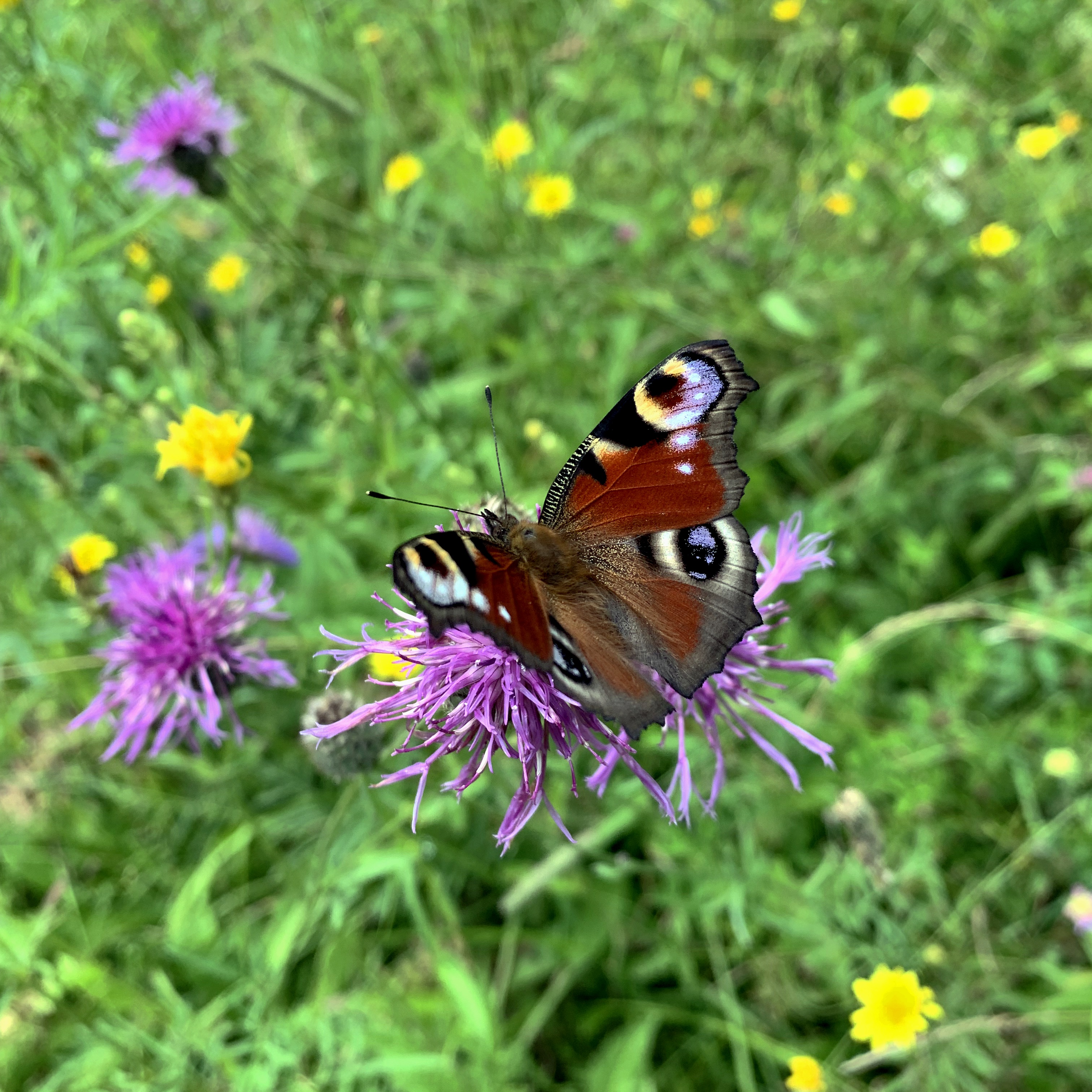
The Peacock Butterfly (Aglais io)
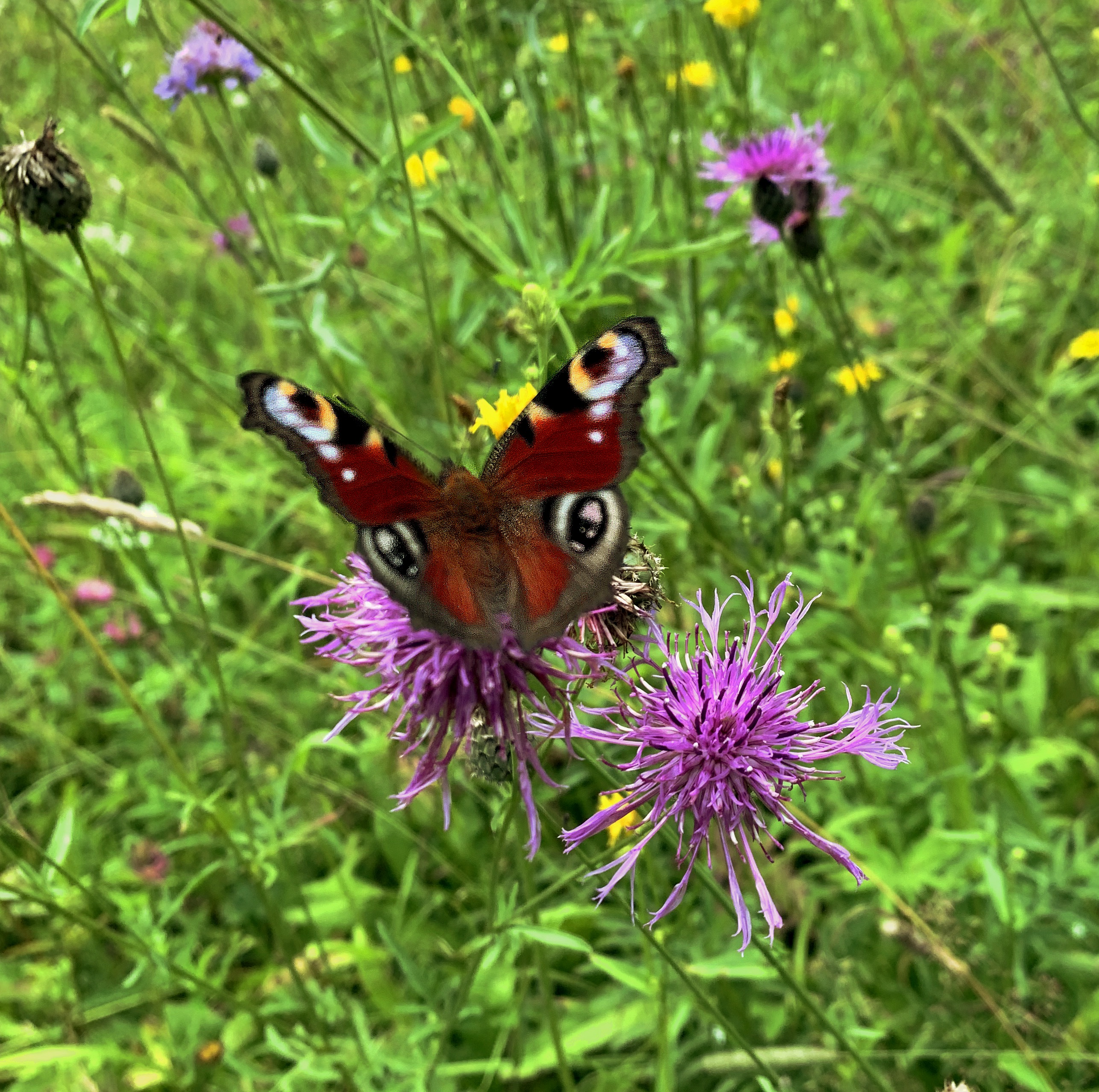
Last weekend there was some kind of mass flight of these butterflies in the clearing behind my house. The days were hot and sunny, and there were thunderstorms at night, so there was almost tropical humidity and heat during the day. Maybe that's why there were so many butterflies. But why did I only have an iPhone in my hands? The butterflies wouldn't let me get close and take photos. But still, I did a few.

What do I know about this butterfly?
The peacock butterfly is a diurnal butterfly from the Nymphalidae family. Its wingspan reaches up to 62 mm, with females usually slightly larger than males.
Appearance
The most striking feature of the peacock butterfly is the four large eyespots on the upper side of its wings — they have blue patches surrounded by black and yellow rings. These patterns resemble the eyes on a peacock’s tail feathers, which is how the butterfly got its common name. The main background colour of the wings is reddish‑brown or rusty red.
The underside of the wings looks completely different: it’s dark brown or black with wavy pale lines. When the butterfly closes its wings, this colouration helps it blend in with the surroundings and look like a dried leaf — a clever camouflage tactic.
It becomes very difficult to see a butterfly in this state.
Habitat
These butterflies are widespread throughout the European part of Russia, with the exception of the tundra and deserts. Prefers open, well-lit habitats such as meadows, wastelands, forest edges, gardens, parks and ravines.
Life Cycle and Behaviour
Flight period. Depending on the region, there can be one, two, or even three generations per year. The first flight is usually from late June to mid‑July, and the second from August to September. Butterflies from the second generation hibernate in sheltered spots (tree hollows, under bark, in crevices, or in attics) and can be seen again in early spring. Sometimes they even appear during winter thaws.
Diet. Adult butterflies feed on flower nectar (from plants like scabious, thyme, and burdock), tree sap, or overripe and rotting fruit. In autumn, they may eat decaying fruit to build up fat reserves before hibernation.
Reproduction. A female can lay up to 100–300 eggs, typically in clusters on the underside of nettle leaves. By the way, The Small Tortoiseshell butterflies do the same thing.
Caterpillar. The caterpillar is black with small white dots and rows of stiff, branched spines. Young caterpillars live together in a communal nest made of silken threads and woven leaves; from the second instar onward, they disperse and live individually. Their main food plants include nettle, hop, raspberry, willow, and occasionally hemp.
Pupa. The chrysalis is angular and hangs head‑down (on fences, walls, etc.). Its colour ranges from grey‑green to brown, often with a golden sheen and two rows of shiny golden spines. The pupal stage lasts about 1–2 weeks.
In summer, the topic of insects is of great interest — there are so many of them around us. In winter, we can only see indoor insects, if there are any in the house.
Oh, by the way, once in winter my friends and I came to their country house. The house wasn’t heated, and of course the temperature inside was almost the same as outside — about −30 °C. We started heating the stove, turned on the electric heaters, and after a few hours it became warm in the house. Oh, a miracle! The butterflies woke up and started flying around the room.
What am I talking about? Oh, yeah... I will continue with a similar topic; I still have a collection of insects.
Friends, thank you for reading my posts, leaving comments, and rating.