[Esp+Eng] Un mes después del terremoto: entre los escombros y la esperanza +++ One month after the earthquake: between the rubble and hope
(English version below).
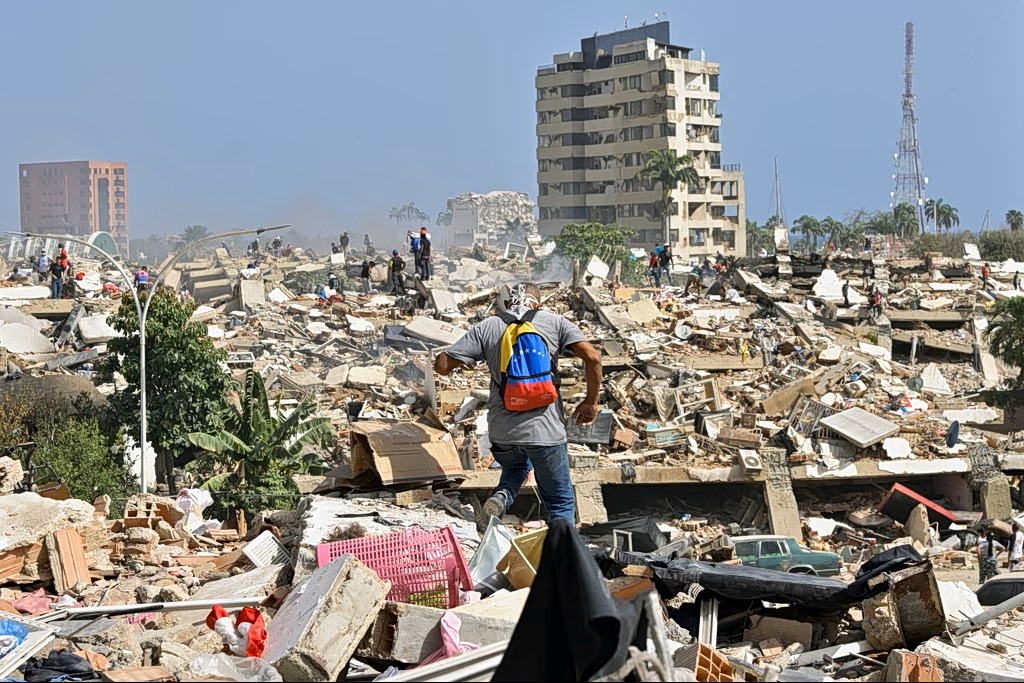
Ya cumplimos poco más de un mes del terremoto doble en Venezuela, el más fuerte y destructivo de los últimos 126 años, y las heridas que dejó el desastre siguen frescas, latiendo, dolientes. Parece que fue ayer cuando el suelo se nos movió debajo de los pies, cuando sentimos que el mundo —nuestro mundo concreto, el de la casa, el del trabajo, el de la rutina— se partía en dos en menos de un minuto. Y aunque han pasado treinta días, a veces siento que seguimos atrapados en ese mismo instante.
Los números duelen y hay que decirlos. Más de 5.000 personas han muerto. Cerca de 18.000 resultaron heridas. Hay miles de familias que perdieron su hogar y hoy duermen en refugios, en casas de familiares, o sencillamente en la calle, al lado de lo que quedó de su edificio. Casi 200 edificios colapsaron por completo y más de 800 quedaron con daños graves. Los análisis satelitales sugieren que la cifra real de estructuras afectadas podría acercarse a las 60.000. La ONU estima los daños en unos 37.000 millones de dólares. No son estadísticas. Son vidas, son historias, son pedazos de nosotros que ya no están 😞.
Pero aquí va la otra parte, la que también hay que contar.
La vida sigue su curso. No porque sea injusticia o indiferencia, sino porque así es la vida. No se detiene. No espera a que terminemos de llorar. Y nosotros, los que seguimos aquí, tenemos que encontrar la manera de caminar aunque nos duelan las piernas.
Hay gente que todavía no ha recuperado el cuerpo de un ser querido. Los equipos de rescate siguen trabajando entre los escombros, día tras día, con un respeto y una dedicación que no tengo palabras para describir. Mientras tanto, hay que seguir viviendo. Hay que volver a generar ingresos, porque las facturas no entienden de luto. Los comercios que se derrumbaron, los negocios que desaparecieron bajo el concreto, los empleos que se esfumaron en un temblor: todo eso hay que reconstruirlo, y no va a ser rápido. Muchos hogares simplemente no tenemos cómo reponerlos en el corto plazo, y eso es una realidad que nos toca mirar de frente, sin trampas ni falsas promesas.
Y sin embargo, en medio de todo esto, algo sigue encendido.
Lo veo en los voluntarios que salieron desde el primer día a ayudar sin que nadie les pidiera. En los ingenieros que se pusieron el casco y recorrieron calle por calle, edificio por edificio, revisando si era seguro volver a entrar. En la señora que cocinó para cien personas en un refugio. En los rescatistas que vinieron de más de treinta países a buscar vida entre las ruinas. En la Cruz Roja instalando hospitales de campaña. En los vecinos que se organizaron por WhatsApp para recolectar agua, comida, ropa, lo que fuera. En la gente que desde la diáspora no dejó de mirar hacia acá, hacia su gente, hacia su tierra 🤝.
Ese calor humano es lo que permite seguir adelante. No es una frase hecha ni un consuelo barato. Es lo que de verdad nos sostiene cuando todo lo demás se cae. La mano que te ayuda a levantar, el abrazo que no dice nada pero lo dice todo, el plato de comida que alguien te pone enfrente porque sabe que no has comido. Esas cosas pequeñas son las que mantienen encendida la esperanza cuando todo está oscuro.
Porque hay que buscarla, la esperanza. No llega sola. Hay que ir a buscarla, cavando entre los escombros materiales y los escombros del alma. Hay que procurarse un camino para sobrevivir, y no me refiero solo a comer y tener dónde dormir. Me refiero a sobrevivir mentalmente, espiritualmente. A no dejar que el miedo a las réplicas nos quite el sueño para siempre. A no permitir que el duelo nos consuma hasta apagarnos. A encontrarle sentido al día, aunque el día empiece con dolor.
Vamos a tener que acostumbrarnos a vivir con las cicatrices. Esas marcas que el terremoto nos dejó como país, como comunidad, como personas. Algunas cicatrices se ven: los edificios que ya no están, las calles rotas, los huecos donde antes había una casa. Otras no se ven pero duelen más: el vacío de quien ya no está, el trauma del que vivió el derrumbe por dentro, el miedo que se queda en el cuerpo como un temblor fantasma que no se va.
Pero las cicatrices también son prueba de que se sobrevivió. Y eso no es poco.
Venezuela va a renacer. No lo digo como un eslogan político ni como una frase para quedar bien. Lo digo porque lo he visto en la calle, lo he visto en la gente, lo he visto en los ojos de quienes perdieron todo y aun así están de pie, trabajando, ayudando, reconstruyendo. Hay brigadas de ingenieros evaluando miles de edificios con un sistema de semáforo para decirnos cuáles son seguros. Hay un plan de reconstrucción en marcha, con fondos internacionales que se están gestionando. Hay campamentos que se han vuelto comunidades. Hay niños que vuelven a jugar. Hay gente que vuelve a soñar.
Un mes después, seguimos heridos. Seguimos de luto. Seguimos con las manos raspadas de tanto remover escombros. Pero también seguimos aquí. Y mientras sigamos aquí, hay algo que hacer, hay alguien a quien ayudar, hay una razón para levantarse mañana.
El terremoto nos partió el suelo. Pero no nos partió el alma.
One Month After the Earthquake: Between the Rubble and Hope
It's been just over a month since the double earthquake in Venezuela, the strongest and most destructive in the last 126 years, and the wounds left by the disaster remain fresh, throbbing, and painful. It seems like only yesterday that the ground shifted beneath our feet, when we felt the world—our concrete world, the world of our homes, our work, our daily routines—split in two in less than a minute. And even though thirty days have passed, sometimes I feel we're still trapped in that same moment.
The numbers are painful, and they must be stated. More than 5,000 people have died. Nearly 18,000 were injured. Thousands of families lost their homes and are now sleeping in shelters, in relatives' houses, or simply on the street, next to what remains of their buildings. Almost 200 buildings collapsed completely, and more than 800 suffered serious damage. Satellite analysis suggests that the actual number of affected structures could be closer to 60,000. The UN estimates the damage at around $37 billion. These aren't statistics. These are lives, these are stories, these are pieces of ourselves that are gone 😞.
But here's the other side of the story, the one that also needs to be told.
Life goes on. Not because of injustice or indifference, but because that's just how life is. It doesn't stop. It doesn't wait for us to finish grieving. And we, those of us who are still here, have to find a way to keep going even though our legs ache.
There are people who still haven't recovered the body of a loved one. Rescue teams continue working among the rubble, day after day, with a respect and dedication that I can't even begin to describe. Meanwhile, we have to keep living. We have to start generating income again, because bills don't understand grief. The shops that collapsed, the businesses that disappeared under the concrete, the jobs that vanished in the earthquake: all of that has to be rebuilt, and it won't be quick. Many of us simply don't have the means to rebuild our homes in the short term, and that's a reality we have to face head-on, without any tricks or false promises.
And yet, in the midst of all this, something still burns bright.
I see it in the volunteers who came out to help from day one without being asked. In the engineers who put on their hard hats and went street by street, building by building, checking if it was safe to re-enter. In the woman who cooked for a hundred people in a shelter. There were rescuers who came from more than thirty countries to search for life among the ruins. The Red Cross is setting up field hospitals. The neighbors organized themselves via WhatsApp to collect water, food, clothing, whatever they could. In the people who, from the diaspora, never stopped looking back here, toward their people, toward their homeland 🤝.
That human warmth is what allows us to keep going. It's not just a platitude or cheap consolation. It's what truly sustains us when everything else falls apart. The hand that helps you up, the hug that says nothing but says everything, the plate of food someone places in front of you because they know you haven't eaten. These small things are what keep hope alive when everything is dark.
Because you have to look for it, hope. It doesn't come on its own. You have to go looking for it, digging through the material rubble and the rubble of the soul. You have to find a way to survive, and I'm not just talking about having food and a place to sleep. I'm talking about surviving mentally and spiritually. About not letting the fear of aftershocks steal our sleep forever. About not letting grief consume us until we're extinguished. About finding meaning in the day, even if the day begins with pain.
We're going to have to get used to living with the scars. Those marks that the earthquake left on us as a country, as a community, as individuals. Some scars are visible: the buildings that are no longer there, the broken streets, the holes where a house once stood. Others are unseen but hurt more: the emptiness of those who are no longer here, the trauma of those who experienced the collapse from within, the fear that lingers in the body like a phantom tremor that won't go away.
But the scars are also proof that they survived. And that is no small thing.
Venezuela will be reborn. I don't say this as a political slogan or a platitude. I say it because I have seen it in the streets, I have seen it in the people, and I have seen it in the eyes of those who lost everything and yet are still standing, working, helping, and rebuilding. There are teams of engineers evaluating thousands of buildings with a traffic light system to tell us which ones are safe. There is a reconstruction plan underway, with international funds being secured. There are camps that have become communities. There are children playing again. There are people dreaming again.
A month later, we are still wounded. We are still grieving. Our hands are still scraped from removing so much rubble. But we are still here. And as long as we are here, there is something to do, someone to help, a reason to get up tomorrow.
The earthquake shattered our earth. But it did not shatter our souls.
Las imágenes usadas pertenecen a sus respectivas fuentes, se ha procurado usar imágenes con licencia de uso público.
The images used belong to their respective sources; efforts have been made to use images with a public use license.
Buen análisis de la red. Me gustó que no te fuiste por las ramas y fuiste directo al punto.
0.00 SBD,
0.03 STEEM,
0.03 SP
Gracias, traté de ser lo más preciso que pude.
Tu post me hizo acordar una conversación que tuve con mi viejo hace años. Cosas que vuelven.
0.00 SBD,
0.03 STEEM,
0.03 SP
Es grato cuando algo nos lleva a un recuerdo que vale la pena recordar.
Comparto tu mirada. La fe no es tener respuestas, es confiar en medio de las preguntas. Bien dicho.
0.00 SBD,
0.03 STEEM,
0.03 SP
Gracias por comentar y aportar un aforismo bastante bueno.
Upvoted! Thank you for supporting witness @jswit.