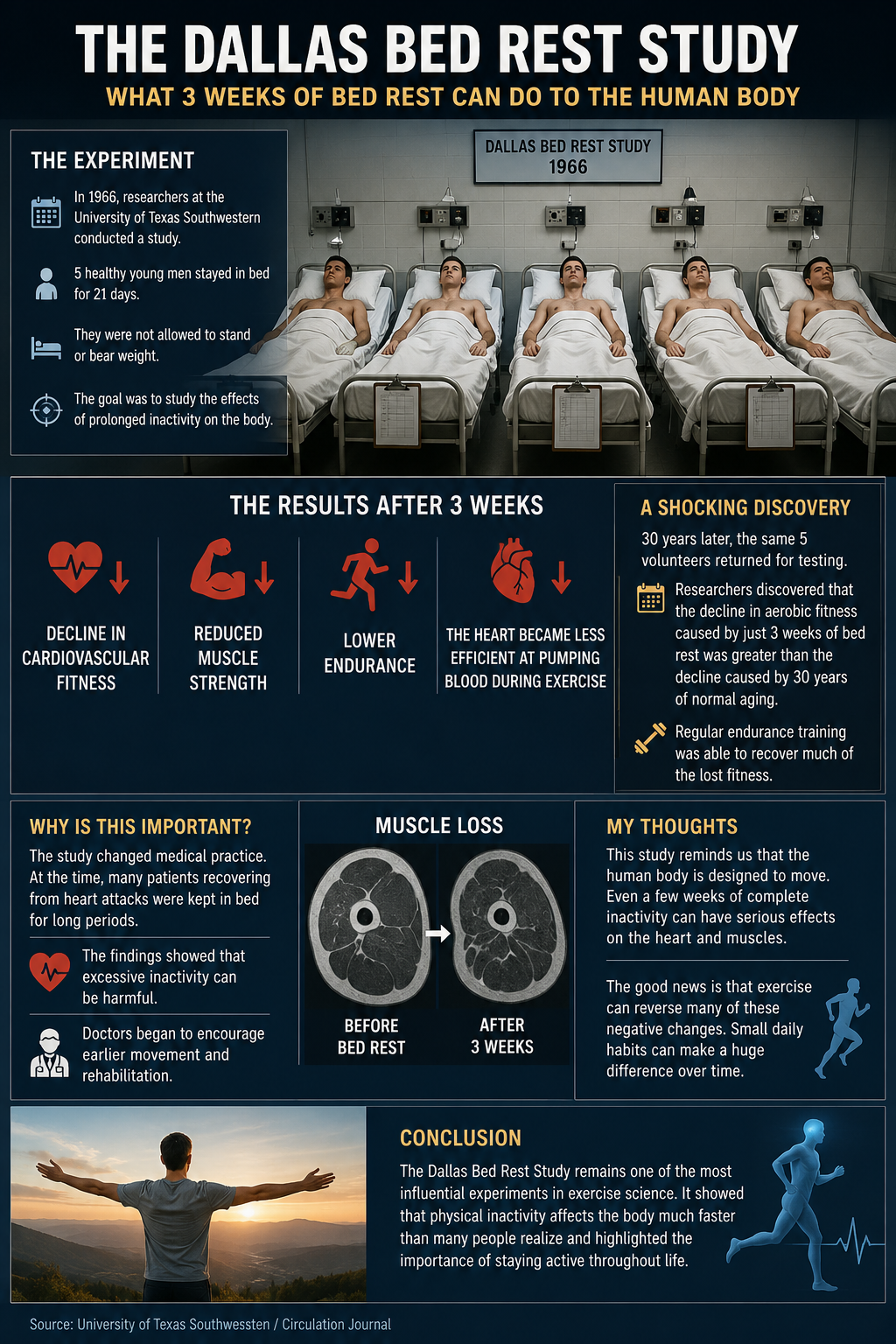
What 3 Weeks of Bed Rest Can Do to the Human Body: The Famous Dallas Bed Rest Study
What 3 Weeks of Bed Rest Can Do to the Human Body: The Famous Dallas Bed Rest Study
Imagine staying in bed for three weeks without standing, walking, or exercising. It may sound like a relaxing vacation, but one famous scientific experiment proved that the effects on the human body can be surprisingly severe.
The Experiment
In 1966, researchers at the University of Texas Southwestern conducted what became known as the Dallas Bed Rest Study.
Five healthy 20-year-old men volunteered to remain in bed for 21 consecutive days. They were not allowed to stand or bear weight during this period. The goal was to understand how prolonged inactivity affects the body, especially in preparation for future space missions. 0
The Results
After only three weeks, the volunteers experienced dramatic changes:
- A significant decline in cardiovascular fitness.
- Reduced muscle strength.
- Lower endurance.
- The heart became less efficient at pumping blood during exercise.
Researchers later found something even more surprising.
A Shocking Discovery
Thirty years later, the same five volunteers returned for follow-up testing.
The researchers discovered that the decline in aerobic fitness caused by just three weeks of bed rest was greater than the decline caused by 30 years of normal aging. Regular endurance training was able to recover much of the lost fitness. 1
Why Is This Important?
The study completely changed how doctors viewed prolonged bed rest.
At the time, many patients recovering from heart attacks were kept in bed for extended periods. The findings showed that excessive inactivity could itself be harmful, leading to changes in medical practice that encouraged earlier movement and rehabilitation. 2
My Thoughts
This study reminds us that the human body is designed to move. Even a few weeks of complete inactivity can have measurable effects on the heart and muscles.
Fortunately, the research also delivered a positive message: regular exercise can reverse many of these negative changes. Small daily habits such as walking, cycling, or strength training can make a huge difference over time.
Conclusion
The Dallas Bed Rest Study remains one of the most influential experiments in exercise science. It demonstrated that physical inactivity affects the body much faster than many people realize and highlighted the importance of staying active throughout life.
Source: University of Texas Southwestern / Circulation Journal