Alceo Dossena: Stonemason & Sculptor
Hello, this is my first submission here. I just joined today.
Like, dislike, vote and comment if you want to.
Alceo Dossena
He was a young man of limited means who traveled throughout Italy working as a stonemason and sculptor, restoring churches and ancient buildings.
This way of earning a living led him to consider imitating the medieval and Renaissance styles of the statues and bas-reliefs he worked on, so he began taking notes and creating sketches. His coworkers praised him for how well his drawings looked on paper and how skillfully he carved both his own and others' works.
Once he felt more confident in his work, he began copying styles from other periods, such as Classical, Ancient Egyptian, and Baroque.
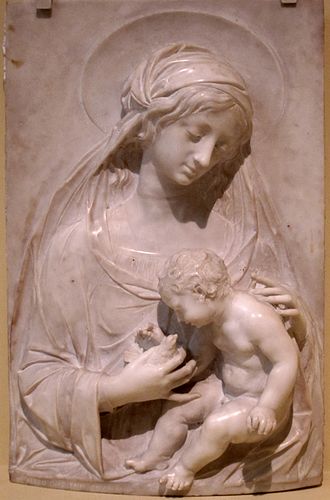
Dossena didn't copy specific sculptors, but rather adopted their style or that of a historical period of interest to him, and then created his own works. He became so adept at imitating the great masters that it was difficult to distinguish his work from the originals.
The Con Artists
His fame grew to such an extent that in 1916, two art dealers named Fasoli and Palese approached his studio and commissioned him to create imitations of established artists, offering him a substantial payment. They told him they would sell them as copies of originals in the decorative arts market.
Seeing that this would allow him to dedicate himself exclusively to what he loved most, Dossena accepted the offer. As part of his work, he aged the finished pieces and added the signature of the artist he was imitating.
Fasoli and Palese sold Dossena's copies and imitations as if they were genuine and kept the lion's share of the profits. The two con artists swindled not only unsuspecting millionaires but also major museums, intermediaries, and expert consultants who inspected each piece before closing deals.
Within two or three years, Dossena's imitations were being exhibited as originals in museums across Europe, the United States, and Canada.
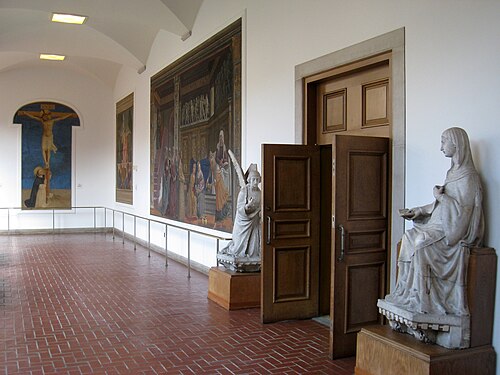
Dossena´s Angels at Pittsburgh University
The Scandal
Fasoli and Palese were earning large sums of money and living the high life, while Dossena was spending what little he had left due to his wife's illness.
A friend who had traveled to the United States warned him that he could go to jail and was selling his works as originals. Dossena explained that his business was making imitations and selling them as such. The friend showed him the catalogs of the museums he had visited during his trip, and among the exhibited pieces were his own.
Dossena was outraged by the fraud and in 1929 hired a lawyer to take Fasoli and Palese to court. They initially denied everything, but Dossena presented evidence consisting of sketches and photographs of works in progress. Unable to refute this, the swindlers tried to implicate the sculptor in the crime of financial fraud. Dossena brought out the accounting records of his workshop, detailing both his expenses for maintenance and materials, as well as the amount paid by Fasoli and Palese for each completed work.
It is unknown how much money they made from their scams, but the judge ruled that they had to pay Dossena fifty thousand euros in compensation. The sculptor was acquitted.
A list was compiled of Dossena's works that had been sold to collections and museums, which alarmed these institutions and prompted them to search their catalogs to verify their authenticity. It could not be definitively proven which works were by Dossena and which were genuine. Some museums kept the forgeries because they found them beautiful and worthy of a place in their collections.
Dossena's acquaintances and neighbors continued to dislike him because of his involvement in the scams, and he lived in solitude, subsisting on what little money he had left, until his death in 1937.
.-.-.-.-.-.-.-.-.-.-.-.-.-.-.-.-.-.-.-.-.-.-.-.-.-.-.-.-.-.-.-.-.-.-.-.-.-.-.-.-.-.-.-.-.-.-.-.-.-.-.
.-.-.-.-.-.-.-.-.-.-.-.-.-.-.-.-.-.-.-.-.-.-.-.-.-.-.-.-.-.-.-.
.-.-.-.-.-.-.-.-.-.-.-.-.-.-.-.-.-.