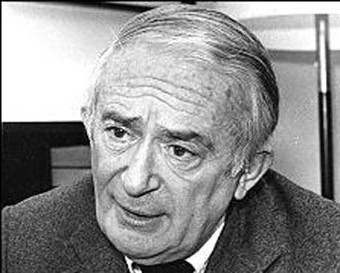
Elmyr de Hory
Hello, everyone.
Here is another article of art forgery. We are back in Europe.
Elmyr de Hory
Creative Poverty or Criminal Leisure
He received his professional training at the Heinmann Academy and two years later moved to Paris.
During his twenties, he enjoyed a comfortable life, meeting other artists and poets, and maintaining contact with important people thanks to his parents. His luck began to run out when he met an English journalist who suspected him of being a spy. The two ended up in a prison in Transylvania until around 1939, when Elmyr was released, only to enjoy a very brief period of freedom.
The Nazis invaded Hungary and sent him to a concentration camp for being Jewish and homosexual. In the camp he was subjected to physical and psychological torture that resulted in him being hospitalized in a prisoner's hospital.
On a day visit, Elmyr changed into his own clothes and left as if nothing had happened. He returned to Budapest on his own and learned that his parents had been taken to extermination camps and that all his property had been confiscated. Penniless, he arrived in Paris and eked out a living painting pictures with meager results. To pass the time, he made imitations of famous painters, and when he saw that these paintings sold quite well, he decided to dedicate himself to forgery.
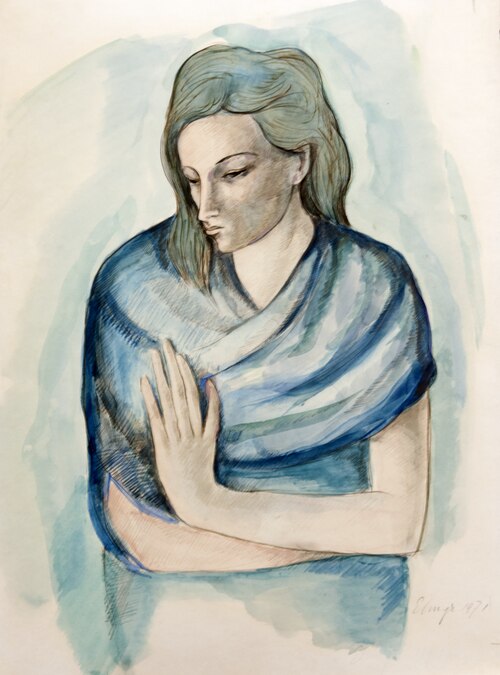
Picasso Imitator
At that time, Pablo Picasso was a painter known for sketching any subject that caught his eye in a short amount of time and always having paper and pencil at hand. Elmyr de Hory was good at making imitations of his sketches and finished works, which were bought by collectors and gallery owners for three hundred euros. Around that time, Elmyr met an art dealer named Jules Chamberlain, who helped him distribute his work, and they began a romantic relationship. Years later, Elmyr discovered that Chamberlain was cheating on him both emotionally and financially.
Some time later, Elmyr settled in Hollywood and invented a noble title. He spoke with a Hollywood accent and claimed that his parents owned mansions and, among them, a collection of expensive paintings and sculptures, from which he obtained the pieces he sold.
It all came to an end when he sold a couple of Modigliani paintings to an expert gallery owner who studied them thoroughly and returned them, threatening to sue him.
Elmyr sought refuge in New York to recover from his ordeal in California. To regain some of his self-esteem, he painted his own works and tried to sell them, but without much success. He traveled to Florida and resumed selling copies and imitations by mail under a pseudonym.
Money began pouring into his account again in large sums, and he was able to return to his former comfortable life. A couple of art dealers, Fernand Legros and Real Lessard, like Chamberlain, sold his works at inflated prices and kept most of the profits, while the forger lived modestly on the meager income they sent him.
The Forger in Trouble
1955 was a bad year for de Hory. He had sold some paintings to a Chicago art dealer who had no trouble noticing they were forgeries. Upon receiving a lawsuit by phone and mail, de Hory fled to Mexico, where he also got into trouble at a gay bar in which a young British man died. The police demanded a bribe in exchange for a quicker release. The judge who handled his case dismissed him as a suspect and let him go.
After this, he returned to Rome and dedicated himself to producing his own work, which brought him a certain degree of fame. Although this boosted his self-esteem, it wasn't enough to live comfortably. Fernand Legros, his agent and swindler, reappeared in his life, and together they resumed selling forged paintings. In less than a month, the two had amassed a considerable portfolio.
Lesard and Legros were arrested and tried for fraud and forging signatures on checks, but not for art trafficking, as there were many legal loopholes regarding art fraud at that time.
Eventually, the authorities tracked down de Hory, who spent little time in prison, and only for homosexual conduct.
On December 11, 1976, he was found dead in his home in Ibiza. His forged works were sold as if they were genuine, and some of them fetched higher prices than the originals.
See You Later