Han van Meegeren: The Flemish Imitator
Hello, dear Incredible India people.
Here is a second submission of art scammers and imitators. I hope you like this one too.
Han van Meegeren: The Flemish Imitator
Born on October 10, 1889, the third child of a Catholic couple, Henricus Antonius, better known as Han van Meegeren, was born into a family of three.
From childhood, van Meegeren displayed a talent for art and painting, skills encouraged by his mother but rejected by his father, who considered art a useless profession and hoped his son would achieve more. Seeing that his third son refused to give up drawing, he negotiated with him, suggesting he at least study architecture, which he deemed more respectable.
When van Meegeren turned 18, he went to Delft to study architecture while also attending the School of Arts. He completed all his architecture courses and failed the final exam twice, which frustrated him. Resigned to not obtaining an architecture degree, he transferred to the School of Arts. His father was irritated, but at least van Meegeren was happy.
First years
The young painter held his first exhibition in the spring of 1917. Critics disliked his "old-fashioned" style, but he did sell a few pieces. With the proceeds, he bought a studio overlooking the gardens of the Royal Palace and made drawings of the domesticated roe deer belonging to Princess Juliana. His subsequent paintings were well-received by the general public for their rural themes, but critics panned them, labeling the painter mediocre. To supplement his income, van Meegeen painted portraits for tourists vacationing on the French Riviera.
By 1925, he was already a well-known artist, but critics continued to reproach him for his resemblance to the great masters of the 17th century, calling him an imitator and lacking in creativity. At that time, Cubism and Surrealism were dominating the art world. Fed up with the negative reviews, van Meegeen had the ill-advised idea of criticizing his detractors in the local newspapers, calling them snobs and ignorant. Since the critics had the final say, they rejected his paintings even more.
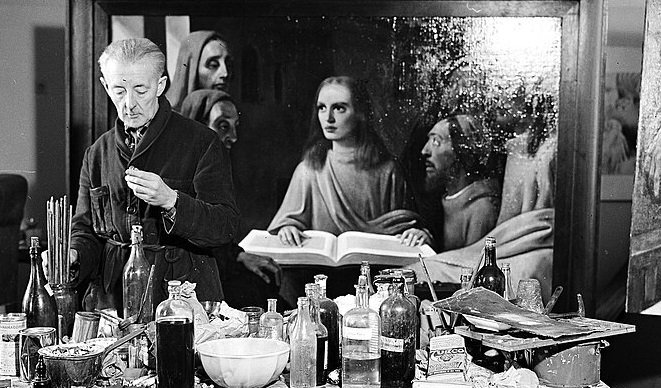
Wikipedia
From 1930 onwards, van Meegeren disappeared from the art scene and decided to make a mockery of the criticism he'd received: if they said he painted like the Masters of old, that's what he'd give them.
He shut himself away in his studio and began studying painters who had already passed away, researching their techniques for applying and mixing paint, palette knives and brushes like the ones they used, and buying antique white canvases. His first work from that period was Man and Woman with a Spinet, an imitation of The Music Lesson by Johannes van der Meer. He hadn't wanted to sell it because he considered it too crude, but a banker bought it as if it were an authentic work.
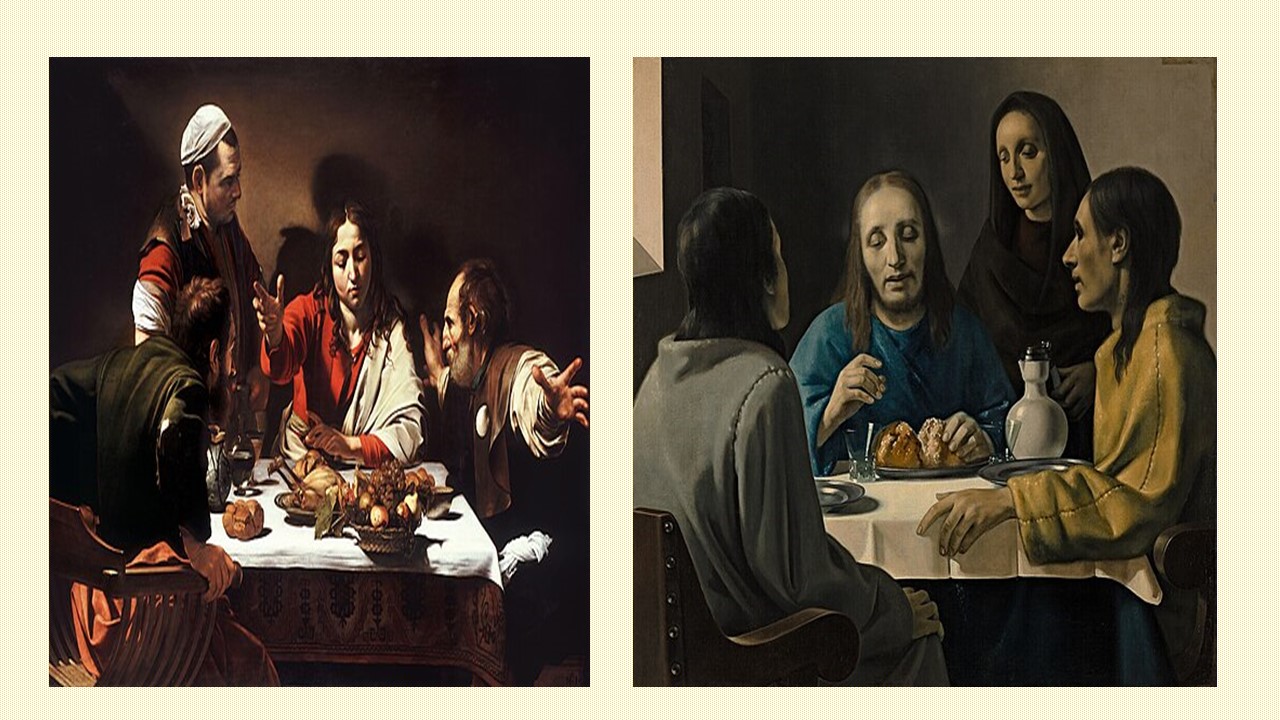
Vermeer´s Emaus Supper & Meegeren´s Emaus Supper
World war Two
Han van Meegeren continued his frauds throughout the war, which lasted from September 1939 to August 1945. Because the conflict devastated the economy, the only people able to buy expensive art without going hungry were the Nazis. To support himself during those seven years, van Meegeren sold several pieces to the invaders through Alois Niedl, an art dealer and intermediary who used counterfeit money.
The Netherlands was one of the nations invaded and destroyed by Nazi Germany, and when the war ended, people wanted the artworks stolen by the military back. When the pieces were recovered, the purchase receipts were reviewed and led back to van Meegeren, who was arrested and tried for treason for selling the artworks to the enemy.
The painter tried to get out of it by alluding to a fake Italian art dealer who had given him the works and, seeing that he was going to be given the death penalty for trading with Italy and Germany, two enemies of the Netherlands at that time, va Meegeren confessed that there was never any such Italian art dealer, but that he himself made the copies.
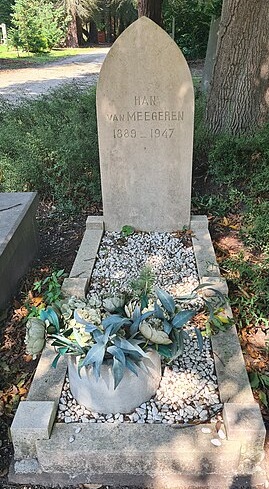
The officers initially didn't believe him, thinking he wanted to lessen the severity of his punishment. The judge in charge of his case ordered him to make one of his famous copies as proof that he was telling the truth.
Between July and September 1945, van Meegeren was allowed to paint his last Vermeer-esque painting, Jesus Among the Doctors, in his cell under the supervision of six witnesses: an art expert, a photographer, three officers, and the prison guard. Upon seeing the final result, his death sentence was commuted, but he still faced charges of fraud and forgery.
People initially considered him a traitor and hated him, but upon seeing that he had deceived the Nazis, they hailed him as a national hero and paid tribute to him at his funeral.
Thanks for reading til the end.