Battery Powered Electric Vehicles Are NOT the Future
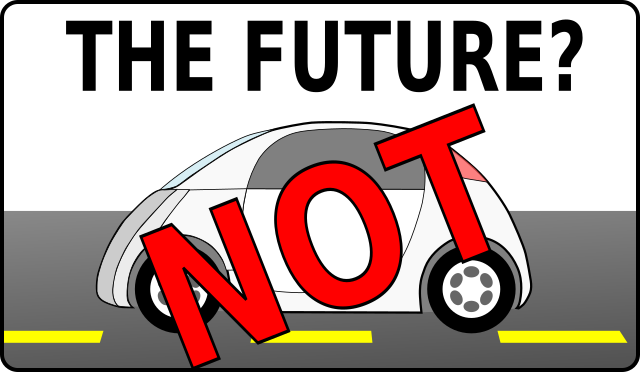
Politicians push for EV adoption, believing they will be seen as "helping the environment"
Young kids are indoctrinated to believe that we are all going to die if we continue to burn "fossil fuels". And then these kids go and play in freeways.
Many countries and states are making it harder to produce and sell ICE vehicles. Kommifornia is trying to go all electric by 2030.
And, any honest analysis will tell you that battery powered electric vehicles are not viable.
Soooo, why the push?

The failure of batteries
If you do not know Chinese made LiIon battery powered vehicles are bursting into flames every day!
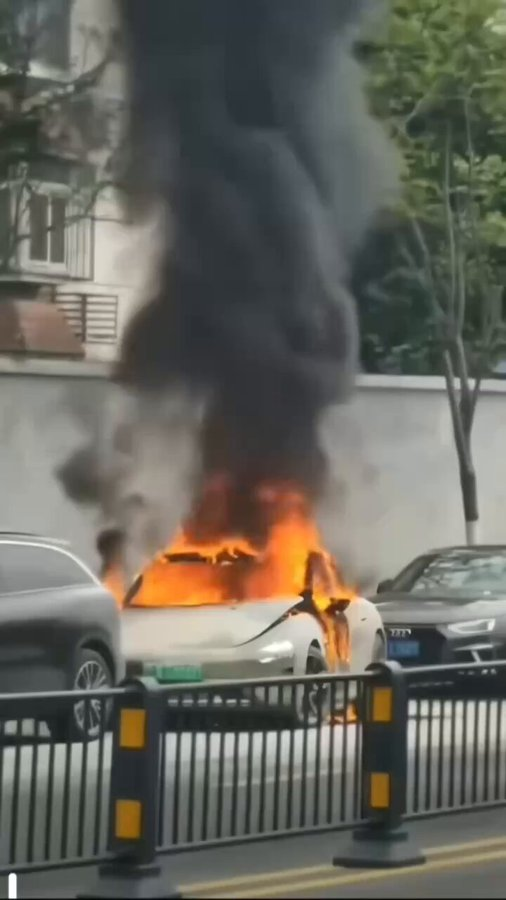
Follow Serpentza for more fiery news.
This is common only because China cheaps out on safety protocols when building a battery pack. However, it can happen to any Lithium Ion battery, even the best from Tesla. So, although we do not have an electric car burst into flames every day, we do have fires. And it happens so often in containers, on the ocean, that ships are threatening to not carry them across the ocean, ever.
But, most people will say that they will make better batteries soon. And it might happen. There is LiFePO4, as an example.
However, engineering will never solve the next two problems. Charging and crashes.
Musk was telling the world that Tesla's electric big rigs would be chargeable in minutes. The power that would need to flow through the cables would require people in thick rubber suits to connect them, then hide behind insulated bunkers, while the truck charged.
Sure, we could get faster charging times, however, the cables can only pass so much current and we are pretty close to the edge where normal people can handle them. Next step, people in insulated suits with 10 foot long fiberglass poles.
And, the thing we haven't seen much reporting on is that a battery powered electric vehicle can mean instant death to a first responder or tow truck driver. Yes, the Tesla engineers have tried to minimize this by testing the cable from both ends via computer modules, but there is a battery, with a lot of KVs in it. Enough to kill any person who accidentally touched both terminals. And, accidents happen.
When we find better battery technology, the problem with accidents becomes bigger. It stores more power, so the EV can go farther between charges… is the same as saying this box is MORE dangerous, and it will take less accident to kill someone.
Not enough electric generation
Kommifornia is almost demanding that everyone switch to all electric. However, during the last electric demand peak, the California govern-cement announced that people should not charge their EVs.
The grid cannot handle the extra electricity that will be needed to charge EVs, if more than a small percentage of people have them.
Further, there isn't enough coal mining / oil that can be gotten to electric power plants. The trains and trucks are almost at capacity. In order to increase electric production for EV charging, we will need to increase mining/drilling, as well as expand the railroad infrastructure.
And the electric companies are not increasing production capabilities. Even though they need it to provide for air conditioning in the summer. Environmental regulations make it too costly, and almost impossible to build new power plants.
There isn't enough rare earths
We do not mine enough copper to build everyone an EV.
We do not mine enough cobalt or lithium or … to build all those new EVs. And so, they won't get built, even if govern-cement issued orders saying you will build the EVs. We can't use what we don't have.
And, as Peter Zeihan says, the fastest we could scale up production of mining these minerals is 10 years. And that is putting everything we have into getting those minerals. Ignoring everything else. Putting all our attention into making EVs.
The idea of converting all vehicles to battery powered EVs is something that will take decades. We can slowly make them, and that is the best we can do.
And this doesn't address the large percentage of EV owners who say that their next car will be ICE.
So, battery powered electric vehicles have huge hurdles to overcome in order to make one for everybody.
Maybe the politicians, and the WEF who controls them, want an EV mandate so that only the rich can drive.
An ICE vehicle is far more likely to burst into flames than an electric vehicle so this doesn't seem like a very good argument in general. Though it's true for shipping purposes the gas tank can be empty.
You can add 200 miles of range in 15 minutes using a supercharger with a Tesla. While slower than filling up your gas tank the difference is not extreme. At home, with a 240v outlet you can go from 20% to 80% overnight.
Whether an ICE or electric vehicle is better really depends on your use case. If most of your driving is less than the range of an electric vehicle than it seems like it could be a better choice. If not, then ICE vehicles still have an advantage.
Our family has two cars, both are ICE currently. When purchasing our last vehicle a few years ago, I considered electric. At the time there still seemed to be too much of a price premium to make it worth it. That does seem to be changing though.
Another alternative is of course a hybrid vehicle
As far as electricity production, there are no technical reasons we can't produce a lot more. Nuclear is an option, solar is an option, wind is an option, natural gas and coal are options. Obviously some of these face more regulatory hurdles than others but ultimately, politicians will have to make a decision about what is more important.
Transportation capacity is always increasing so I don't see this as a major long term concern.
I don't expect electric to replace ICE any time in the near future, I do expect the percentage of electric to continue to gradually increase over time though.
If we are talking about in America, ICE fires are rare and LiIon fires are rare. However, ICE fires are easy to put out, and LiIon they just have to control the burn.
In China they are daily! And they are VERY fast. You have a couple of seconds to get out from the time you smell the hint of smoke.
ICE fire has 12 gallons of gas, tops. Usually burns itself out. And rarely sets even the car next to in on fire.
LiIon fire is VERY hot, and has burned down burned down concrete parking structures and all the cars inside it. (chain reaction of one burning LiIon, starting another)
Transportation capacity is actually shrinking. No one wants to put the money into expansion. Its a losing proposition. Money that will take two decades to recover.
Instead, everyone is pushing the buck. Adverts about turning off electrical appliances. Energy companies paying people to get rid of their old appliances. Adverts to ride share or take the bus. Because it is REALLY expensive to add a little more to the system.
My SUV holds 30 gallons, not 12 gallons and in the U.S. at least, SUVs (and trucks which also have large gas tanks) are VERY common.
The China problem sounds like a quality control issue, not specific to the tech.
It's true that Lithium Ion battery fires are harder to deal with but this can be mitigated by having the appropriate suppression material.
I'm not sure how transportation capacity can possibly be decreasing. Again, speaking form a U.S. perspective, there are always new roads being built or existing ones being expanded. New railways being built, more and newer airliners being built, etc. As far as oil production, the U.S. is setting new records.
As far as electricity production, while it has not kept up with demand, it does continue to increase with recent years having the highest production levels. It's true that coal and petroleum capacity specifically has reduced, but solar and natural gas have increased more than making up for that. A record 4,430 terawatt-hours was produced in 2025. Again, this is speaking of from a U.S. perspective. I'm not as familiar with what is going on in Europe, China, etc.
As far as i know, there is none.
LiIon once started, will burn, even underwater.
And yes, it is because of cheap Chinese quality, but these batteries do not have much tolerance. Large LiIon batteries will always catch on fire. It is why the Tesla has hundreds of little batteries.
And this is just the battery, we haven't talked much about the deadly electrical shock potential.