SC-S31/W5-Movie Magic | Movies About Love Beyond Romance — My Sister's Keeper
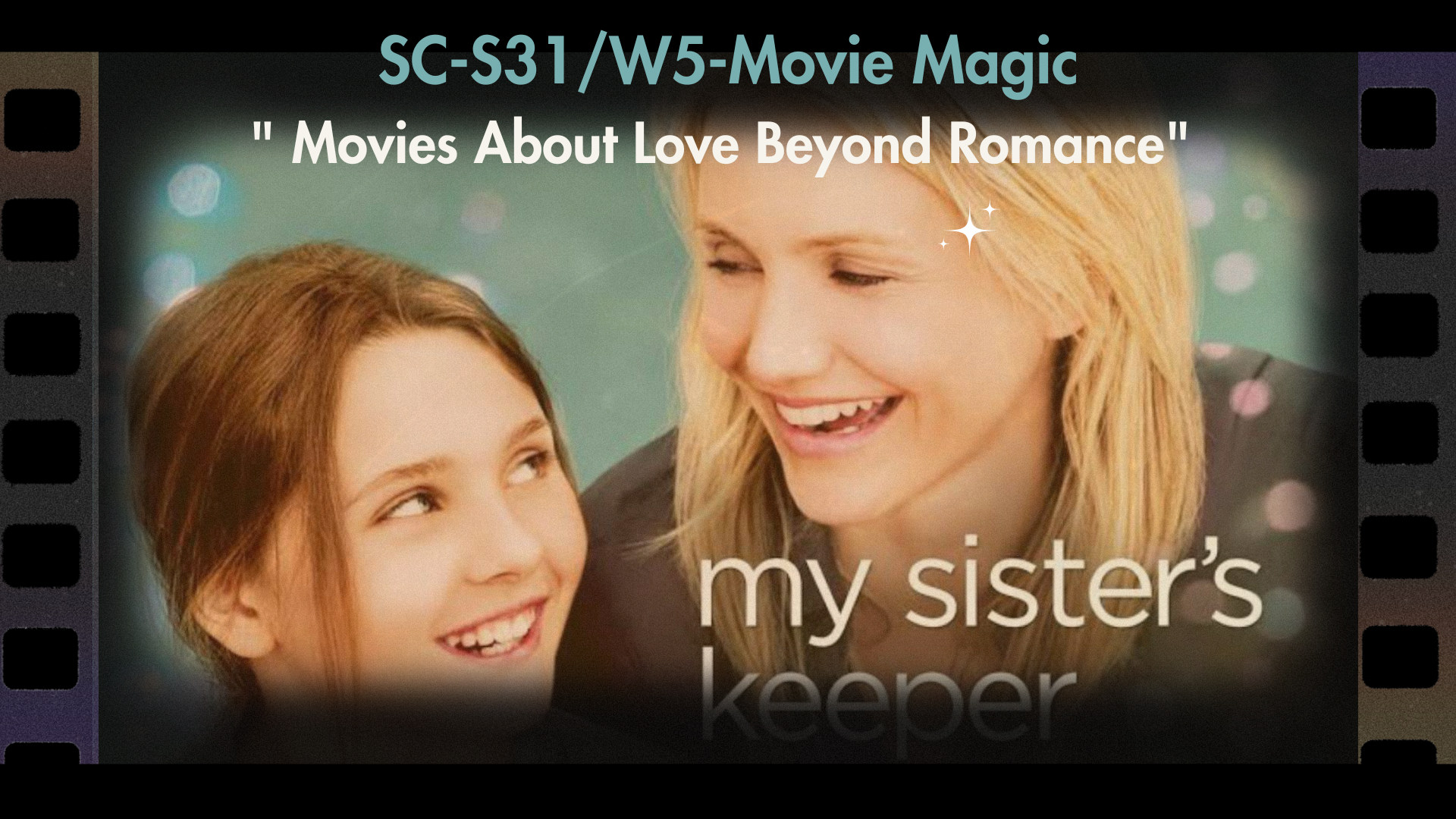
Edited by Canva
Hello Movie Lovers!
Week 5 of Movie Magic arrives with a theme that cuts straight to the heart: love beyond romance. And I want to bring a film that took me completely apart the first time I watched it and put me back together differently.
The film I chose is My Sister's Keeper (2009), directed by Nick Cassavetes, based on the bestselling novel by Jodi Picoult.
About the Film
| Director | Nick Cassavetes |
| Country | United States |
| Year | 2009 |
| Language | English |
| Runtime | 109 minutes |
| Based on | Novel by Jodi Picoult (2004) |
| Cast | Cameron Diaz, Abigail Breslin, Sofia Vassilieva, Jason Patric |
My Sister's Keeper tells the story of the Fitzgerald family, shattered and rebuilt around one central reality: their eldest daughter Kate has leukemia. When Kate was two years old, her parents Sara and Brian made a decision that would define everything that followed, they conceived another child, Anna, specifically engineered through genetic selection to be a perfect biological match for Kate. Anna has been donating blood, stem cells, and bone marrow to her sister her entire life.
Now Anna is eleven years old. Her parents want her to donate a kidney. And Anna for reasons the film slowly, painfully reveals hires a lawyer and sues her parents for medical emancipation. The right to decide what happens to her own body.
What follows is not a courtroom drama. It is one of the most devastating examinations of what love costs and what it asks of the people who carry it.
What Type of Love Was Most Powerful in the Movie?
The film is full of love. A mother who refuses to accept that her daughter will die. A father who quietly holds everyone together while he is breaking. A brother who disappears into anger because no one notices him. Two sisters who share something so deep it has no name.
But the love that shook me most profoundly was the love between the two sisters Kate and Anna.
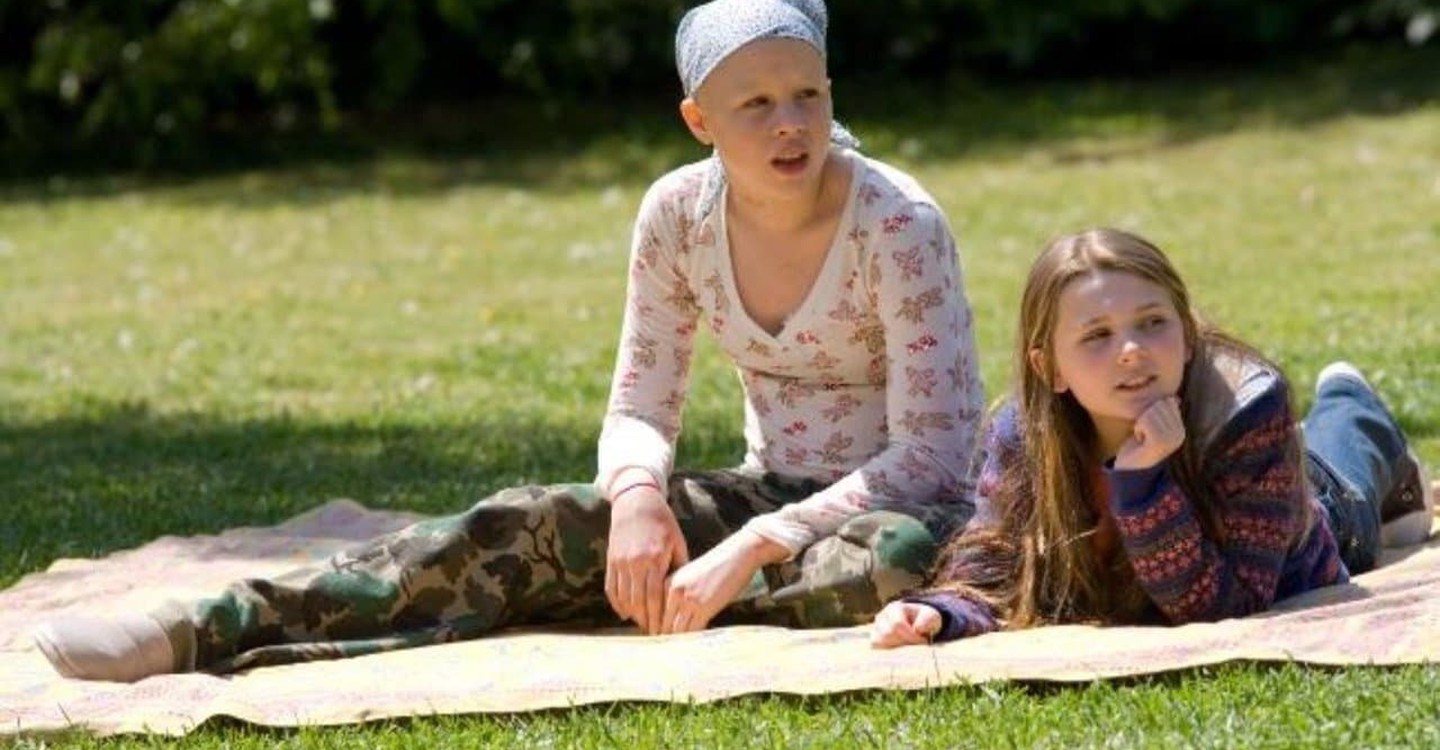
Because here is the truth the film withholds until the very end, the truth that makes everything more painful in retrospect: Anna is not filing the lawsuit for herself. She is filing it for Kate. Kate, who is exhausted. Kate, who has decided she is ready to stop fighting. Kate, who cannot bear to watch her little sister be dismantled piece by piece for a battle she no longer wants to fight but who cannot say so to her mother without destroying her.
So Anna says it for her. With a lawsuit. In a courtroom. At eleven years old.
Source
That act of love a child choosing to become the villain in her own family's story so that her dying sister can finally rest is the most selfless thing I have ever seen depicted in a film. It is love that requires no recognition. Love that will never be publicly credited. Love that looks, to everyone watching, like selfishness.
"I want to be a person. I want the right to make decisions about my own body. I want to be able to say yes or no."
— Anna Fitzgerald
She is not talking about herself. And that is the whole film.
Is This Kind of Love Realistic Today?
Yes. And it is more common than we ever discuss.
Every family that has a chronically ill child knows this silent war. The siblings who grow up in the shadow of a sick brother or sister. The ones who learn early to make themselves small, to ask for less, to celebrate quietly so as not to draw attention away from the one who needs it most. The ones who love deeply and invisibly, whose sacrifices are never named because they never had the language for them.
The film also asks a question that is urgently relevant in medicine today: where does parental love end and a child's autonomy begin? With advances in genetic medicine, designer babies, and organ compatibility technology, the ethical question Anna raises was I born to save someone else, or was I born for myself? is no longer science fiction. It is a debate happening in hospitals and bioethics committees right now.
What makes the film realistic is not its drama. It is its honesty about how love can trap people. Sara loves Kate so much that she cannot see what she is doing to Anna. Kate loves her family so much that she cannot ask to be released. Anna loves Kate so much that she is willing to be hated for her.
Every character is imprisoned by their love. And that is exactly how it works in real families, in real life, every single day.
What Did the Movie Teach Me About Love?
Love and control are not the same thing even when they feel identical.
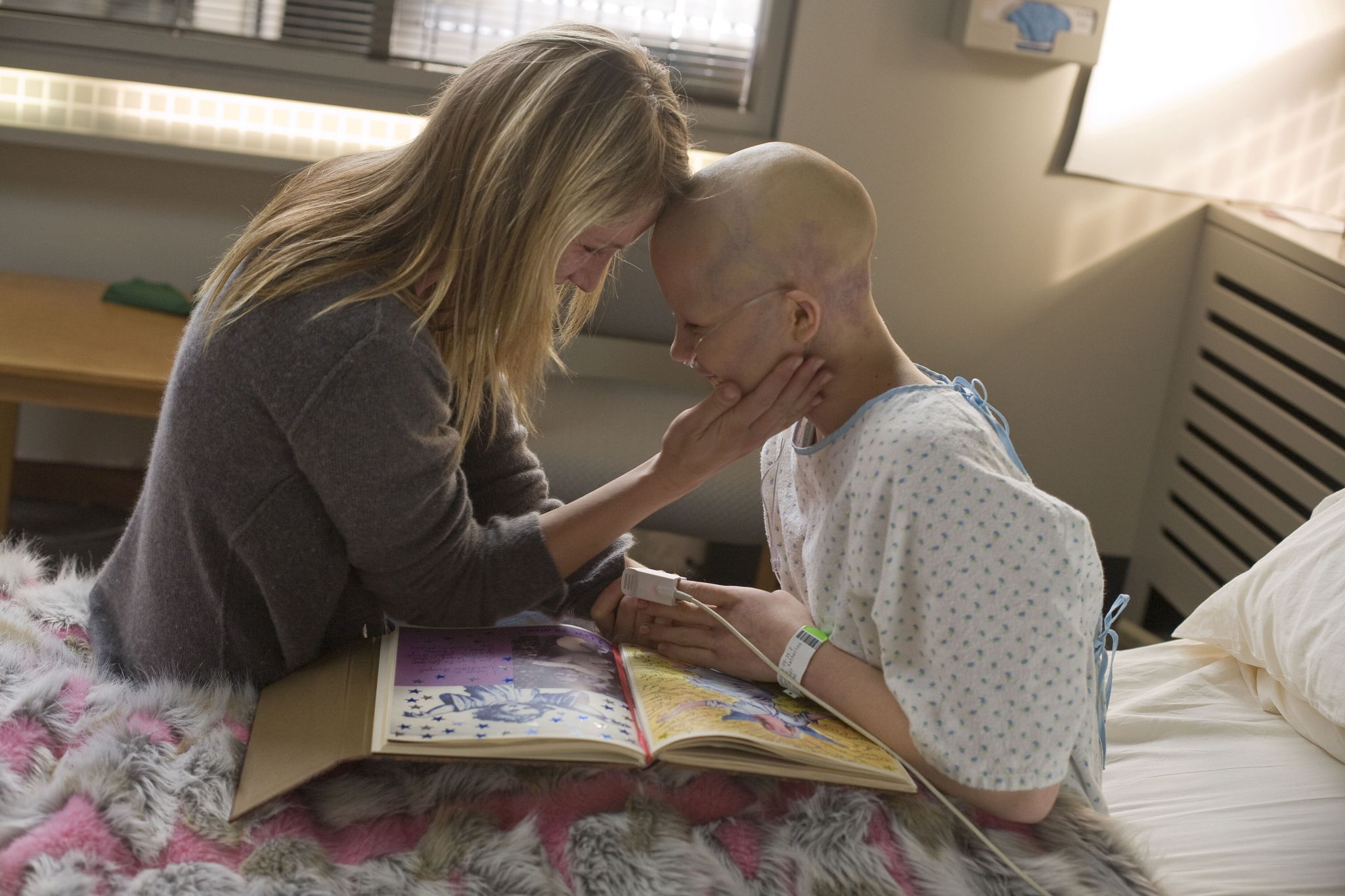
Sara Fitzgerald is not a monster. She is a mother who looked at her dying child and decided she would do anything. And she did. She dismantled her career, her marriage, her relationship with her other children, and her capacity for grief all in service of keeping Kate alive. That is love. Enormous, consuming, real love.
Source
But the film asks gently and then less gently: at what point does "I will do anything for you" become "I will not hear what you are telling me"? Sara loves Kate, but she cannot listen to Kate. Because listening to Kate would mean accepting something she has made the whole architecture of her life around refusing.
That taught me that the hardest part of loving someone is not the sacrifice. It is the listening. Especially when what they need to say is something you cannot bear to hear.
The second thing the film taught me: the people who sacrifice most quietly are often the ones no one thinks to protect.
Anna has given parts of her body to her sister since before she could understand what that meant. And yet in this family, in this crisis, she is the one who had to hire a lawyer to be seen. The film made me think of all the people in our lives the quiet ones, the functional ones, the ones who seem fine who are giving pieces of themselves in ways no one is counting.
And the third thing, the one I think about most: love sometimes looks like letting go.
Kate's love for Anna is the love of someone who says: you have given enough. I release you. Live your life fully, even if it means I leave mine. That kind of love the love that chooses the other person's freedom over its own continuation is the rarest and most beautiful thing a human being can do.
Final Thoughts
My Sister's Keeper is a film that will break you. There is no way around that. The ending arrives like a wave you did not see coming, and it changes the meaning of everything you watched before it.
But what stays with you is not the grief. It is the grace. The way these flawed, exhausted, fiercely loving people chose each other again and again, even when it cost them everything.
This film does not tell you that love conquers all. It tells you something more honest and more valuable: that love is the reason we fight, the reason we let go, and the reason we find a way to keep living even after the unbearable happens.
If you are ready to feel something real, watch this film. And hold the people you love a little closer afterward.
Trailer:

Comment
Welcome to Steemit challenge season 31| movie Magic week5
Good selection of movie! Sounds interesting, I will check it out.
Good interpretation of the task given.
Exactly! love is the reason we fight, the reason we let go, and the reason we find a way to keep living even after the unbearable happens.
Saludos amigo espero estes bien, esta película sin duda llega a conmover porque tiene un tema bastante difícil y es que como padres nunca se esta preparado para ver a un hijo luchar contra una enfermedad y buscamos las mil alternativas posibles, entiendo a esa mamá pero me pongo en el lugar de la hija tambien al querer dejar de luchar por tanto agotamiento fisico y mental, lo que si puedo ver es habia amor de parte de toda esa familia solo que la situación no los hacia ver con claridad las cosas.
Congratulations, your comment has been upvoted by the Steemcurator03 team. Keep up the valuable comments.
Curated By: ruthjoe
My X link:
https://x.com/BBouchamia40189/status/2055693293342630228
Upvoted! Thank you for supporting witness @jswit.