Mango trees select their best fruit to survive
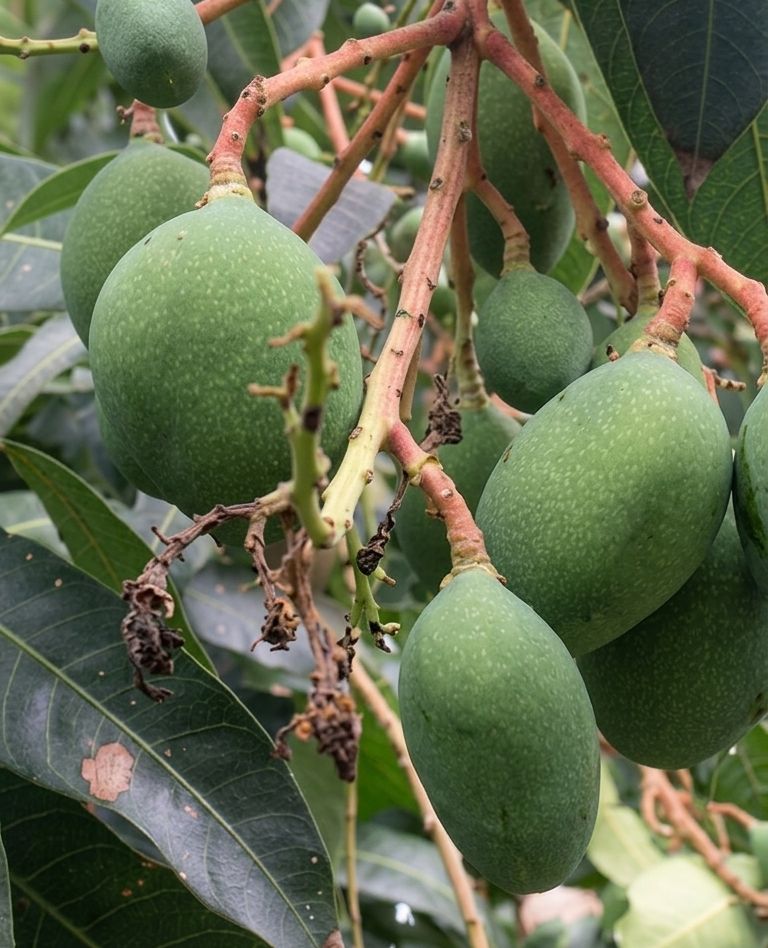
When a mango tree stops blooming because the flowering season is over, many small green mango fruits appear on the tree. They hang close to each other in clusters on each branch.
This sight can easily fool you to think and believe that that mango tree will have an enormous harvest.
On each branch though, the tree itself has to make a difficult decision and it's a management decision entirely influenced by scarcity.
Plants make their food using sunlight, water and resources from the soil. Each branch of the mango tree receives only a certain amount of water and plant nutrients which is limited.
If every small green fruit that you see at that stage, stays on the branch, there is definitely not enough energy for the tree to share among all of them.
If it was to do that, then every mango would be small, hard instead of being soft, sour instead of being sweet and infact, wouldn't be considered good for food.
Fortunately for the mango tree, it has evolved to take care of the situation by itself. That's the decision making I was talking about.
It drops many of the weaker small green fruits to the ground.
The tree creates a cushion of spongy cells between the stem of the fruit and the branch. When the stems become weak, the fruits break free and fall. But the healthy fruits with good seeds produce chemical substances that strengthen the stem. So the tree provides the stem with good nutrients.
I know that you'll probably be concerned if you don't know, when you see many of those small green fruits lying on the ground right under the tree.
You shouldn't worry, most of these early fruits are safely discarded and it's the tree's decision and way of surviving and giving you the fruits you'll harvest. In fact, letting more than ninety percent of early fruits drop allows the tree to concentrate on fewer fruits and gives you quality over useless quantity.
Posted with Speem