Another mechanism that panspermia can act in the universe.
in Popular STEMyesterday

Another mechanism that panspermia can act in the universe.


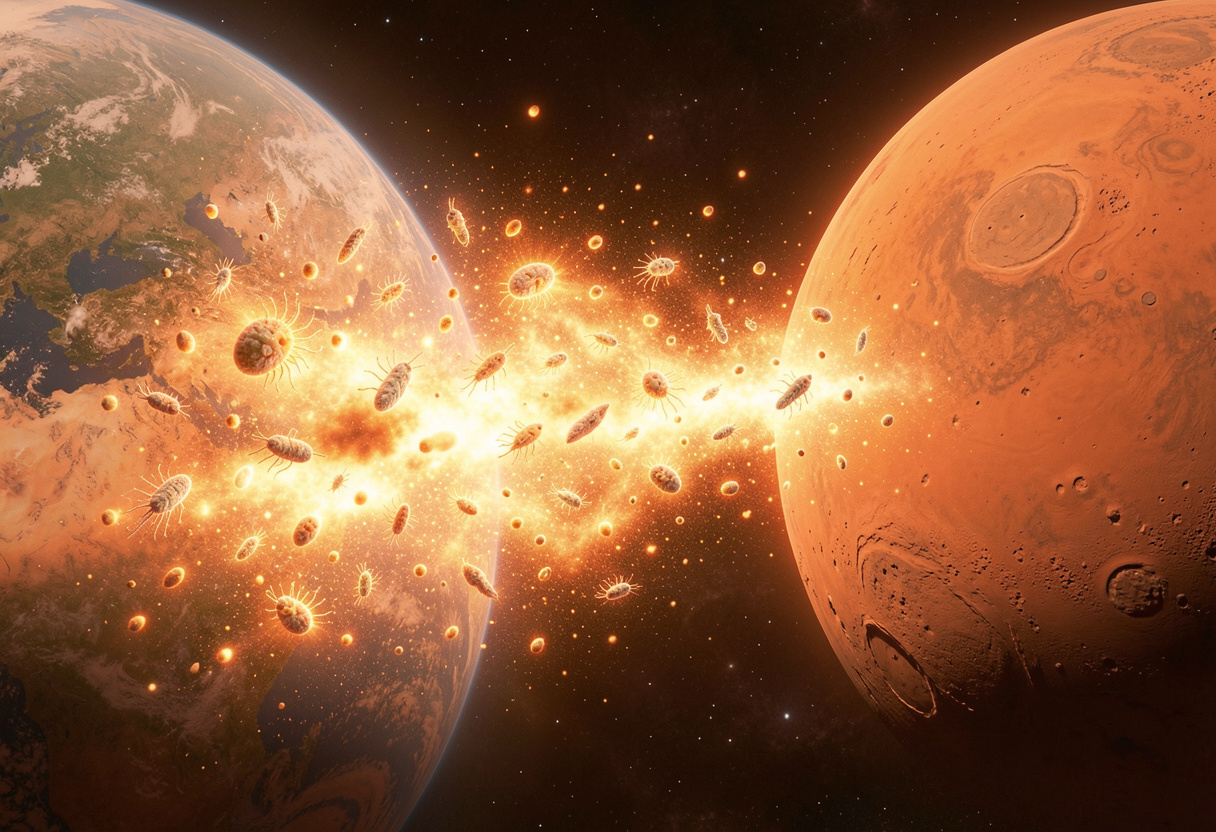
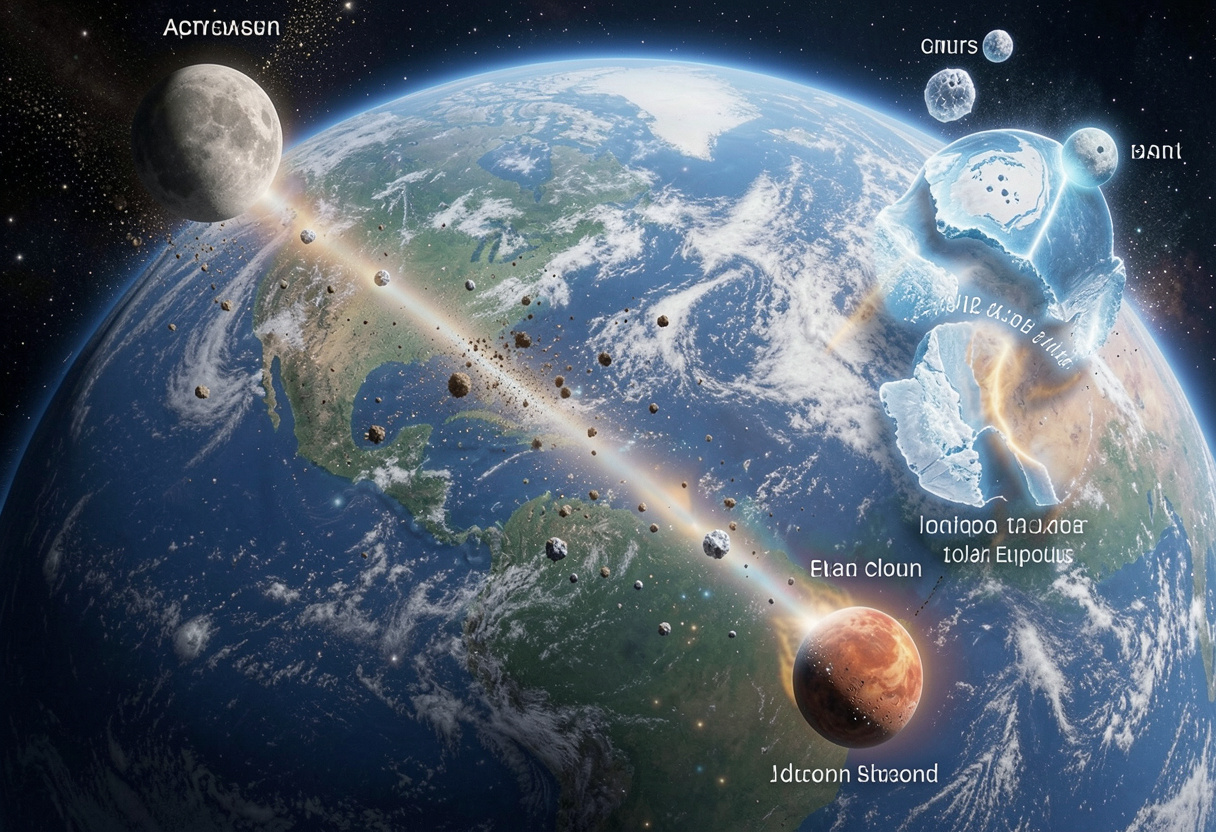
Zaza Osmanov is collaborating with SETI, he studied at the University of Turin, but right now he is at the Free University of Tbilisi in Georgia, in Georgia of the Caucasus, and this researcher is the creator of two quite interesting theoretical studies that have a rather curious original point. The first research published at the end of May asked whether the Earth could have seeded life on the Moon Europa and in practice in all the remains of places in the solar system where there could be liquid water.

And in the second research published just a few days ago, on June 12, he extended the theory about whether life on Earth could have expanded in the form of microorganisms, bacteria throughout the galaxy. What is this idea about? It starts from something quite basic, it is a study on panspermia. Panspermia is the theory that explains how life spread to other places, that is, it explains, for example, that life could have reached Earth by means of meteorites or comets, whether active life, living microorganisms or in a spore state, for example, because there are many microorganisms.


The smallest microorganisms can endure thousands and millions of years inside a rock or a block of ice, that is, in active panspermia, there are softer versions that say that the basic elements, the bricks that constitute life, arrived on asteroids and comets to Earth, but life itself formed the Earth. Active panspermia does not explain how life arose, but rather how it came, could have come from somewhere else, and arrived here on Earth.


This researcher starts from the points that we know, he does not theorize about where it came from and these things. goes to the concrete. He says, "We know that there is life in the universe and that life is here on Earth, the Earth could have sent microorganisms to other places" could life on Earth migrate in some way to the Moon Europa gives it as an example, also to Enceladus or any other place or to Mars or any place in the solar system that had water.


And what this researcher proposes is life that could have escaped from Earth and that could have reached the Moon Europa, because the Moon Europa in particular, we know, has a surface ocean under the icy crust. What is it based on? In the first investigation with equations with dynamics, trajectories, there is a lot of data, they are also quite extensive investigations, it does not prove that this has occurred, it simply raises as possible and with the calculations and the trajectories and so on the possibility of how it could have arrived and the main idea, the original part is that it proposes that these life forms could have traveled on particles of terrestrial dust and this is the most original part because until now this type of transmission of panspermia was given by volcanic eruptions from supervolcanoes that would have thrown rocks and inside From those rocks there would be terrestrial bacteria because it would have launched them into space, then into space because they would have traveled for years until they reached Mars or the Moon Europa.

Or also the impact of large asteroids on Earth that would have launched rocks with bacteria into space, but not here, here the mechanism is different and quite curious and with a much larger expulsion volume. The idea is that he has calculated the operation of micrometeorites that constantly impact the Earth's atmosphere, but what apart from large rocks that we see as bright superbolides, micrometeorites, dust particles, particles of small grains, what we already have shooting stars, are constantly impacting or colliding with micrometeorites, but in what is cosmic dust it is constantly. And those dust impacts end up accelerating the local terrestrial dust, the one in the atmosphere.


And much of the local dust that can reach great heights can reach not only the stratosphere, but almost reach areas close to the border with space at about 100 km high. Much of that dust contains microorganisms, sometimes alive, sometimes in a spore state. And when that space dust hits the Earth, with the Earth's atmosphere, it ends up creating tensions, it ends up creating pressures, it ends up creating small shocks, small thrusts that may be small for us from our point of view, but for those dust particles that these microorganisms have, they are very powerful and they can end up launching those dust particles at more than 11.2 km per second, which means that they go out into space and once they go out into space they can be propelled by solar radiation, it is dust, if they were rocks they would have to enter orbits and in trajectories, but the dust can be easily pushed by the solar wind and this would mean that the dust that constantly leaves the Earth could reach the Moon Europa or Enceladus or Mars or any place in the solar system that had ice and possibly water under the surface.


This mechanism, for example, would not allow these dust particles to reach Venus, because Venus is closer to the Sun, but it would allow all that jet, because there are billions of particles, he has also calculated among the calculations of how Europa could reach the Moon, and one thing is to leave and another thing to arrive, it comes out because the reactions of the cosmic dust end up pushing the particles of the terrestrial dust and they have pushed you out and then in space the solar wind already pushes you and takes you away after maybe weeks. But let's say that a few thousand years or more in the case of a bacteria that is in a spore state, it would not be a problem, but it ends up taking Europa to the Moon.


And you have to fall very flat so that this dust particle does not overheat and therefore does not kill the bacteria, even if they are in a state of spores and receive a lot of heat, they end up dying and apparently, that would be 1%, at an angle of 1% and it would be in 1 of every 365 impacts of terrestrial dust that reached the Moon Europa, he estimated that in only between 30 and 80 million years several billion particles of dust would have arrived. terrestrial origin.


According to this researcher, that dust that has managed to fall well, one in every 300 or so, would still have to fall in a certain area, in active areas. which are the areas where Titan's ice crust opens, which are fracture zones, it would be only a proportion of those billions of particles that would have arrived from the Earth in those millions of years, but even so, it would still be a considerable number of particles of terrestrial origin with bacteria that could have reached those cracks on the Moon Europa and could filter into the liquid ocean, according to this theory, which by the way can be extended, then, to Enceladus or any other place with liquid water in the solar system.


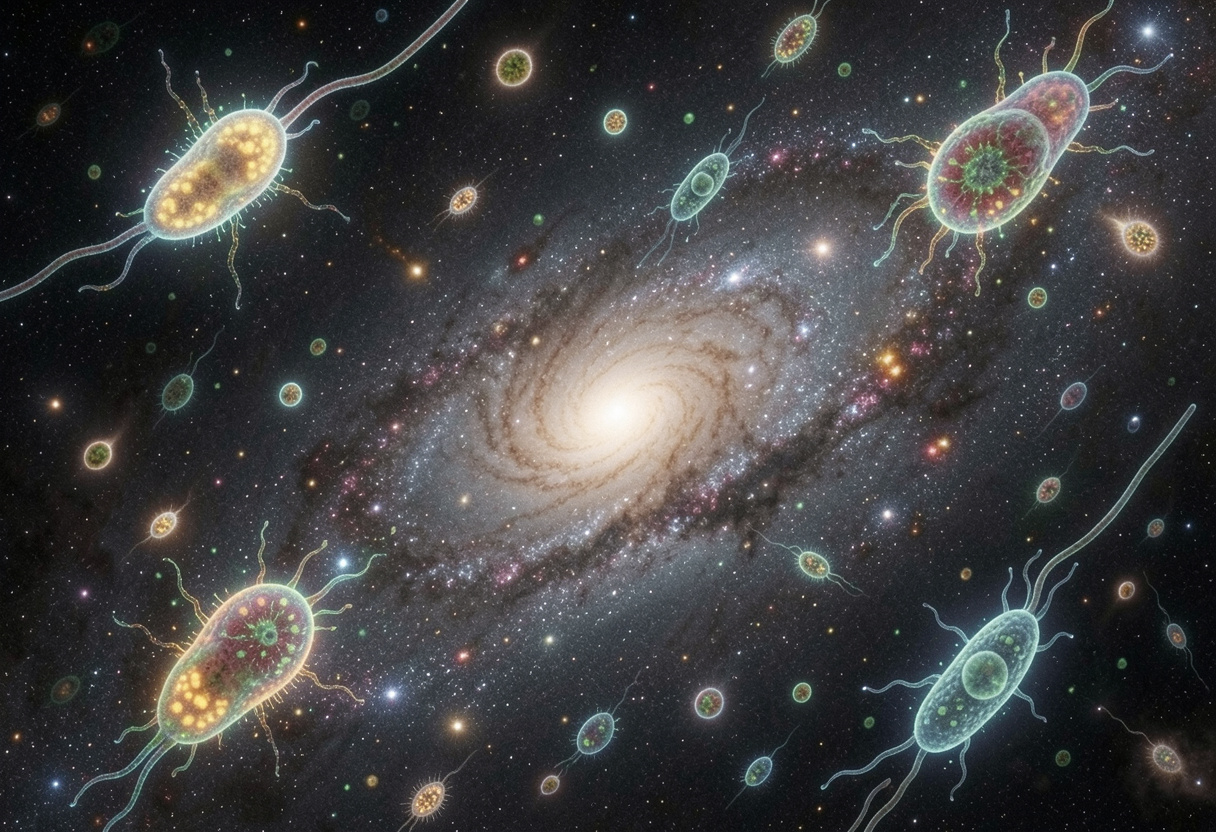
The second investigation, that of June, extends this mechanism to the entire galaxy as planetary dust, which not only can escape from the Earth, but can end up, apart from all these mechanisms, expelled from the solar system by gravitational interactions. He calculates that in 5 billion years those particles of Earth origin could have reached up to a million star systems, also depending on the size of the grain and the area that the solar system had traveled.


According to this theory, according to this research, using the Drake equation, it suggests that the galaxy could be full of this planetary dust full of life with colonies of bacteria, either in the form of spores or in any case, although they are not the be that dust loaded with basic elements to start life wherever it arrived. And we are only talking about dust, even if it is billions of grains of dust. We are only talking about the dust that arises from a single planet with life, the Earth, so, if there are more planets with life in the galaxy, there should be dust of this type everywhere.


Study Source


The images without reference were created with AI
Thank you for visiting my blog. If you like posts about #science, #planet, #politics, #rights #crypto, #traveling and discovering secrets and beauties of the #universe, feel free to Follow me as these are the topics I write about the most. Have a wonderful day and stay on this great platform :) :)


! The truth will set us free and science is the one that is closest to the truth!