Scales on the rocks of Mars
Scales on the rocks of Mars
Souce
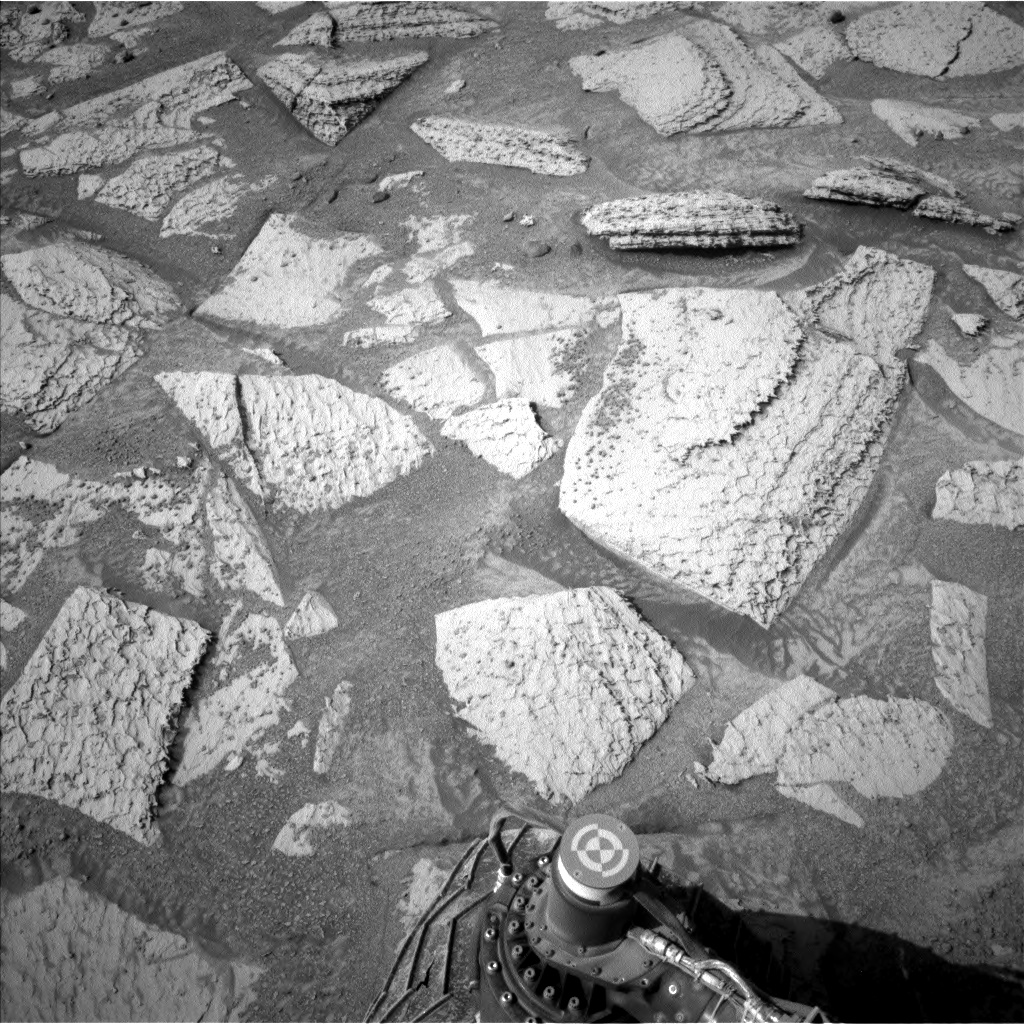
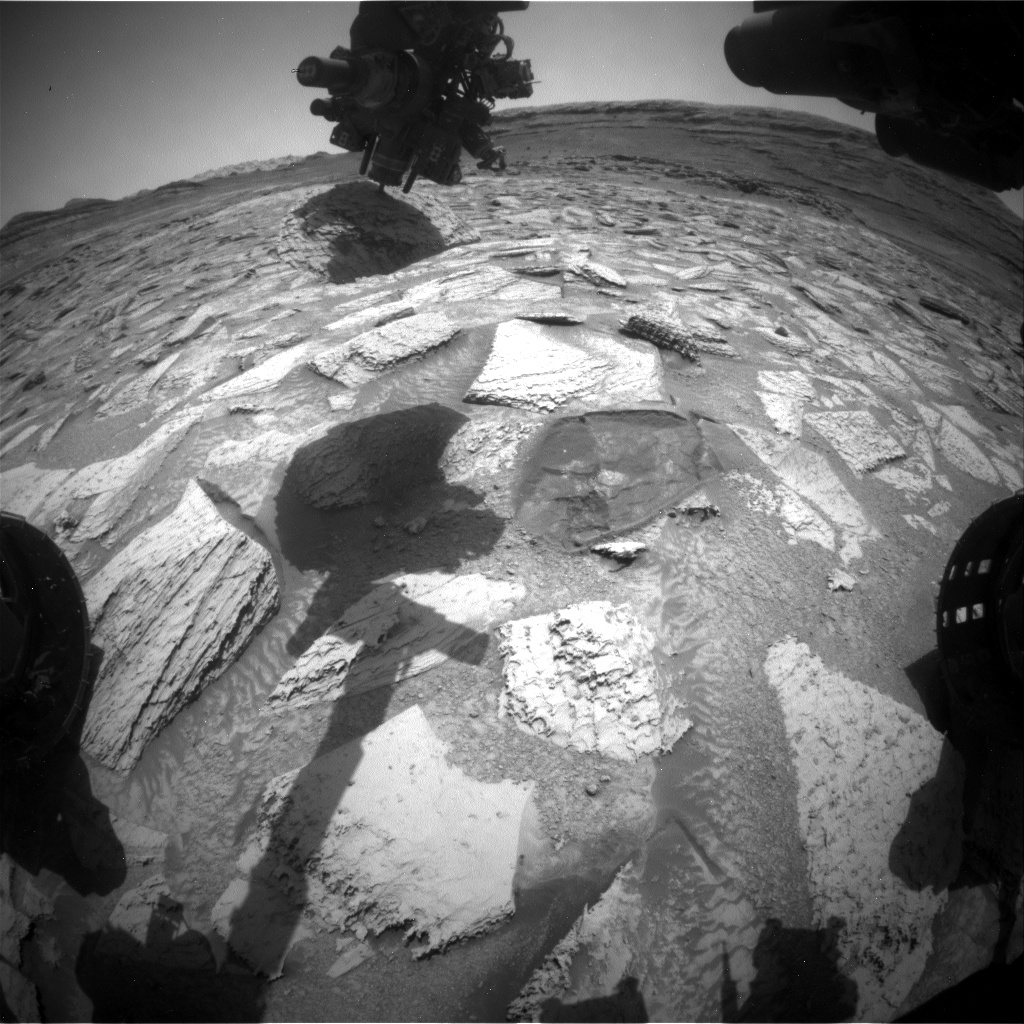
Curiosity is exploring the topic of the strange flake rocks of the Antofagasta crater, it is a raw photo from April 27, today it had published more from this same area, they are taking samples because they are very interesting rocks, the crater itself is small, it is about 10 m in diameter, but it has two characteristics that make it very special.
Souce
It is practically certain that they are formed by the action of water, what I am not very clear about is how the action of water could have created such an amount, in principle the process would be a layer of mud, water, it could be a small pond or a small lake. That mud dries or freezes because ice, the cold can also make this type of structures, cracks are created in the dry mud, those cracks are filled with another material, it may be hit by the wind, with dust material that arrives from the wind and that hard material that fills the cracks is what draws the scales and then layer after layer after layer, because here there are a lot of layers with these structures of scales.
The images without reference were created with AI
Thank you for visiting my blog. If you like posts about #science, #planet, #politics, #rights #crypto, #traveling and discovering secrets and beauties of the #universe, feel free to Follow me as these are the topics I write about the most. Have a wonderful day and stay on this great platform :) :)
Congratulations!
Your post has been selected and upvoted by the SteemPro Team 🚀
Explore more on SteemPro:
🌐 https://www.steempro.com
🎮 Play SteemHeights: https://www.steempro.com/games/steem-heights
💬 Join our Discord: https://discord.gg/Bsf98vMg6U
💪 Supporting the growth of the Steem ecosystem together.
🟩 Vote for witness faisalamin:
https://steemitwallet.com/~witnesses
https://www.steempro.com/witnesses#faisalamin
This is an automated message.