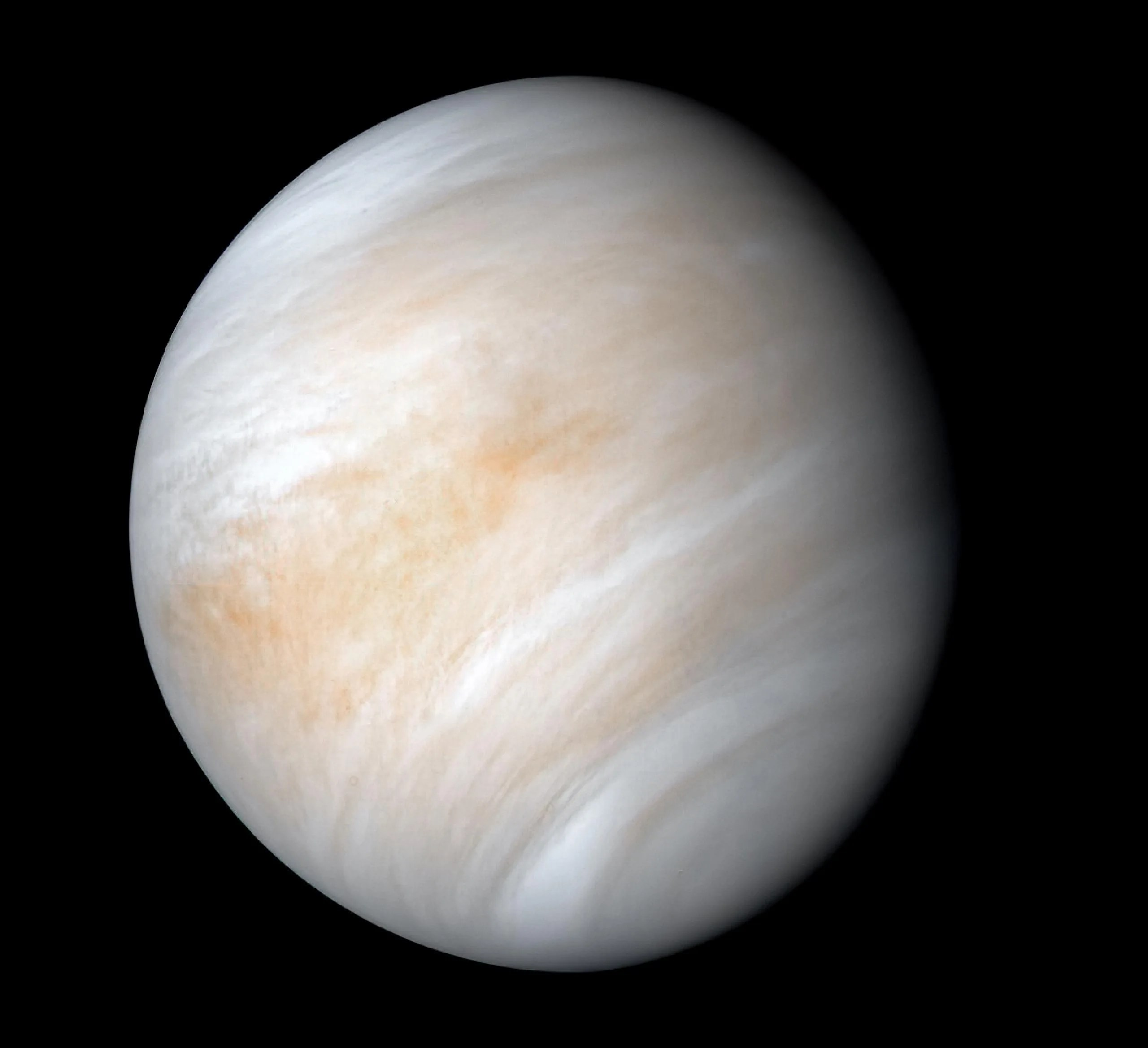
Venus is not like Earth.

in Popular STEMyesterday

Venus is not like Earth.


Souce


Venus is often called Earth's "evil twin" because of its hellish environment; for reasons still unknown to us, the planet has transformed into the most realistic cosmic version of hell, featuring temperatures of 467ºC and sulfuric acid rain—though recent research suggests the acid levels aren't quite as extreme as initially thought, sulfuric acid is still definitely present.


Surface pressure on Venus is comparable to what you would find 900 meters underwater on Earth; yet, were it not for those deadly hazards, Venus would seem quite familiar. It is only slightly smaller than Earth, and the gravity is ideal—you would hardly notice a difference. A person weighing 70 kg on Earth would weigh 63.4 kg on Venus, whereas on Mars, that same person would weigh just under 26 kg—a scenario that would lead to serious long-term health complications.


In a Martian colony, descendants and future generations would evolve into a different type of human—with a metabolism, body, bone structure, and musculature distinct from those of Earth-bound humans—because the difference in gravity is unavoidable and would shape human development there. On Venus, however, humans would remain much like those on Earth; there is hardly any difference in that regard. Yet, other differences are extreme: temperature, atmospheric pressure, and aridity—Venus is incredibly dry. There is also another curious feature: days on Venus are eternal, lasting 243 Earth days. It has by far the longest day in the solar system; in fact, the day lasts longer than the year, as a Venusian year is only 225 days long.


And it isn't because it is closer to the Sun—it really isn't much closer to the Sun than Earth or Mercury, for instance; actually, a day on Mercury lasts... sorry, it lasts *less* time than a day on Venus. It is believed that its dense atmosphere caused the day to be so long and also caused the planet to rotate in the opposite direction to the rest of the planets. Beyond these extraordinary characteristics—which turn it into a hellish place—something happened to Venus. For now, the initial information we have comes from this first study; it is interesting, though you might find it a bit dry.


It was published on July 31 and discusses the broad flanks of elevated areas and a fault on Venus that indicate recent rifting activity. What does all this mean? Well, it essentially points to something regarding Mars: Mars has no tectonic plates, nor does it have continents as we know them here on Earth. It is possible that the northern hemisphere once had a type of ocean floor—since a vast ocean existed there; in fact, that is where the lowlands are concentrated, where the surface elevation is below average—whereas the southern hemisphere contains the highlands. It is as if there were a supercontinent in Mars's southern hemisphere, but that likely froze in place billions of years ago, and Mars has remained that way ever since.


There is volcanic activity and hotspots, but no tectonic plate movement; it never developed. It is believed that plate tectonics never developed on Venus either, yet this research reveals the existence of faults similar to those that open up—creating great rifts and separating continents—on Earth. Moreover, these faults are active; they widen at a rate comparable to the movement of Earth's tectonic plates—between 3 and 10 centimeters per Earth year.


Venus has hotspots—jets or plumes of hot material and magma rising from the mantle to the surface, forming massive volcanoes. It also exhibits intense volcanic activity; a vast portion—practically the majority—of Venus's surface is young, dating back less than 700 million years. However, this is not unusual, as much the same occurs on Earth: most of Earth's surface is less than 700 million years old. While there are specific ancient zones known as cratons, the Earth's surface generally renews itself every few hundred million years.


How does this happen on Venus? It does not appear to be driven by tectonic plates; there are no moving continents at present. Nevertheless, this research indicates that Venus does possess active geology involving movement—potentially a different type of geological activity than Earth's—yet it generates similar structures, rifts, and gigantic faults that widen at speeds comparable to those seen here on Earth.


Study Source


The images without reference were created with AI
Thank you for visiting my blog. If you like posts about #science, #planet, #politics, #rights #crypto, #traveling and discovering secrets and beauties of the #universe, feel free to Follow me as these are the topics I write about the most. Have a wonderful day and stay on this great platform :) :)


! The truth will set us free and science is the one that is closest to the truth!


Sort:  

Congratulations!

Your post has been selected and upvoted by the SteemPro Team 🚀

Explore more on SteemPro:
🌐 https://www.steempro.com
🎮 Play SteemHeights: https://www.steempro.com/games/steem-heights
💬 Join our Discord: https://discord.gg/Bsf98vMg6U

💪 Supporting the growth of the Steem ecosystem together.

🟩 Vote for witness faisalamin:
https://steemitwallet.com/~witnesses
https://www.steempro.com/witnesses#faisalamin

steempro-cover-black.png
This is an automated message.