A new technique allows for the first time the observation of key properties of materials atom by atom/Una nueva técnica permite por primera vez observar propiedades clave de los materiales átomo a átomo

Source
A group of researchers from the Institute of Materials Science of Barcelona (ICMAB-CSIC) have developed an innovative technique that allows, for the first time, direct observation of how electrons are arranged around atoms, something fundamental for understanding and designing new materials. To put this into perspective, we can think of the difference between viewing a city from a satellite and being able to observe each house and its garden. Until now, available techniques (such as those based on X-rays) offered a "global" or average image of a material's electronic structure.
Un grupo de investigadores del Instituto de Ciencia de Materiales de Barcelona (ICMAB-CSIC) han desarrollado una innovadora técnica permite, por primera vez, observar directamente cómo se organizan los electrones alrededor de los átomos, algo fundamental para entender y diseñar nuevos materiales. Para ponernos en situación, podemos pensar en la diferencia entre ver una ciudad desde un satélite y poder observar cada casa y sus jardines. Hasta ahora, las técnicas disponibles (como las basadas en rayos X) ofrecían una imagen "global" o promedio de la estructura electrónica de un material.
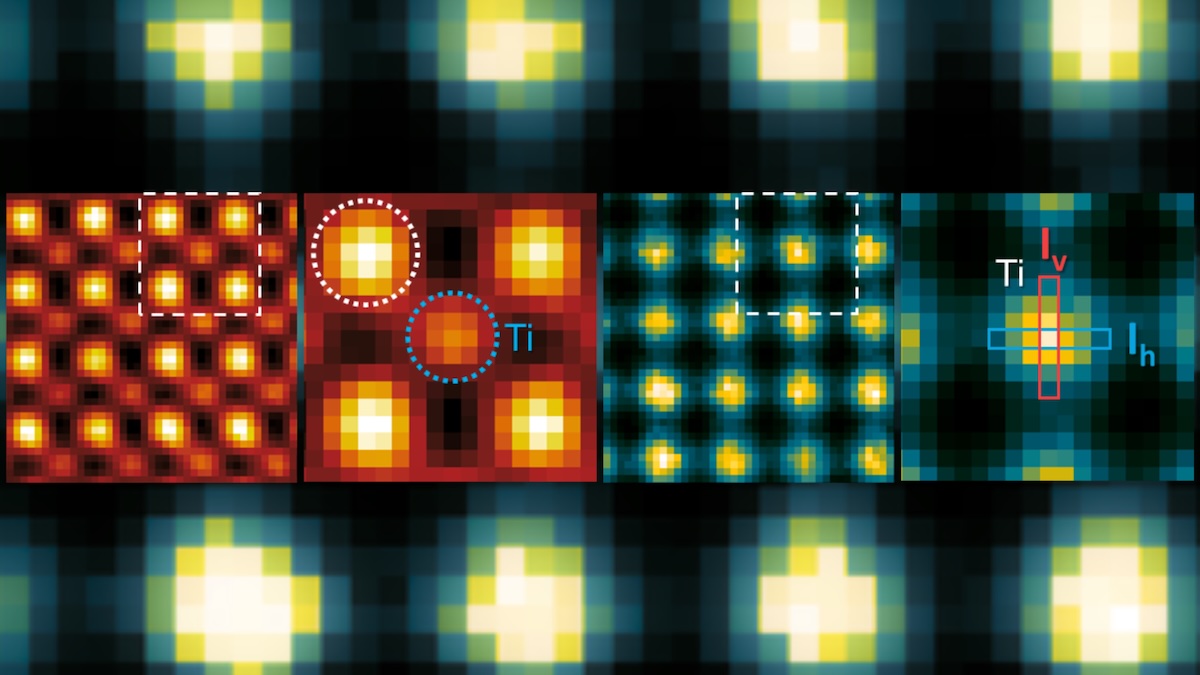
The details of how electrons behave in a specific atom or region were being lost. This new methodology is like a high-precision "scanner" that directs an extremely fine electron beam onto the material being studied. It analyzes in great detail how this beam interacts with the electrons of the material's atoms, and from these interactions, scientists can reconstruct the shape and orientation of the electron "clouds" (orbitals) around each atom, detecting variations that were previously invisible.
Se perdían los detalles de cómo se comportan los electrones en un átomo concreto o en una región específica. Esta nueva metodología es como un "escáner" de altísima precisión que dirige un haz de electrones extremadamente fino sobre el material que se quiere estudiar. Se analiza con gran detalle cómo interactúa ese haz con los electrones de los átomos del material y a partir de esas interacciones, los científicos pueden reconstruir la forma y orientación de las "nubes" electrónicas (orbitales) alrededor de cada átomo, detectando variaciones que antes eran invisibles.
Source
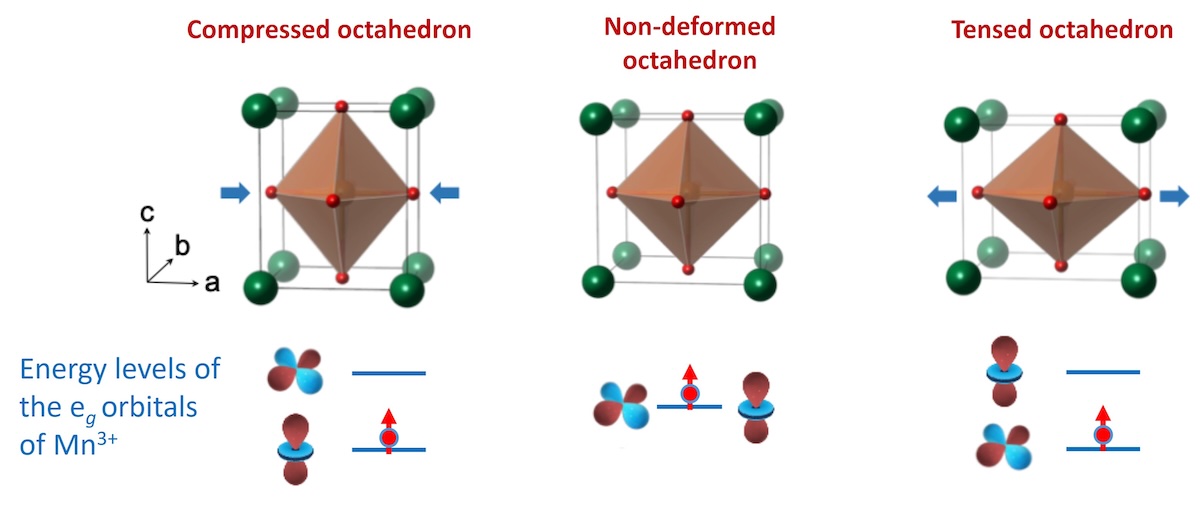
The key is that they can "observe" atomic orbitals, which are the regions where electrons are most likely to be found. It's like being able to see the shape of each tree in a forest instead of just a patch of green. The potential impact is enormous because the arrangement of electrons determines a material's key properties. This technique opens the door to designing materials with custom-made properties. By being able to see how electrons arrange themselves when a material is compressed, stretched, or otherwise modified, scientists will understand the relationship between structure and property at an unprecedented level.
La clave es que pueden "observar" los orbitales atómicos, que son las regiones donde es más probable encontrar electrones. Es como poder ver la forma de cada árbol en un bosque en lugar de solo una mancha verde. El impacto potencial es enorme porque la disposición de los electrones determina las propiedades clave de un material. Esta técnica abre la puerta al diseño materiales con propiedades a la carta, al poder ver cómo se organizan los electrones cuando un material se comprime, estira o modifica, los científicos entenderán la relación entre estructura y propiedad a un nivel sin precedentes.
This is like having the instruction manual for a material. It's essential for developing more efficient materials for electronics, data storage (such as faster, lower-power memories), and quantum computing. It will allow for the design of better materials for batteries, supercapacitors, and solar cells. It's especially useful for analyzing defects in materials or the interfaces between different materials, which are regions where unique and highly useful electronic properties often arise that don't exist in the rest of the material.
Esto es como tener el manual de instrucciones de un material. Es esencial para desarrollar materiales más eficientes para la electrónica, el almacenamiento de datos (como memorias más rápidas y con menor consumo) y la computación cuántica. Permitirá diseñar mejores materiales para baterías, supercondensadores o celdas solares. Es especialmente útil para analizar defectos en los materiales o las interfaces entre diferentes materiales, que son regiones donde a menudo surgen propiedades electrónicas únicas y muy útiles que no existen en el resto del material.
Source
For now, it's only a laboratory test. Before this technique can move from a proof of concept to an everyday tool, it still needs to overcome several challenges. It has been successfully tested on one type of material. Its effectiveness and adaptability will need to be verified on a wide range of materials (metals, organic semiconductors, ceramics, etc.). The technique is based on a very advanced form of electron microscopy, which requires highly specialized equipment and highly qualified personnel.
Por el momento solo es una prueba de laboratorio, para que esta técnica pase de ser una demostración de concepto a una herramienta de uso cotidiano, aún debe superar varios desafíos. Se ha probado con éxito en un tipo de material. Habrá que verificar su eficacia y adaptabilidad en una amplia gama de materiales (metales, semiconductores orgánicos, cerámicas, etc.). La técnica se basa en una forma muy avanzada de microscopía electrónica, que requiere equipos muy especializados y personal altamente cualificado.
For widespread use, processes would need to be simplified or costs reduced. The ultimate goal is not just to see how electrons are organized, but to use that knowledge to design and manufacture new materials with customized properties. In short, the technique is real, it works, and it's a huge scientific breakthrough. But it's still in the "proof of concept" phase, a cutting-edge research tool for better understanding materials. Its transformative impact on industry and everyday technology will be the result of years of work.
Para su uso masivo, sería necesario simplificar los procesos o abaratar los costes. El objetivo final no es solo ver cómo se organizan los electrones, sino usar ese conocimiento para diseñar y fabricar nuevos materiales con propiedades a la carta. En resumen, la técnica es real, funciona y es un avance científico enorme. Pero aún está en la fase de "prueba de concepto", una herramienta de investigación puntera para entender mejor los materiales. Su impacto transformador en la industria y en la tecnología cotidiana será fruto de un trabajo de años.
More information/Más información
https://www.icmab.es/a-new-technique-allows-researchers-to-observe-key-material-properties-atom-by-atom-for-the-first-time-it-is-like-opening-a-box-that-until-now-has-been-closed
This is a most interesting development in materials science - the ability to examine electronic orbitals at the atomic level could lead to new insights into the relationships between a material’s structure and its measured properties. Even more exciting is the prospect of using such an approach to engineering specific materials for particular purposes - batteries, solar cells, novel electronics, and more. The value of such an endeavor is limited only by one’s imagination, and these proof-of-concept results are exciting because a powerful tool has been demonstrated that allows us to go from “we wish we could see X” to “here, let me show you.”
A veces siento que el algoritmo me conoce mejor que yo mismo. Justo lo que necesitaba leer.
Gracias por tomarte el tiempo de escribir esto. Estos temas están dando que hablar y está bueno discutirlos con datos.
@mauromar, hay momentos donde uno necesita leer algo que le recuerde lo esencial. Tu post fue eso para mí hoy.