Bacteria discovered that transform radioactive uranium into a stable mineral/Descubren bacterias que transforman uranio radiactivo en un mineral estable
Source
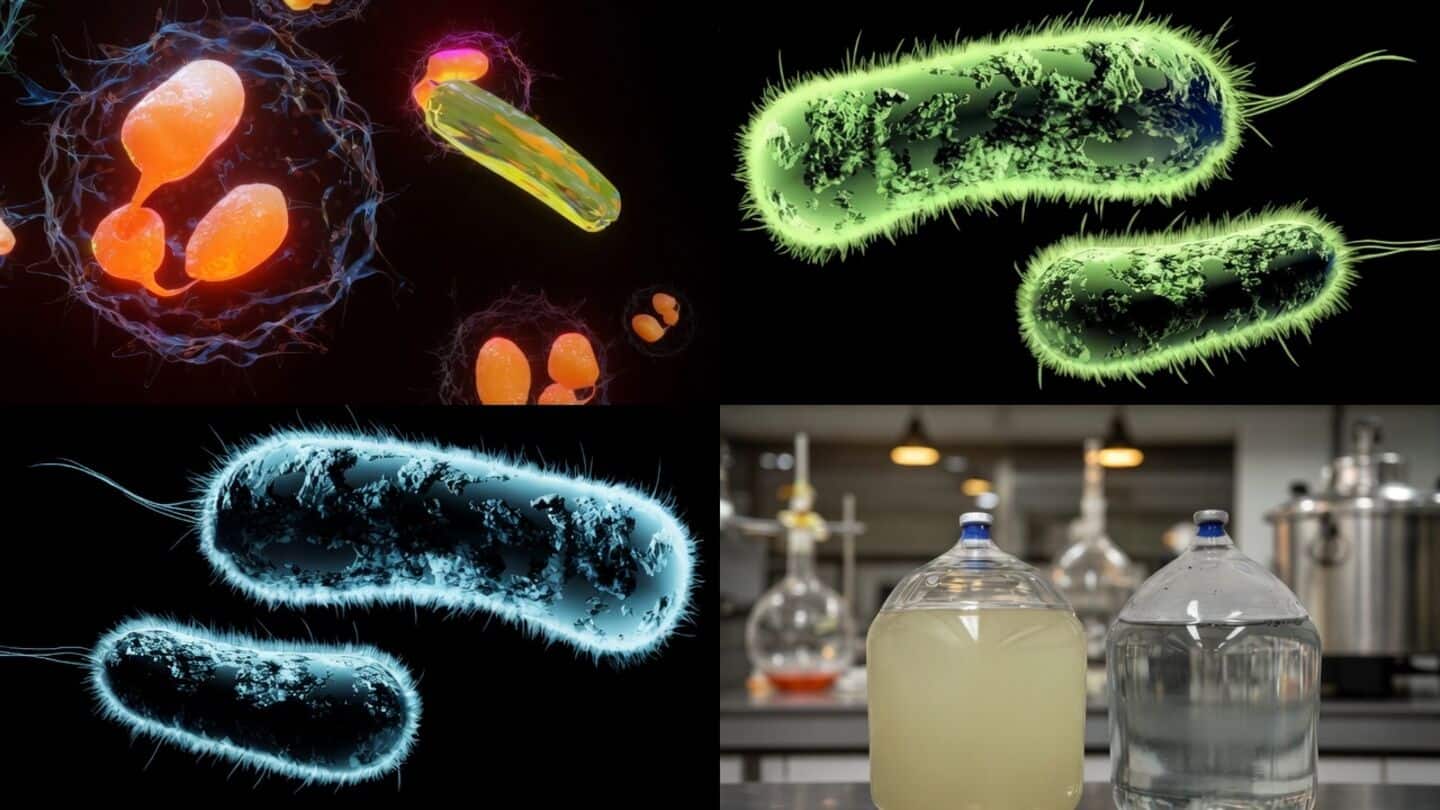
A team of researchers from the Helmholtz-Zentrum Dresden-Rossendorf (HZDR) in Germany and the University of Granada have discovered bacteria that transform radioactive uranium into a stable mineral. These bacteria don't "eat" uranium; rather, they transform it into a solid, stable mineral, facilitating its handling and preventing its dispersal. This process was already known for obtaining tetravalent uranium (U(IV)), but the major breakthrough is that the researchers have demonstrated that these bacteria can also generate pentavalent uranium (U(V)), an intermediate state previously thought to be unstable, which in this study proved to be highly persistent, even in the presence of oxygen.
Un equipo de investigadores del Helmholtz-Zentrum Dresden-Rossendorf (HZDR) de Alemania y de la Universidad de Granada han descubierto bacterias que transforman el uranio radiactivo en un mineral estable. No se trata de bacterias que "comen" uranio, sino que lo transforman en un mineral sólido y estable, lo que facilita su gestión y evita que se disperse. Este proceso ya se conocía para obtener uranio tetravalente (U(IV)), pero la gran novedad es que los investigadores han demostrado que estas bacterias también pueden generar uranio pentavalente (U(V)), un estado intermedio que se creía inestable, y que en este estudio resultó ser muy persistente, incluso en presencia de oxígeno.
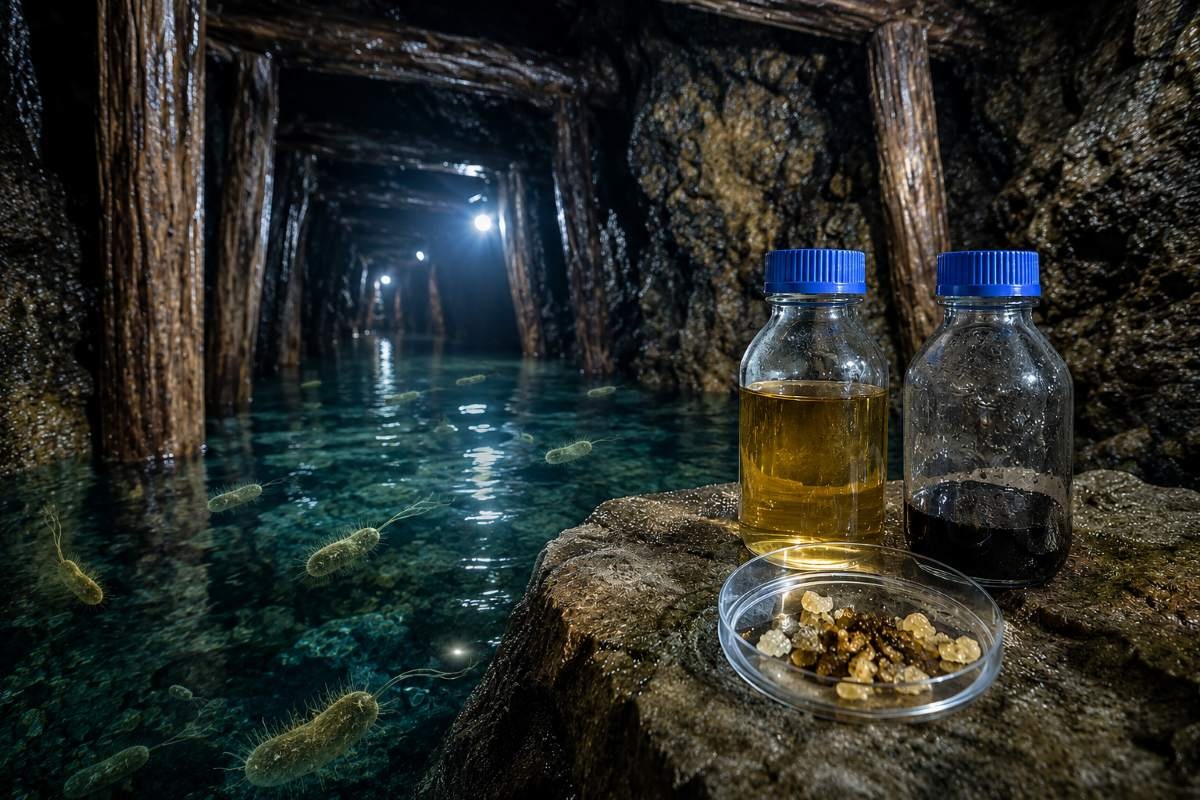
The process is known as bioreduction and works as follows. In mine water, uranium is found primarily as hexavalent uranium (U(VI)). This form is highly soluble and mobile, so it can leach into aquifers and pose a risk to health and the environment. Researchers took water from a uranium mine in Germany (Schlema-Alberoda) that still contained uranium levels above legal limits. In the laboratory, they added a simple and inexpensive nutrient (glycerol, a byproduct of biodiesel production) to the mine water. This nutrient serves as "food" for the native bacteria living in that environment.
El proceso se conoce como biorreducción y funciona de la siguiente manera. En el agua de minas, el uranio se encuentra principalmente como uranio hexavalente (U(VI)). Esta forma es altamente soluble y móvil, por lo que puede filtrarse en acuíferos y suponer un riesgo para la salud y el medio ambiente. Los investigadores tomaron agua de una mina de uranio en Alemania (Schlema-Alberoda) que aún contenía niveles de uranio por encima de los límites legales. En el laboratorio, añadieron un nutriente simple y barato (glicerol, un subproducto de la producción de biodiesel) al agua de la mina. Este nutriente sirve como "alimento" para las bacterias autóctonas que viven en ese entorno.
Source
Upon receiving this food, the bacteria, especially the sulfate-reducing and fermenting groups, begin to multiply and become more active. As part of their metabolism, they transfer electrons to soluble uranium U(VI), thereby reducing it. This process converts U(VI) into two solid, much less soluble forms. On the one hand, it produces uraninite (U(IV)), a well-known and stable tetravalent uranium mineral; on the other hand, it also produces FeU(V)O₄ nanoparticles and U(V)-carbonate complexes.
Al recibir este alimento, las bacterias, especialmente los grupos que reducen sulfato y los fermentadores, empiezan a multiplicarse y se vuelven más activas. Como parte de su metabolismo, transfieren electrones al uranio soluble U(VI), con lo que consigue reducirlo. Este proceso convierte el U(VI) en dos formas sólidas y mucho menos solubles. Por un lado Uraninita (U(IV)) que es un mineral de uranio tetravalente muy conocido y estable, por otro lado también produce nanopartículas de FeU(V)O₄ y complejos U(V)-carbonato.
These are forms of pentavalent uranium (U(V)) that, contrary to previous expectations, also precipitated and remained stable for at least 130 days under oxygen-free conditions and for up to four weeks after exposure to oxygen. In the experiments, the bacteria reduced the uranium concentration in the water by 96%, from 1 mg/L to 0.04 mg/L. Although this is still laboratory-scale research, the potential impact of this discovery is very significant.
Estas son formas de uranio pentavalente (U(V)) que, contrariamente a lo que se pensaba, también precipitaron y permanecieron estables durante al menos 130 días en condiciones sin oxígeno y hasta cuatro semanas después de exponerse al oxígeno. En los experimentos, las bacterias lograron reducir la concentración de uranio en el agua en un 96%, pasando de 1 mg/L a 0.04 mg/L. Aunque todavía es una investigación a escala de laboratorio, el impacto potencial de este descubrimiento es muy significativo.
Source
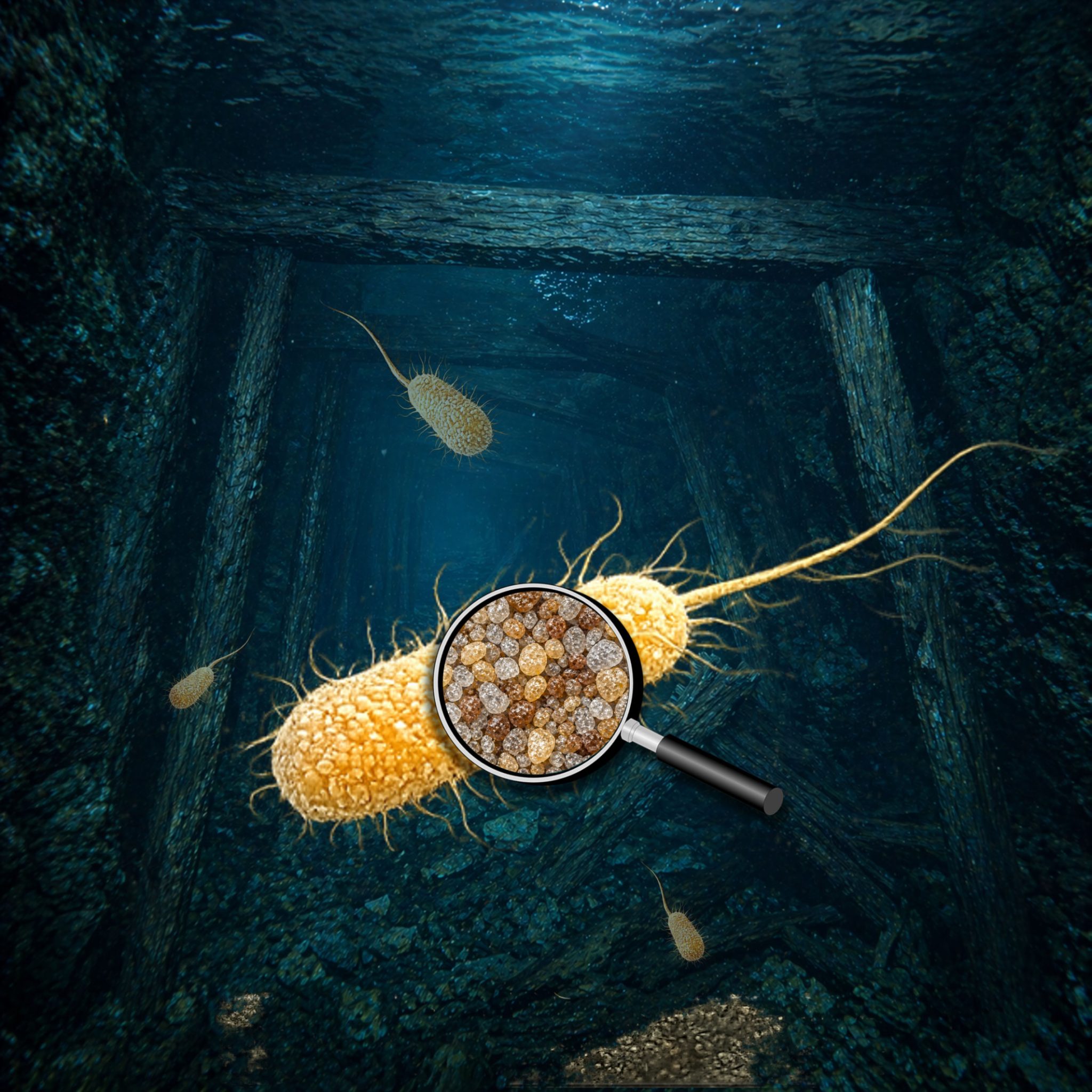
The key finding is that the U(V) form is stable. This is crucial for long-term remediation, as it ensures that the trapped uranium will not easily remobilize in the future, which was an unknown factor with previous methods. Current methods for treating mine water, such as chemical precipitation with lime, are expensive, require ongoing maintenance, and generate large volumes of secondary waste. Biostimulation with glycerol could be a much more economical and environmentally friendly alternative, as it uses a low-cost byproduct and stimulates a natural process.
El hallazgo clave es que la forma U(V) es estable. Esto es crucial para la remediación a largo plazo, ya que garantiza que el uranio atrapado no se re-movilice fácilmente en el futuro, lo que era una incógnita con los métodos anteriores. Los métodos actuales para tratar aguas de mina, como la precipitación química con cal, son caros, requieren un mantenimiento continuo y generan grandes volúmenes de residuos secundarios. La bioestimulación con glicerol podría ser una alternativa mucho más económica y con un menor impacto ambiental, ya que utiliza un subproducto de bajo coste y estimula un proceso natural.
This study was conducted under real-world mine water conditions, increasing the likelihood that the strategy could be effective in other locations around the world with similar uranium contamination. Bioreduction is not the only approach. Other research explores phosphate biomineralization, where bacteria precipitate uranium (also in a stable form) by forming uranium phosphate minerals. Each technique may be more suitable depending on the geochemical conditions of the site. In short, this advance offers a promising new tool for addressing one of the nuclear industry's most complex environmental legacies, converting a mobile and hazardous contaminant into a solid, manageable mineral in a simpler and more cost-effective way.
Este estudio se realizó en condiciones reales de agua de mina, lo que aumenta la probabilidad de que la estrategia pueda ser efectiva en otros lugares del mundo con contaminación similar por uranio. La biorreducción no es la única vía. Otras investigaciones exploran la biomineralización con fosfato, donde las bacterias precipitan el uranio (también en forma estable) mediante la formación de minerales de fosfato de uranio. Cada técnica puede ser más adecuada según las condiciones geoquímicas del lugar. En resumen, este avance ofrece una nueva y prometedora herramienta para abordar uno de los legados ambientales más complejos de la industria nuclear, convirtiendo un contaminante móvil y peligroso en un mineral sólido y gestionable de forma más sencilla y económica.
More information/Más información
https://scitechdaily.com/bacteria-turn-toxic-uranium-into-a-surprisingly-stable-compound/
This scientific achievement is certainly interesting. Using bacteria to transform mobile radioactive uranium into a stable mineral offers new solutions for safely purifying contaminated waters in mines. The new stable form of U(V) is interesting because it contradicts established beliefs and may allow better environmental protection. Nature keeps giving us surprising solutions to complicated human issues.
0.00 SBD,
0.85 STEEM,
0.85 SP
Justo pasaba por el feed y tu post me hizo frenar. En una plataforma donde sobra lo superficial, esto se destaca.
De los posts que aportan algo distinto a lo que se ve habitualmente en el feed. Gracias por profundizar en lugar de quedarte en la superficie.
@mauromar, hay personas que hablan desde el libro y personas que hablan desde la vida. Vos hablás desde la vida y se nota.