Innovative system moves aircraft with engines off and reduces ground emissions by up to 80%/Innovador sistema mueve aviones con los motores apagados y reduce hasta un 80% sus emisiones en tierra

Source
We tend to think of air travel emissions as occurring at high altitudes, yet before a plane even leaves the airport, it spends a considerable amount of time taxiing along the runway with its engines running—generating a deafening roar, consuming fuel, and polluting the environment in the process. This is why the device we are discussing today could prove incredibly useful at airports worldwide: the TaxiBot, a semi-robotic electric tug capable of moving aircraft with their engines turned off.
Las emisiones achacadas a la navegación aérea tendemos a pensar que se producen a gran altitud, pero antes de que el avión abandona el aeropuerto se pasa un buen rato "andando" por la pista con los motores encendidos, lo cual no solo produce un ruido infernal sino que gasta combustible y de paso contamina el medio ambiente. Por eso el artilugio que hoy comentamos puede ser de gran utilidad en los aeropuertos de todo el mundo ya que se trata de un remolcador eléctrico semirrobótico llamado TaxiBot capaz de mover los aviones con sus motores apagados.
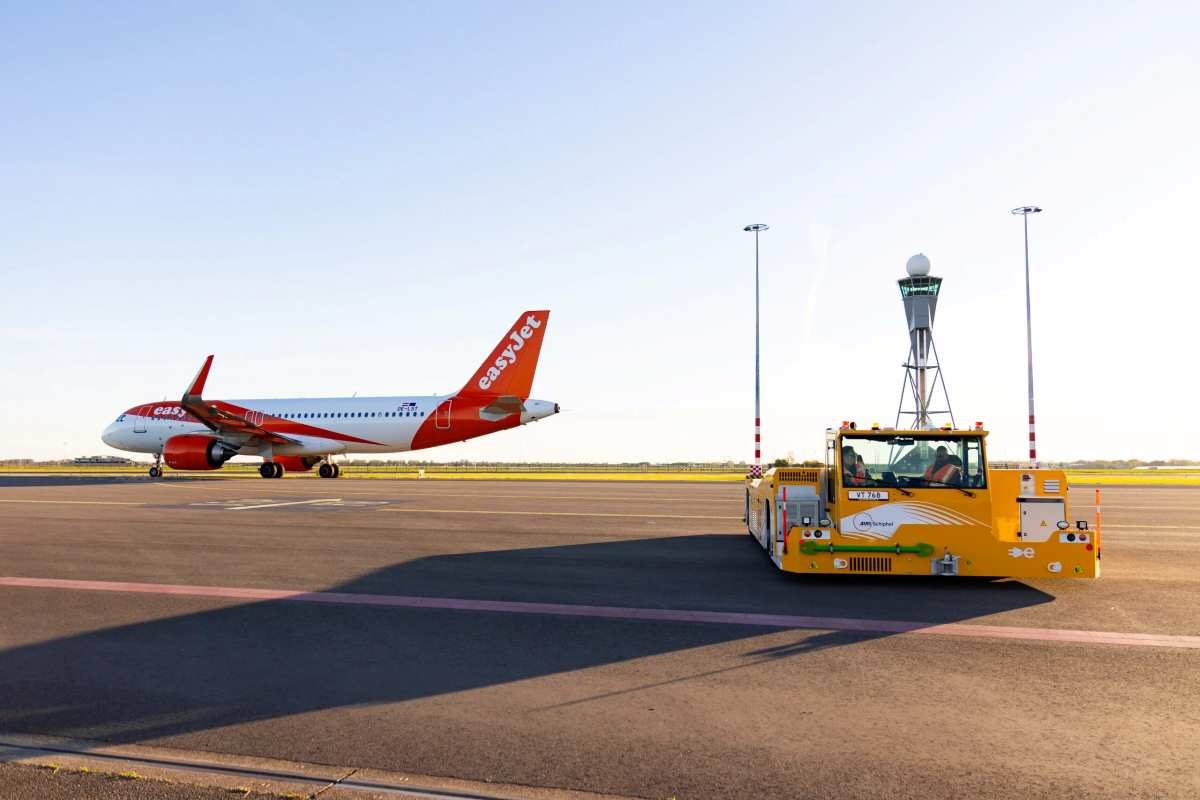
Although the concept is not new—having been tested for years—the latest development is that Amsterdam Schiphol Airport launched the world's first fully electric version in May 2026, in collaboration with easyJet, Airbus, and the ground handling company Menzies Aviation. The TaxiBot is a specialized vehicle that transports the aircraft from the boarding gate to the runway, allowing the aircraft's main engines to remain off throughout the entire journey.
Aunque el concepto no es nuevo ya que se lleva probando desde hace años, la novedad es que el aeropuerto de Amsterdam Schiphol ha estrenado en mayo de 2026 la primera versión totalmente eléctrica del mundo, en colaboración con easyJet, Airbus y la empresa de asistencia en tierra Menzies Aviation. El TaxiBot es un vehículo especializado que transporta el avión desde la puerta de embarque hasta la pista de despegue permitiendo que los motores principales de la aeronave permanezcan apagados durante todo ese trayecto.
Source
The tow vehicle attaches to the aircraft's nose landing gear, lifting the nose wheel onto a pivoting platform. Once connected, the pilot controls the TaxiBot from the cockpit using the same pedals and steering tiller used for taxiing, providing a very similar handling feel. The system moves the aircraft at a maximum speed of 23 knots (approximately 42 km/h). A ground operator rides inside the TaxiBot, responsible only for driving the vehicle back to the terminal after it disconnects on the runway.
El remolcador se acopla al tren de aterrizaje delantero del avión, levantando la rueda de morro sobre una plataforma pivotante. Una vez conectado, el piloto toma el control del TaxiBot desde la cabina utilizando los mismos pedales y palanca de dirección que usaría para rodar con el avión, lo que le da una sensación de manejo muy similar. El sistema transporta la aeronave a una velocidad máxima de 23 nudos (unos 42 km/h). Dentro del TaxiBot viaja un operario de tierra que solo se encarga de conducir el vehículo de vuelta a la terminal una vez que se desconecta en pista.
Upon reaching the start of the runway, the pilot starts the engines, the TaxiBot disconnects, and the aircraft is ready for takeoff. Implementing this system yields highly positive results in terms of both the environment and operations. Schiphol uses this system on the Polderbaan—its longest runway, which also entails the longest taxi times. Fuel savings there can reach up to 65%, reducing emissions of CO2, nitrogen oxides (NOx), and fine particulate matter in the area surrounding the airport. To put this into perspective, easyJet estimates savings of 95 kg of fuel and 299 kg of CO2 per flight.
Al llegar al inicio de la pista, el piloto enciende los motores, el TaxiBot se desconecta y el avión ya está listo para despegar. La implementación de este sistema tiene implicaciones muy positivas, tanto a nivel medioambiental como operativo. Schiphol utiliza este sistema en la Polderbaan, su pista más larga y con mayor tiempo de rodaje. Allí, el ahorro de combustible puede alcanzar hasta un 65%, reduciendo las emisiones de CO2, óxidos de nitrógeno (NOx) y partículas finas en el entorno del aeropuerto. Para que nos hagamos una idea, easyJet estima un ahorro de 95 kg de combustible y 299 kg de CO2 por vuelo.
Source
Operating with engines turned off drastically reduces ground noise. This creates a healthier, safer, and quieter work environment for ground handling staff on the apron (the aircraft parking area), thereby improving their quality of work life. Furthermore, reduced use of the main engines during taxiing lowers component wear and tear, resulting in lower long-term maintenance costs for airlines. The all-electric TaxiBot is already in regular commercial operation at Schiphol with easyJet’s Airbus A320neo aircraft. It is not merely a trial; it has become part of the airport's daily operations.
Al ir con los motores apagados, el ruido en tierra se reduce drásticamente. Esto crea un entorno de trabajo más saludable, seguro y silencioso para los empleados de handling que trabajan en el apron (la zona de estacionamiento de aeronaves), mejorando su calidad de vida laboral. Por otra parte al usar menos los motores principales durante el rodaje reduce el desgaste de los componentes, lo que se traduce en menores costes de mantenimiento para las aerolíneas a largo plazo. El TaxiBot totalmente eléctrico ya está en operaciones comerciales regulares en Schiphol con aviones Airbus A320neo de easyJet. No es solo una prueba, sino que ya forma parte del día a día del aeropuerto.
The airport expects to receive three additional electric units by the end of 2026. Furthermore, work is already underway to certify the system for KLM Cityhopper’s Embraer aircraft and Transavia’s Boeing 737s. This project is a key element of Schiphol’s strategy to reduce its environmental impact and move toward zero-emission ground operations, serving as an example of how technology can make aviation more sustainable in the short term without waiting for new aircraft designs. In short, this system is not a futuristic concept but a reality already transforming one of Europe’s most important airports, demonstrating that it is possible to move large aircraft cleanly, quietly, and efficiently.
El aeropuerto espera recibir tres unidades eléctricas adicionales a finales de 2026. Además, ya trabajan para certificar el sistema para los aviones Embraer de KLM Cityhopper y los Boeing 737 de Transavia. Este proyecto es una pieza clave en la estrategia de Schiphol para reducir su impacto ambiental y avanzar hacia operaciones en tierra con cero emisiones, siendo un ejemplo de cómo la tecnología puede hacer más sostenible la aviación a corto plazo sin necesidad de esperar a nuevos diseños de aviones. En resumen, este sistema no es un concepto futurista, sino una realidad que ya está transformando uno de los aeropuertos más importantes de Europa, demostrando que es posible mover grandes aviones de forma limpia, silenciosa y eficiente.
More information/Más información
https://newatlas.com/aircraft/taxibot-air-taxiing-robot-schiphol-airport/
An example of innovation helping to lower carbon emissions when waiting for the complete changeover to new aircraft technologies. The TaxiBot reduces fuel use, CO2 emissions, noise and wear on engines which provides advantages for airline companies, airport personnel and the environment. Such solutions as these will allow aviation to become more sustainable in the near term.