Nancy Grace Roman Telescope, with a field of view 100 times larger than Hubble/Telescopio Nancy Grace Roman, con un campo de visión 100 veces mayor que el Hubble
Source
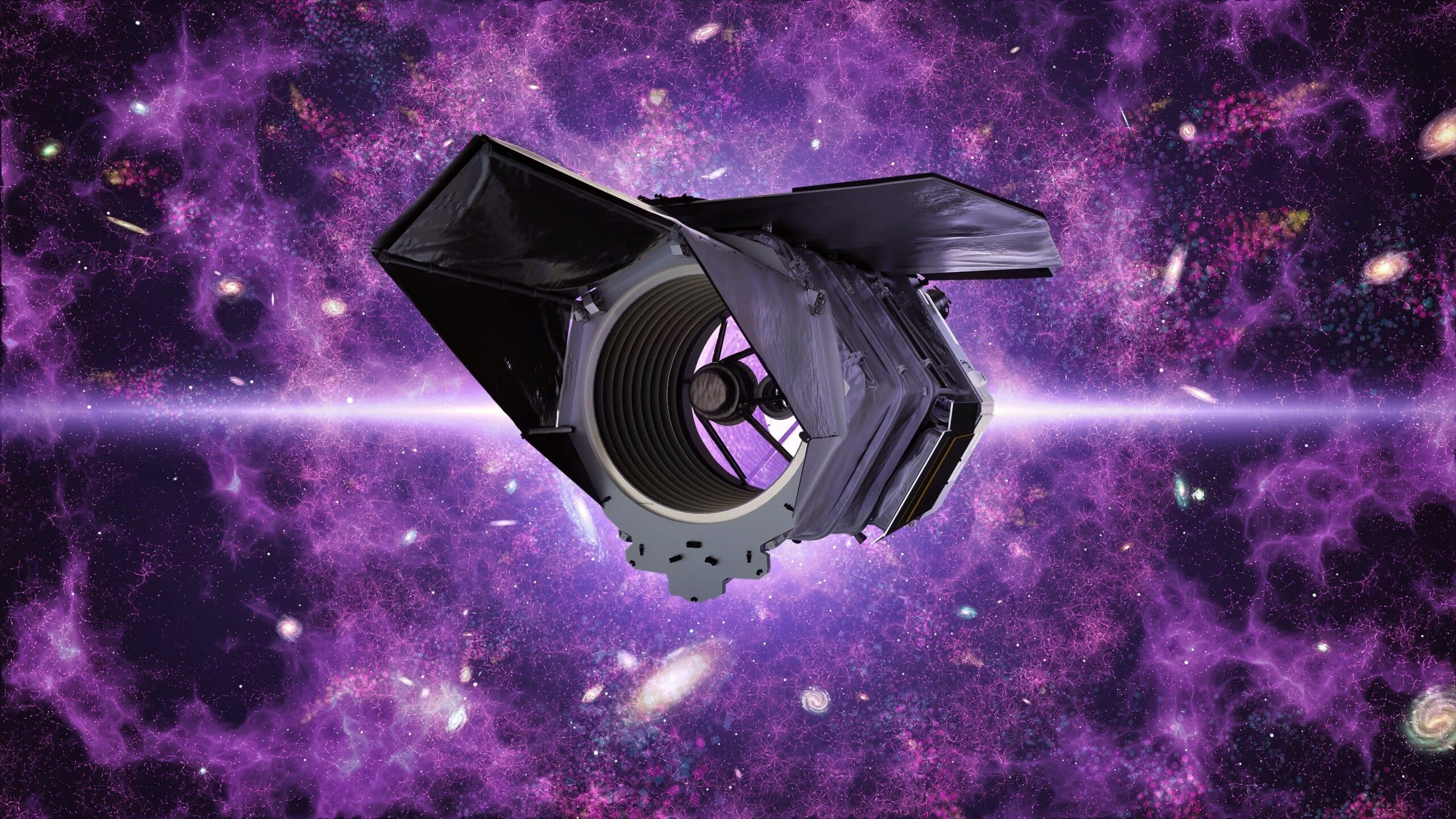
For nearly four decades, the Hubble Space Telescope has delighted young and old alike with its spectacular photographs of the universe and its wonders. But after more than 36 years (since its launch in 1990), it seems its mission has finally reached its limit, and now we need even greater resolution. NASA's Nancy Grace Roman Space Telescope, scheduled for launch on August 30, 2026, is a new, powerful observatory that will revolutionize our view of the universe. Its key innovation is its ability to capture images with similar detail to Hubble, while covering an area of the sky 100 times larger in a single exposure.
Durante las últimas casi cuatro décadas el Telescopio Espacial Hubble ha hecho las delicias de pequeños y mayores con sus fotografías espectaculares del universo y sus maravillas. Pero después de más de 36 años (ya que fue lanzado en 1990), parece que su misión ya ha dado sus frutos y ahora necesitamos más resolución. El Telescopio Espacial Nancy Grace Roman de la NASA, cuyo lanzamiento está previsto para el 30 de agosto de 2026, es un nuevo gran observatorio que revolucionará nuestra visión del universo. Su principal innovación es que puede capturar imágenes con un detalle similar al del Hubble, pero cubriendo un área de cielo 100 veces mayor en una sola exposición.
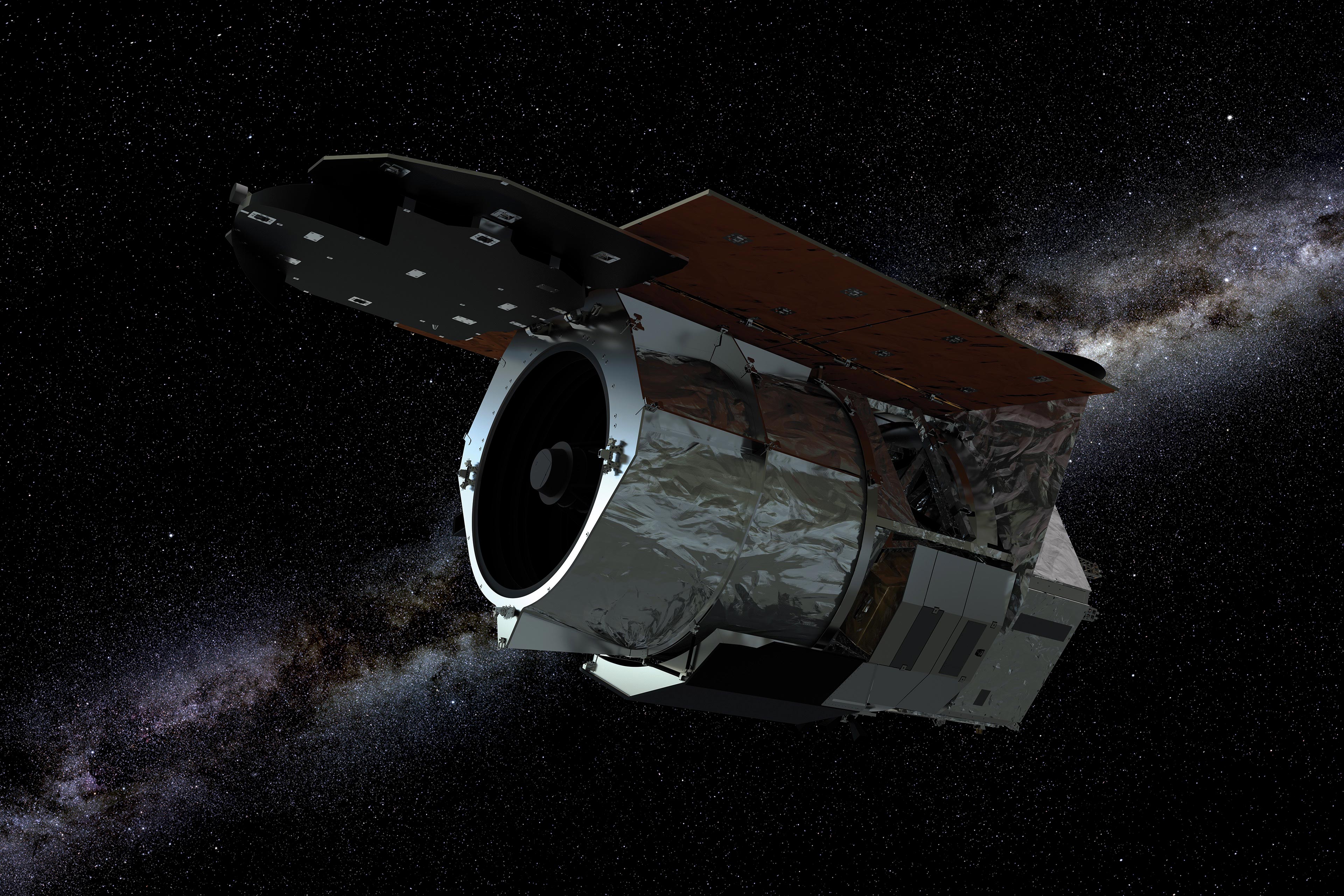
This allows it to perform massive astronomical measurements, moving from studying isolated objects to conducting complete surveys of the cosmos. The Roman telescope is based on a combination of proven technology and key advances. Its primary mirror measures 2.4 meters in diameter, similar to Hubble's, giving it a very similar light-gathering capacity and level of detail. This ensures equally sharp images. But its greatest asset is the wide-angle camera; the heart of the telescope is its Wide Field Instrument (WFI), a 300-megapixel camera composed of 18 detectors.
Esto le permite realizar mediciones astronómicas masivas, pasando de estudiar objetos de forma aislada a realizar censos completos del cosmos. El telescopio Roman se basa en una combinación de tecnología probada y avances clave. Su espejo principal mide 2.4 metros de diámetro, similar al del Hubble, lo que le otorga una capacidad de captar luz y un nivel de detalle muy parecidos. Esto asegura que las imágenes sean igualmente nítidas. Pero su mejor baza es la cámara gran angular, el corazón del telescopio es su Instrumento de Campo Amplio (WFI), una cámara de 300 megapíxeles compuesta por 18 detectores.

Source
While Hubble views only a small portion of the sky, Roman's WFI can capture a much larger area, making it 100 times more efficient at mapping the universe. This new telescope also incorporates an active coronagraph, a pioneering instrument that uses deformable mirrors to block a star's light, much like a "noise canceller." This allows for the direct observation of planets orbiting stars, a far more difficult feat than indirect detection and a major breakthrough for exoplanet detection.
Mientras que el Hubble ve una pequeña porción del cielo, el WFI de Roman puede capturar una extensión mucho mayor, lo que equivale a ser 100 veces más eficiente para cartografiar el universo. Este nuevo telescopio también incorpora un coronógrafo activo, un instrumento pionero que utiliza espejos deformables para bloquear la luz de una estrella, como si usara un "cancelador de ruido" para la luz. Esto permite ver directamente planetas que orbitan a su alrededor, un logro mucho más difícil que la detección indirecta y un gran avance para la detección de exoplanetas.
Thanks to its ability to observe large portions of the sky in great detail, the Roman telescope will have a transformative impact on several areas of astronomy: It will map the distribution of millions of galaxies and study the "cosmic voids" (enormous empty regions between them). By analyzing how these structures have grown over time, scientists will be able to gain fundamental clues about the nature of the mysterious dark energy, which is accelerating the expansion of the universe, and the dark matter about which we know nothing.
Gracias a su capacidad de observar grandes porciones del cielo con gran detalle, el telescopio Roman tendrá un impacto transformador en varias áreas de la astronomía: Cartografiará la distribución de millones de galaxias y estudiará los "vacíos cósmicos" (enormes regiones vacías entre ellas). Al analizar cómo han crecido estas estructuras a lo largo del tiempo, los científicos podrán obtener pistas fundamentales sobre la naturaleza de la misteriosa energía oscura, que acelera la expansión del universo, y la materia oscura de la que no sabemos nada.
Source
Roman is expected to detect more than 100,000 new exoplanets. It will do so primarily through gravitational microlensing, an effect that occurs when a planet passes in front of a distant star and bends its light, like a cosmic magnifying glass. Its coronagraph will also allow it to take the first images of Jupiter-like planets orbiting other stars, a milestone in the search for habitable worlds. By repeatedly scanning the same regions of the sky, Roman will be adept at detecting phenomena that change over time, such as supernovae or tidal disruption events, which occur when a star is torn apart by a supermassive black hole.
Se espera que Roman detecte más de 100.000 nuevos exoplanetas. Lo hará principalmente mediante microlentes gravitacionales, un efecto que ocurre cuando un planeta pasa frente a una estrella lejana y desvía su luz, como una lupa cósmica. Su coronógrafo también permitirá tomar las primeras imágenes de planetas similares a Júpiter orbitando otras estrellas, un hito en la búsqueda de mundos habitables. Al escanear repetidamente las mismas regiones del cielo, Roman será un experto en detectar fenómenos que cambian con el tiempo, como las supernovas o los eventos de disrupción de mareas, que ocurren cuando una estrella es desgarrada por un agujero negro supermasivo.
It is expected to observe up to 100 of these events per year, helping us understand how black holes grew in the early universe. Ultimately, the Roman telescope doesn't replace Hubble or the James Webb, but rather complements them. While Hubble and Webb focus on observing specific objects in great detail, Roman will create the grand maps of the cosmos that will tell us "where" and "when" to look to make the next great discoveries. Its data legacy will be so vast that astronomers will continue to analyze it for decades.
Se prevé que observe hasta 100 de estos eventos por año, ayudando a entender cómo crecen estos agujeros negros en el universo primitivo. En definitiva, el telescopio Roman no reemplaza al Hubble o al James Webb, sino que los complementa. Mientras que el Hubble y el Webb se enfocan en observar objetos específicos con gran detalle, Roman realizará los grandes mapas del cosmos que nos dirán "dónde" y "cuándo" mirar para hacer los próximos grandes descubrimientos. Su legado de datos será tan vasto que los astrónomos seguirán analizándolos durante décadas.
More information/Más información
https://scitechdaily.com/next-generation-nasa-space-telescope-named-for-mother-of-hubble-nancy-grace-roman/
https://efe.com/ciencia-y-tecnologia/2026-07-30/nasa-prepara-lanzamiento-telescopio-roman-2/
Justo pasaba por el feed y tu post me hizo frenar. En una plataforma donde sobra lo superficial, esto se destaca.
Gracias por tomarte el tiempo de escribir esto con tanto detalle. Me gusta el enfoque.
Gracias por tomarte el tiempo de escribir esto. Estos temas están dando que hablar y está bueno discutirlos con datos.
With the innovative active coronagraph of the Roman Space Telescope, a transformation of totality has occurred, changing the game completely. In the process of utilizing deformable mirrors to block the rays of the nearby stars in a manner similar to that of a cosmic noise-canceller, it enables the shift from indirect detection to direct imaging of the external planets in our proximity. Plus, its addition to the numerous 300-mega pixel Wide-Field Instrument will contribute to the revolutionization of planet-detecting processes and mapping dark energy.
Me quedé pensando en lo que escribiste. Es de esos posts que uno termina y sigue dándole vueltas un rato después.