New method for 3D printing concrete bridges that reduces material usage by up to 76%/Nuevo método para imprimir puentes de hormigón en 3D que reduce hasta un 76% el uso de material
Source
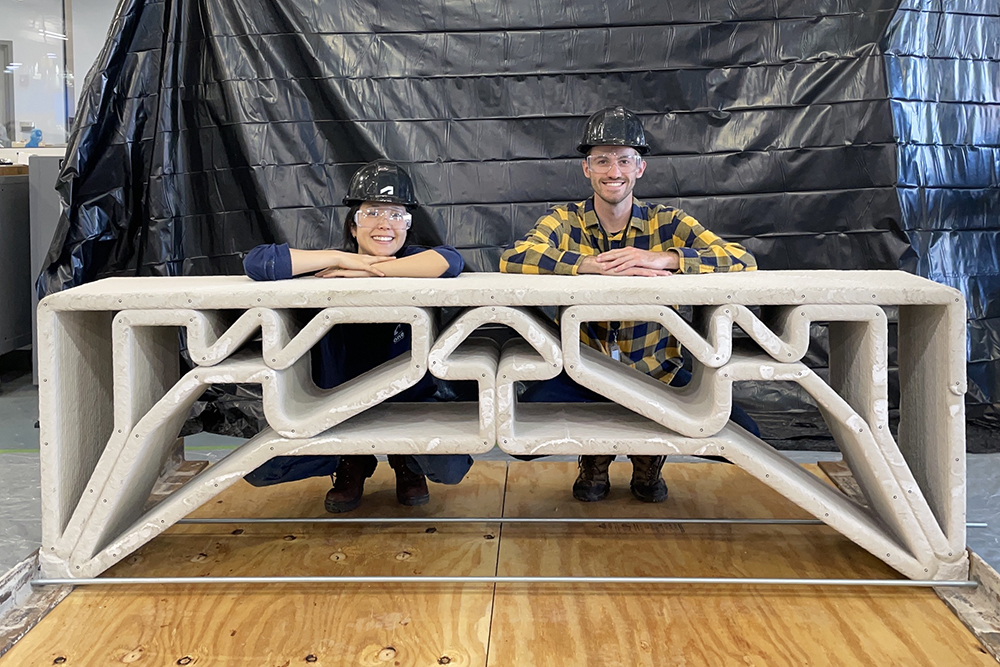
A team of researchers at MIT (Massachusetts Institute of Technology) has developed a new method that could reduce material usage in 3D concrete printing by up to 76%. The key lies not in a new type of concrete, but in intelligent software that designs structures with the actual limitations of current printers in mind. The method focuses on overcoming a key problem: the most efficient computer-generated designs are often impossible to manufacture with current 3D concrete printers.
Un equipo de investigadores del MIT(Massachusetts Institute of Technology) ha desarrollado un nuevo método que podría reducir el uso de material en la impresión 3D de hormigón hasta un 76%. La clave no está en un nuevo tipo de hormigón, sino en un software inteligente que diseña estructuras pensando en las limitaciones reales de las impresoras actuales. El método se centra en superar un problema clave: los diseños más eficientes creados por ordenador suelen ser imposibles de fabricar con las impresoras 3D de hormigón actuales.
Engineers use a technique called topology optimization, which can find the lightest and strongest shape, often resulting in complex, spiderweb-like structures. However, these don't account for the physical limitations of printers and would be impossible to build. The MIT team has created a framework that integrates these limitations directly into the design process. To do this, they identified three main constraints and translated them into mathematical rules for their software.
Los ingenieros utilizan una técnica llamada optimización topológica, que es capaz de encontrar la forma más ligera y resistente, que a menudo resultan ser complejas estructuras con formas de "tela de araña". Sin embargo, estas no consideran los límites físicos de las impresoras y serían imposibles de construir. El equipo del MIT ha creado un marco de trabajo que integra estas limitaciones directamente en el proceso de diseño. Para ello, identificaron tres restricciones principales y las convirtieron en reglas matemáticas para su software.
Source
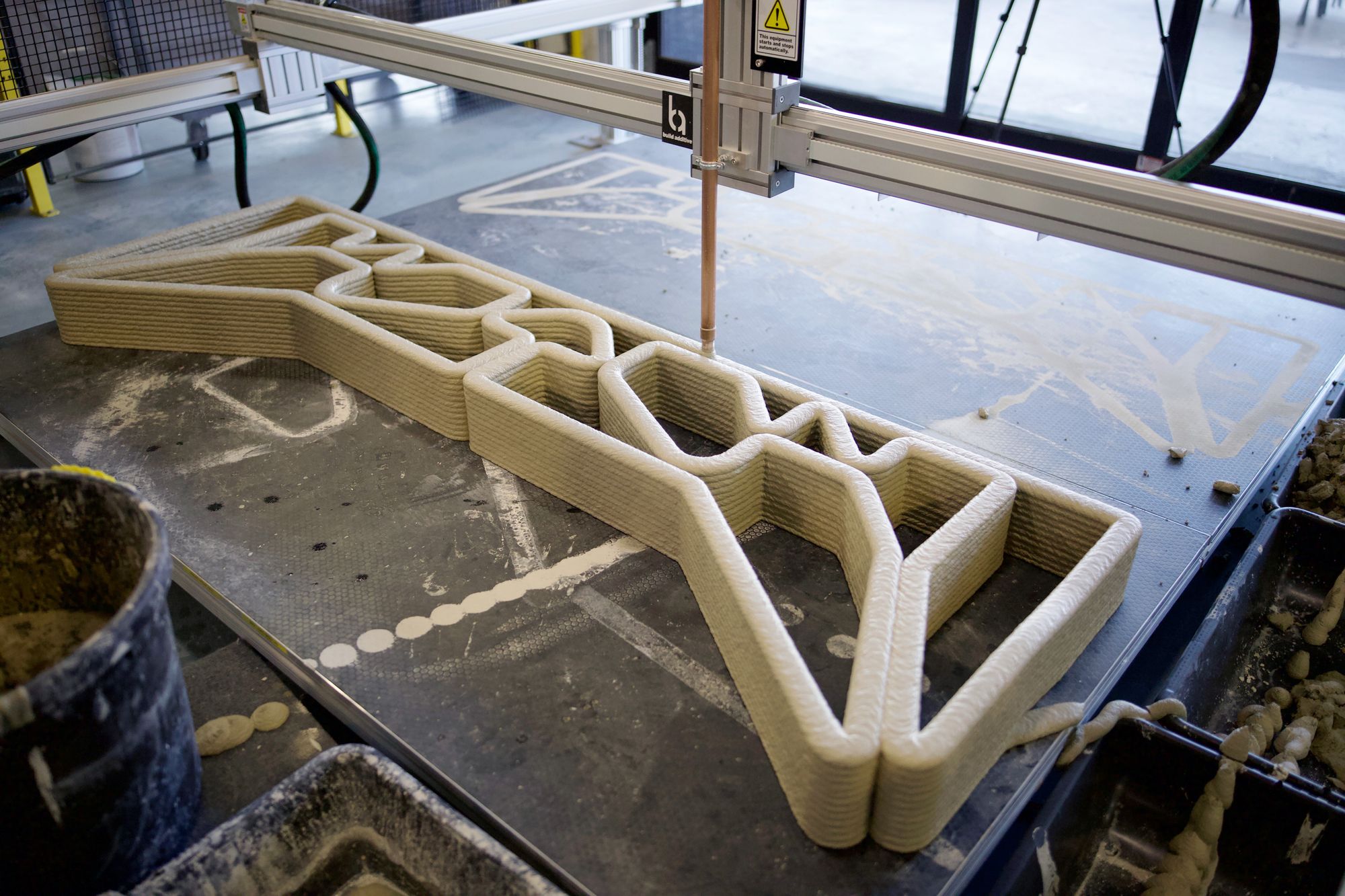
The first of these constraints is the bead thickness; each layer of concrete must have a minimum thickness (4 cm was used in the test bridge). Next is the rotational capability; the printer nozzle cannot rotate at excessively tight angles. Finally, continuous printing is required to avoid weak points; the structure must be printed in a single motion, without pauses. By "programming" these limitations, the software automatically generates a design that is both extremely efficient in its use of material and that the printer can build without requiring manual redesigns.
La primera de estas restricciones es el grosor del cordón, cada capa de hormigón debe tener un grosor mínimo (en el puente de prueba usaron uno de 4 cm). Luego está la capacidad de giro, la boquilla de la impresora no puede girar en ángulos demasiado cerrados. Por último la impresión continua, para evitar puntos débiles, la estructura debe imprimirse en un solo movimiento, sin pausas. Al "programar" estas limitaciones, el software genera automáticamente un diseño que es a la vez extremadamente eficiente en el uso de material y que la impresora puede construir sin necesidad de rediseños manuales.
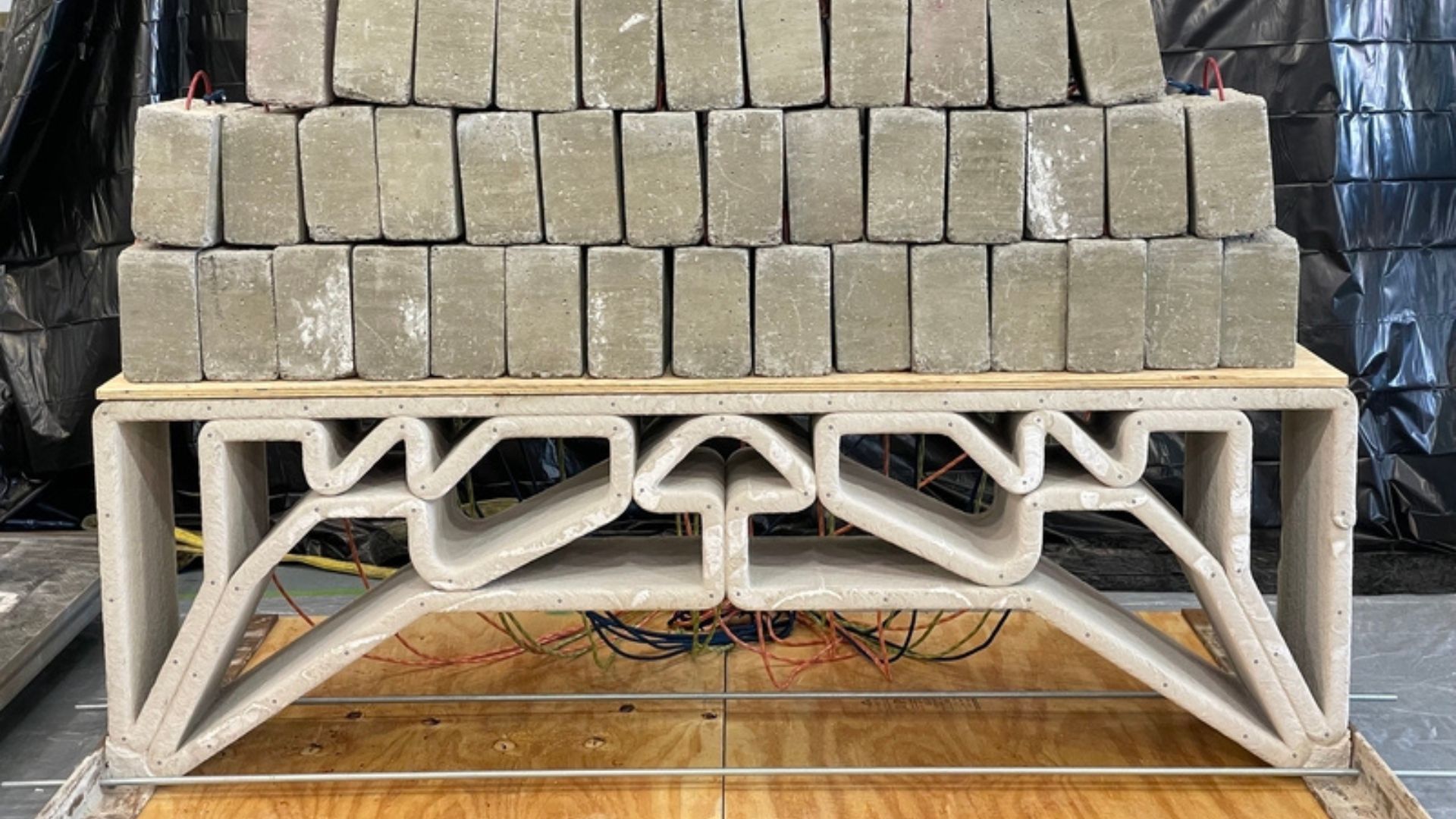
To validate their method, the researchers printed a 2.3-meter-long bridge at Autodesk's Boston facility. The structure weighed about 400 kg and was printed in just 30 minutes using standard mortar. In load tests, the bridge withstood over 900 kg with virtually no bending, far exceeding expectations. This result led to a surprising finding: the bridge's design wasn't limited by the strength of the concrete, but rather by the limitations of the printer itself. This means the current structure is "oversized" for its purpose because the printer can't create the thinnest, most efficient shapes the software could design.
Para validar su método, los investigadores imprimieron un puente de 2,3 metros de largo en las instalaciones de Autodesk en Boston. La estructura pesaba unos 400 kg y se imprimió en solo 30 minutos con mortero estándar. En las pruebas de carga, el puente soportó más de 900 kg sin doblarse prácticamente, superando con creces las expectativas . Este resultado llevó a un hallazgo sorprendente: el diseño del puente no estaba limitado por la resistencia del hormigón, sino por las propias limitaciones de la impresora que lo fabricó.Esto significa que la estructura actual está "sobredimensionada" para su propósito porque la impresora no puede crear las formas más delgadas y eficientes que el software podría diseñar.
Source
This discovery has a major impact, as concrete is the world's most widely used building material and its production is one of the largest sources of CO2 emissions. The research showed that the most significant limitation was not the need to print in a single line, but rather the thickness of the concrete bead. The team's analysis revealed that if a printer could use a 1 cm bead instead of the current 4 cm, material usage could be reduced by 76%, while still maintaining a wide safety margin. This result serves as a roadmap for manufacturers, indicating that relatively modest improvements in printing hardware could lead to massive material savings and a significant reduction in carbon footprint.
Este descubrimiento tiene un gran impacto, ya que el hormigón es el material de construcción más utilizado del mundo y su producción es una de las mayores fuentes de emisiones de CO2. La investigación demostró que la limitación más importante no era la necesidad de imprimir en una sola línea, sino el grosor del cordón de hormigón. El análisis del equipo reveló que si una impresora pudiera usar un cordón de 1 cm en lugar de los 4 cm actuales, se podría reducir el uso de material en un 76%, manteniendo un amplio margen de seguridad. Este resultado sirve como una "hoja de ruta" para los fabricantes, indicando que mejoras relativamente modestas en el hardware de impresión podrían generar ahorros masivos de material y una reducción significativa de la huella de carbono.
In addition to optimization, this technique already offers other advantages over traditional methods, such as eliminating the need for wooden formwork used in conventional construction. The MIT team recognizes that a concrete bridge without steel reinforcement (which provides tensile strength) has limited practical applications. Their next goal is to investigate how to integrate steel bars (reinforcing bars) into the 3D printing process to create reinforced concrete structures. This is a crucial step before the technology can be applied to large-scale infrastructure construction.
Además de la optimización, esta técnica ya ofrece otras ventajas frente a los métodos tradicionales como la eliminación de encofrados de madera que se usan en la construcción convencional. El equipo del MIT es consciente de que un puente de hormigón sin refuerzo de acero (que proporciona resistencia a la tracción) tiene un uso limitado en el mundo real. Su próximo objetivo es investigar cómo integrar barras de acero (varillas de refuerzo) en el proceso de impresión 3D para crear estructuras de hormigón armado. Esta es una etapa crucial para que la tecnología pueda aplicarse a la construcción de infraestructuras a gran escala.
More information/Más información
https://interestingengineering.com/innovation/new-mit-3d-printed-concrete-bridge-carries-over-2000-pounds-in-tests
Amazing advancement! Using printer limitations in the design phase rather than thinking about them later is a brilliant engineering strategy. When future printers will learn to use thinner concrete layers and steel reinforcement at the same time, then it will allow us to minimize material consumption, expenses and CO₂ emissions and make 3D-printed structures more realistic and feasible. Great one!
@mauromar, tu post me hizo acordar una conversación que tuve con mi viejo hace años. Cosas que vuelven.
Justo venía siguiendo este tema y tu post me aclaró un par de cosas. @mauromar
Compartir lo que uno piensa en la plataforma no siempre es fácil. Gracias por animarte a hacerlo. @mauromar