Evolution and regeneration of the human mind
Evolution and regeneration of the human mind
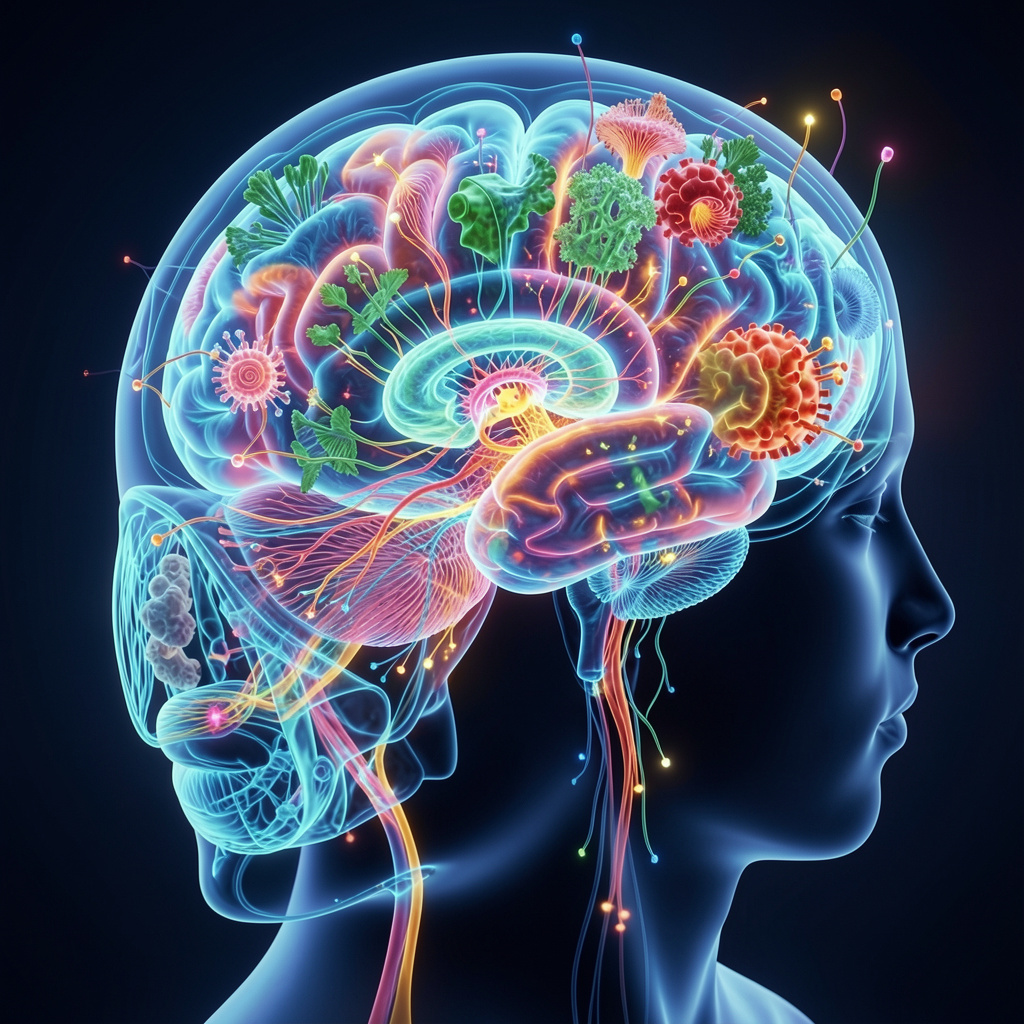
As medicine seeks ways to regenerate the human brain, an unexpected discovery in tiny songbirds may have revealed why our minds hardly repair themselves.
Researchers at Boston University studied the brain of the Sebran rammer, a bird famous for learning complex songs, and found something surprising. New neurons literally push their way into the adult brain to take up space - no metaphor - using high-resolution electron microscopy, scientists observed newborn neurons traversing brain tissue like explorers blazing trails in a dense forest.
Instead of delicately surrounding mature cells, they compress them, move them and advance until they reach their destination. It is an aggressive and perhaps revolutionary behavior. In humans, most of the neurons that we use throughout life are already present from birth. Our brain generates few new cells, however, birds, fish and reptiles continue to produce neurons throughout life, maintaining a greater capacity for adaptation and repair.
The question was always, why? Now a powerful hypothesis arises, perhaps the human brain has been designed or has evolved according to your belief to preserve deep memories, stable personality and delicate connections built over decades. Our nervous system could have drastically reduced the input of new invasive neurons, in other words, to maintain who you are, the brain may have sacrificed some of its
ability to regenerate.
These ideas change the way we view neurodegenerative diseases such as Alzheimer's, Parkinson's and age-related cognitive decline, but there is an optimistic side. For a long time it was believed that new neurons could only migrate using support structures called glia, abundant in the initial phases of human life and reduced after birth. However, in birds, these neurons seem to advance without depending on that support. This means that human brain repair may not require conditions previously considered impossible.
The Boston University team is now investigating the genetic communication of these cells using single-cell RNA sequencing. Do you want to understand how these neurons know when to stop, where to go, and how to integrate without causing chaos? If this biological code is deciphered, the impact could be gigantic. It wouldn't just be treating diseases, it would be teaching the human brain to rebuild itself.
Follow my publications with the latest in artificial intelligence, robotics and technology.
If you like to read about science, health and how to improve your life with science, I invite you to go to the previous publications.
Follow my publications with the latest in artificial intelligence, robotics and technology.
If you like to read about science, health and how to improve your life with science, I invite you to go to the previous publications.
Congratulations!
Your post has been selected and upvoted by the SteemPro Team 🚀
Explore more on SteemPro:
🌐 https://www.steempro.com
🎮 Play SteemHeights: https://www.steempro.com/games/steem-heights
💬 Join our Discord: https://discord.gg/Bsf98vMg6U
💪 Supporting the growth of the Steem ecosystem together.
🟩 Vote for witness faisalamin:
https://steemitwallet.com/~witnesses
https://www.steempro.com/witnesses#faisalamin
This is an automated message.