Robots learn more like children.

in Popular STEMyesterday

Robots learn more like children.


Image source:


The result was surprising.


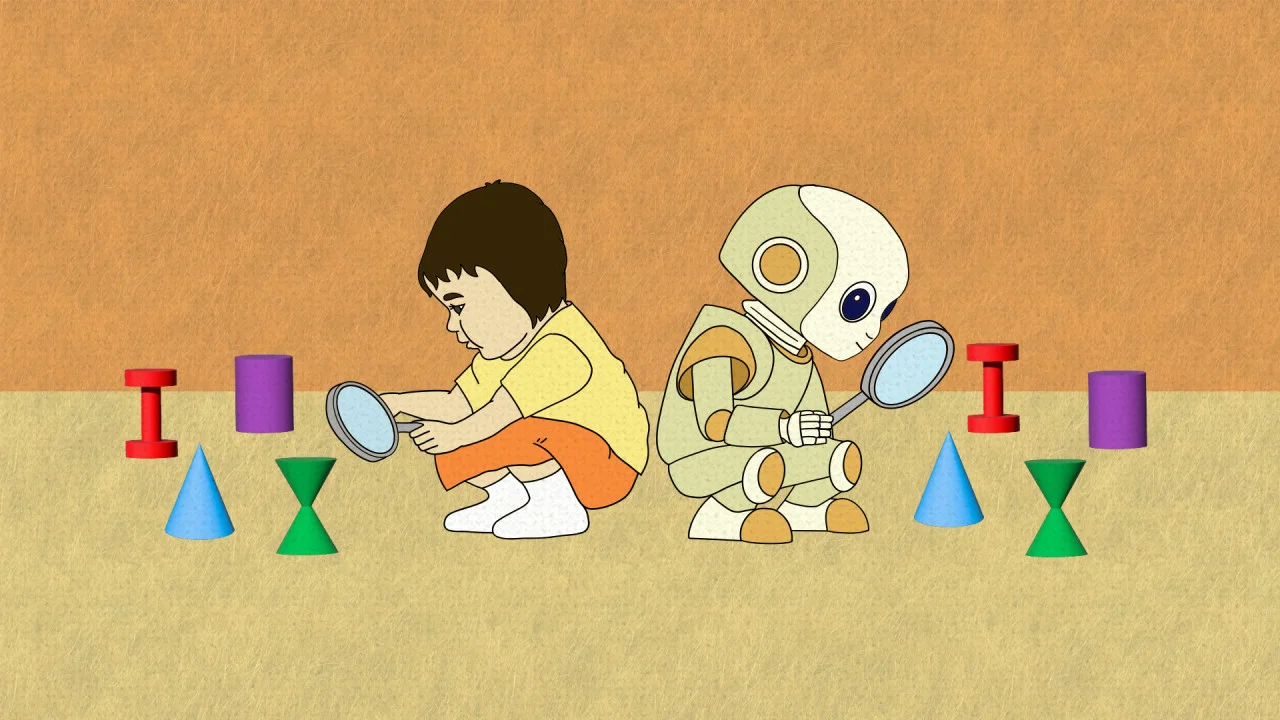
Researchers at the Okinawa Institute of Science and Technology in Japan developed a system that attempts to make machines learn like children: exploring, playing, making mistakes, and transforming curiosity into knowledge.


Not only did the robots learn nearly twice as fast, but they also began to exhibit spontaneous behaviors very similar to those of young children. Unlike large language models that learn by analyzing vast amounts of text to predict the next word, this project employs an architecture inspired by the workings of the human brain; to achieve this, the researchers combined that architecture with reinforcement learning.


The robots received a reward when they correctly completed a language-based task, but they also obtained an internal reward for exploring unfamiliar situations and learning something new—in other words, they were incentivized not only to get things right but also to make discoveries. The effect was immediate. Even after mastering the assigned tasks, many robots continued to explore their environment on their own initiative.


They knocked over objects, tested different combinations, and performed unrequested actions; at first glance, this behavior seemed pointless, but this form of play ultimately accelerated language learning, reinforcing a hypothesis widely discussed in child psychology: play is also a way of learning.


Researchers discovered another striking result when varying the amount of available linguistic input.


Robots trained on just 48 different combinations managed to correctly generalize about 25% of new instructions, whereas those exposed to 180 combinations achieved a generalization rate of approximately 85%. This demonstrates that the diversity of experiences was far more important than simply repeating the same examples countless times.


Perhaps the most curious finding emerged when scientists intentionally reversed certain language rules: initially, the robots learned the exceptions correctly, but as they began to formulate general rules, they temporarily started making mistakes in the very areas they had previously mastered, only to get them right again later; this behavior mirrors a well-known learning curve observed in children, who often invent verb forms before finally mastering the irregular verbs of their native language.


References 1


Follow my publications with the latest in artificial intelligence, robotics and technology.

If you like to read about science, health and how to improve your life with science, I invite you to go to the previous publications.