The princesses of ancient Egypt were warriors.
in Popular STEM8 days ago

The princesses of ancient Egypt were warriors.


Image source:


Here is another chance prediction that might actually be true.


I don’t know if you’ve seen the movie *The Mummy*—specifically the second installment. I love it as an adventure film; I find it entertaining and really enjoy it. I especially liked the sequel—it’s a lighthearted, unpretentious adventure movie—and it featured an impressive opening scene showing a fight between two Egyptian princesses.


Director Stephen Somers wrote that scene in the year 2000. It had no scientific basis; it simply depicted a clash between two Egyptian princesses who would later be spiritually reincarnated. The scene served to introduce the conflict between the two female leads. When the script was written back in 2000, the whole thing was a complete invention; in fact, archaeologists at the time assumed that Egyptian princesses—whether from the royal family or the high nobility—played a passive role: getting married, having children, managing household affairs, and that was it—nothing more.


But it has happened—as has occurred at times with literary works and certain films; I’m thinking right now, for instance, of *Star Wars* and the Death Star—where it seems there was an accidental prediction, because recent research reveals a completely different story—or rather, a story similar to the one we saw in the movie.


Research led by Said Hasep of Benny Swift University in Egypt suggests that weapons found in the tombs of several Egyptian princesses—who lived nearly 4,000 years ago—were not merely decorative. Classical historiography holds that women in Egypt, even those of the highest nobility, played a passive, secondary, and domestic role; while some might occasionally rise to power, it was considered an exception. However, this discovery marks a radical shift in that perspective.


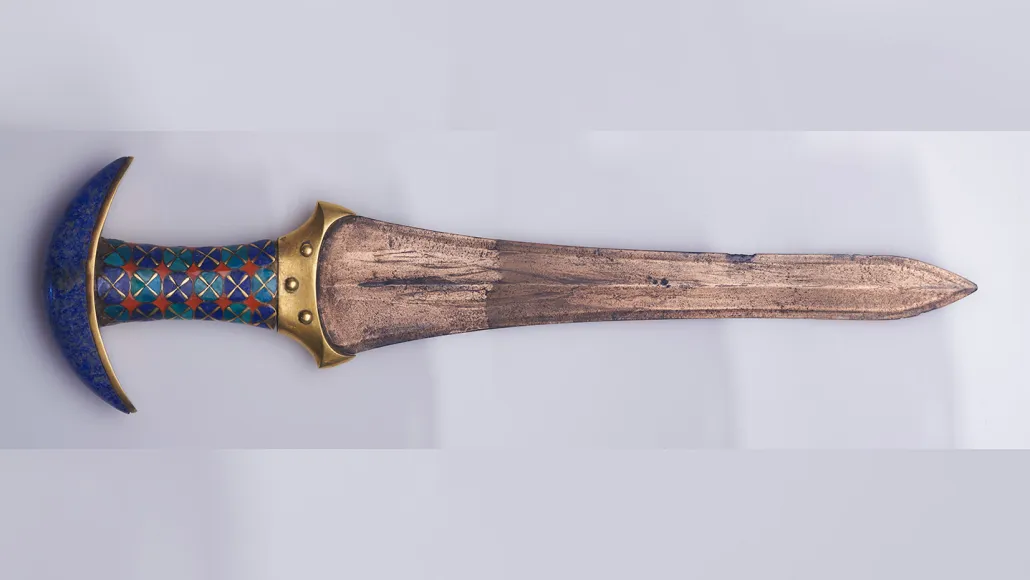
Rather than being confined to the home and domestic affairs, it appears that the daughters of the pharaoh—specifically Amenemhat II, who died around 1900 BC—were buried with bows, maces, and, in one instance, a dagger like the one shown in the image. This weapon is not made of iron but dates back to the Bronze or Copper Age—reflecting a time nearly four millennia ago. The researchers established this connection not only by noting the presence of weapons in the burials or determining that they were not merely ceremonial, but also by analyzing the princesses' mummified remains. They discovered that certain bones showed signs of intensive weapon use—particularly associated with maces—indicating that these women were indeed trained for combat. This fundamentally changes our understanding of the role of an Egyptian princess.


References 1


Follow my publications with the latest in artificial intelligence, robotics and technology.

If you like to read about science, health and how to improve your life with science, I invite you to go to the previous publications.


Sort:  

Congratulations!

Your post has been selected and upvoted by the SteemPro Team 🚀

Explore more on SteemPro:
🌐 https://www.steempro.com
🎮 Play SteemHeights: https://www.steempro.com/games/steem-heights
💬 Join our Discord: https://discord.gg/Bsf98vMg6U

💪 Supporting the growth of the Steem ecosystem together.

🟩 Vote for witness faisalamin:
https://steemitwallet.com/~witnesses
https://www.steempro.com/witnesses#faisalamin

steempro-cover-black.png
This is an automated message.