We have entered the era of synthetic code, AIs that program themselves.
in Popular STEM23 hours ago

We have entered the era of synthetic code, AIs that program themselves.



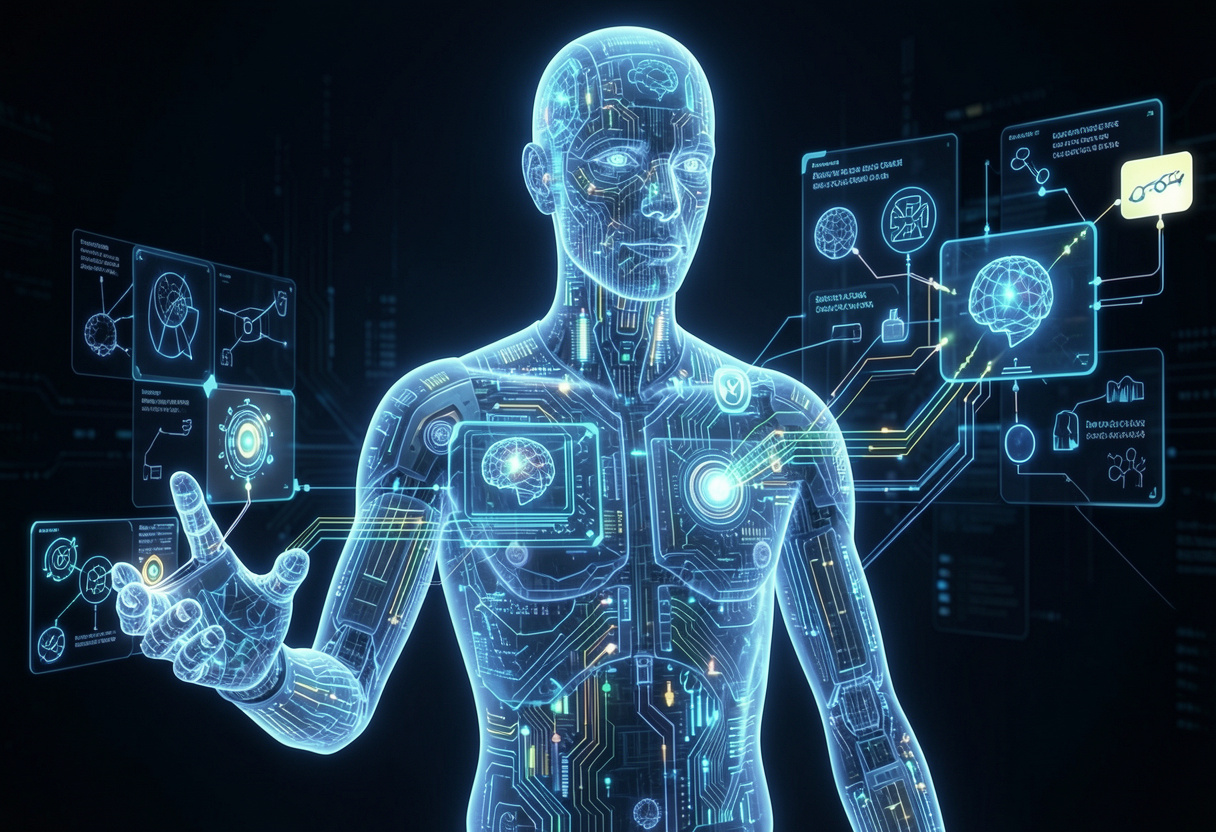
An artificial intelligence capable of writing code, correcting its own errors and participating in the creation of systems even more advanced than itself, that idea belonged to the territory of science fiction for a long time, fueling stories about machines that evolved outside of human control, but in 2026, documents released by Anthropic revived a debate that until recently seemed distant.


Artificial intelligence is beginning to participate in its own development and security researchers treat this process so seriously. and in the backstage of the great laboratories of Silicon Valley, much of the heavy lifting is no longer carried out exclusively by human programmers. A report from the Antropic Institute revealed that the industry is entering the so-called era of synthetic code, where systems already help you write, review and test the software that drives the next generation of models and the numbers are impressive.


With tools like Cloud Code, approximately 80% of the code used in internal systems at Anthropic was already generated by artificial intelligence in May 2026, this allowed an eightfold increase in the amount of code validated daily compared to the levels seen in 2024, according to Jack Clark, co-founder of the company, the speed of progress of already continues to accelerate rather than decelerate, including the time needed for advances in areas such as medicine, science and engineering.


This evolution also appears in autonomy tests; at the beginning of 2024, the most advanced models could work alone for just a few minutes. A year later, the Cloud Sonet 3.7 was already performing complex tasks for about an hour and a half. In 2026, Cloud Opos 4 showed the ability to spend up to 12 hours executing sophisticated jobs without human intervention. In tests such as the SW Bench, aimed at correcting errors in real software projects, and the core bench that measures the ability to reproduce scientific research, advances occurred at a surprising speed, but the researchers themselves warn that there is still an important difference between operational autonomy and total autonomy.


Humans for now continue to define the objectives, evaluate the results and monitor the most powerful systems. The biggest fear of the security community is not that machines will become conscious, but that the speed of technological evolution surpasses the human ability to audit and verify what the AIs themselves produce, which is why Anthropic has already started conversations with legislators and security specialists to discuss new forms of supervision and validation. After all, if artificial intelligence is ceasing to be just a tool and becoming an active participant in its own evolution, perhaps the most important question is no longer when it will happen, but rather will we be prepared to keep up with this pace.


Sorry for my Ingles, it's not my main language. The images were taken from the sources used or were created with artificial intelligence


Sort:  

Congratulations!

Your post has been selected and upvoted by the SteemPro Team 🚀

Explore more on SteemPro:
🌐 https://www.steempro.com
🎮 Play SteemHeights: https://www.steempro.com/games/steem-heights
💬 Join our Discord: https://discord.gg/Bsf98vMg6U

💪 Supporting the growth of the Steem ecosystem together.

🟩 Vote for witness faisalamin:
https://steemitwallet.com/~witnesses
https://www.steempro.com/witnesses#faisalamin

steempro-cover-black.png
This is an automated message.

Loading...