Blockchain Applications in Intellectual Property Licensing and Royalty Distribution
At this moment, many sectors are revolutionizing the world with the help of blockchain technology. It is assisting businesses, government and individuals with record keeping in a safe and transparent manner. An essential segment where blockchain is emerging as a game-changer is in intellectual property licensing and royalty payments. Creative work – music, books, movies, software, inventions, paintings, photographs, and many more – are all examples of intellectual property. They are property of their author(s) and must not be stolen or used without their permission. I think that's a process that can be made easier, faster and more trustworthy with blockchain technology.
Intellectual property licensing: The act of allowing another individual or organization to utilize a creative work, with the owner's consent, under a set of conditions. For instance, a musician might permit a company to use a song in an ad, or a software developer might let a company use a computer program. The owner will then be paid. This is sometimes referred to as a royalty. Royalties play a crucial role as they are essential for incentivizing creators for their hard work and creativity.
Traditionally, license and royalty payments can be an issue. There are many that are involved, such as publishers, agents, distributors, lawyers and collection societies. This process can be delayed and costly due to the numerous intermediaries. There are times, however, when creators do not get their payments when they are due. At times, they may not even know how much money they should get. Record inaccuracies, fraud, and the lack of transparency are also challenges for artists and inventors.
Blockchain technology offers a more effective solution to address many of these issues. A blockchain is a database of information recorded in blocks which are linked together and stored digitally. After the information has been entered into the blockchain, it is extremely hard to alter or delete. This ensures that the system is safe and reliable. All transactions are documented and all who have permission are able to view the same information. This helps to minimize conflicts and build trust between creators and users.
An application of blockchain is proving ownership of intellectual property. Once a creator completes a song, book, artwork or invention, they are able to register it on a blockchain. It records the who and when the work was registered. This provides good evidence of ownership. In the event that a later claimant emerges to say that the work is theirs, the blockchain record can be used to settle the controversy. I believe it will give creators more confidence, as it is properly documented.
Licensing is also a breeze with blockchain. Licensing agreements can be recorded as smart contracts on the blockchain instead of a multitude of paper documents. A smart contract is a digital agreement which executes according to the rules encoded in the smart contract. For instance, assume that a company wishes to access a song for a year; the clever contract can automatically enable access to the song after payment. Access may be automatically terminated at the end of the licence. This saves time and minimises error.
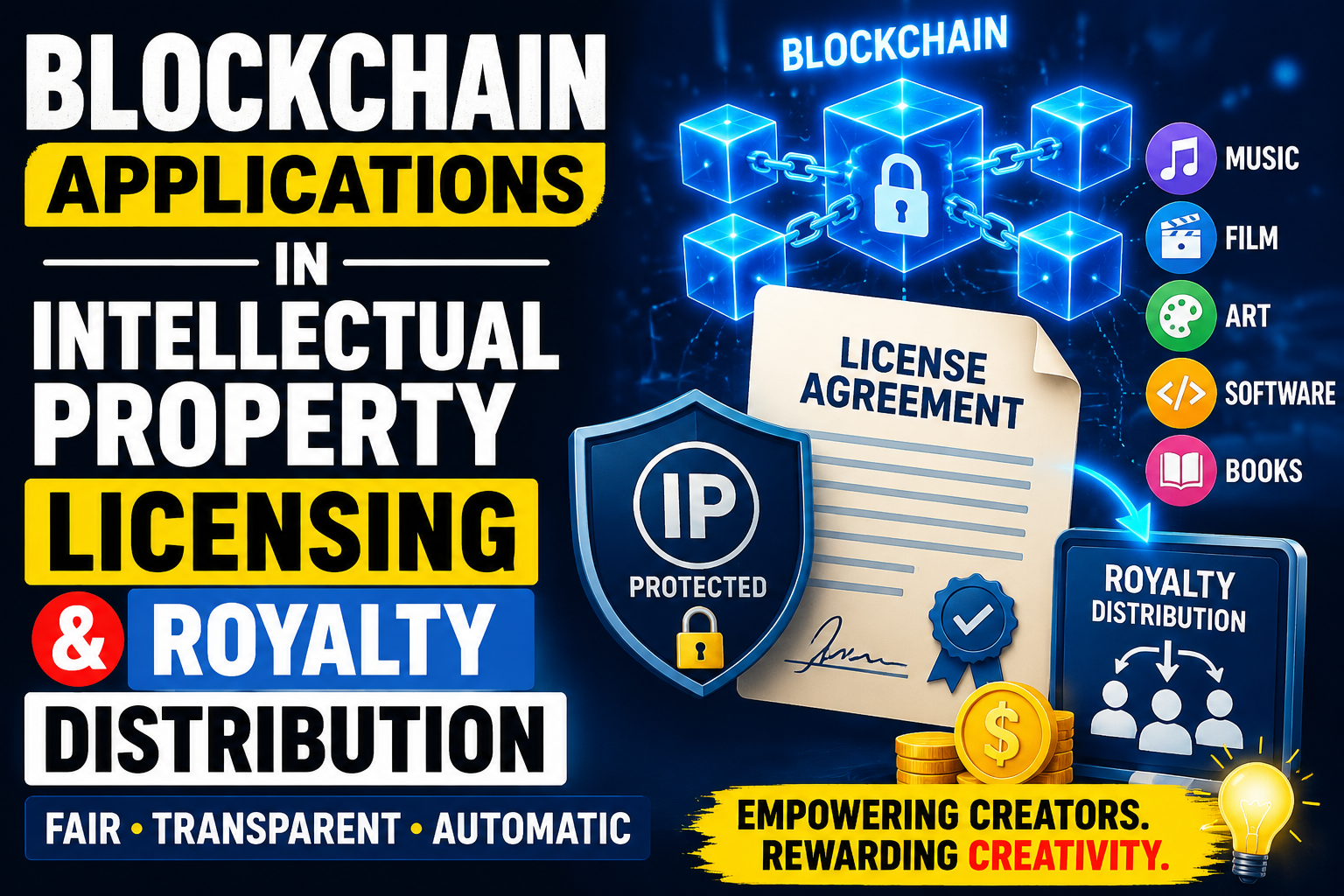
Blockchain is also very helpful in the field of royalties distribution. Under the traditional system, it can take months for royalty payments to be received by the creator. This can be frustrating to independent artists who rely on a steady income. Blockchain makes it possible to automatically make payments when a work is used or sold. Smart contracts can precisely determine the proper royalty and transfer it straight to the owner's digital wallet. This is a faster, more accurate and more transparent process.
Another benefit is that blockchain can split up the royalties of a number of individuals. For instance, a song can involve multiple writers, producers and performers. Everyone is responsible for a specific percentage of work. The smart contract can execute the sharing of the payment automatically based on these percentages, without arguments or waiting. Each individual gets the agreed share. This ensures fairness and trust between all concerned.
It also provides a solution to combat piracy and illegal copying using blockchain. Each digital product license can have a unique record on the blockchain. This helps creators and companies to track the usage of their content. When someone distributes the work without permission, it is easier to tell if anyone has a copy. While the blockchain can't entirely prevent piracy, it does make it more challenging for pirates and can help to protect intellectual property rights.
Even small creators can be helped with blockchain technology. Historically, lots of musicians, writers, as well as artists were reliant upon larger companies to handle their work. In today's day and age, blockchain has made it possible for creators to engage directly with consumers. They can sell music, books, digital art or software, avoiding the need to rely too much on middlemen. This allows them to retain a greater percentage of their income. I think this opens up a number of opportunities for talented individuals who may not have the opportunity to be published by a large company.
Although there are numerous benefits, blockchain faces certain challenges. There is a lack of understanding of the technology among many. Technical knowledge and investment can also be involved in the setup of blockchain systems. There are no clear regulations regarding the management of intellectual property rights through blockchain technology in some countries. Furthermore, not all blockchain platforms are compatible with each other. A number of obstacles must be overcome before blockchain can be widely embraced globally.
To conclude, blockchain is driving positive changes in IP licensing and royalties distribution. It ensures secure ownership records, increased transparency, decreased fraud, faster licensing and fair and timely payments to creators. Smart contracts help to automate agreements and eliminate any needless intermediaries. While there are still some hurdles to be faced, the potential of blockchain for safeguarding IP is quite promising. The more that people are aware of and use this technology, creators will be able to have more control over their work, and will be able to receive a fairer reward for their creative works. I think that's going to be a big part of blockchain's future in helping to foster innovation, and to safeguard the rights of creators around the globe.
https://x.com/i/status/2084160896859844736
https://x.com/i/status/2082974918300541265
https://coinmarketcap.com/currencies/pussfi/
Note:-
Regards, @adeljose