Blockchain-Based Healthcare Record Systems and Patient Data Confidentiality
Health is one of the most crucial segments of human life. All of us have gone to hospitals or clinics and medical record documents have been generated to aid physicians in understanding the individual's condition. These records contain details like medical history, lab results, prescriptions, allergies, surgeries and more. Many countries still maintain these records in other poorly integrated systems within the hospital. Records are sometimes lost, stolen or inaccessible when patients transfer to another hospital. Due to these difficulties, many experts consider that blockchain technology can improve healthcare record systems, while maintaining patient data confidences.
Blockchain is a digital technology that provides a secure way to store information in blocks linked together in a chain. After adding data to the blockchain, it is extremely hard to alter or erase the data without the permission of the network. This is the difference between the traditional databases that are owned by one organization and have all the information. Rather, blockchain establishes a safe and trusted system in which records can be easily verified. This is why blockchain is gaining traction in a variety of industries, including healthcare.
With a blockchain-based healthcare record system, patients' medical records can be securely maintained. Hospitals can share verified data on a blockchain network, rather than maintaining individual records that might be out of sync. This means that if the patient visits another hospital, all important medical information is readily accessible to the doctor as soon as he or she is properly authorized to access it. Consequently, the treatment could be quicker and more precise. Previous medical records are available, allowing doctors to prevent repeat tests.
The safety of data is one of the greatest benefits of blockchain in the healthcare industry. Medical information is rather private and shouldn't be looked at by any individual who doesn't have proper authorization. Hospitals are frequently a target for cybercriminals as their medical information often includes valuable personal data. These records are secure thanks to blockchain's robust encryption and verification processes. Attempting to alter the stored information is very hard even if someone is trying to attack the system. This helps to minimize the chances of data theft and unauthorised access.
Another significant upside of the blockchain technology is patient data confidentiality. Confidentiality is the ability to provide medical information only to those who are authorized to have access to the information. Patients in a blockchain system can have more control over who can have access to their records or use them. For instance, an individual may authorize a physician, specialist or pharmacist to have access to some data. Permission can be rescinded if the patient no longer wishes to have the records viewed. I believe this provides patients with more trust as they know their personal health data is being managed properly.
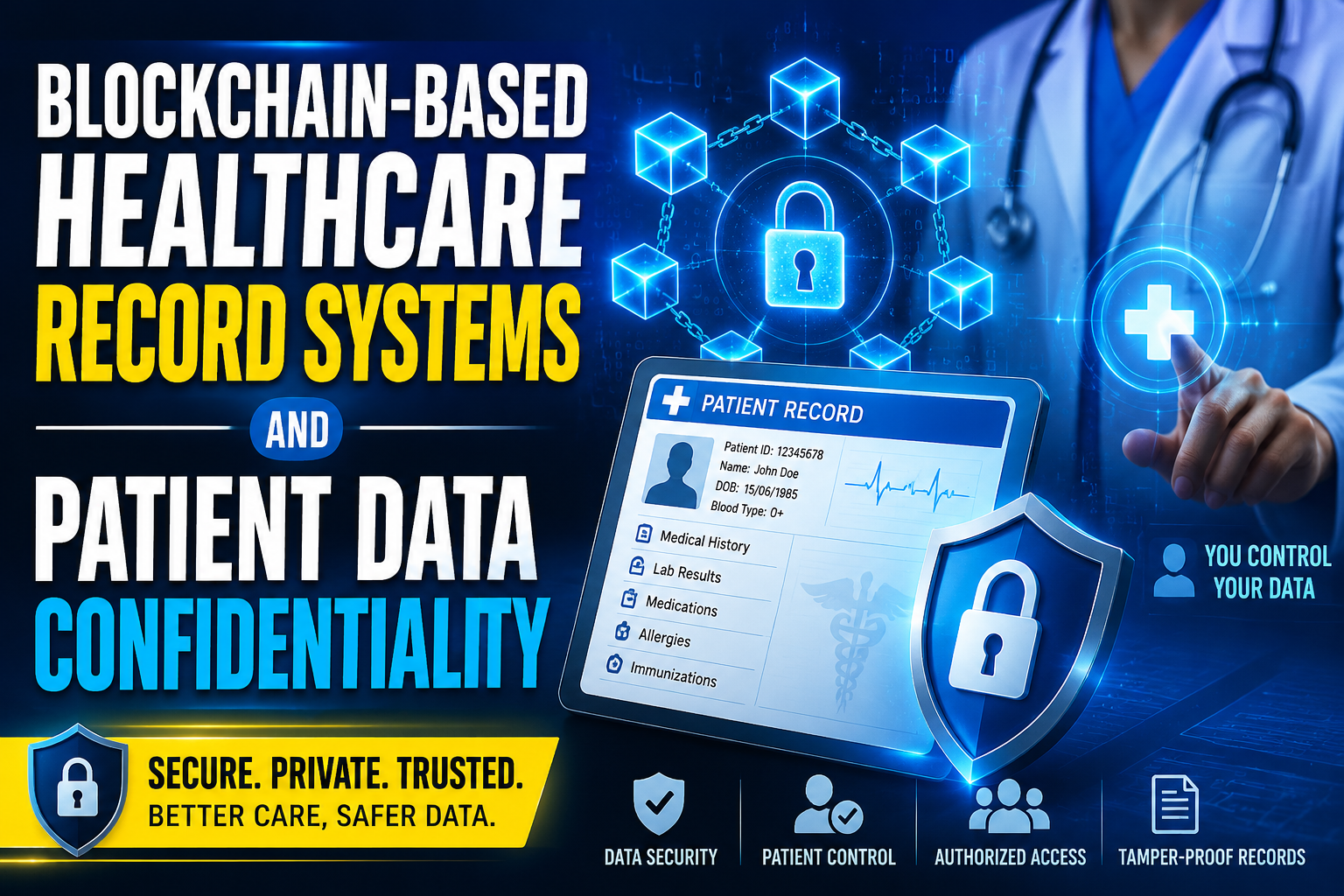
The blockchain also enhances trust between healthcare providers. Each update is stamped with a time, and it isn't easy to modify, so doctors and hospitals can be confident that the medical records are accurate. This decreases the risk of fraud or incorrect information being entered into a patient's history. Medical records are crucial to the proper care and treatment.Medical records are vital for the right care and treatment.
One of the critical advantages is improved healthcare collaboration. Numerous hospitals are operating multiple computer systems that don't readily communicate with each other. Blockchain can establish a shared platform, allowing authorized healthcare professionals to access and share records securely. This is particularly helpful with the referral of patients to specialists, or if patients receive care in an emergency in another city or country. In emergencies, accurate medical information can save lives if it can be readily obtained.
The technology of blockchain can also be useful for medical research. Healthcare data is crucial for researchers to study diseases, create new medicines, and enhance treatments. Patient data can be transferred securely without compromising patient identity with blockchain. Medical information can be researched without the patient's personal information. To aid in scientific research, while maintaining patient privacy.
While this has its perks, blockchain healthcare systems do have a few drawbacks. The high expense of installing the technology is one of the challenges. New computers, software, and trained staff may be needed at hospitals to operate the system. These costs may be challenging for smaller hospitals. Another issue is that if the blockchain network is not optimized, it can handle a vast amount of medical data at a significantly slower rate when compared with traditional databases.
Government regulations and healthcare policies are also important. The laws regarding the storage and sharing of medical information vary from country to country. Healthcare organizations need to take the legal obligations of blockchain systems into account. They should also have clear guidelines regarding who has access to patient information and how it is secured. If there's no regulation, the technology won't be fully accepted by hospitals and patients.
Education is another important factor. To ensure the proper and confident engagement of doctors, nurses, hospital staff, and patients, it is essential that all these stakeholders have an understanding of how blockchain operates. Medical and healthcare workers can be trained on how to safeguard patient data with the new technology. Public awareness is also required to enable patients to grasp the advantages and constraints of the blockchain-based health care system.
In the future, I feel like blockchain could positively alter the healthcare industry. Blockchain systems can be faster, cheaper and simpler to use as technology advances. The technology could potentially be used by more hospitals and healthcare organizations to enhance patient care and ensure the security of confidential information. Good government-to-government, government-to-healthcare provider, and government-to-technology provider collaborations will also contribute to the success of blockchain.
To sum up, blockchain healthcare records are a new solution for many problems in healthcare. They enhance security, boosts trust, facilitates communication, and provides patients with more control over their personal data. There are obstacles to overcome, including cost, regulations, and technical complexity, but the upside of investing in this is very promising. In my opinion, blockchain technology has the potential to make healthcare more secure, reliable, and private for people across the globe if planned correctly and continuously improved.
Note:-
Regards, @adeljose
I am so sorry. It is a mistake from my side. I have corrected it
@adeljose
@adeljose
https://x.com/i/status/2083880760684015679
https://coinmarketcap.com/currencies/pussfi/
https://x.com/i/status/2079866677102051664