Blockchain-Based Supply Chain Transparency and Traceability
One such application of blockchain technology in today's business is blockchain-based supply chain transparency and traceability. A supply chain is the journey goods take from the producer to the final consumer. It could involve farmers, manufacturers, suppliers, transport firms, warehouses, retailers and customers. Many supply chains may lack the ability to trace the product back to its source, its handling process, and the product handling done prior to the customer. The solution to this lies in the use of blockchain technology, which will provide a secure digital account of transactions and movements.
Blockchain is a digital record system that records information in a series of connected blocks. The information stored on a blockchain is shared among different users in a network. After proper recording of information, it is very difficult to change it without a nod from the network. This allows the blockchain to be valuable for supply chains as each key step of the chain can be traced and documented. For instance, as a product moves out of a factory, the movement can be tracked on the blockchain. Once at a warehouse, an additional record may be added. This can occur when the product is dispatched to a retailer and then on to a customer.
Transparency is one of the major benefits of using blockchain in supply chains. Transparency involves that parties along the supply chain will have a better overview of what is going on. A traditional supply chain may rely on a set of different records maintained by various companies. A company might know production details, another company might know the transport details and a retailer only might know the time of arrival. This is hard to compare information or find errors. In blockchain, trusted information is shared between any authorized members of the supply chain. This may help to communicate and decrease confusion.
Another crucial aspect of blockchain supply chain is traceability. Traceability is the ability to track a product from its source to its end. If you have a bag of coffee, for instance. The information about the coffee can start from the farmer who produced the beans. Then the record can indicate dates of collection, transport, processing, packaging and distribution to various sellers. If the customer desires to know where the coffee originated, it can be traced back through the supply chain records. This can make customers feel more confident in the products they purchase.
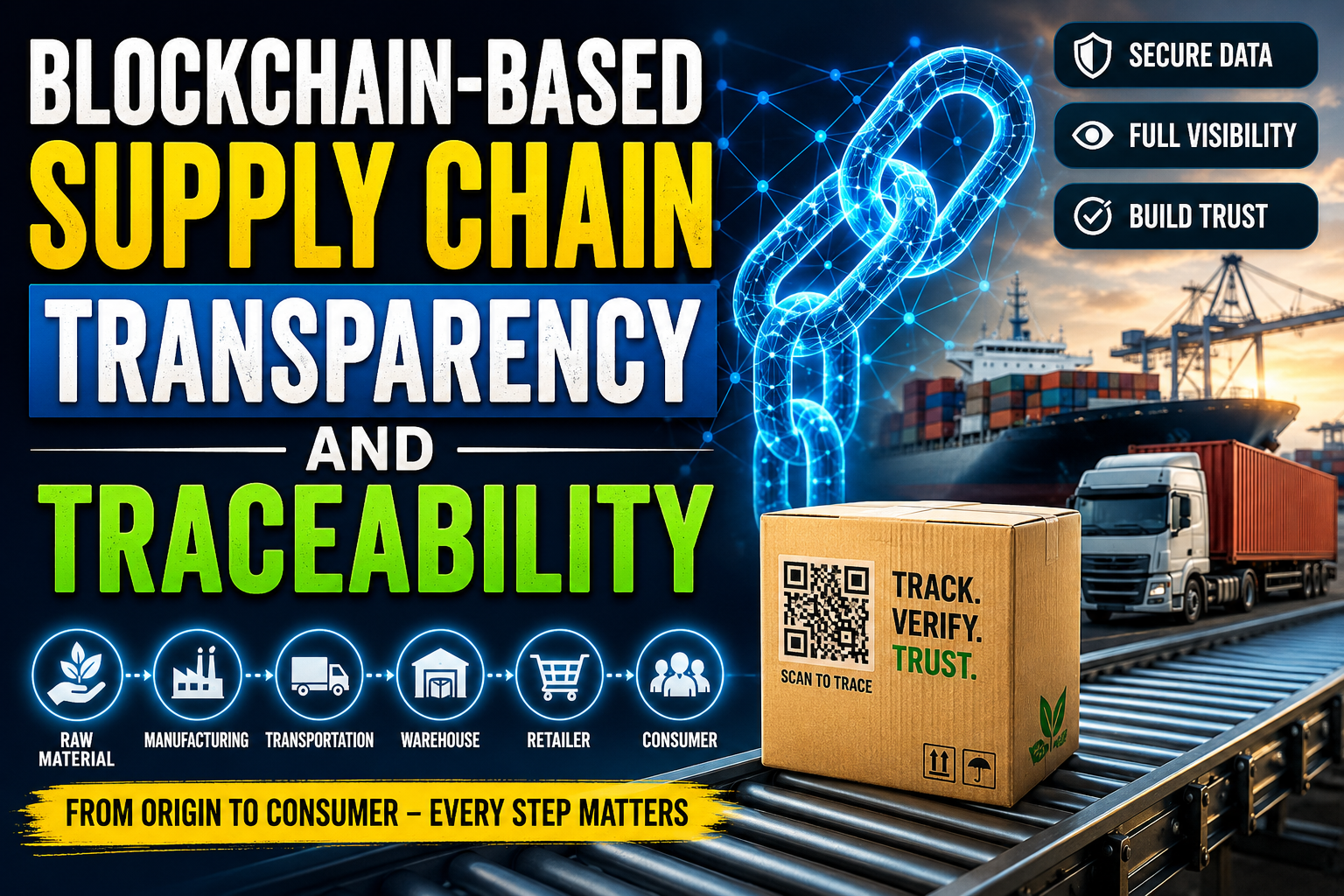
Another application of blockchain is in combating counterfeit products. Fake products are those items that are produced and sold as genuine products. They can be harmful to consumers and lead to business losses. With the introduction of digital identities and tracking of product movement on a blockchain, companies can make it more difficult for fake products to get into their supply chain. A customer/business can view the history of a product and verify if it was sourced from the right manufacturer/supplier.
The other major benefit is to be able to solve problems promptly. A company sometimes may find out after product distribution that the product is damaged or unsafe. Identifying the issue in a conventional supply chain is very time consuming as it may take time to locate the records. Blockchain can enable the company to trace the product back through the supply chain based on the record. The producer, batch, transportation route or the warehouse associated with the problem may be able to be identified. This can allow for quicker and more effective products recalls.
The blockchain technology also empowers businesses to build trust. Often companies do not fully trust each other in their supply chains. Every business has their own records, disagreements may arise if the records are different. A shared system of blockchain can be a shared record which authorised participants can use. But just because blockchain eliminates all disagreements does not mean it takes away all disagreements. It can also help make auditing easier as key activities are digitally recorded.
The technology can be beneficial in a number of industries. In the agricultural sector, blockchain can be utilized to trace food from the farms to the supermarket. It can be used in medicine for tracing of drugs and medical products. It can monitor origin of raw materials and manufacturing processes in the manufacturing sector. It can be used in the fashion industry to help companies to provide information regarding the source of the materials. It also can be helpful for international trade as goods might pass through many countries and businesses before being consumed.
Yet, blockchain supply chain systems are not without their set of challenges, as well. A drawback is the setup expense for the technology. New software, hardware, training and technical staff may be required by companies. These expenses can be challenging for small businesses. The other difficulty is that blockchain is just as dependable as the information that's put into it. The blockchain could end up storing incorrect data if a worker puts in incorrect data from the start. Thus, enterprises need to have adequate methods of verifying data.
The privacy aspect is also crucial. Business information in the supply chain may not want to be accessible to everyone. Prices, suppliers, contracts or production information may be included in some of the information. This is why it is crucial for companies to create blockchain systems with only authorized individuals gaining access to sensitive data. Common standards are also required as there are different technologies and systems that may be used by different companies.
I believe that blockchain could make a significant impact on SCM by fostering transparency, traceability, security, and trust. It can enable businesses to understand where products are originating from, where they are being taken and what they are doing on the way. It can also provide more information for the consumers purchasing the products. But blockchain is not a panacea for all problems in the supply chain. It must go hand-in-hand with the right management, right data, right people and right business practices.
Note:-
Regards, @adeljose
I have corrected it
@adeljose
@adeljose
https://x.com/i/status/2087958258652795184
https://x.com/i/status/2087958258652795184
https://coinmarketcap.com/currencies/pussfi/