Blockchain-Powered Renewable Energy Trading Systems and Sustainable Development
Renewable energy is becoming one of the most important solutions to the world's energy problems. As a result, now many countries are adopting the use of solar panels, wind turbines, hydroelectric power and so on as a way to mitigate pollution and ensure the environment. It's not enough, though, to generate renewable energy. There's an opportunity to buy, sell and share this energy in a better way. That's where blockchain-based renewable energy trading platforms come in handy. These systems enable individuals to exchange electricity directly with each other, rather than relying solely on major electricity companies. This technology, in my view, has the potential to do a lot of things in the world, ranging from access to energy and transparency to sustainable development.
Blockchain is a new technology that records data in an encrypted and transparent manner. Rather than storing records in a single location, blockchain stores copies of the same record on numerous computers. Each transaction is made on a chain of blocks and after the information is recorded, it is extremely hard to alter or delete it. As such, blockchain offers trust, security, and transparency. That's why many industries are starting to use blockchain technology for various applications such as trading renewable energy.
The concept is an electricity trading system based on blockchain that enables people, businesses, and communities to directly trade electricity. For instance, a solar panels family can produce more electricity than their family requires during the day. The surplus electrical power can be traded with their neighbours through a blockchain platform, rather than being wasted. All transactions are securely stored, validated and recorded automatically on the blockchain. This accelerates and simplifies the energy trading process, decreases the need for middlemen and increases the reliability of the trading process.
Smart contracts are one of the key components of these systems. A smart contract is a digital agreement that executes transactions when a set of conditions are met. For instance, when the electricity is sent from one household to another, the smart contract will automatically get executed to pay for the electricity at a fixed price. There is no need for manually approving the transaction. This is not only time-effective but will also decrease errors and boost the trust between purchasers and sellers. This is an interesting concept to me that would make it easy and efficient to trade energy.
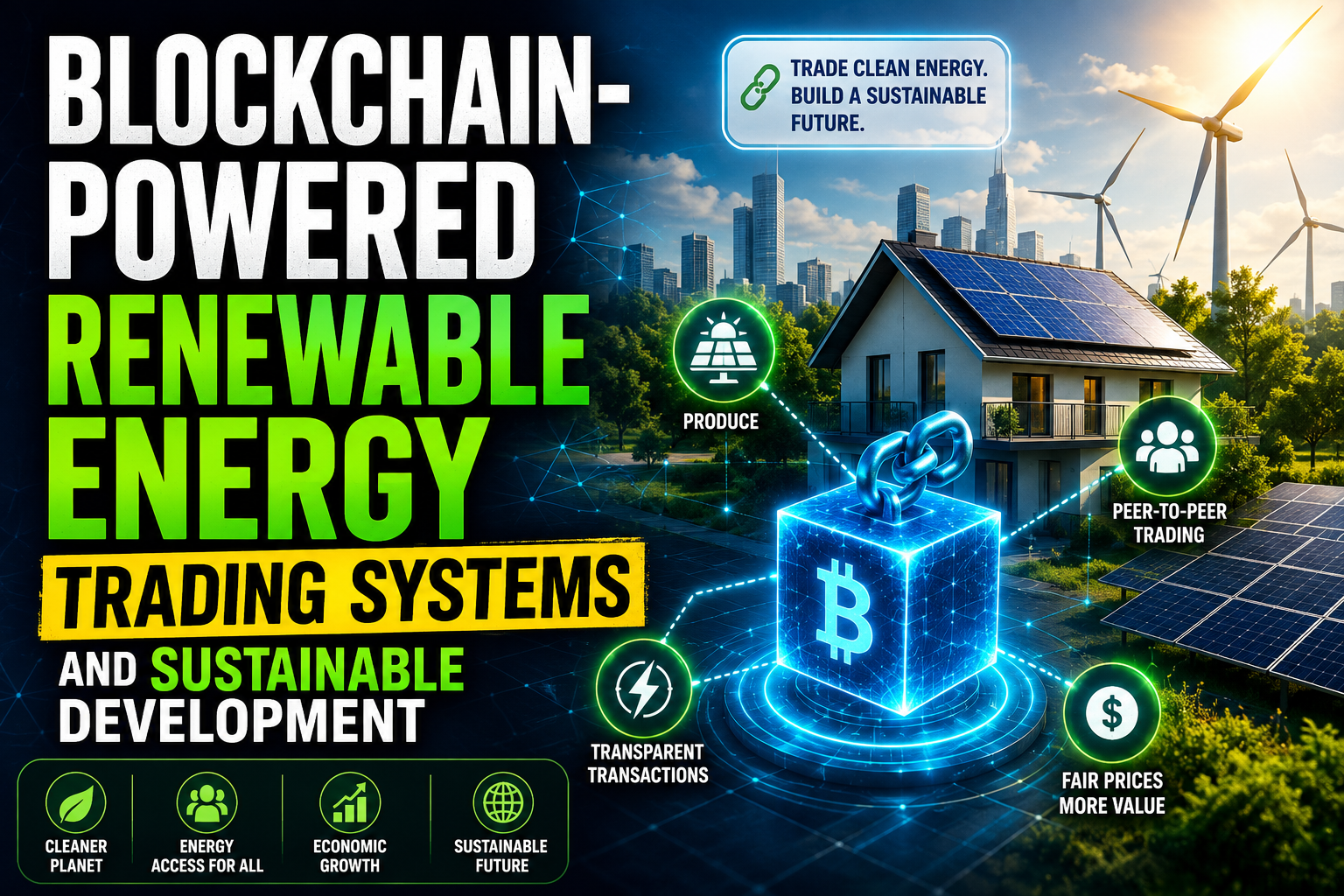
Blockchain technology also enhances transparency in the renewable energy market. Authorized participants on the network will be able to view and verify all transactions. It allows consumers to identify where their electricity is coming from and ensures that the electricity is being produced from renewable sources (e.g. solar or wind). This clarity will make consumers feel more confident and lower the chances of fraud. It also helps to promote investment in clean energy since they are aware of the system being honest and trustworthy.
Another significant advantage of a blockchain-based system for trading renewable energy is its ability to facilitate decentralized energy systems. In conventional electricity generation systems the electricity is typically produced by a large power plant and sent to consumers via the central network. But, blockchain gives energy generation and trading at the local level. Electricity can be generated within a home, school, business or community and then used.Electricity can be produced within a community, business, school or home, and consumed in the same place. This is sometimes referred to as P2P energy trading. It boosts energy independence and alleviates the strain on national electricity networks, particularly during peak usage.
These trading systems also play a significant role in the promotion of sustainable development. Sustainable development is development which satisfies the needs of the current generation without compromising the ability of future generations to satisfy their own needs. Renewable energy is already contributing to the reduction of air pollution and greenhouse gas emissions. Combining blockchain in renewable energy trading makes it more accessible and affordable for clean energy. This will promote greater adoption of clean energy resources rather than fossil fuels, thus providing a cleaner environment and a healthier society.
Renewable energy trading can be further boosted by blockchain to enhance economic development. Renewable energy owners, like those with solar panels, can generate additional revenue from selling energy produced in excess of their needs. This will generate new business opportunities and promote the investment in clean energy technologies. The local communities can be more economically active as energy production and trading will not be dominated by just few big companies. I believe this is a level playing field in energy and more people can make money.
Electricity is still a big problem in many developing countries. Rural communities are often far from national power grids and the cost and reliability of electricity supply is high. Blockchain technology can offer an alternative solution for renewable energy systems. It is possible to install small solar mini-grids in these communities and enable the local production and trade of electricity. It enhances access to energy, education and healthcare, communication and small business, and also helps in poverty reduction. To me, this will be a game-changer for millions of people who don't have reliable electricity now.
Although blockchain-based renewable energy trading systems have numerous benefits, they also have some drawbacks. The deployment of the technology is a high up-front cost for digital infrastructure, renewable energy systems and internet connectivity. Some blockchain networks do use a lot of electricity as well, but newer blockchain technologies are far more energy efficient. Furthermore, blockchain-based energy trading is still not sufficiently regulated by many countries' laws and regulations. It is important for governments, technology firms, and energy companies to cooperate in developing policies that facilitate safe and fair deployment of these systems.
Education and public awareness are also of paramount importance. There's still a lot of confusion regarding the functioning of blockchain technology and how one can engage in the trade of renewable energy. Training, public education programs and technical assistance will assist in building confidence and promote broader uptake. I think once the awareness of this technology becomes known, people will be more inclined to invest in renewable energy and the blockchain trading platforms.
Note:-
Regards, @adeljose
Hello @adeljose
I have done the promotion. Sorry I skipped it.
@adeljose
https://x.com/i/status/2080581682457936248
https://x.com/i/status/2079866677102051664
https://coinmarketcap.com/currencies/pussfi/