Blockchain Technology and the Advancement of Transparent Governance Systems
Today, blockchain is revolutionizing numerous aspects of the world. It is now not utilized just for cryptocurrencies such as Bitcoin. A growing number of governments, companies, schools, and institutions are looking into the potential of blockchain as a means to enhance their operations. An important factor in which blockchain can be a giant factor is governance. Governance is decision making, resource management and service to the people by leaders and institutions. In my opinion, good governance is transparent, fair and honest. Governments can be more transparent and accountable by using blockchain technology.
Blockchain is a digital system that has blocks to store information. The blocks are joined end to end to make a chain. Each block has a history of transactions or activities. This information is once it's in it can't be easily changed. This ensures that blockchain is extremely secure and trustworthy. Only the same information is accessible to all those that are authorized. This makes blockchain less susceptible to cheating, hiding records, and altering key data in an unauthorized manner.
Transparency is among the best advantages of blockchain technology. The reason why many governments have issues is that citizens don't trust the use of public funds. Sometimes, money designated for roads, schools, hospitals, or other projects, ends up in the pockets of individuals involved in corruption. Blockchain allows all transactions to be recorded permanently. Citizens, auditors and the government can review expenditures. This is more difficult for dishonest individuals to misappropriate public money. I believe this can help people start trusting their leaders more since the actions of the government are easier to verify.
Beyond creating new opportunities for data on healthcare, Blockchain holds the potential to enhance elections. In all countries electing is of a great importance. But there have been many elections around the world that have been impacted by election fraud, buying of votes and manipulation. Blockchain can be used to create a more secure voting mechanism, ensuring that each vote is securely recorded. The vote can't be changed or deleted after it's been submitted. This aids in maintaining the integrity of the election. It also helps election officials to count votes more accurately, and increases confidence in the final vote count by the voters.
The next governance area is the management of public records, which is made simple by blockchain. Governments also maintain many vital records like birth certificates, land ownership records, business registration and tax records. These records can be lost, damaged or illegally altered at times. These can be safely stored on a blockchain. All updates are documented in terms of time and date, allowing changes to be tracked easily. This helps eliminate fraud and safeguards citizens from the loss of essential documents.
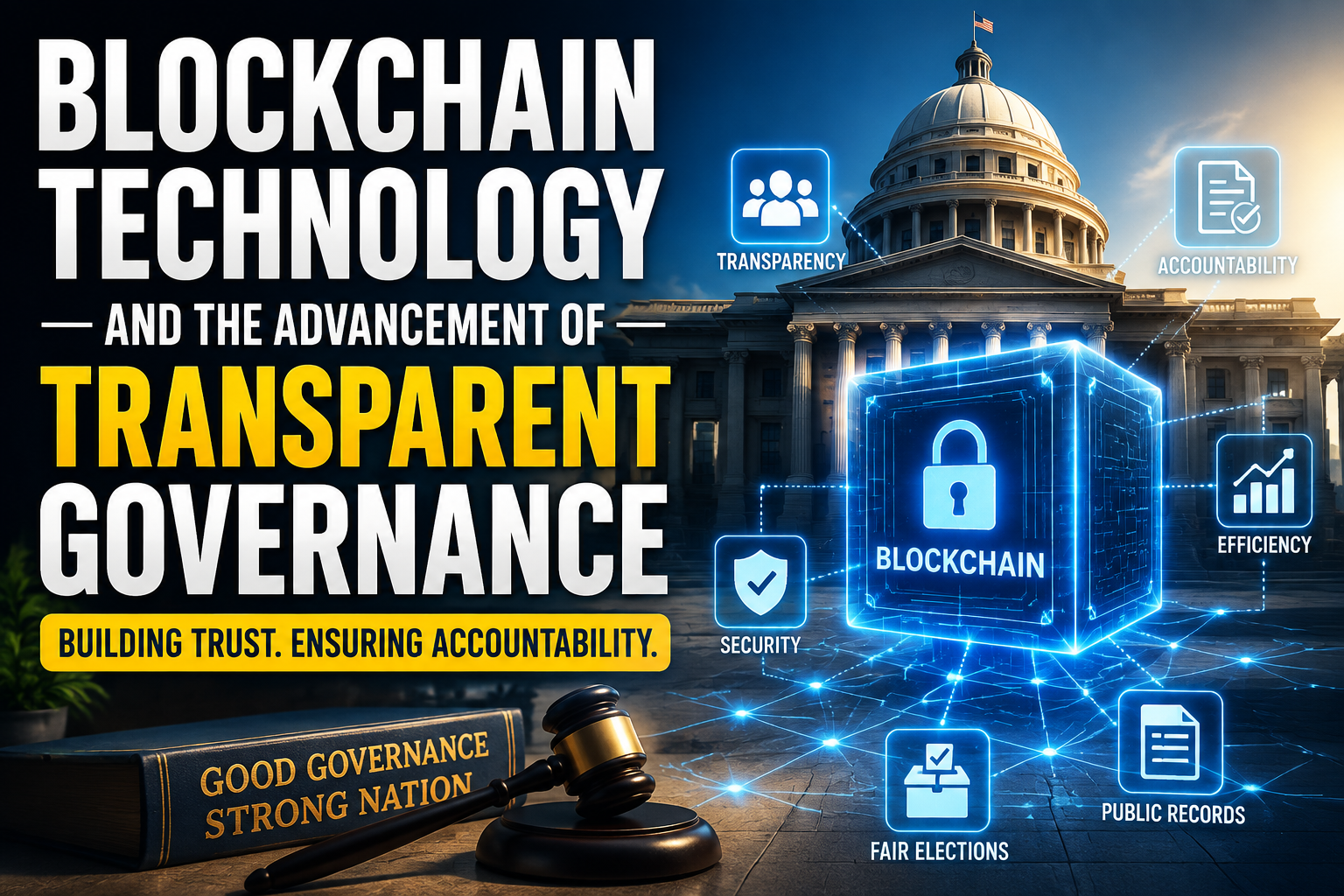
One of the other areas where blockchain can help is in government procurement. Governments pay out significant sums for purchases of goods and services. Unfortunately, sometimes corruption occurs in the process of granting or not granting a contract. Favoritism and bribery may result in the awarding of contracts to companies that are not the best.Companies can be awarded contracts for reasons other than their merits, due to bribery and favouritism. By using blockchain, it is possible to paint a picture of each step in the procurement process. All parties are able to see how contracts are awarded and if the rules were adhered to. This fosters a fair environment and helps to cut corruption.
Blockchain also increases accountability of government. The public officials should serve the people in a fair manner. If government actions are recorded on the blockchain, it will be easier to monitor government activities. All approved payments, projects or policy decisions can be traced. Investigators can easily pinpoint what has gone wrong or what illegal activities have taken place if there are errors or illegalities. I think this might be a way of motivating leaders to take responsibly actions since it is possible to analyse what they did or did not do in front of the public.
Furthermore, blockchain can enhance the provision of government services. Slow manual processes lead to citizens having to wait hours for paperwork or approvals. These services can be faster and more efficient using blockchain. Individuals can get licenses, pay taxes, or even obtain government advantages on safe digital systems. As records are already verified on the blockchain, processing is faster, and a lot of paperwork and delays are eliminated.
Blockchain technology can have a significant impact in developing nations as well. Poor record-keeping systems in some countries make corruption more feasible. The funds of the public could be spent without proper accounting. Blockchain can offer a secure digital solution to safeguard records and enhance transparency. It is also likely that governments which employ transparent systems will have increased trust among international organizations and investors, who can easily check on the financial activities and public projects of the government.
While there are numerous benefits to blockchain, it also has some drawbacks. It costs a lot to set up blockchain systems. Governments require computers, a network and skilled employees to operate the technology. There's also a need to educate many public servants on blockchain. There may be citizens who lack digital knowledge to effectively use the services provided by blockchain. There is also a privacy issue as some government information must be kept confidential. Governments need to be mindful in designing blockchain systems that are transparent but not exposing sensitive information.
Another difficulty is that there are still no laws and regulations that back blockchain technology in many countries. Governments need to establish clear legal guidelines that spell out how blockchain records will be recognized and protected. The successful implementation requires cooperation between technology experts, lawmakers and government agencies. If not planned well, blockchain initiatives can end up as failures or as a source for new challenges.
Despite these issues, the prospects of blockchain governance are promising. With the rise of technology, more governments will make use of blockchain with various applications and services. Additionally, with improved internet connectivity, enhanced cybersecurity, and greater digital education, blockchain will be even more useful. I feel blockchain will be a key enabler for creating governments that are more transparent, efficient and accountable to the people they serve.
To wrap up, the blockchain technology can revolutionize governance systems by enhancing transparency, combating corruption, enhancing elections, safeguarding public records, improving accountability and making government services more efficient. There are still challenges to be addressed that need to be overcome; however, it is not something that cannot be done. I think governments which are using the blockchain wisely and responsibly will take the world's trust and will have better services to their citizens. With the increasing adoption of this technology in other countries, transparent governance could become a reality for future generations.
https://x.com/i/status/2084300573004701978
https://x.com/i/status/2082974918300541265
https://coinmarketcap.com/currencies/pussfi/
Note:-
Regards, @adeljose