Blockchain Technology and the Reinvention of Secure Online Authentication Systems
Today, people use the internet as a daily tool for banking, shopping, studying, health and social media. The majority of online services require us to verify our identity before being able to use them. This procedure is known as online authentication. Many websites require a login and password before we log in to our accounts. But passwords are susceptible to being stolen, guessed, or hacked. This has placed online security as a critical concern globally. With the advent of blockchain technology, the situation is changing with the introduction of a novel and secure approach to identity verification that provides a new and safer way to identify individuals. I think blockchain can be used to create more secure, reliable and trustworthy online authentication.
A blockchain is a digital technology that captures information in blocks which are linked together in a series of blocks. Each block holds information and after it is filled, it is hard to alter or remove information. Many computers store the information, rather than just one central computer. Many computers store the same information, making it quite hard for hackers to attack the system. This is what makes blockchain one of the safest technologies of today.
Traditional online authentication relies primarily on passwords. A lot of users have simple passwords or even re-use their credentials across various websites. An attacker who locates one of the passwords could then access numerous other accounts. Even major companies have been known to suffer data breaches, with millions of usernames and passwords being leaked. This leads to loss of monetary value, identity theft and loss of trust. I believe this is one of the greatest issues in online security these days.
An alternative is blockchain technology, which enables users to have a more independent digital identity. Rather than having this information stored on the servers of various companies, blockchain enables users to store their identity in a secure digital wallet. When confirming someone's identity is required, the blockchain verifies the information but not unnecessary personal data. This minimizes the chances of hackers accessing sensitive data as it is not stored in a single location.
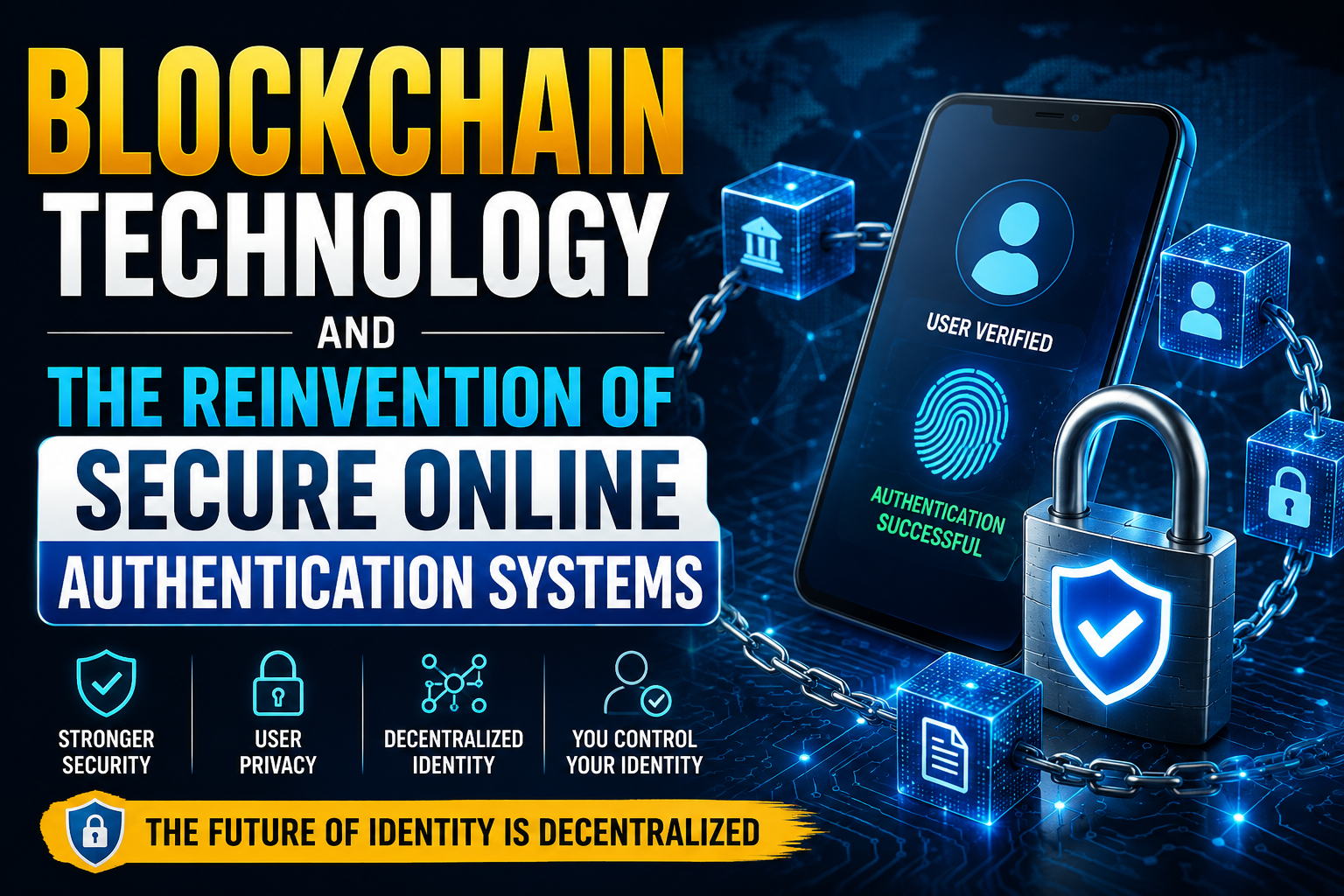
Decentralisation is another significant benefit of blockchain authentication. A traditional system does not allow for different companies or organisations to share or utilise information about users. Hacking into that company's server could mean that the information of all its users is compromised. One reason that blockchain removes this single point of failure is that information is shared across many machines. As long as one computer in the network is attacked, the remaining computers will still safeguard the data. This provides far greater security in blockchain authentication as compared to the traditional authentication methods.
Digital signatures are also allowed by blockchain. A digital signature is similar to a handwritten signature that establishes the authenticity of a message or transaction. It is secured with high-end encryption. However, unlike a password check, the blockchain is verified when someone signs in. This process is significantly more secure since it's very hard for criminals to copy or forge a digital signature.
Another key advantage of blockchain authentication systems is privacy. Numerous online services have the ability to gather all kinds of information from their users. This information is sometimes shared with third parties in a way that it is not fully comprehended by the user. Blockchain enables individuals to determine what information they wish to share. For instance, someone could establish their age when the day and night are not supplied, and the house address may not be revealed. It can prevent personal privacy from being compromised while providing the security needed.
Banking and financial services are another area where blockchain authentication can be beneficial in terms of security. Customer data is a highly sensitive matter that banks deal with on a daily basis. In the event that hackers gain access to these systems, the implications will be quite grave. Chain of blocks offers enhanced security through the use of encrypted records and decentralised verification. Accounts are more secure for customers and banks have less chance of fraud and identity theft.
Blockchain authentication can also be used in the healthcare sector. Patient records stored at hospitals and clinics need to be confidential and kept private. With blockchain, doctors, nurses, and patients can have access to medical records without any unauthorised access. This ensures patient safety and safeguards patient information from cybercriminals.
Schools are also starting to look into the possibility of blockchain authentication. Schools and Universities can benefit from blockchain by securing the student record, certificates and academic achievements. Students may be able to prove their qualifications without worrying about fake certificates or altered records. Employers can easily and efficiently confirm academic qualifications.
While blockchain technology has plenty of advantages, there are also some challenges. The cost of blockchain systems can be high, and there are still plenty of companies that have older computer systems that are challenging to replace. Some individuals also aren't entirely acquainted with the way blockchain works, and are reluctant to trust it. Governments and technology firms need to collaborate to develop standards and raise awareness of the value of it. However, as blockchain technology advances, many of these problems could be easier to address.
To sum up, blockchain technology is transforming secure online authentication systems making them more reliable, private, and secure. It is decentralised, has strong encryption, digital signatures, and has user-controlled identity, making it more secure than traditional password-based systems. Although there are still challenges to overcome, the future of blockchain authentication looks very promising. As more organisations use this technology I think this will make online experience safer for people and increase their trust in online services. Beyond verifying our identities, blockchain is helping to create a more secure and trustworthy digital world for all.
https://x.com/i/status/2081300880884699420
https://x.com/i/status/2079866677102051664
https://coinmarketcap.com/currencies/pussfi/
Note:-
Regards, @adeljose
Note:-
Regards, @adeljose