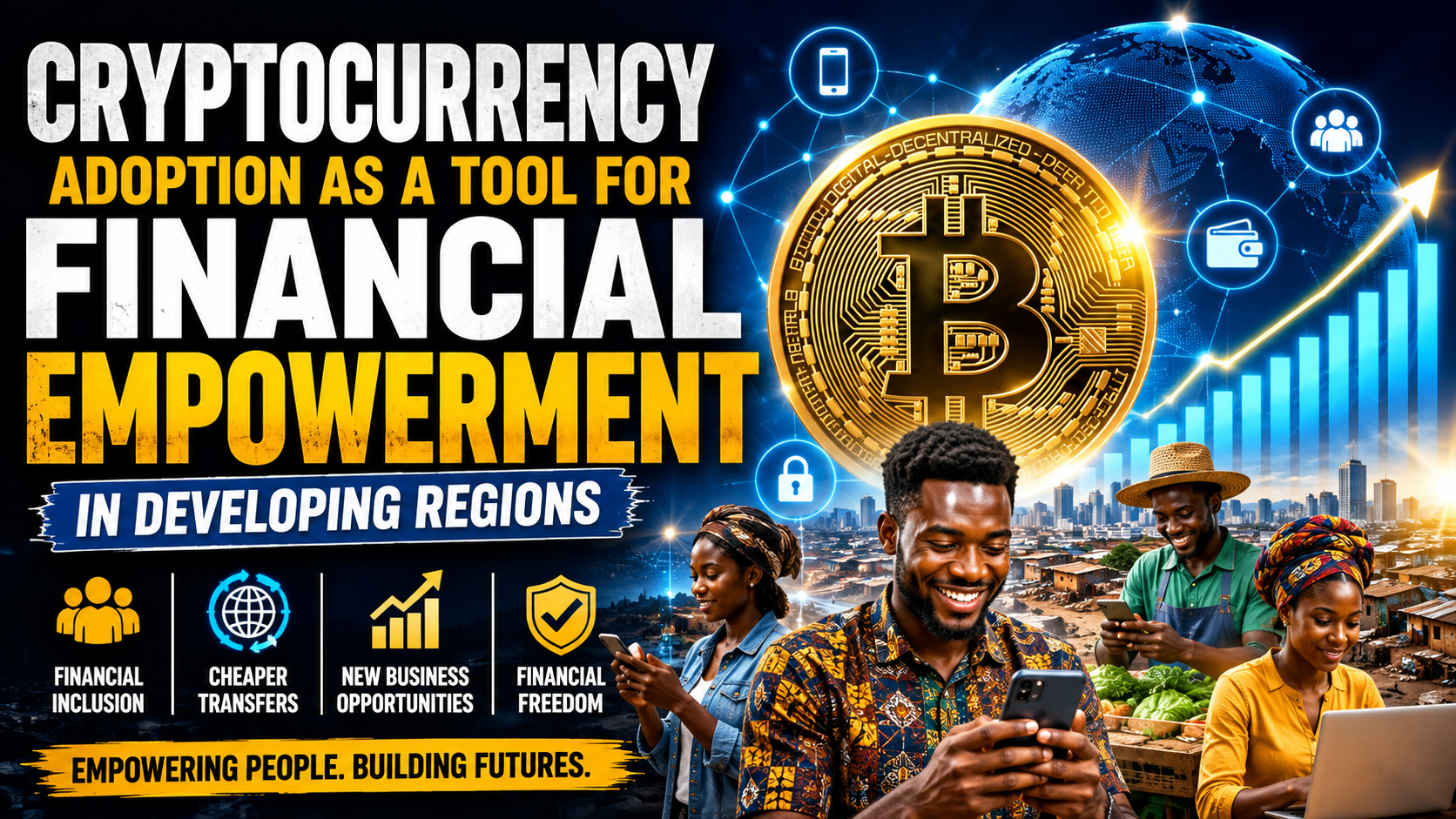
Cryptocurrency Adoption as a Tool for Financial Empowerment in Developing Regions
Cryptocurrency is among the largest financial innovations in recent years. It's revolutionizing the way people send, receive, save and invest cash. While conventional currency is governed by banks and governments, cryptocurrency functions on blockchain technology, which enables people to transact with each other without involving banks or governments. For millions of people in many developing areas who lack access to quality banking services, cryptocurrency is a useful tool for financial empowerment. I think that cryptocurrency, if used wisely, can provide new opportunities and thus better up lives of many.
Poverty, unemployment, inflation, inadequate banking services, and lack of loans are some of the financial difficulties that many developing countries experience. The distance to the bank is great in some rural areas. But some don't even have the documents necessary to open a bank account. This places many people at a disadvantage for engaging in the financial system fully. That's where cryptocurrency comes into the picture; all someone requires is a smartphone and Internet connection to establish a digital wallet and start dealing.
Financial inclusion is one of the big pros of crypto. In developing countries, millions of people are still not banked, particularly in developing countries. These individuals can keep their wealth secure, pay bills and receive payments without relying on a conventional bank, with cryptocurrency. This allows financial services to be accessible to people who may not otherwise be able to access them, such as small business owners, students and workers in remote areas. I believe this is one of the solid motivations behind the rise in cryptocurrency popularity in many developing areas.
The other significant advantage is the ability to transfer foreign currency at a lower rate and faster. Remittances from family members abroad are an important source of livelihood for many people in developing countries. A lot of the traditional money transfer services involve a lot of high transfer fees and can take days to arrive. It can lower these expenses and facilitate transactions much more quickly with cryptocurrency. Families are able to access a portion of the funds sent back to them, enabling them to pay school fees, purchase foodstuffs, as well as other essentials to support daily activities and/or start a business.
The cryptocurrency also presents new business and employment opportunities. There is a large number of Gen Z's already working as blockchain developers, cryptocurrency traders, digital marketers, digital content creators, and Web3 pros. Others freelance and get paid by clients in other countries in cryptocurrencies. There is also the option for small business owners that accept cryptocurrency as a means of payment so that they can provide their services to customers from all over the world. With the advancement of digital technology, cryptocurrency is presenting new opportunities for innovation and entrepreneurship.
Furthermore, cryptocurrency can help individuals preserve the worth of their cash in nations with great inflation. In a few developing countries the exchange rates of the local money depreciates rapidly, which makes it hard for people to save money. Others opt to invest in some cryptocurrencies or stablecoins to maintain their assets in an alternative manner. While prices of cryptocurrencies can fluctuate greatly from time to time, some cryptocurrencies offer an alternative to those who wish to minimise the impact of inflation on their savings.
With these benefits, however, there are also some drawbacks to the adoption of cryptocurrencies. Price volatility is one of the challenges. The prices of many cryptocurrencies fluctuate rapidly. An individual can purchase a cryptocurrency one day and end up losing a lot of money the next. This may result in monetary losses, particularly if investors buy and sell based on a lack of knowledge. I think everybody should have the knowledge of cryptocurrency before making any effort to invest in it as knowledge is the key to making better financial decisions.
Another is that in some countries there is no adequate regulation. Governments are still seeking to grasp the nature of cryptocurrency and the way it ought to be handled. In some areas, there is no clarity on regulations, in other countries, cryptocurrency activities have been limited. Lack of regulations can allow fraud, scams and illegal activities. There are many people out there who have lost all of their savings due to investing in fake cryptocurrency projects that made unrealistic promises of profits. This demonstrates the critical need for robust legislation and community education.
However, low internet connectivity and weak digital skills limit the spread of cryptocurrencies in many developing areas. Not all people have a smart phone or internet access that is reliable. Others don't know what digital wallets, private keys or blockchain technology are. If not educated, users could fall prey to a cybercriminal or unknowingly lose access to their digital assets. The government, schools, and technology firms need to invest in digital education, so that more people can use cryptocurrency safely.
Governments should develop policies that are balanced and promote innovation while safeguarding consumers' interests to maximize the positive effects of cryptocurrencies. Financial institutions can also cooperate with blockchain companies to build financial services that are both secure and cost effective. There is a need to educate the people on responsible investing, online security and the risks of digital currency in educational programmes. Enhanced Internet connectivity and cheap smartphones will also help cryptocurrency to reach farmers in rural areas.
To conclude, cryptocurrency could be a strong instrument for financial empowerment in the growing areas. It encourages financial inclusion, lowers international money remittance costs, generates jobs, fosters entrepreneurship and offers new financial management options. But it requires responsible use, proper regulation, digital education and enhancement of technology infrastructure to achieve success. While I don't think cryptocurrency is a one-size-fits-all solution for all financial issues, it can be a key component of increasing financial freedom and economic growth. With the cooperation of governments, businesses, and individuals, cryptocurrencies can contribute to a more inclusive and robust financial future in developing nations.
Note:-
Regards, @adeljose
https://x.com/i/status/2082080023956132018
https://x.com/i/status/2079866677102051664
https://coinmarketcap.com/currencies/pussfi/