The Future of Decentralized Economic Systems in a Blockchain-Driven Society
Technology is accelerating the world's change at a rapid pace. New digital tools ease people and businesses life every year. Blockchain is one of the greatest technologies that is transforming the world today. Blockchain has brought a new paradigm in the storage of data and financial transactions. It is also developing decentralised economic systems in which one can transact money and possessions without relying solely on banks and governments. If introduced correctly, I feel this technology has the potential of transforming the future of the global economy.
In a decentralized economic system, no one central authority controls the economy, but instead a large number of people do. In the traditional financial system, banks, governments and financial institutions regulate and manage much of the money transfer, loan and bookkeeping activities. With decentralized systems, blockchain helps these activities occur via a network of computers. Each transaction is once it is recorded on the blockchain, very hard to alter or delete data. This is because it helps to build trust among users as they can ensure the records are verified.
The core technology of decentralized economic systems is dubbed blockchain. It's a digital record that's safe across numerous computers. Each transaction is added into blocks, and these blocks are linked with one another to create a chain. If data is added to the blockchain it's difficult to alter. This renders blockchain to be transparent, secure, and reliable. This is very interesting to me as less opportunity for fraud, people can have faith in the system and not rely on one organisation alone.
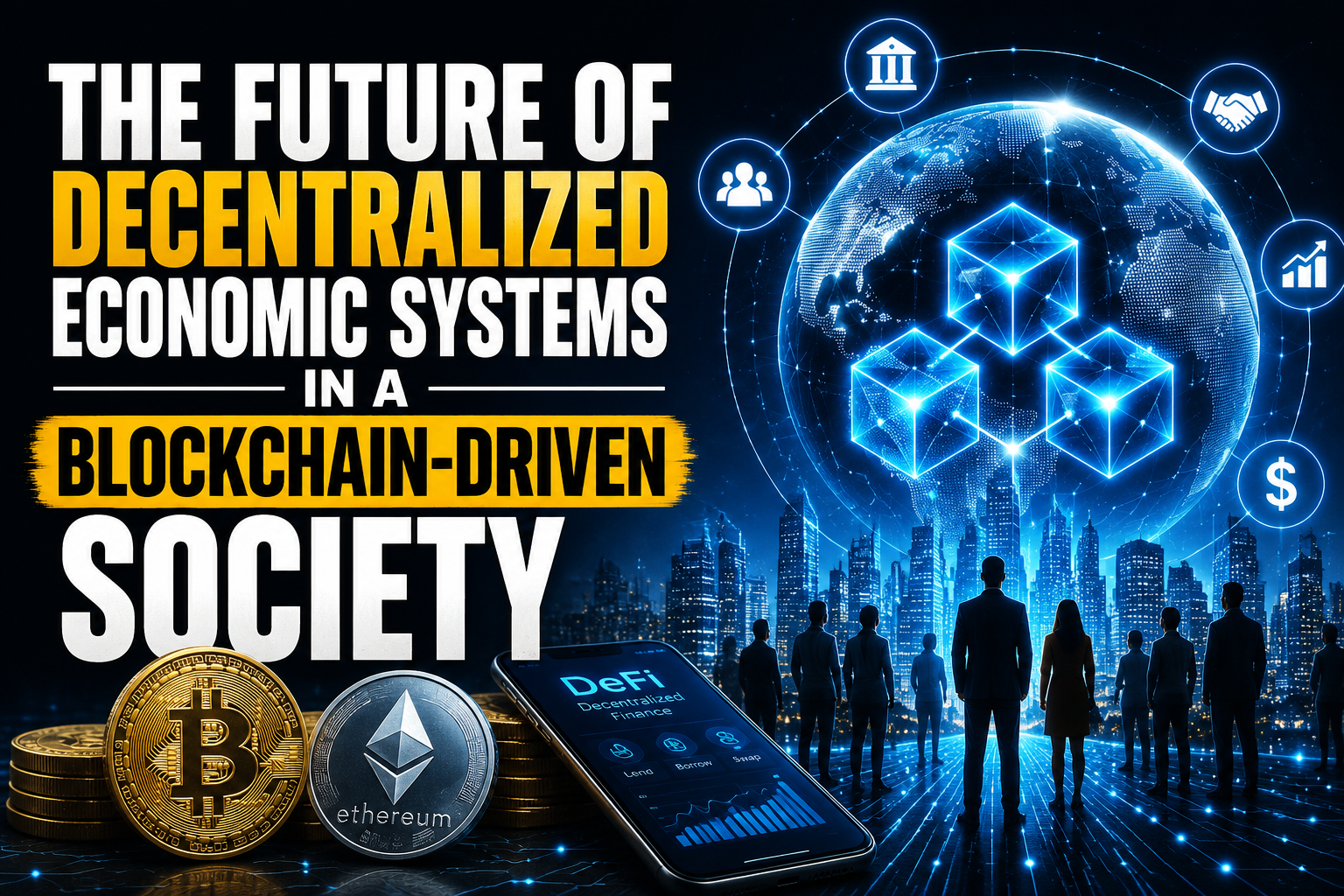
Cryptocurrency is one of the key aspects of a blockchain-based society. Bitcoin and other cryptocurrencies enable people to transfer and receive funds without relying on banks. This helps to speed up the process of international payments, and in some cases, the payments are also cheaper. Digital wallets can also be used to help people manage their own finances. Decentralized economic systems could become more commonplace globally as more people adopt cryptocurrencies. But there is still a lot of work to be done to figure out how to regulate these digital currencies without sacrificing consumer protection by many governments.
Smart contracts is another crucial component of decentralized economic systems. Smart Contracts are digital contracts that execute the terms as written in the contract when the conditions are fulfilled. For instance, a payment may be automatically paid when a product is delivered. This eliminates the need of middlemen in many business transactions, as well as delays. Businesses can gain time, cost-efficiency and effectiveness as they continue to use smart contracts.
Another significant development enabled by blockchain technology is Decentralized Finance or DeFi. DeFi offers access to borrowing and lending, saving, investing, and trading digital assets without a bank. Users can do many financial activities online in minutes, rather than filling out many forms and waiting several days for approval. This could be beneficial to those who don't always have access to banking services, particularly in developing nations where many are still financially excluded.
Digital ownership is also a key component of the outlook of decentralized economic systems, thanks to blockchain technology. Digital assets like artwork, music, land records, certificates and more can be owned securely. Blockchain can be used to ensure asset ownership and minimise forgery and bogus documents. Governments have the potential to implement blockchain into voting systems, identity management, tax collection, and keeping public records, among other future use cases. These enhancements can help to lessen corruption and improve government services.
Economic systems that are blockchain-based can have a significant impact on businesses. Every step in the production can be recorded on the blockchain, making the supply chain more transparent. Customers will be able to discover the origins of products and determine if they are authentic or not. Businesses can enhance inventory operations, limit fraud, and boost customer trust. Blockchain can also help financial institutions minimize paperwork and streamline transactions.
Decentralized economies have a number of drawbacks, yet they have many benefits. One of the key problems is the government regulation. There is a work still to be done in many countries to legislate about cryptocurrencies and blockchain companies. One obstacle is cyber security. While blockchain technology is very secure, it is vulnerable to private key and password theft. However, it is not without its problems, as there are concerns about illegal activity, price fluctuations and the extensive use of energy by some blockchain networks. In order to realize an ultimate acceptance of decentralized systems, these challenges have to be overcome.
Education is also an essential component of the future of blockchain. There is still a lack of understanding about the working of blockchain. They could end up falling for a scam or make bad investments if they don't know what to do. I think that schools, universities and governments should educate people on blockchain, on digital finance, and on online security. The more people are aware of the decentralized systems, the more they will be able to use them safely and confidently.
To wrap up, decentralized economic systems in a blockchain-based society are certainly looking bright. Blockchain technology provides greater transparency, security, speed and financial inclusion. It can potentially transform payment habits, asset ownership, business models and relationships between citizens and governments. While challenges like regulation, cybersecurity, and public awareness remain, ongoing enhancements and responsible adoption of blockchain technology offer a promising solution to these issues. I feel that decentralized economic systems will persist and become an important part of the global economy. As technology continues to evolve, society can work together to make a more secure, fair and efficient economic future for all with blockchain.
https://x.com/i/status/2082711745173356749
https://coinmarketcap.com/currencies/pussfi/
https://x.com/i/status/2079866677102051664
Note:-
Regards, @adeljose