Tokenized Economies and the Fragmentation of Traditional Asset Classes
The fragmentation of traditional asset classes and tokenized economies are emerging as significant issues in contemporary finance. A tokenized economy is a system in which real assets or rights are turned into tokens on a blockchain. These tokens may be used as ownership, value or entry. Conventional asset categories are real estate, stocks, bonds, gold, art and other valuable investments. The people can purchase small digital components of these assets now through tokenization as opposed to the previous method of buying them. I consider this to be a significant shift in the way individuals invest in future.
The idea behind tokenization is to split an asset into numerous digital tokens. As an illustration, a one-million dollar building can be subdivided into one million tokens. The tokens can denote a small portion of the building. This implies that an individual does not require huge amounts of money to invest. A small amount of money can allow someone to purchase a portion of such property. Historically, investments used to be restricted to rich individuals or big businesses. Today, more people are getting access to tokenization.
The disaggregation of traditional asset classes can be considered one of the largest implications of tokenized economies. Fragmentation refers to the division of a huge asset into a series of smaller pieces that can be invested in. One of such examples is real estate. Previously, purchasing of land or a commercial facility was very capital-intensive, legal, and costly in maintaining. However, in tokenization, numerous individuals have the ability to own a portion of a single property. I believe that this can be more inclusive and accessible to ordinary people in terms of property investment.
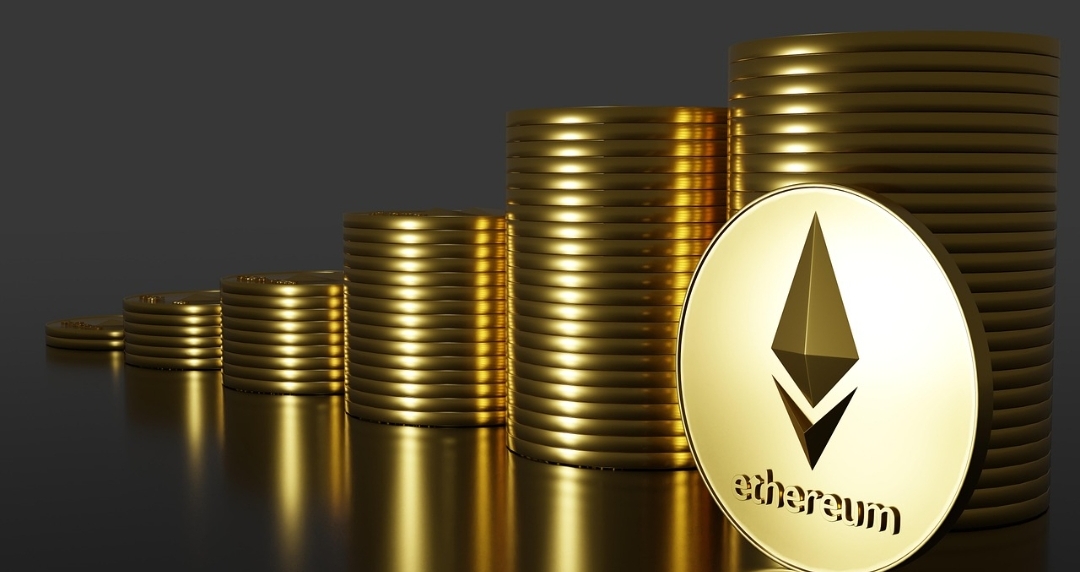
Fragmentation of stocks may also be done via tokenization. Fractional investing is already possible on some platforms, but tokenization will enable this system to be more extensive and quicker. An individual can purchase a very small share in the costly company shares as opposed to the money required to purchase a single share. This will enable young investors to begin accumulating wealth at a younger age. It is also capable of enhancing the involvement in the financial markets across the world.
Art and collectibles is another asset category undergoing change. Previously, rich people owned most of the rare paintings, luxury watches, and historical items. With the help of tokenization, a single artwork may be subdivided into thousands of digital tokens. A lot of individuals are able to invest in that art. I find this interesting as it enables ordinary people to enter into markets that had been closed to them.
Other commodities including gold, silver and others can also be tokenized. Rather than holding actual gold, an investor can have tokens, which are backed by gold reserves. It can alleviate stress in storage and simplify the purchase or sale. The transfer of tokens across borders can be done easily and swiftly compared to some traditional systems which may require time and paper work.
A significant benefit of tokenized economies is their liquidity. Liquidity refers to the ease of purchasing or selling an asset. Several hard-to-sell assets are traditional. Property can take months. Fine art might require auctions and agents. However, tokenized assets are able to be traded more rapidly on digital platforms. I think that this speed will be appealing to more investors seeking flexibility.
Nevertheless, fragmentation is problematic as well. In the event of dividing assets into numerous tiny units, ownership may be complex. Management decisions, voting rights, repair decisions, profit decisions or litigation can be challenging. To illustrate, in the case of thousands of owners of tokens associated with a single building, who makes the decision on when to sell it or to revamp it? These questions require definite systems.
Another grave problem is regulation. Governments are yet to understand the means of regulating tokenized markets. There are those tokens that will act as securities, whereas other tokens will be more of commodities or utility products. Fraud and confusion may increase without any clear laws. I believe that trust is highly valued in finance and thus a very strict regulation is required.
There is also technology risk to take into account. The tokenized economies rely on blockchain networks, smart contracts, digital wallets, and the internet. In case of system failure, hacking or code errors, investors will lose money. There are also risks associated with traditional assets, but with digital systems there are new ones.
Speculation is also a possibility. Since they can be traded in a short period of time, it is possible that some individuals will concentrate only on quick money, rather than actual long-term value. This is capable of forming bubbles, in which prices become excessive and burst downwards. Such behavior has already been observed in a certain part of the crypto market.
Despite these issues, the tokenized economies might even expand further since they address most of the ancient obstacles. They lower entry barriers, enhance access, and link international investors. With very little money, a student of one nation can invest in a property or artwork of another nation. Such access was challenging in the olden days.
Banks, governments, and major companies are already researching on tokenization. Others are looking at tokenized bonds, tokenized real estate funds, and digitalized formations of conventional investments. This demonstrates that tokenization is becoming a reality.
To me tokenized economies are an opportunity and responsibility. They can democratize investment and make markets more efficient, yet they will have to be founded with honesty, transparency and appropriate regulation. Breaking up the traditional asset classes is transforming ownership into something that only the rich could enjoy to many people. This transformation has the potential to redefine the future of finance in an influential manner, should it be handled effectively.
https://x.com/i/status/2038990196453126632
https://coinmarketcap.com/currencies/pussfi
https://x.com/i/status/2036134193260802100
Note:-
Regards, @adeljose