My Entry: SCS32-W5 | Real-Life Problem Solving Challenge: Study Techniques
Hello everyone! How are you doing today I hope all are fine and I'm also good 👍 😊
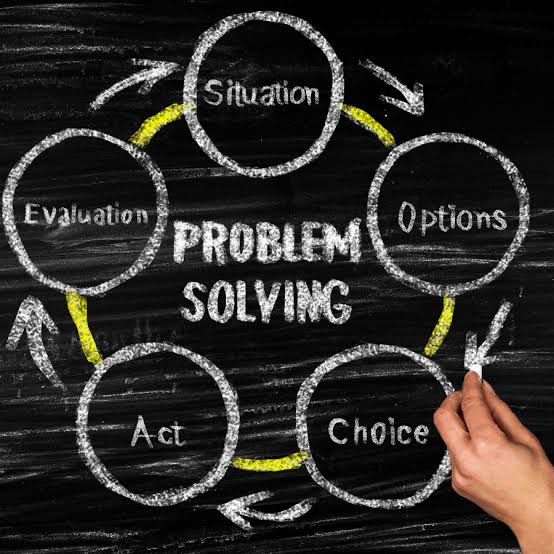
Today I want to share my thoughts about problem-solving and why it is important in our daily lives. We usually think problem-solving is only useful in studies or jobs, but real events around the world also teach us many lessons.
One example is the tensions between Iran and America. For a long time, both countries had disagreements and there were moments when the situation became very serious. People around the world were worried because conflict affects not only the countries involved but also ordinary people, businesses, and the global economy.
When I read about these events, I realized that problem-solving is not about reacting quickly. First, it is important to understand the problem. In many situations, leaders, experts, and mediators try to understand the reasons behind disagreements before making decisions. This reminds me that whenever I face difficulties in my own life, I should first understand the problem instead of making emotional decisions.
Another lesson is to consider different perspectives. Every side has its own concerns and interests. By listening to different viewpoints, it becomes easier to find common ground. In daily life, this also applies to family matters, studies, and relationships. Sometimes we only see things from our own side and forget that others may have different opinions.
Communication is another important part of problem-solving. Even after serious tensions, negotiations and discussions continue because dialogue can prevent bigger damage. In my own experience, many misunderstandings can be solved through calm conversations instead of arguments.
Problem-solving also requires evaluating results and making adjustments. Not every solution works perfectly. Sometimes people need to change strategies and learn from previous mistakes. This is true for students, workers, and even governments.
From these examples, I learned that patience, analysis, communication, and learning from experience are all important elements of problem-solving. Life will always bring challenges, but the way we respond to them determines the outcome.
✍️ This is my entry for the SCS32-W5 | Real-Life Problem Solving Challenge: Study Techniques challenge.
Posted via SteemHome
Study techniques certainly help us to organize information much more effectively and make activities less rigorous and stressful.
On the other hand, it's worth noting that having a study habit or some way of organizing the information we need to learn or teach will help us perform better.
Best of luck!