Harappa Museum
The city of Harappa is a world-famous five-thousand-year-old civilization that was discovered in 1921 when excavations were carried out here. Because five thousand years ago, this city was destroyed and ruined. A river used to flow around it. It is possible that this river may have engulfed it, or a sudden disaster from nature may have wiped out its civilization. This city was destroyed and ruined. Then, scientists here thought of excavating it to discover the things inside it and what kind of life the people lived.
This five-thousand-year-old civilization connects us with the Indus Valley because we also know the Indus Valley by the same name as the civilization found here in Harappa. The site, which was destroyed or damaged for any reason, was taken over by the government of Pakistan and named as Harappa Museum.
In the picture below, you can see the main gate of the Harappa Museum. This is its main exterior from where we enter it. The total fee here is 30 rupees. Because this entire area is under the Government of Pakistan, its fee has been kept very low. The entry fee for only one person is 30 Pakistani rupees.
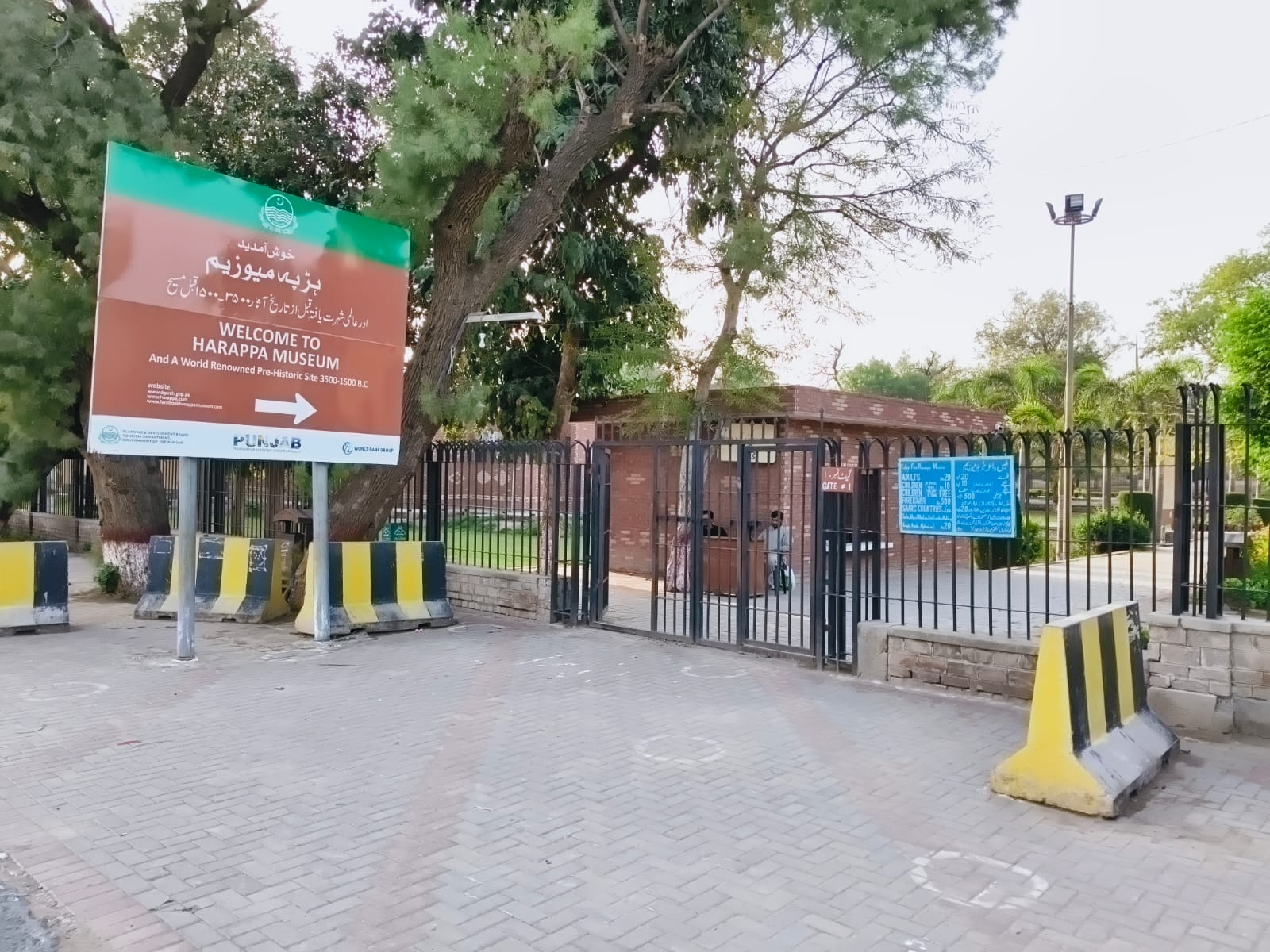
Main Gate Exterior
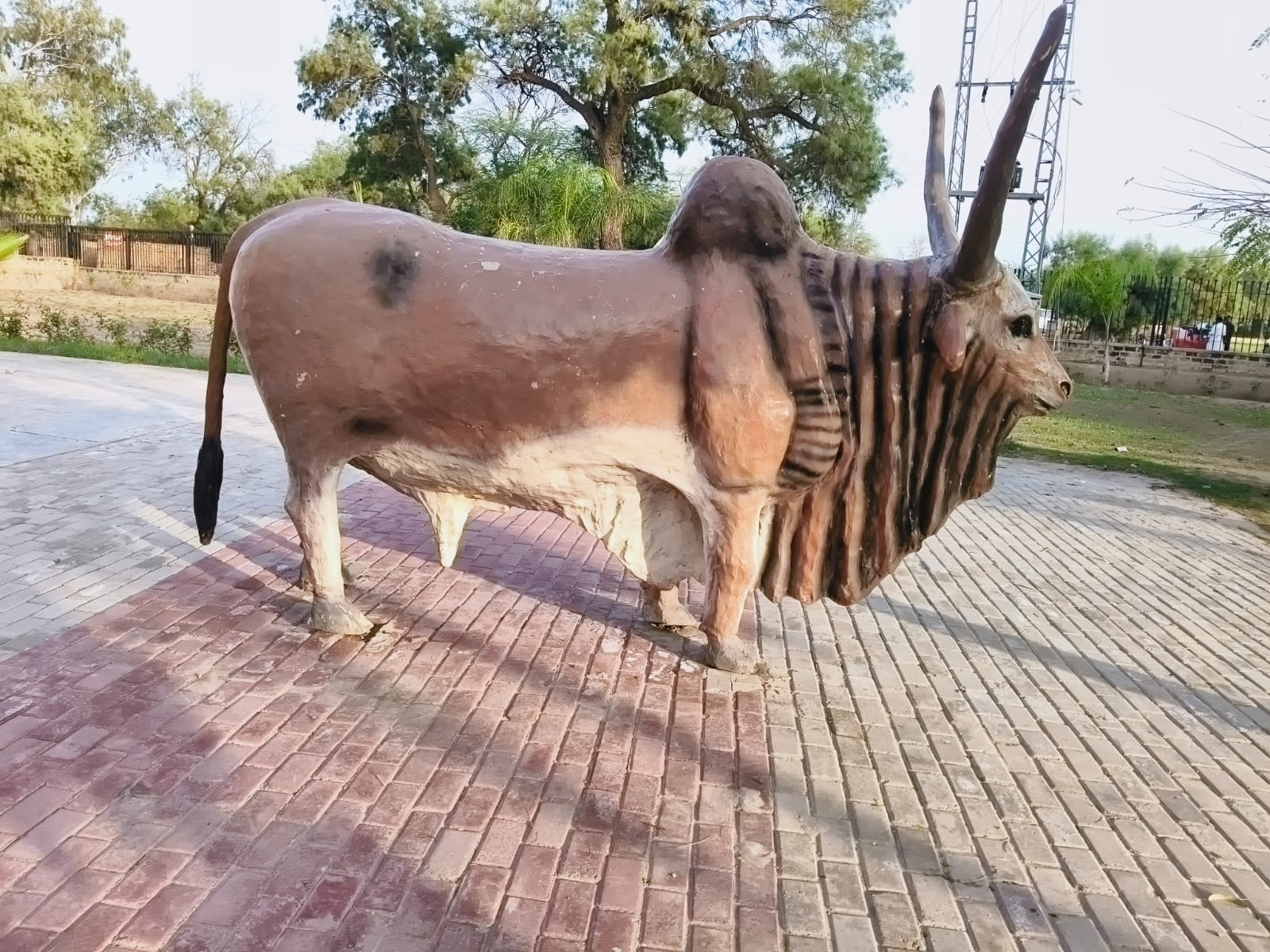
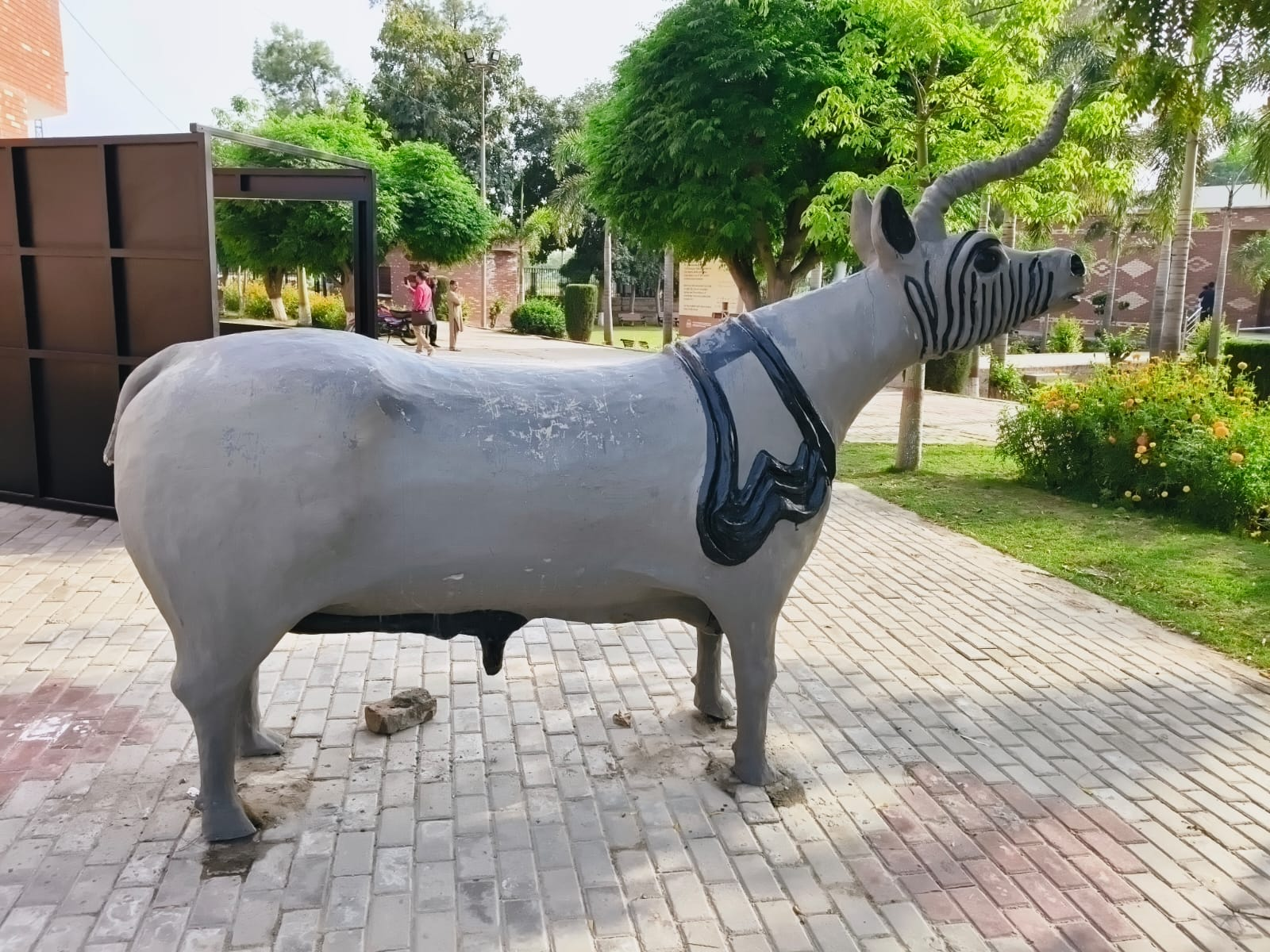
Earlier, this civilization was not very efficient; there was not much renovation here, but in the present era, it has been made very good. As soon as we enter through its main gate, we see two bulls, which are one of the biggest symbols of this civilization. One of them is a bull with one horn. This one horn is a symbol of this era. During this time, these bulls used to be, so they have been prepared here with clay to represent this era.
 |  |
|---|
In front of these two bulls, we see two buildings. On one side is a cinema hall which has just been completed and has not been opened. And on the other side, we see a museum that houses all the things that were discovered during the excavation. And in front of it, a board has been placed on which the details of the Harappa civilization are written, as in the Harappa Museum.
When we enter the main building of the Harappa Museum, we see a gallery that is beautifully designed. Its walls are decorated with all the pictures that we see in the ruins. They have good lighting and a good coloring system that welcomes the visitors.
| History Board of Harappa Museum | 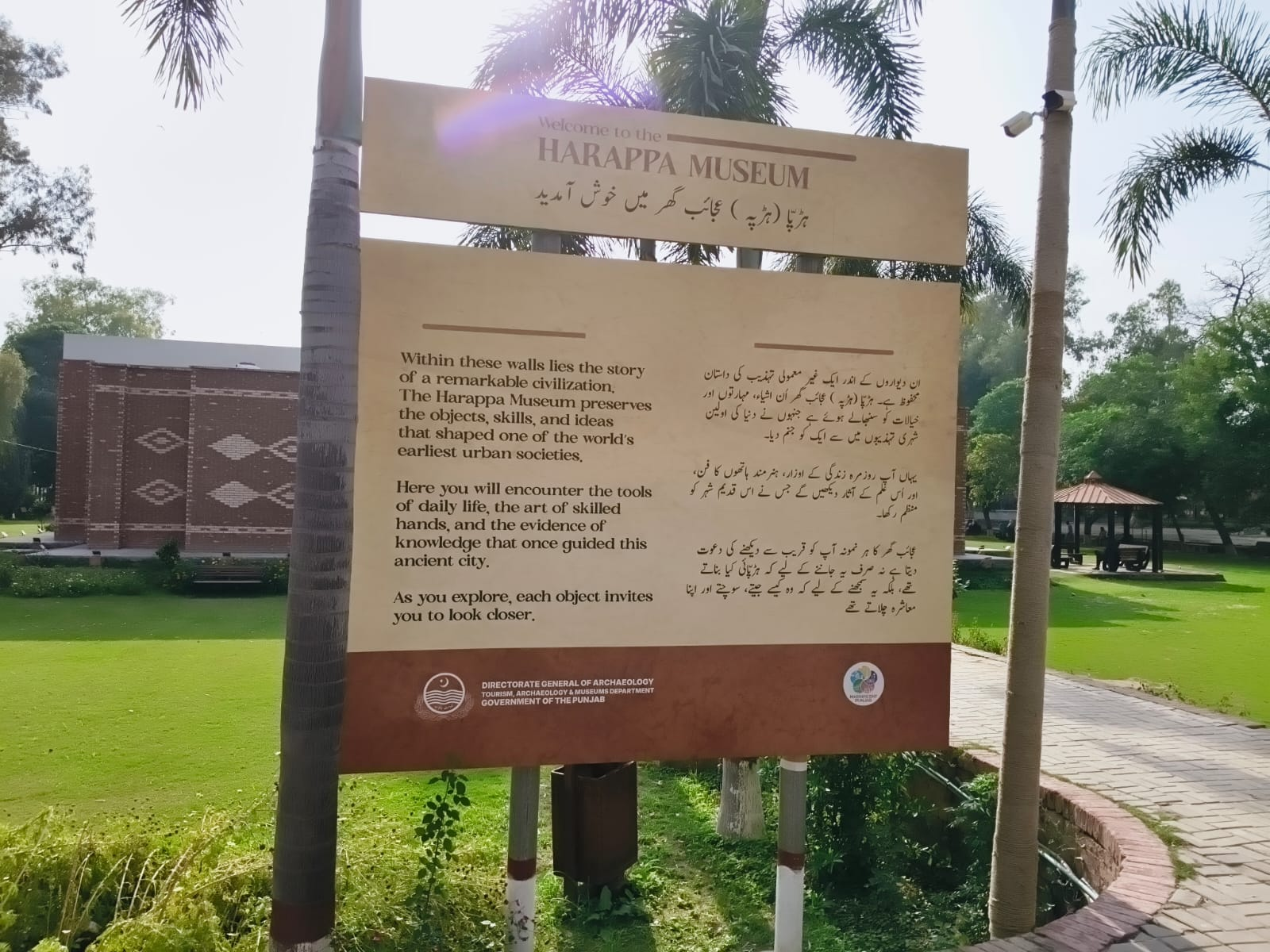 |
|---|
| Cinema Hall Harappa Museum | 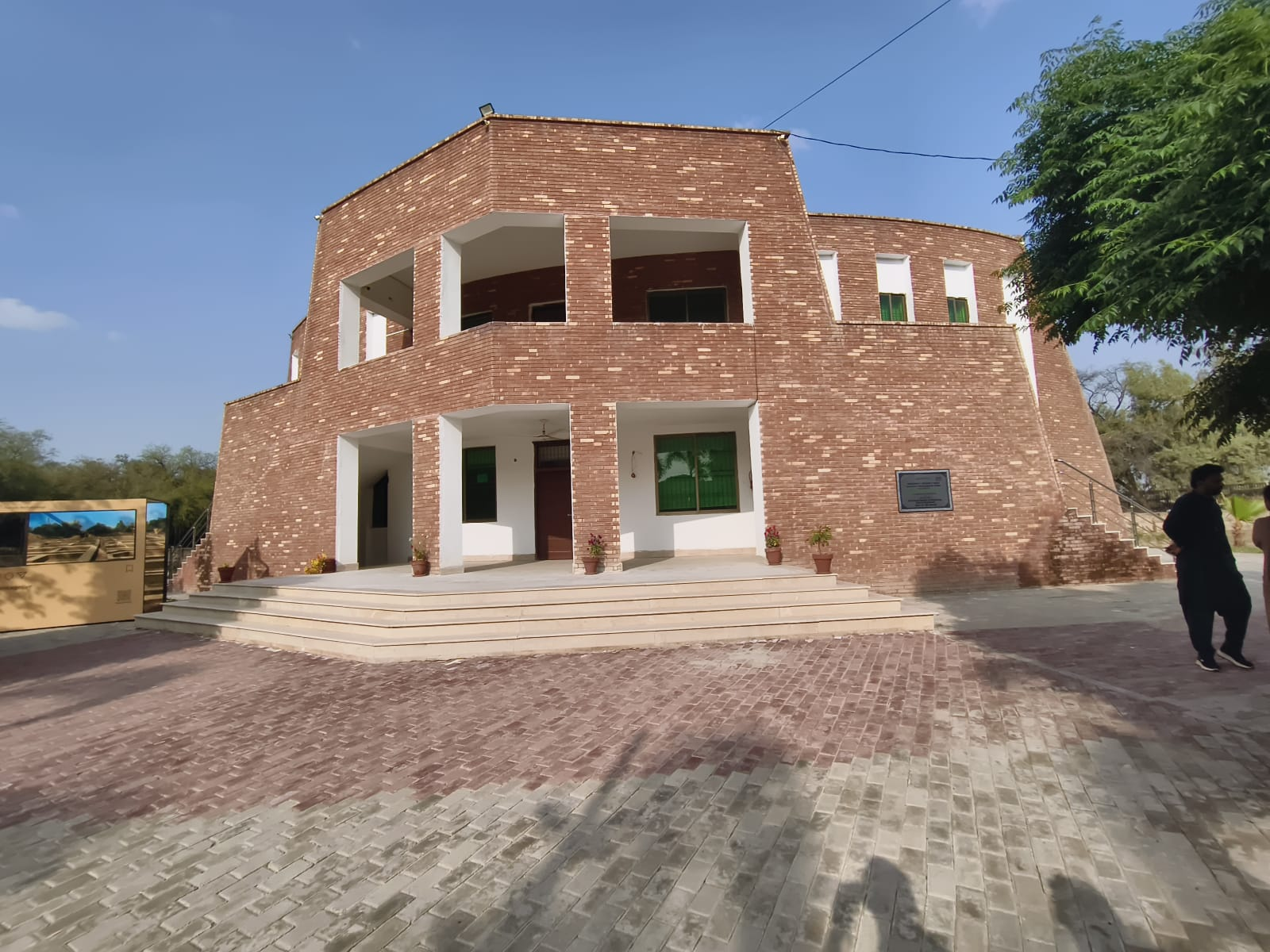 |
|---|---|
| Museum Building For Old Civilization Ornaments | 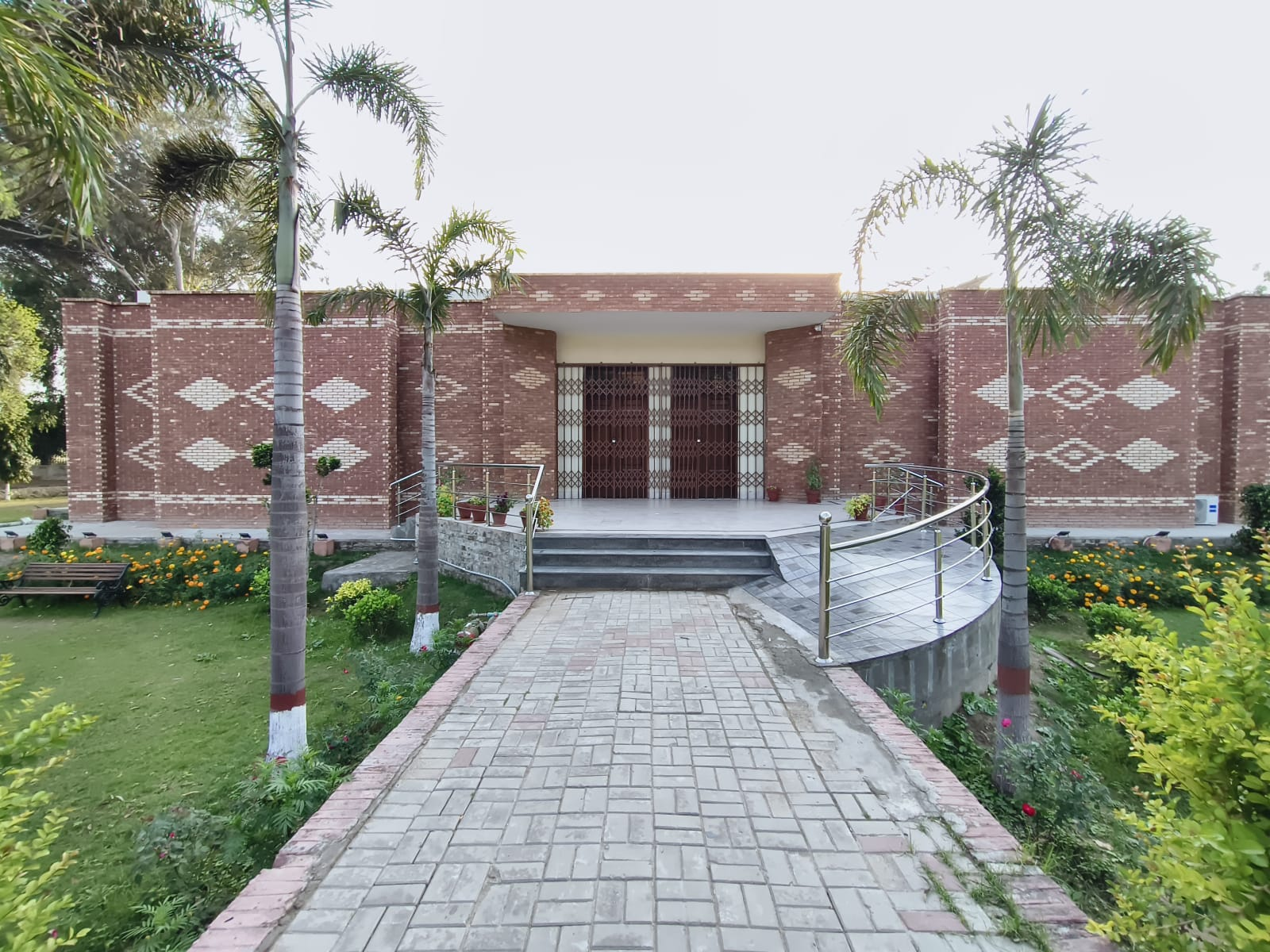 |
| Museum Building Corridor | 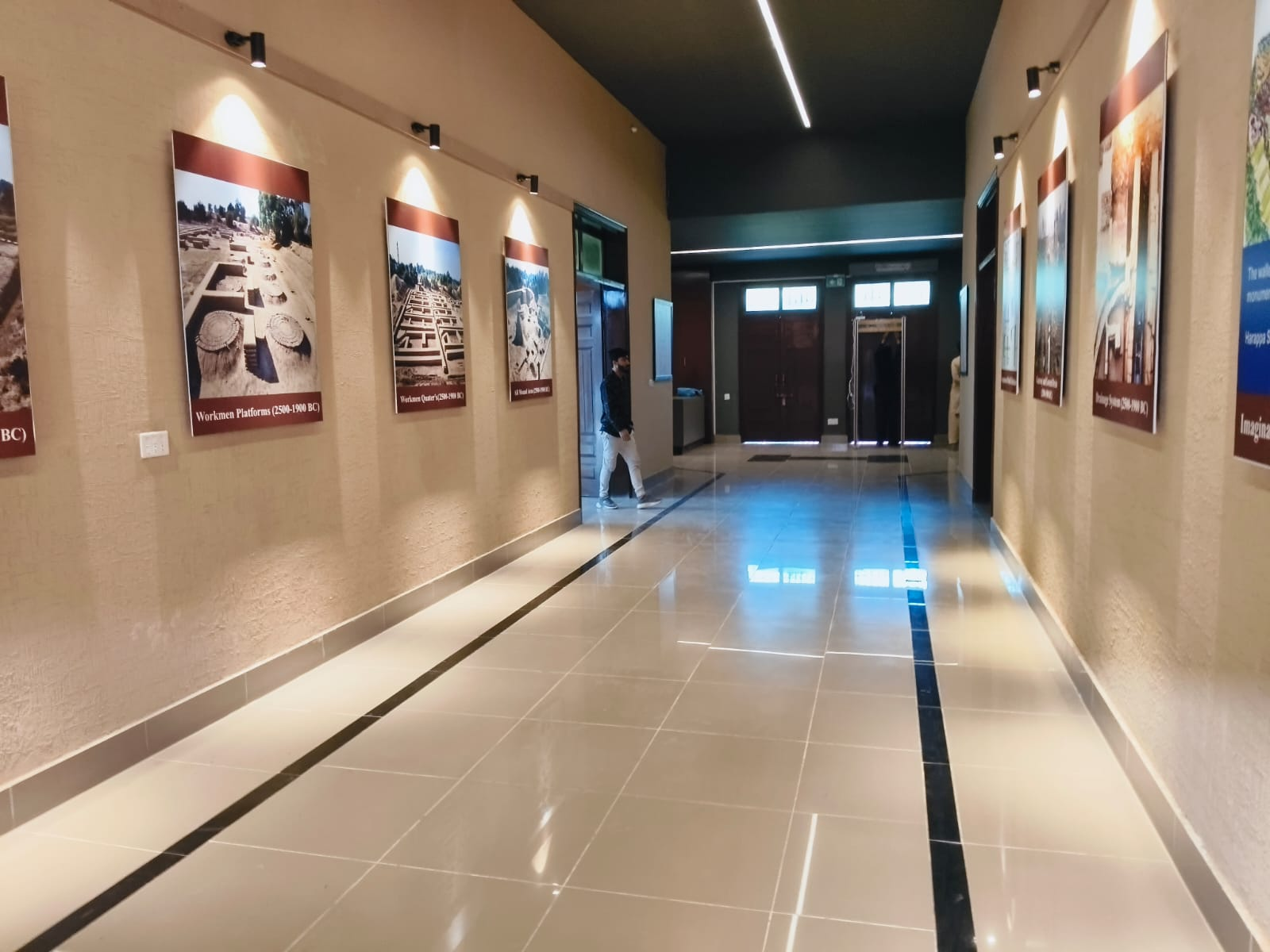 |
Inside the Harappa Museum, there are three such sculptures that are specially made but represent the era when the people of that era were also hardworking and knew how to work with their hands. In the first picture, you can see a picture of a woman who is spinning thread with a reel. This represents that their women were very advanced and hardworking.
Similarly, in the next picture, a statue of a man is seen separating wheat from wheat plants, which is also a great example of hard work. Furthermore, a small city has been created to represent the culture there, behind which a wallpaper has been placed, and in front, all the things that people used to do with their hands in that era are shown.
| Thread Making | 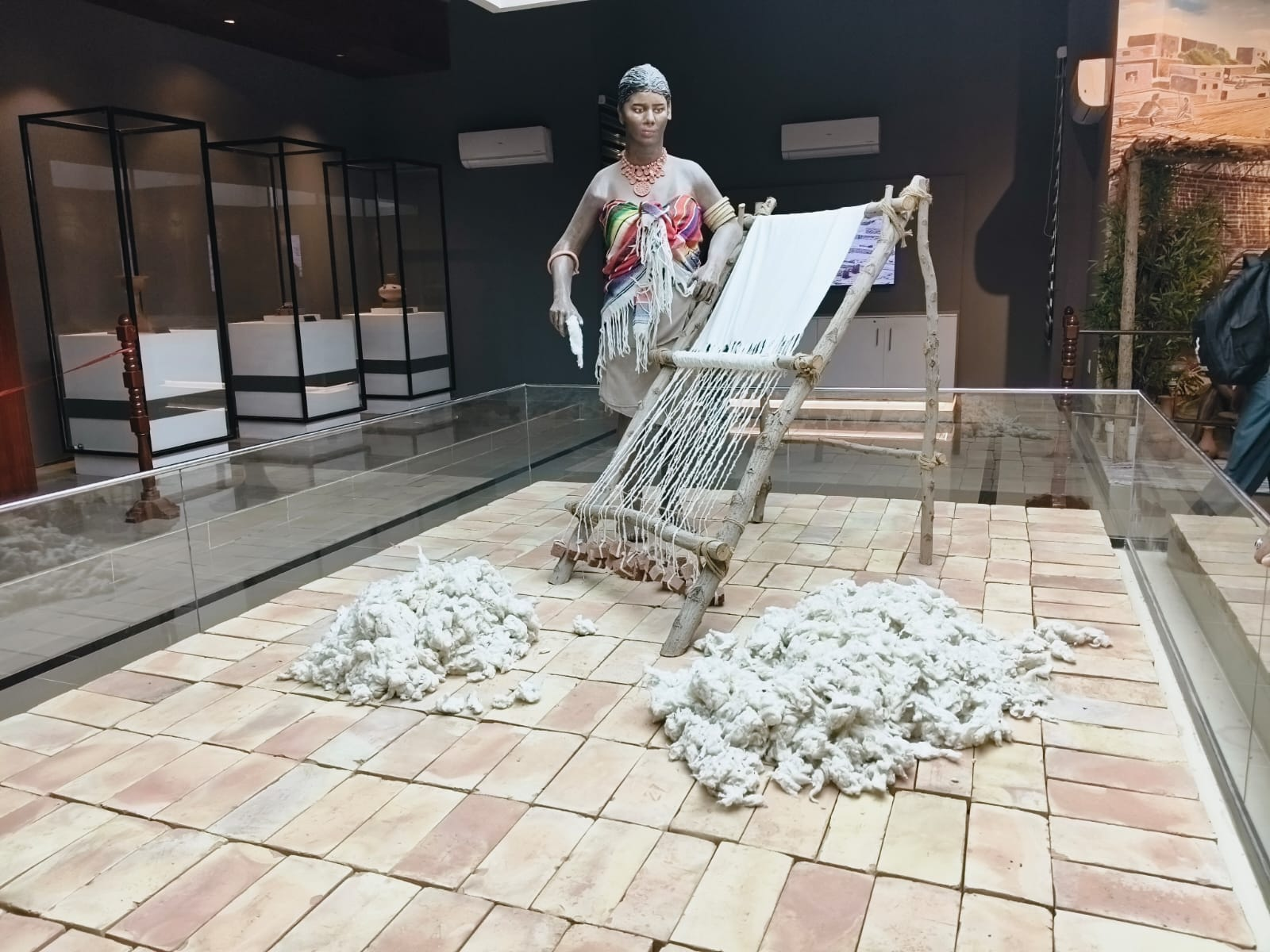 |
|---|---|
| Filter Wheat From Plants | 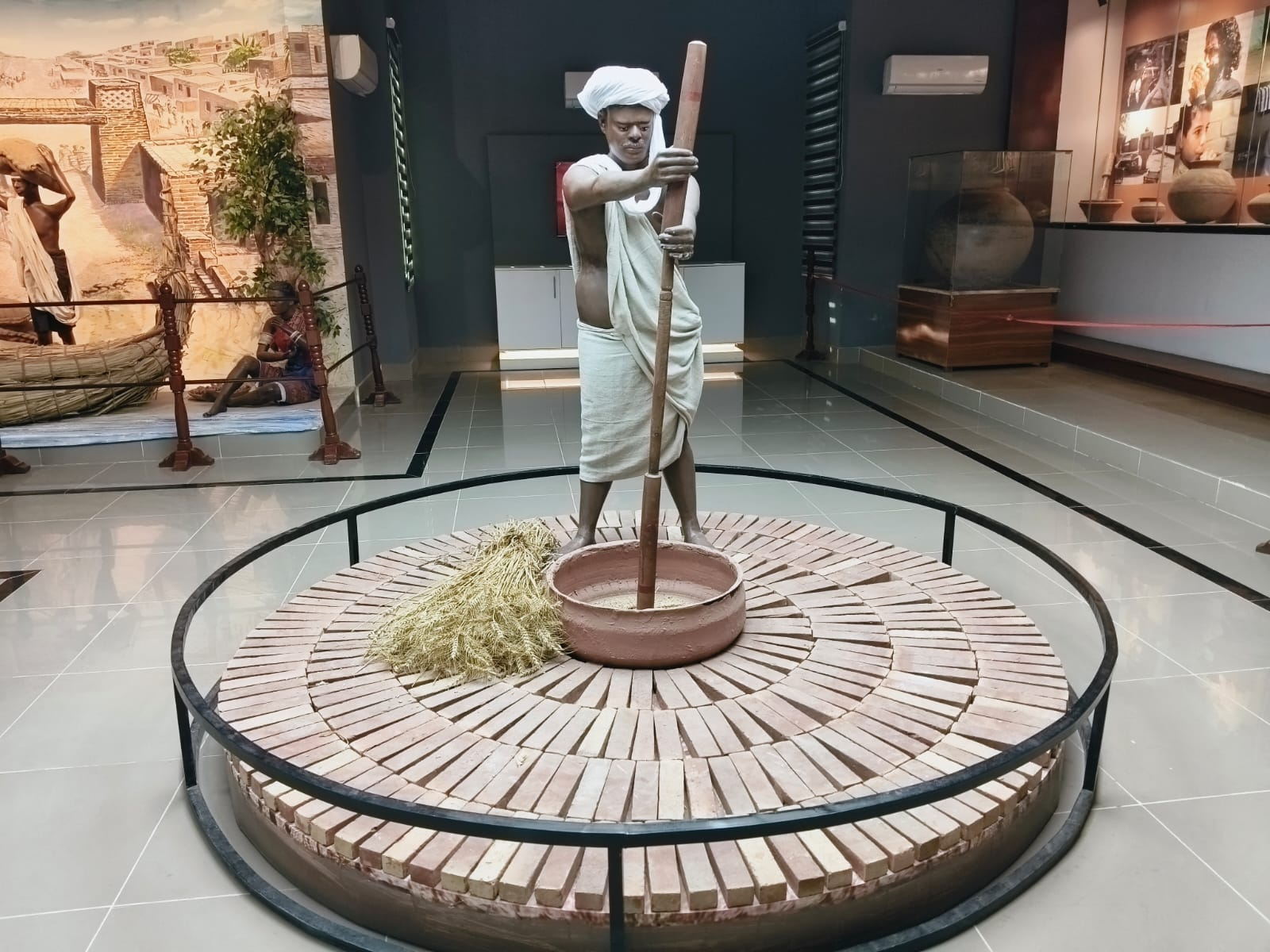 |
| Presenting Punjabi Culture | 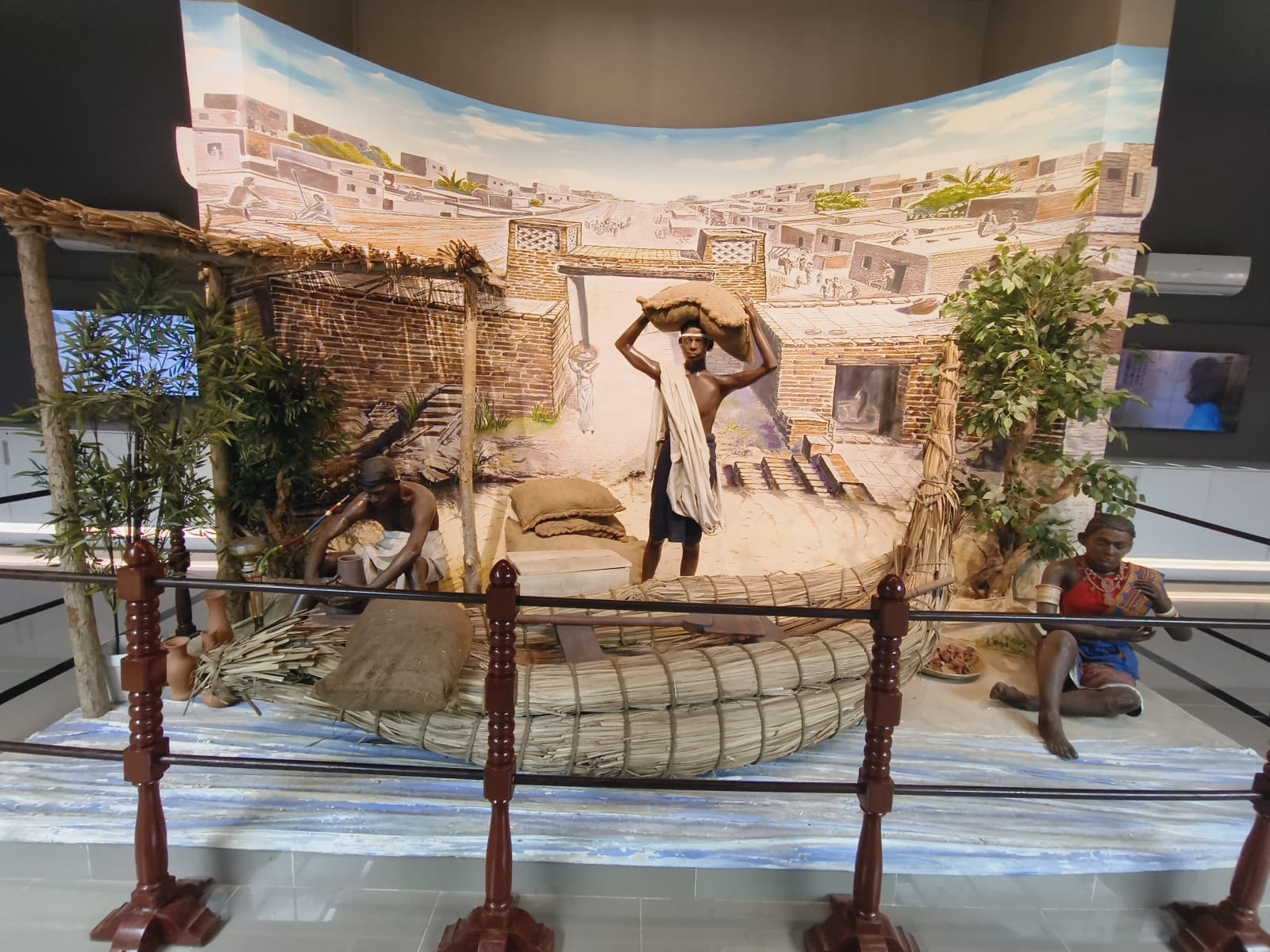 |
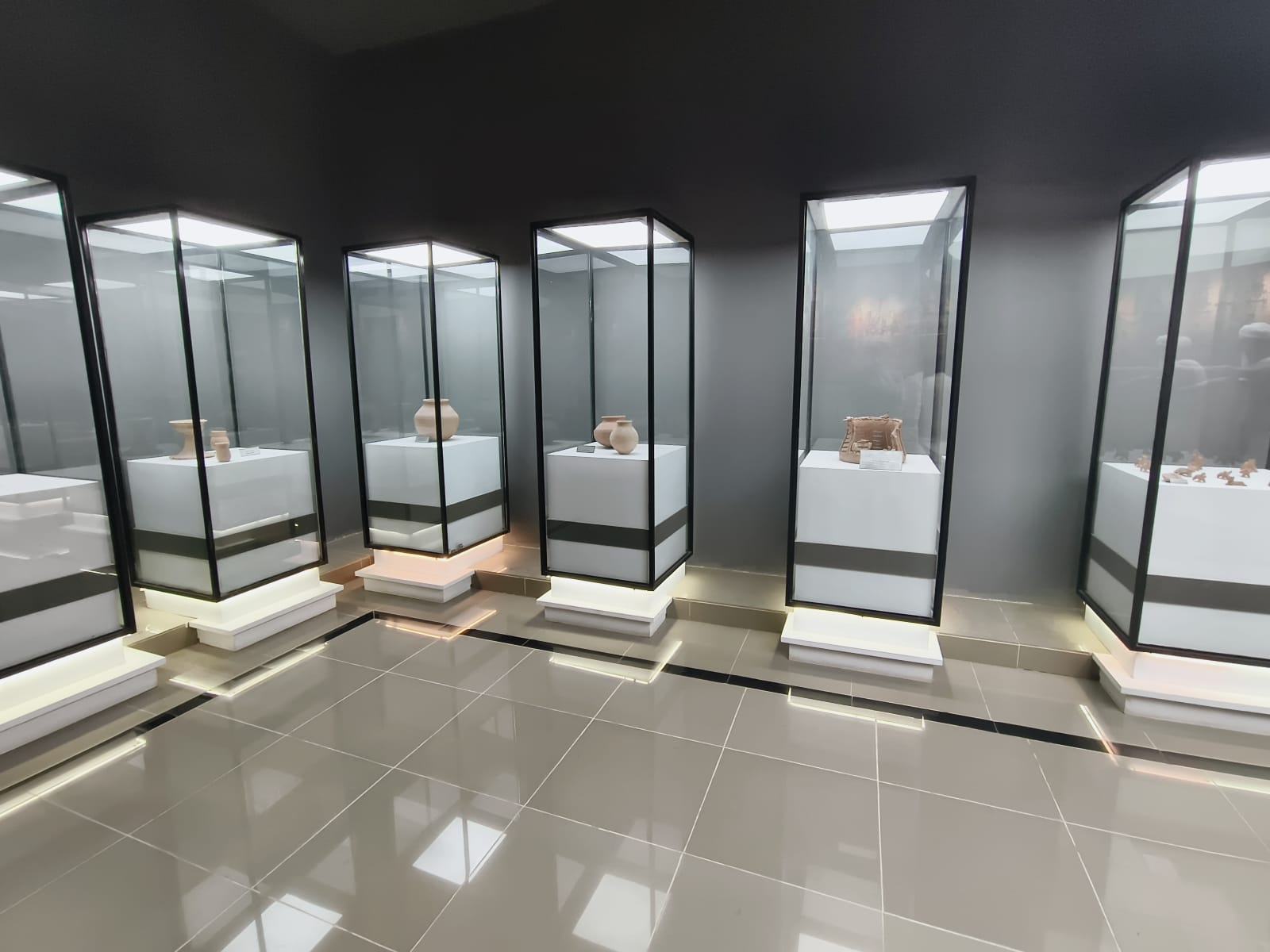
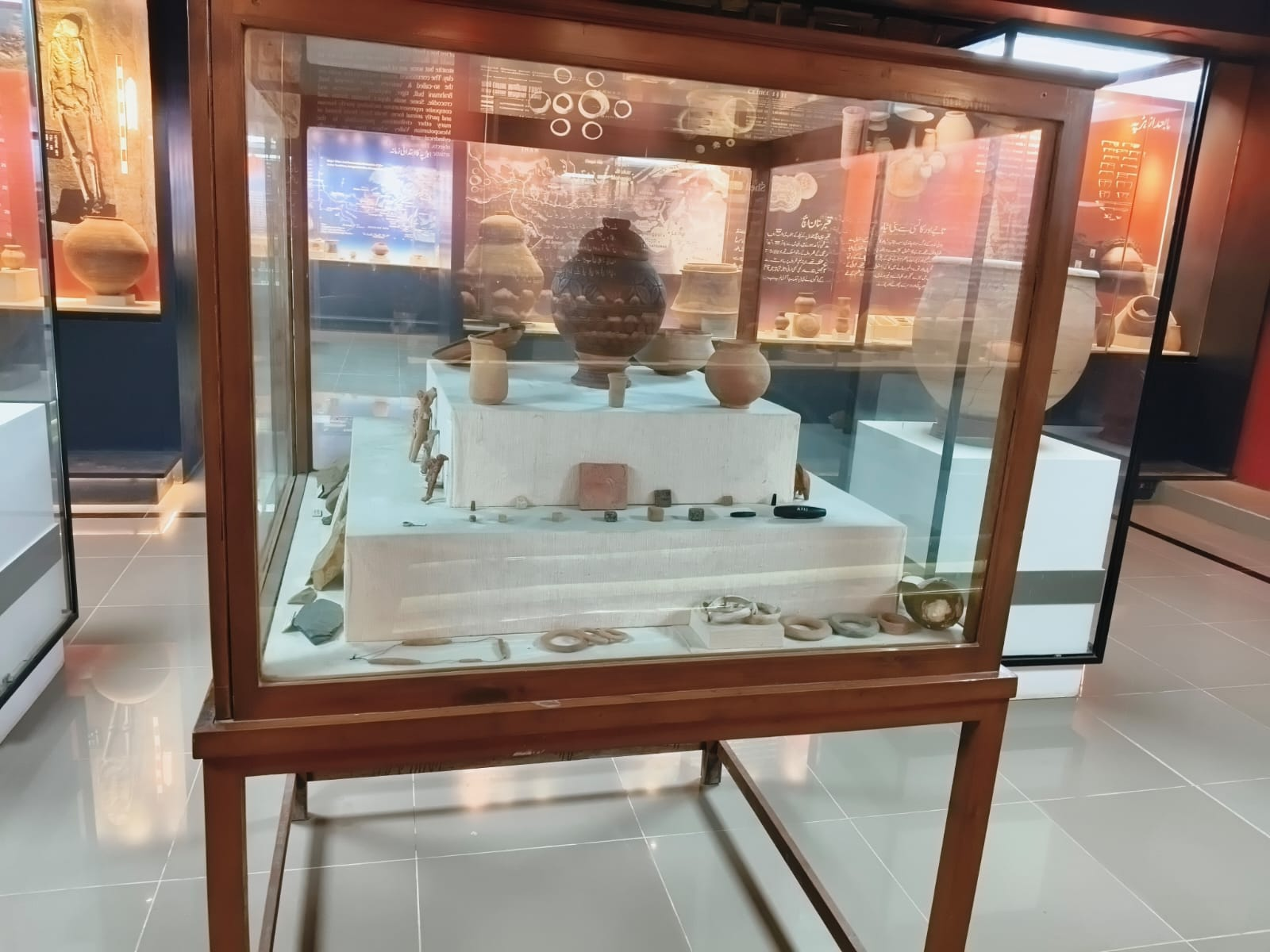
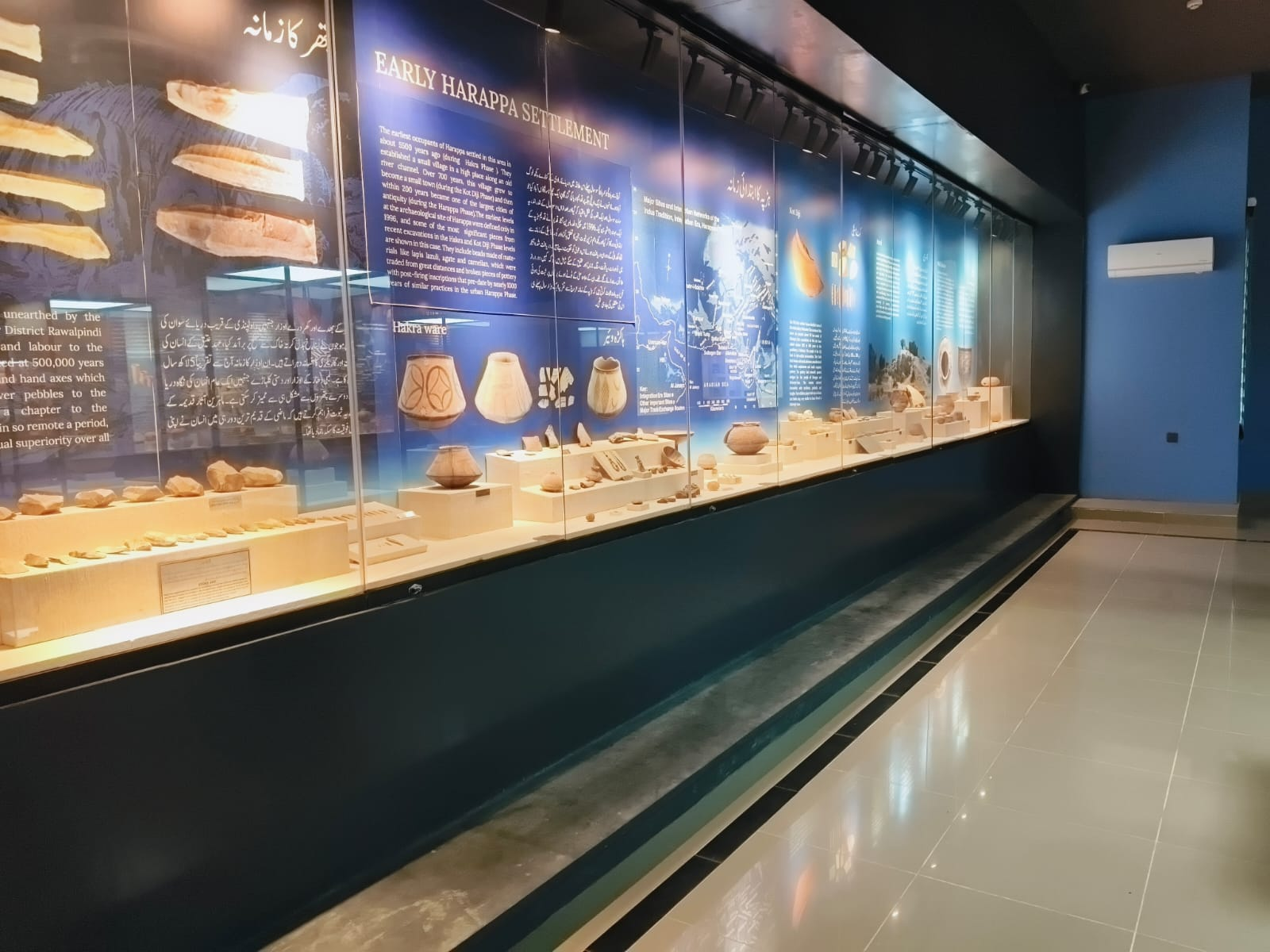
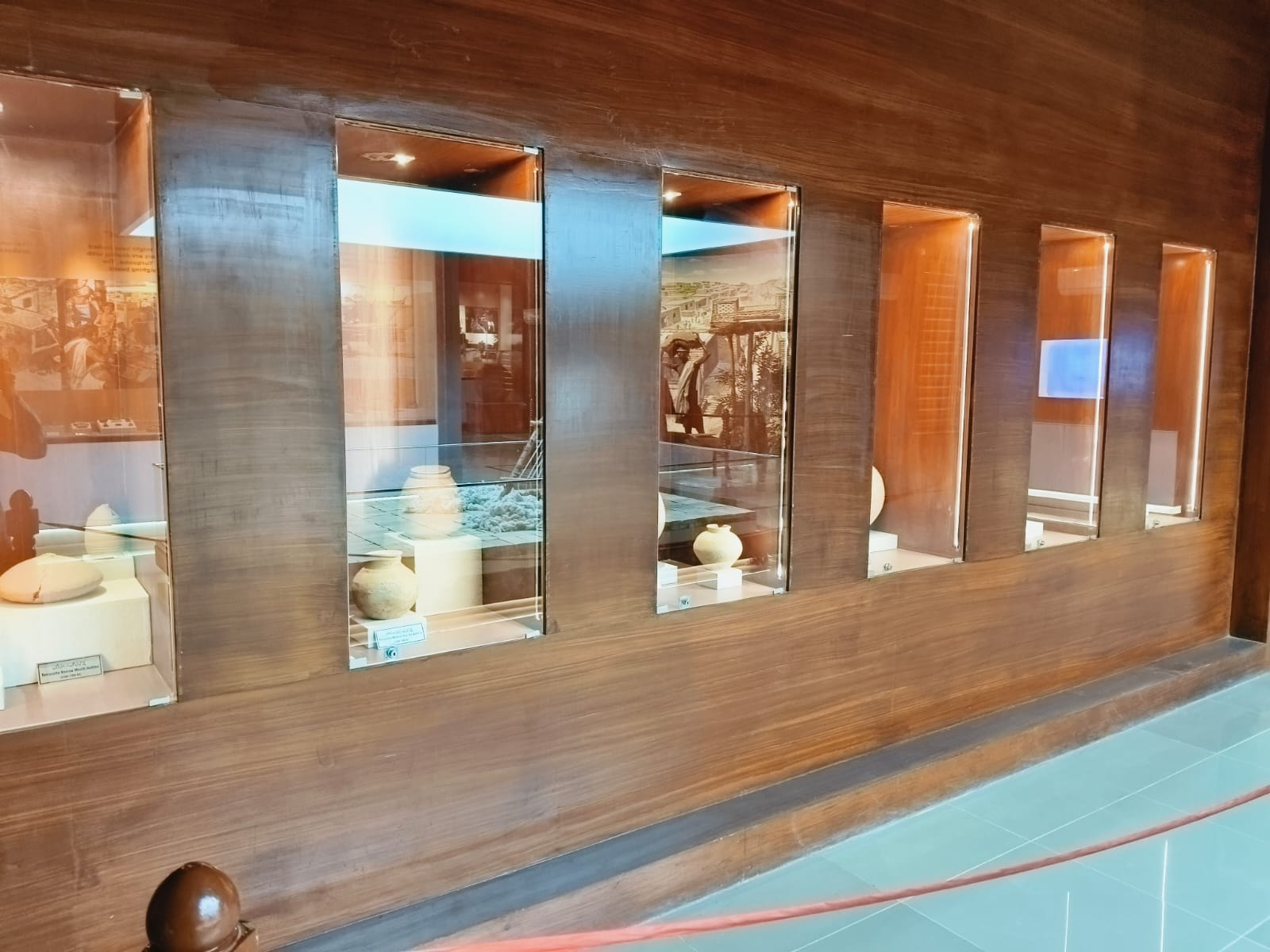
When it was excavated in 1921, many things were discovered that people used during that period. Among all the things used during that period were pottery. Small clay figurines that children used as toys have been discovered, and many weapons have also been discovered, which shows that those people were warriors and had the strength and power to fight. Furthermore, all the tools that they used for their daily use, through which they completed their livelihood, have also been discovered.
 |  |
|---|---|
 |  |
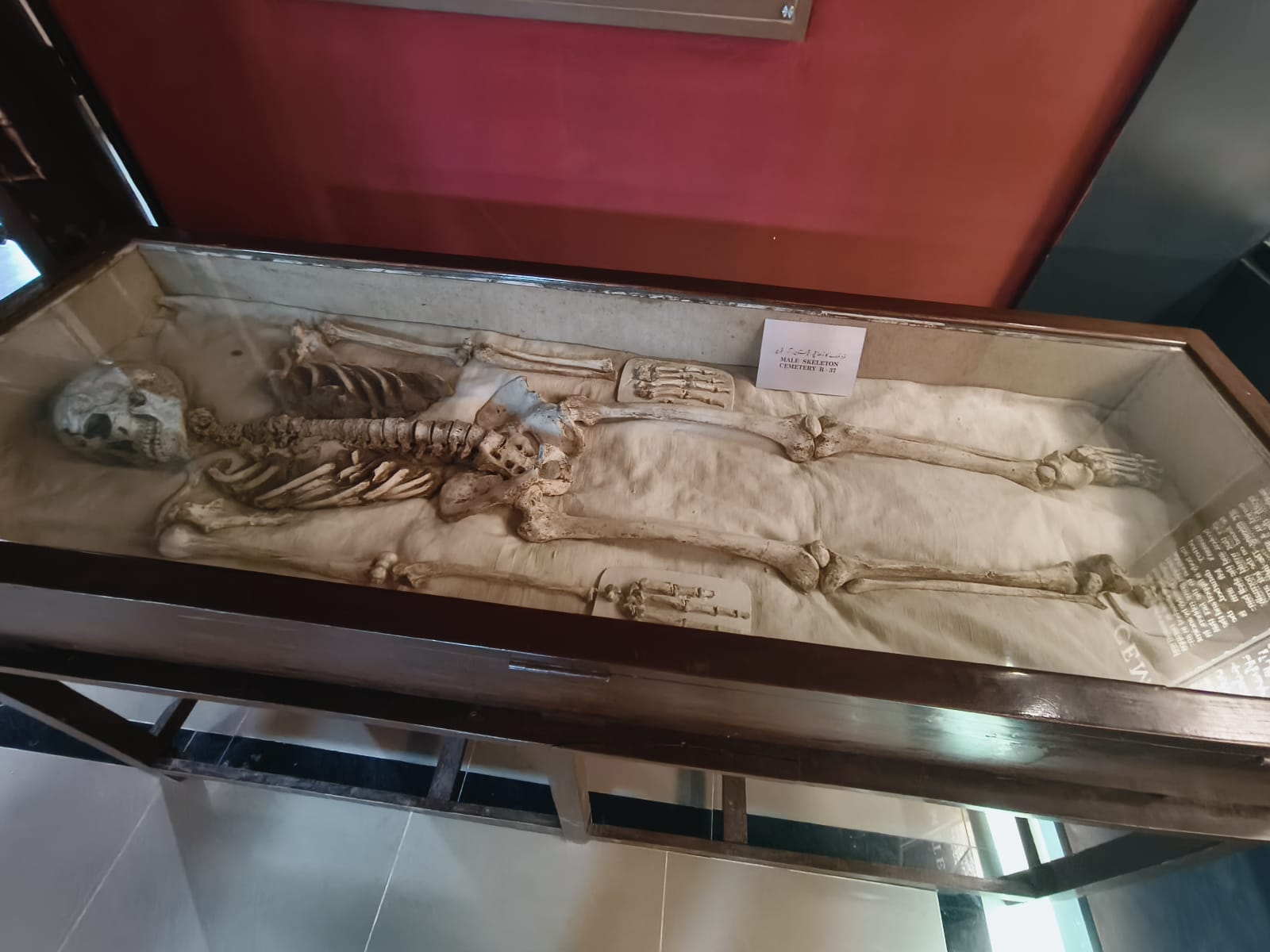
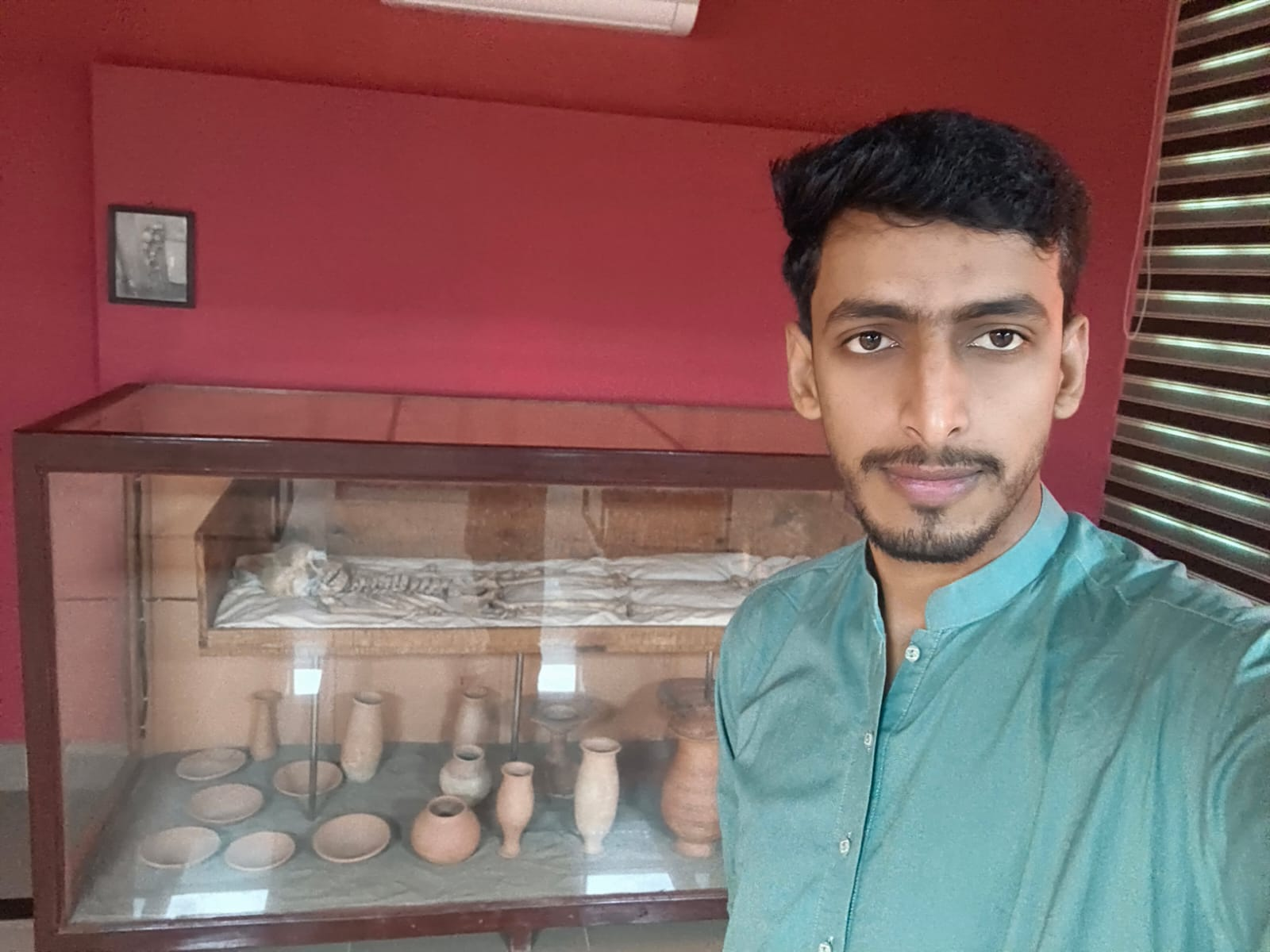
The most beautiful thing is that human remains have also been found here, including two skeletons, one of a woman and the other of a man. If you look at the size of both, they are generally five feet eight inches to nine inches, which proves that the people of five thousand years ago were also like us. Their lifestyle was also like ours. They were very updated. Their utensils are also found here, which proves that they were experts in eating and drinking and used things well.
 |  |
|---|
All the objects kept in the Harappa Museum have detailed descriptions of each object so that visitors can know what the purpose of the object they are looking at was. During this period, all these objects have been placed under good lighting so that everything is clearly visible. Some objects are very small, but a large lens has been placed on them through which people can see them easily.
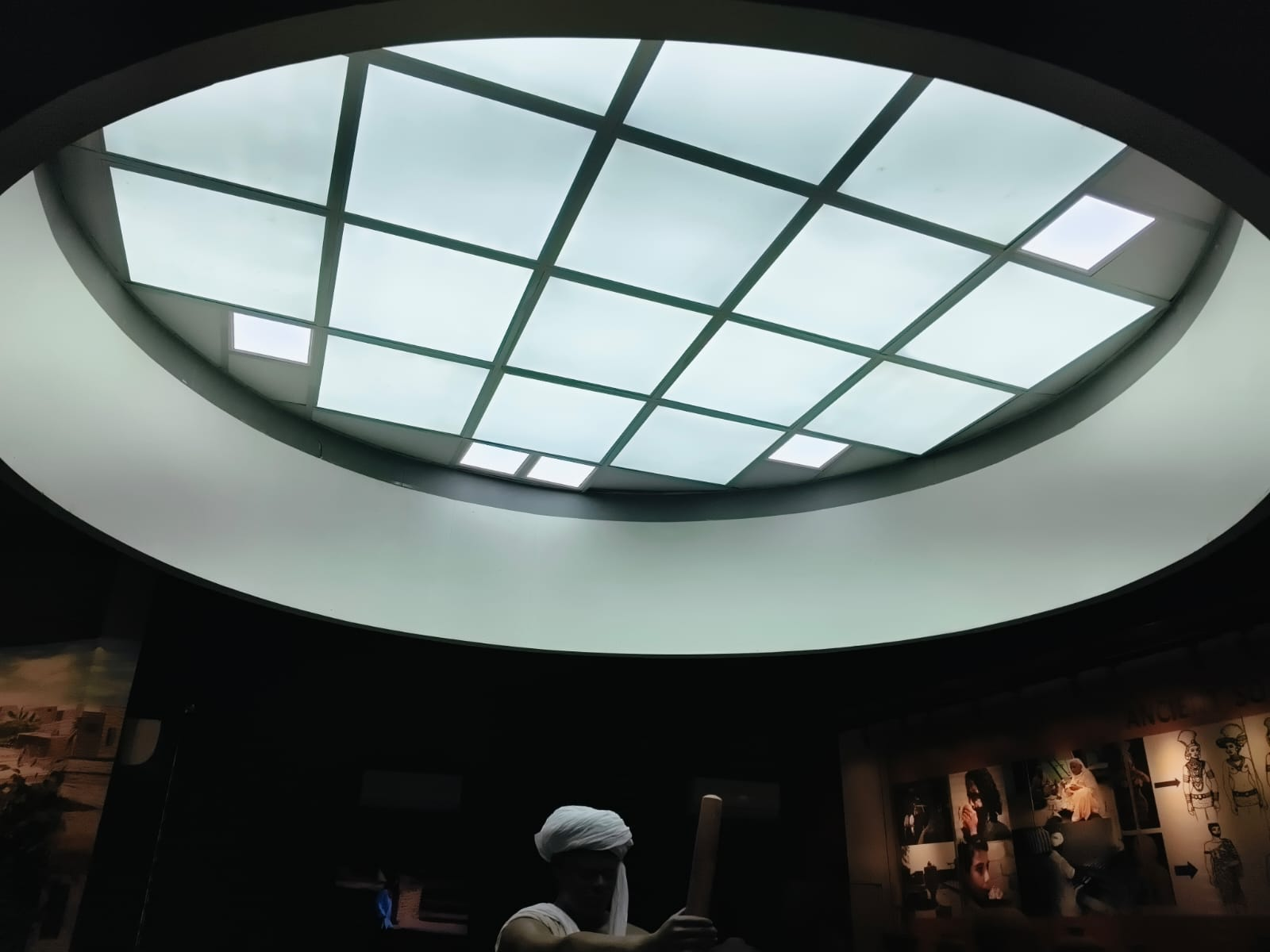
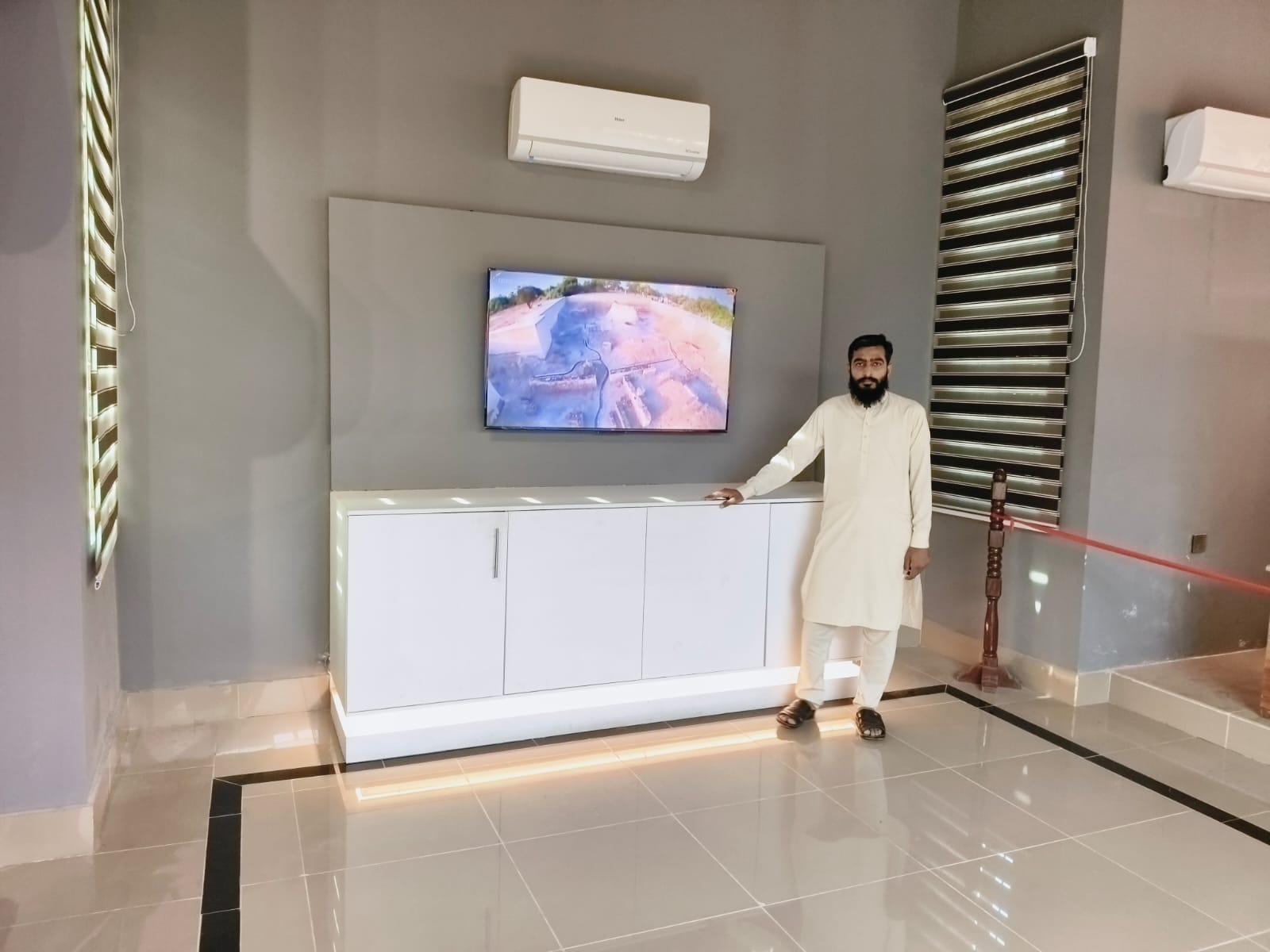
On top of all these things, if you look at the ceiling, there is good lighting, beautiful designs have been made on the walls, and an LCD is installed here, on which the entire history of this area runs all day long. People can see the entire history of the control of this Harappan museum on this LCD. All those pictures and videos are installed there that you can also see with the naked eye.
 |  |
|---|
The area of the Harappa Museum is about five to six kilometers, which is a vast area. It was a small room in which all the tools and objects that were found here during the excavation were kept. Then, when I moved forward, I saw a small park in which small swings were installed, which were for children. Children are very happy to come here, discover old things, swing on swings, and enjoy their families.
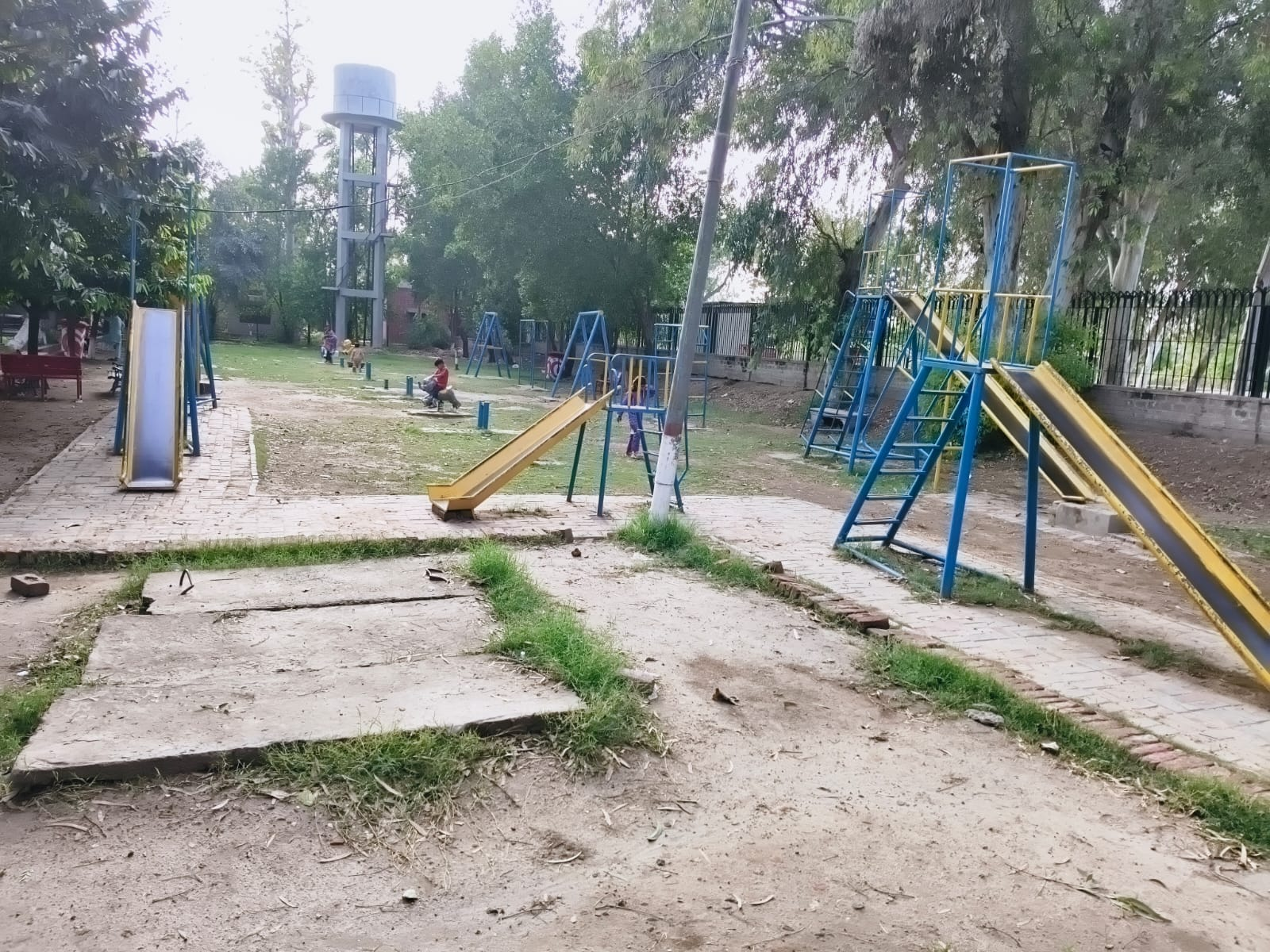
Little Play Land For Children
Further, as we move forward, the area begins where you will see all the ruins. Here you will not see anything far away except for the ruins, high mountains, soil, and rocks. And the most interesting thing is that here you can see very old trees that have been growing for thousands of years, which are still standing and standing, and they are planted on the soil, and there are many stones inside this soil, but still, that tree is standing and standing.
Here, when the hours of Harappa begin, a large history board has been installed there, on which the entire history has been written, explaining why the ruins of Harappa exist and how they were built. So, here I took some photographs which I have shared with you.
| Archaeological Remains of Harappa History | 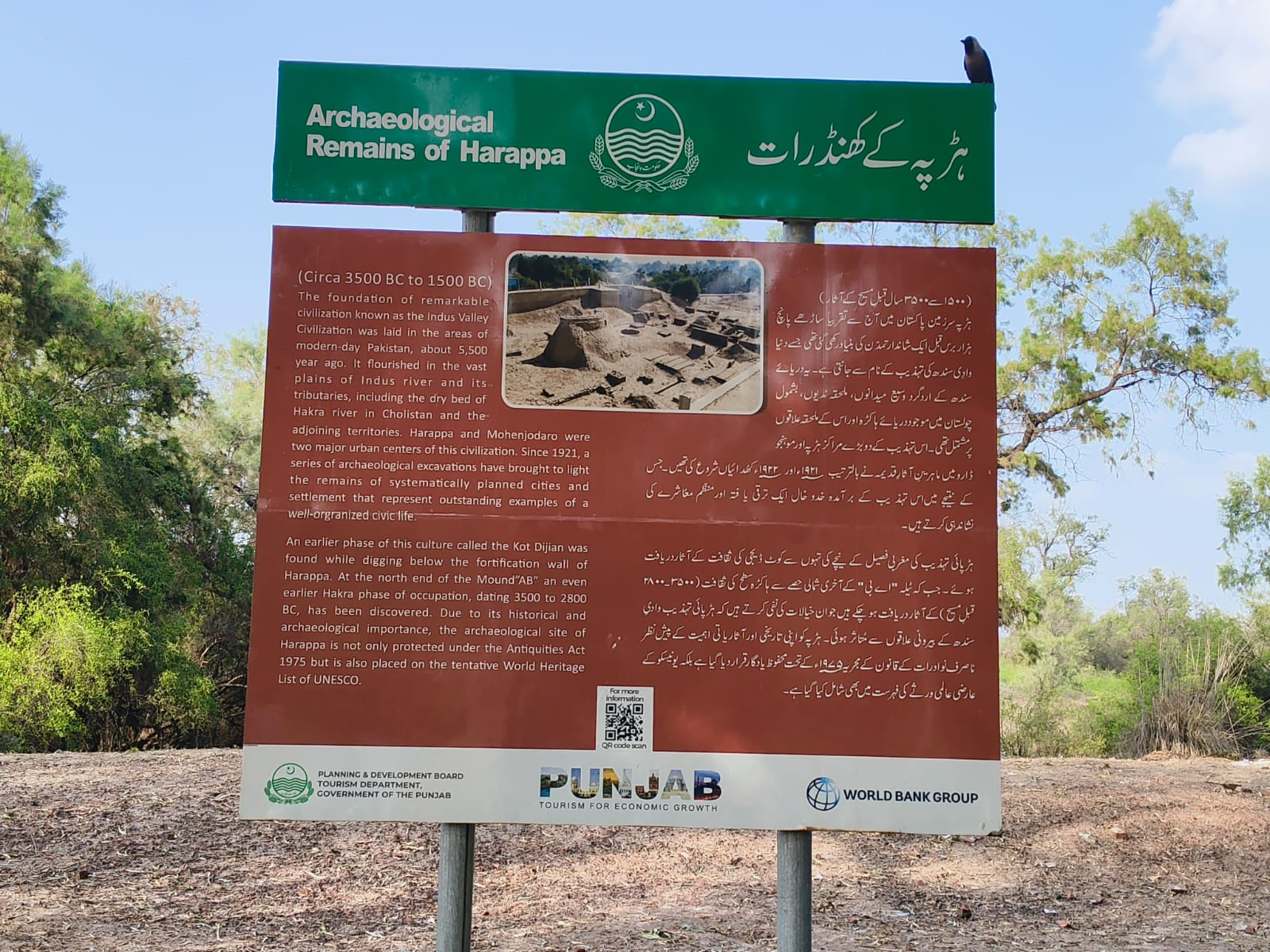 |
|---|---|
| My Self At Archaeological Remains of Harappa |  |
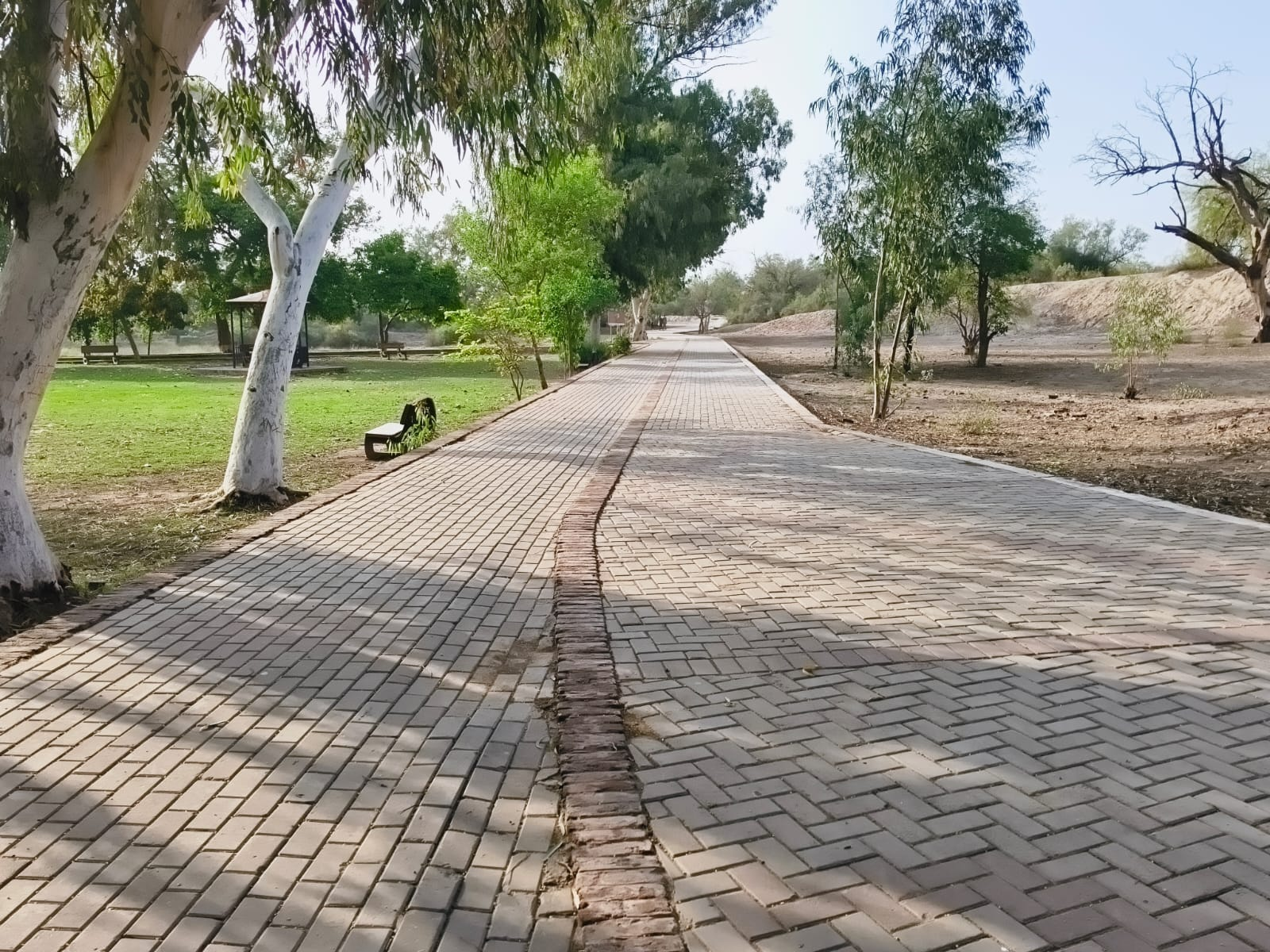
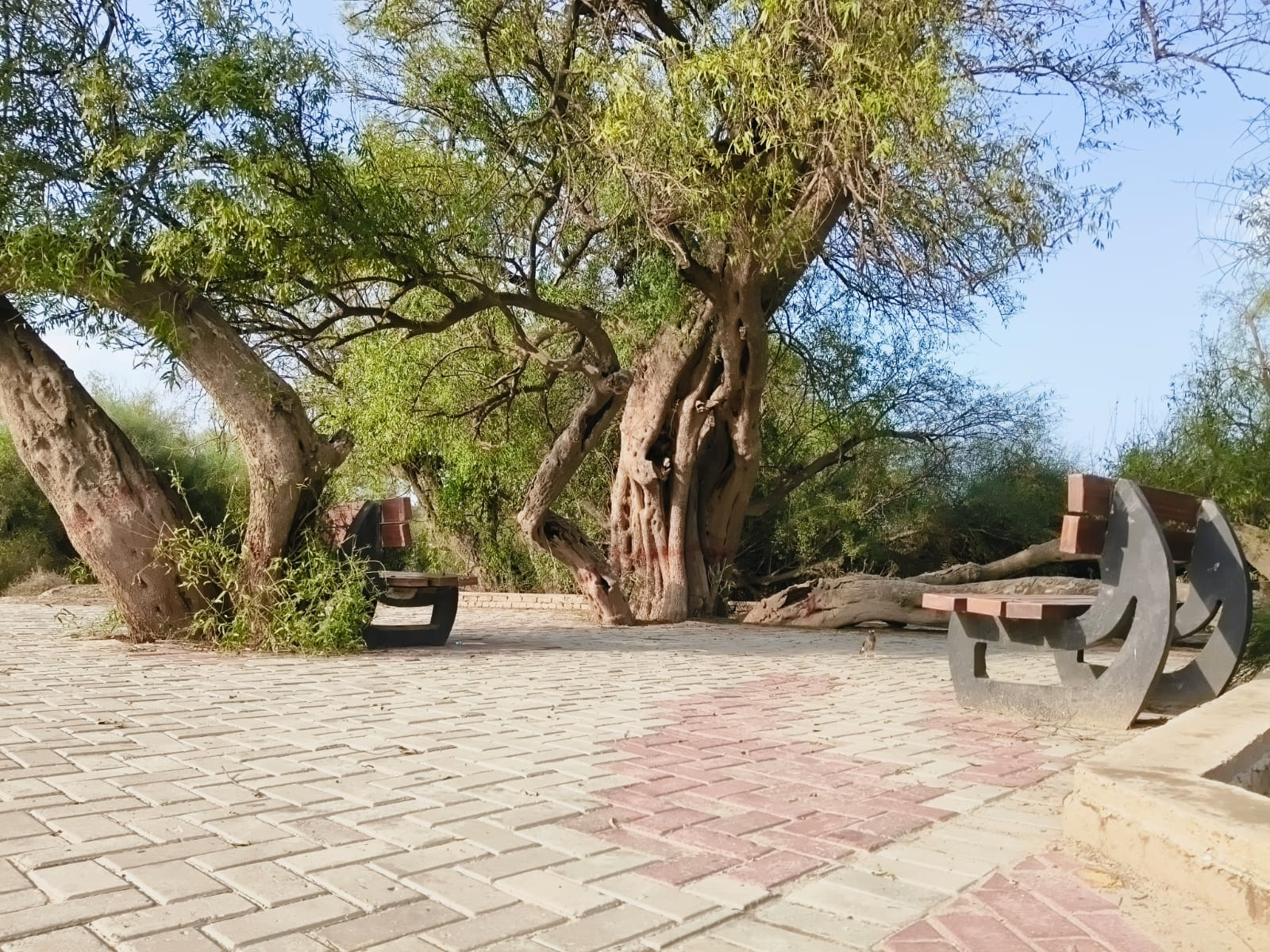
If you look at the ruins of Harappa, there are huge mountains of mud around, which were built by razing people's houses. Meanwhile, clean, paved streets have been made, and some chairs have been placed on these streets at various places so that people can visit the entire area from here with ease. If someone gets tired here, he can sit down, take a breath, and then move on. All the places to sit are made there, where an aesthetic view is seen. You can sit there and see the oldest trees and discover the things of that era.
 |  |
|---|
After covering a distance of 500 meters, when we reached there, we saw the Mount AB Southern Area. This is the area where the people of that era had built wells, paved canals, and a good water system. From here, the people there used to fill their homes with water. From here, it can be estimated that these people were very advanced. They had an understanding of everything. They had made everything open, airy, and light, and they had made a proper arrangement for water, for which paved canals have been built.
In the area of Mount AB Southern Area, you will see a history board on which the history of this mound is written. You can also benefit from this history. I am sharing that history board below.
| Mound AB Southern Area | 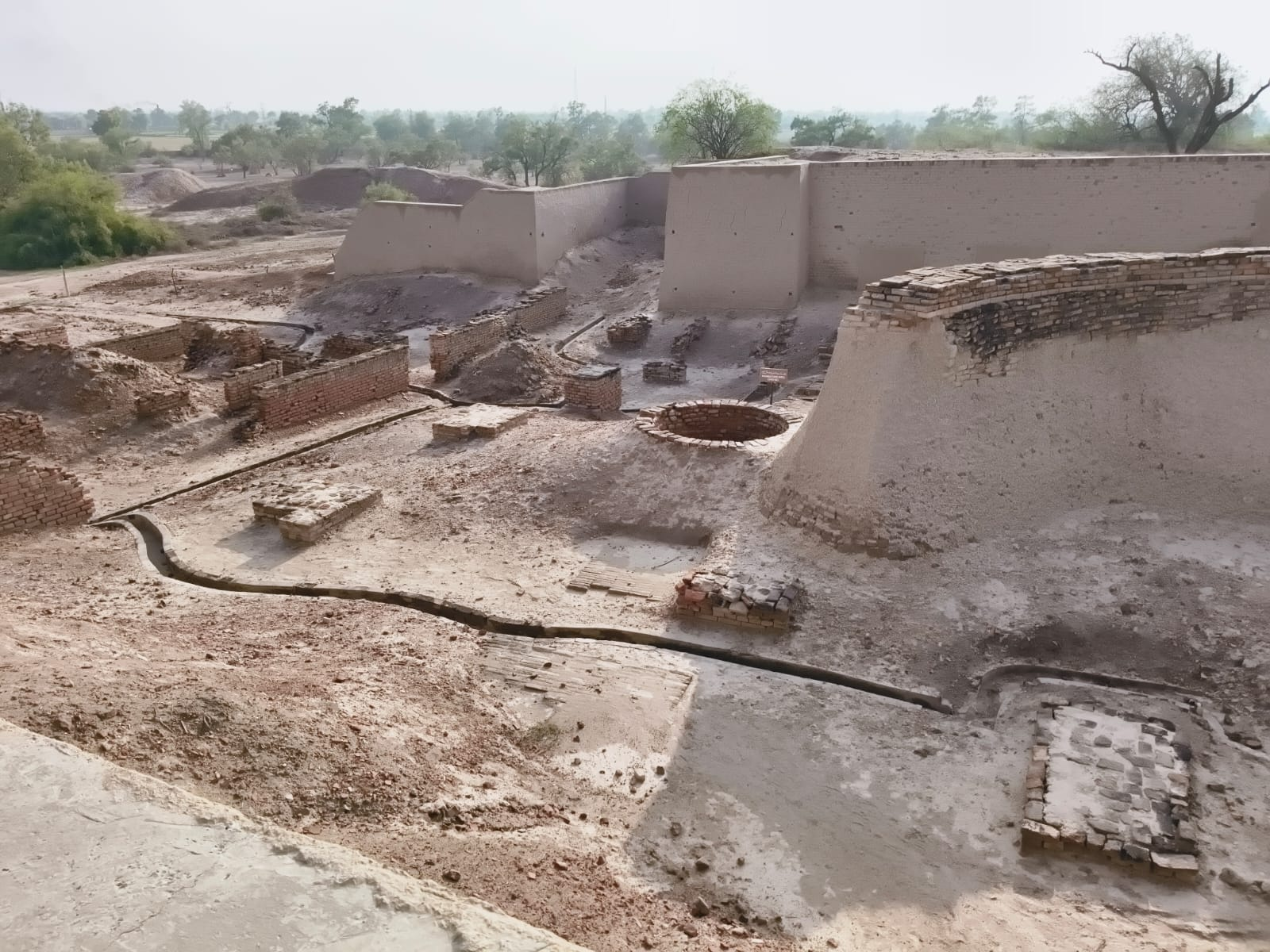 |
|---|---|
| Mound AB Southern Area History Board | 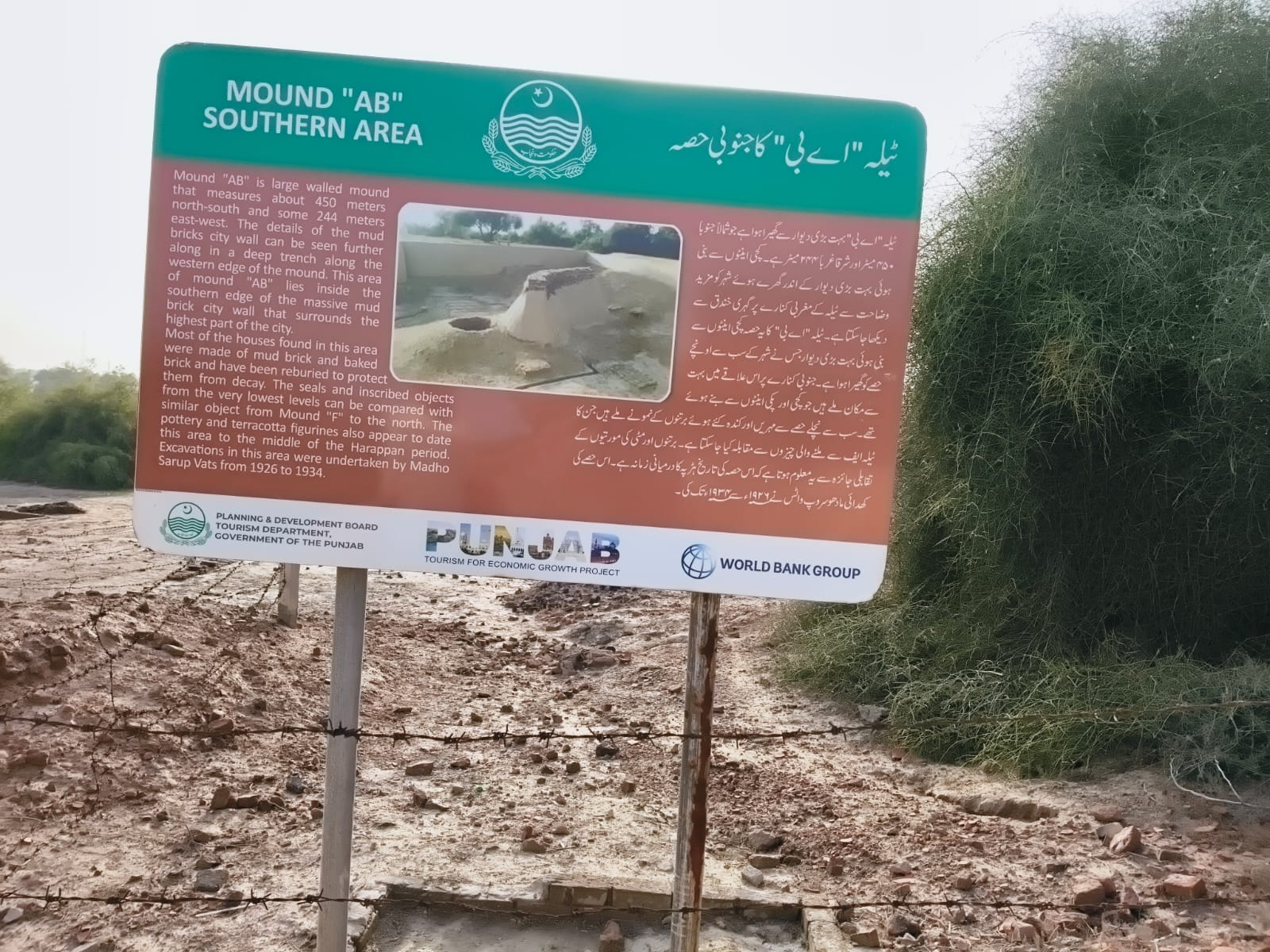 |
After moving further, we reached a point where there was a walled city. Here, a wall was created, which represents that those people were their protectors and warriors and were going to protect themselves. From this wall, it can be inferred that they used to fight with the coming enemies and used this wall to keep them within their boundaries. Whoever moved beyond it was killed. Then the enemies used to attack them from behind this wall. Therefore, you can also read its history on a board here. All these things are a great example of their bravery.
| Fortification Wall | 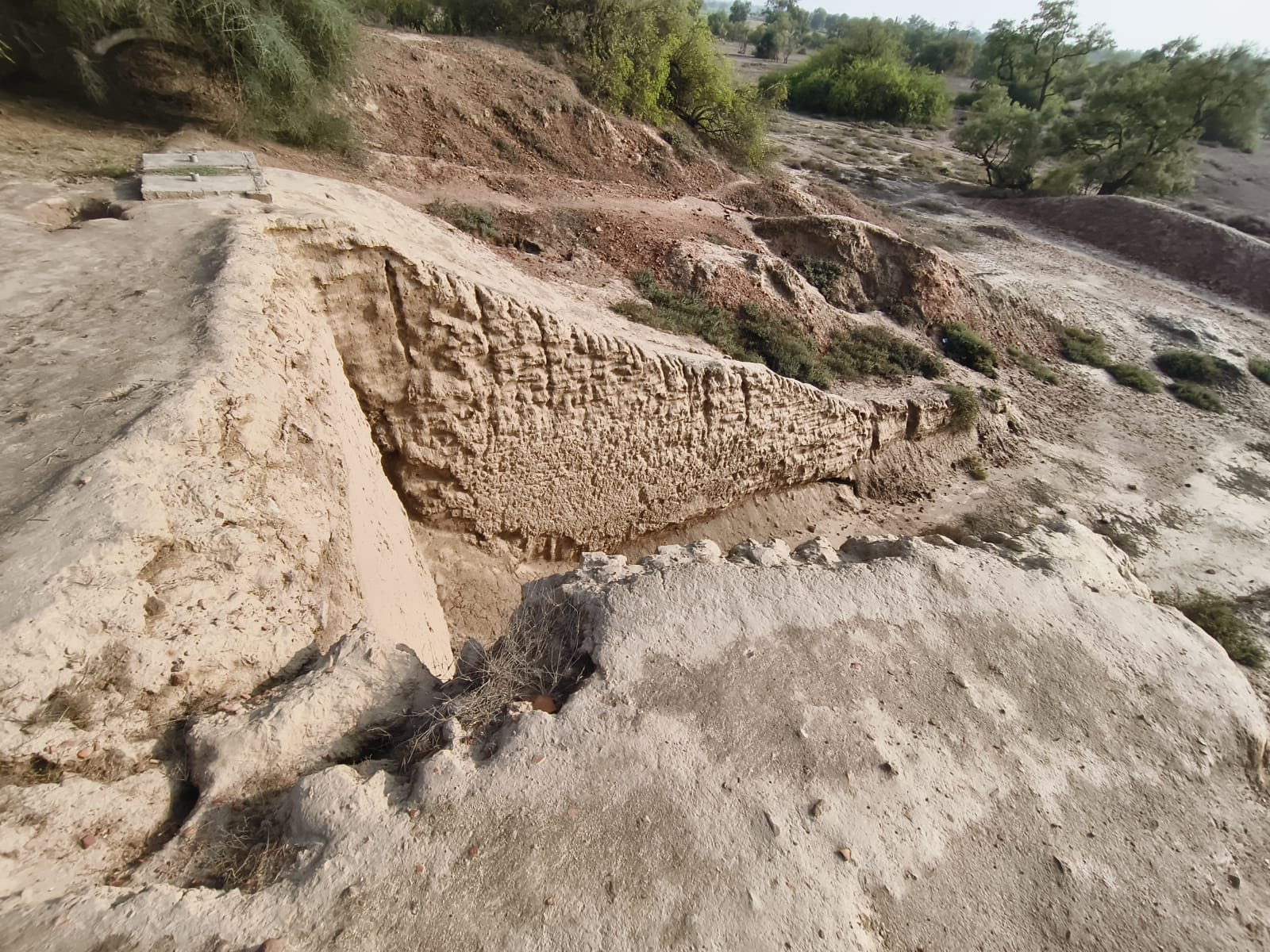 |
|---|---|
| Fortification Wall History Board | 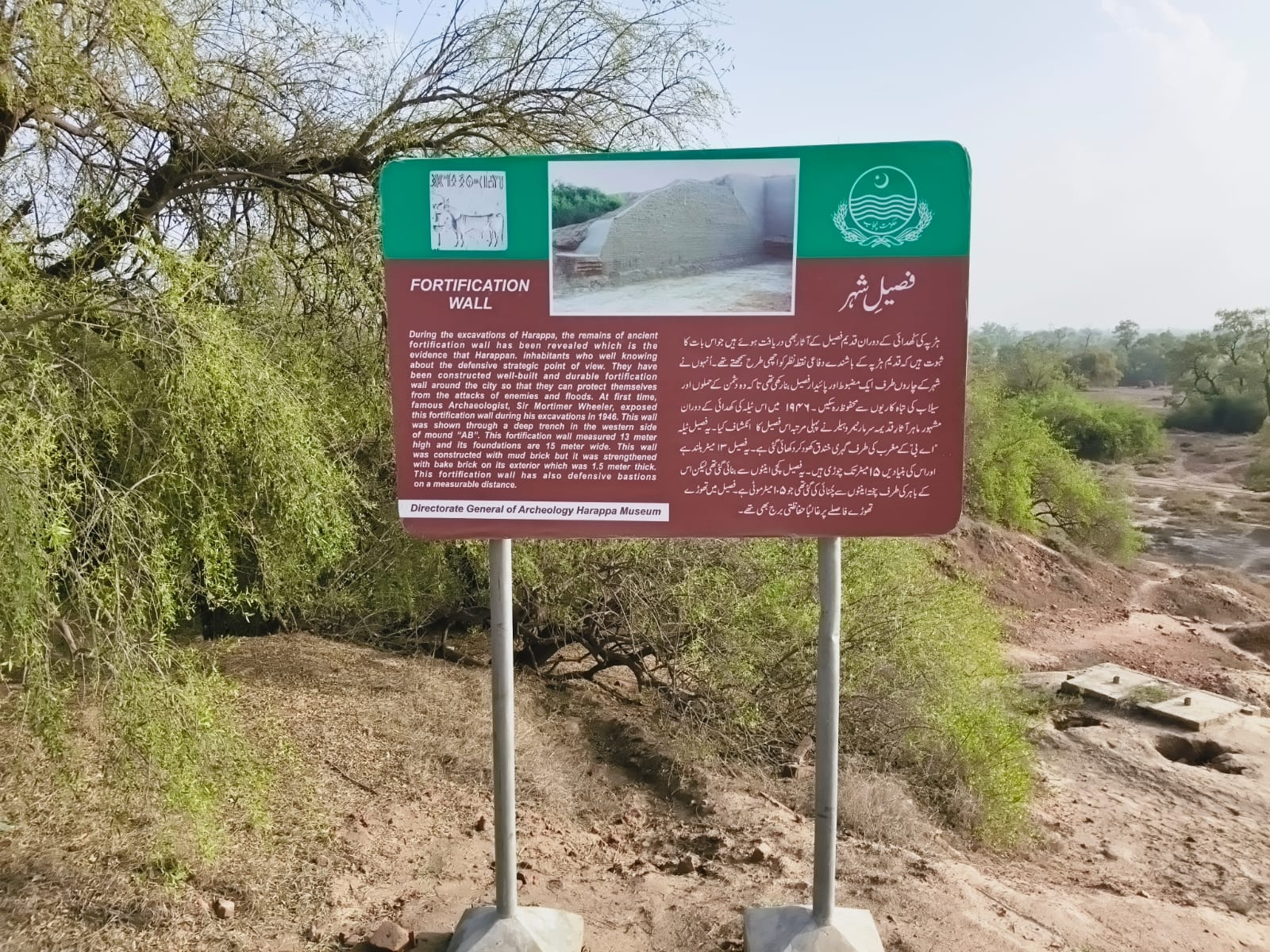 |
A small city was inhabited here at that time because it was an open area. Small cities were built here in different places; each city had a separate name. The name of this city was Mound AB, and you can also see that this city was built with baked bricks. The people of that era also associated themselves with baked bricks because they made their houses open, they had skylights, the streets were open, and the water system was excellent, so they were very advanced people.
Cloth has also been discovered here, so it can be inferred from the cloth that they also took care of their clothes, making their own cloth and using it. Their development with baked bricks takes us to a clear turning point, from which we can infer this era.
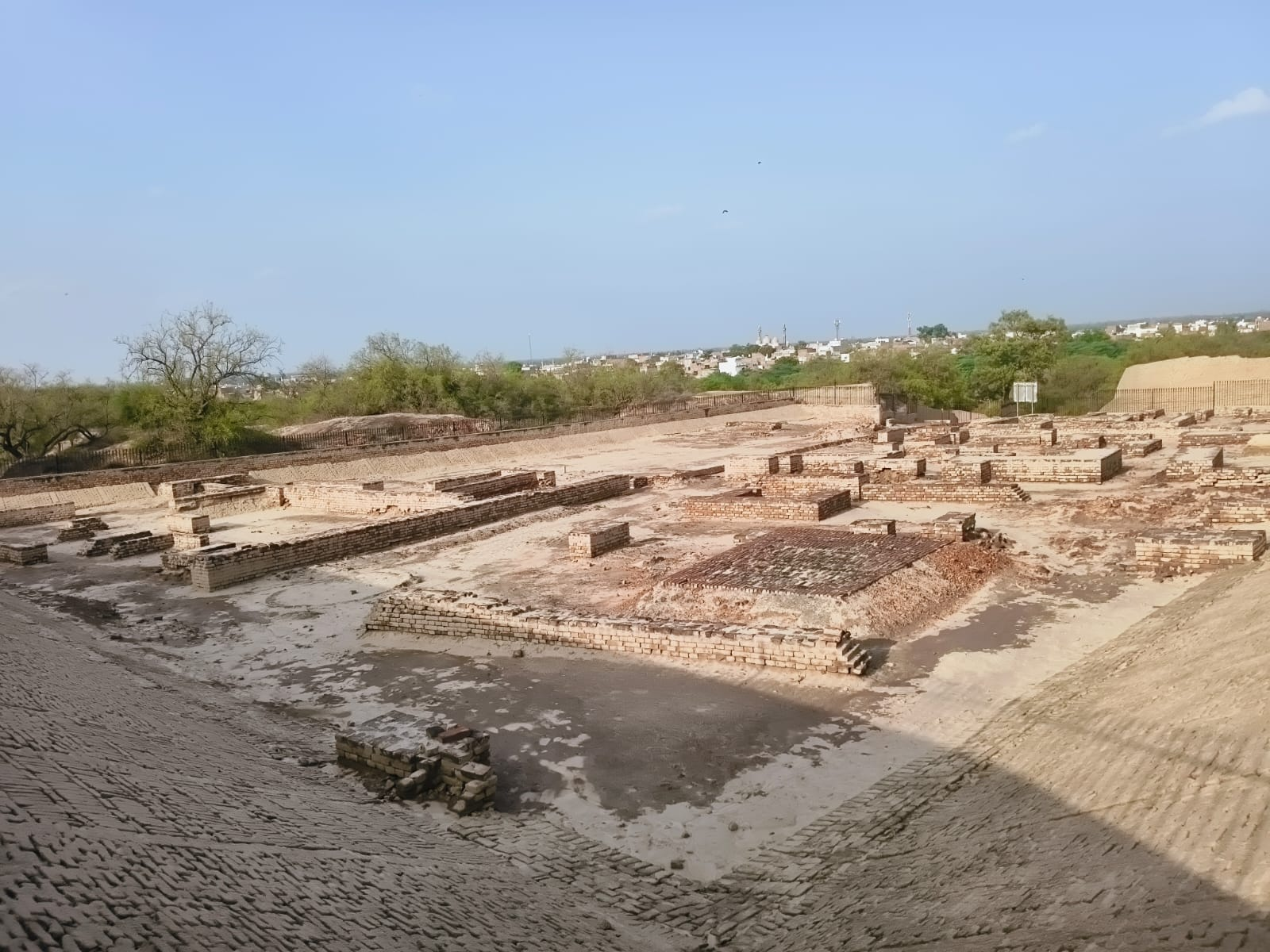 | 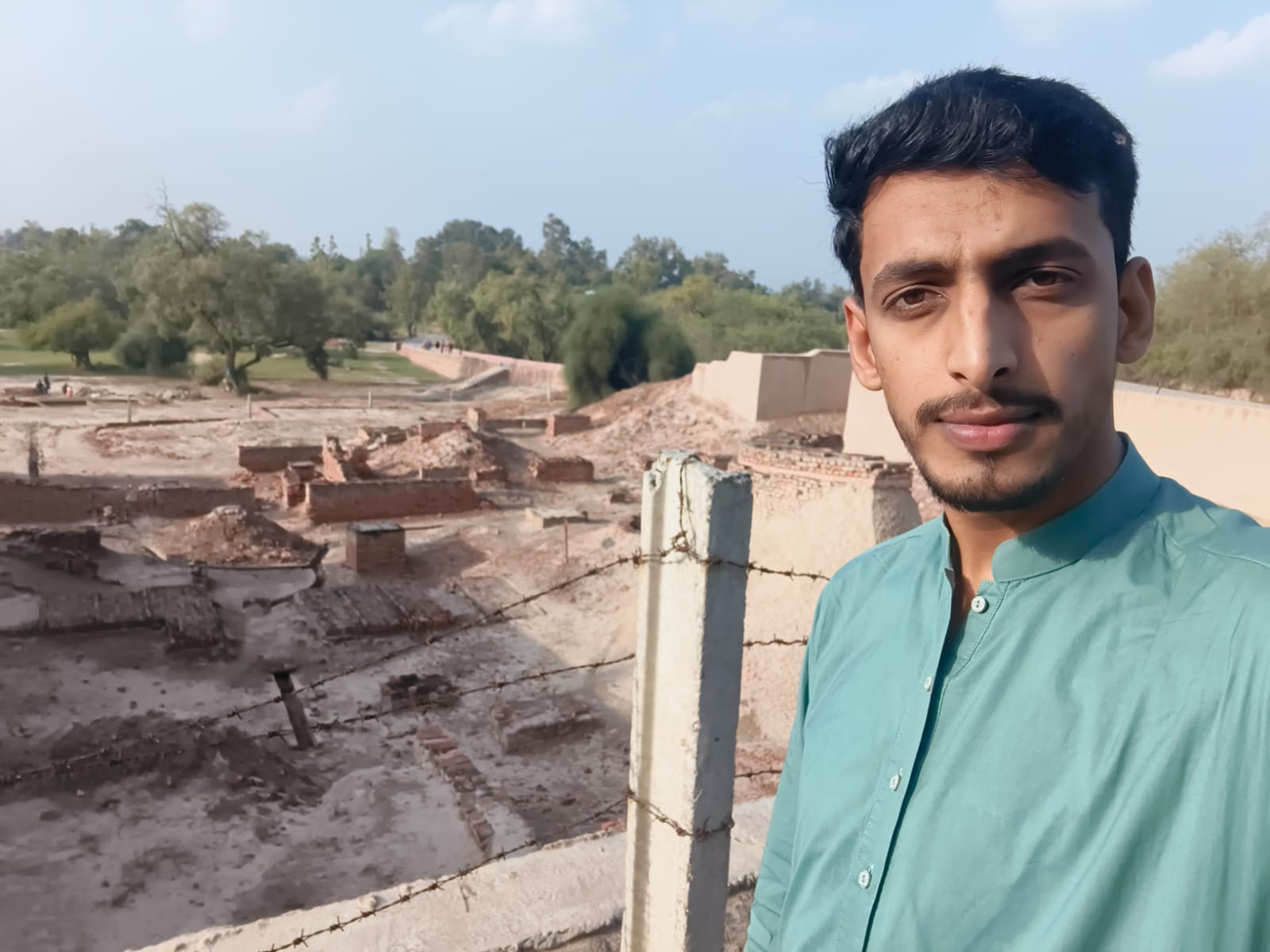 |
|---|
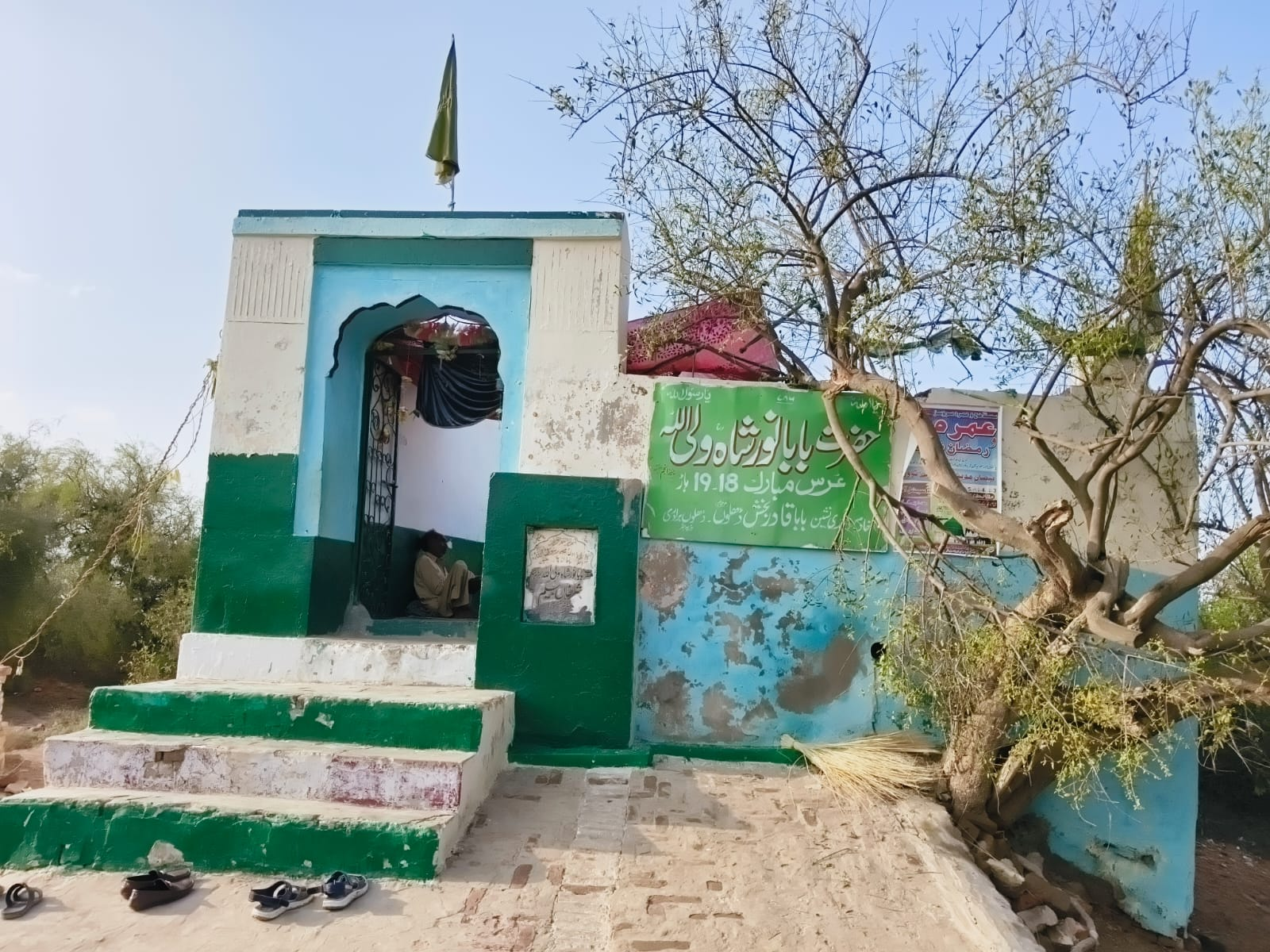
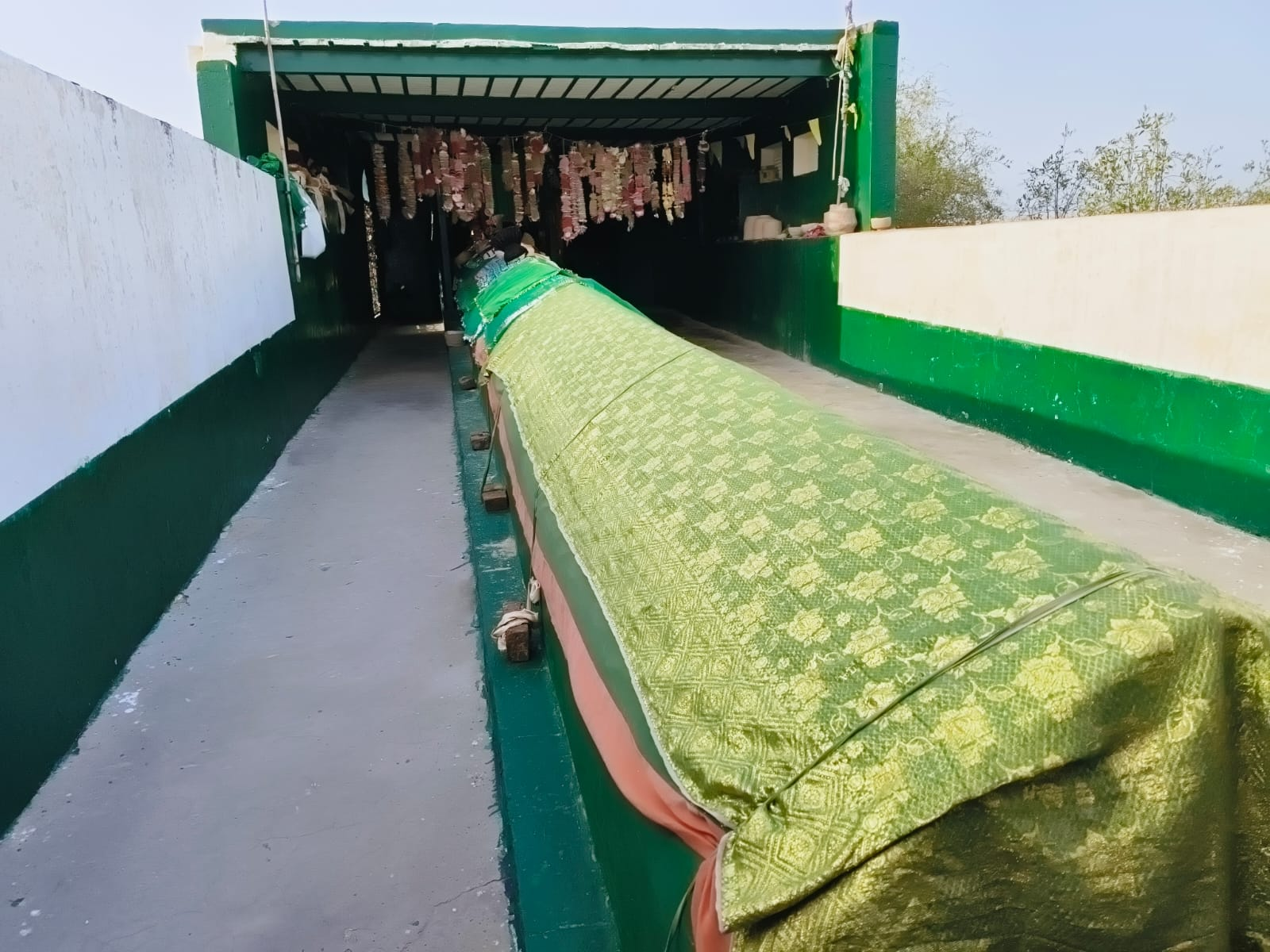
I have discovered the entire ruins area of this Harappa Museum. Slowly, I moved forward, and I got to see new things. When I moved further, I saw a shrine here, which was the shrine of Hazrat Baba Noor Shah Waliullah, where his grave can be seen. The specialty of this grave was that it is a nine-yard-long grave. The nine-yard-long grave means that Hazrat Baba Noor Shah Waliullah was nine yards tall, and he was a very kind and warlike person.
The history of Hazrat Baba Noor Shah Waliullah was also the same: he was a warrior, and he reached this area while fighting, and here he met martyrdom, and he accepted it and embraced this soil, and people buried him here. He is a special personality of that era whom we get to see here.
 |  |
|---|
Hazrat Baba Noor Shah Waliullah was a very tall person, so it is mentioned in the scriptures that he used to wear stone rings. In the picture below, you can see the two big rings, which are made of stone and are very heavy. In that era, he used to wear rings that were similar to the way we wear a small ring in today's era, because he was very tall and powerful, and used to wear things like that.
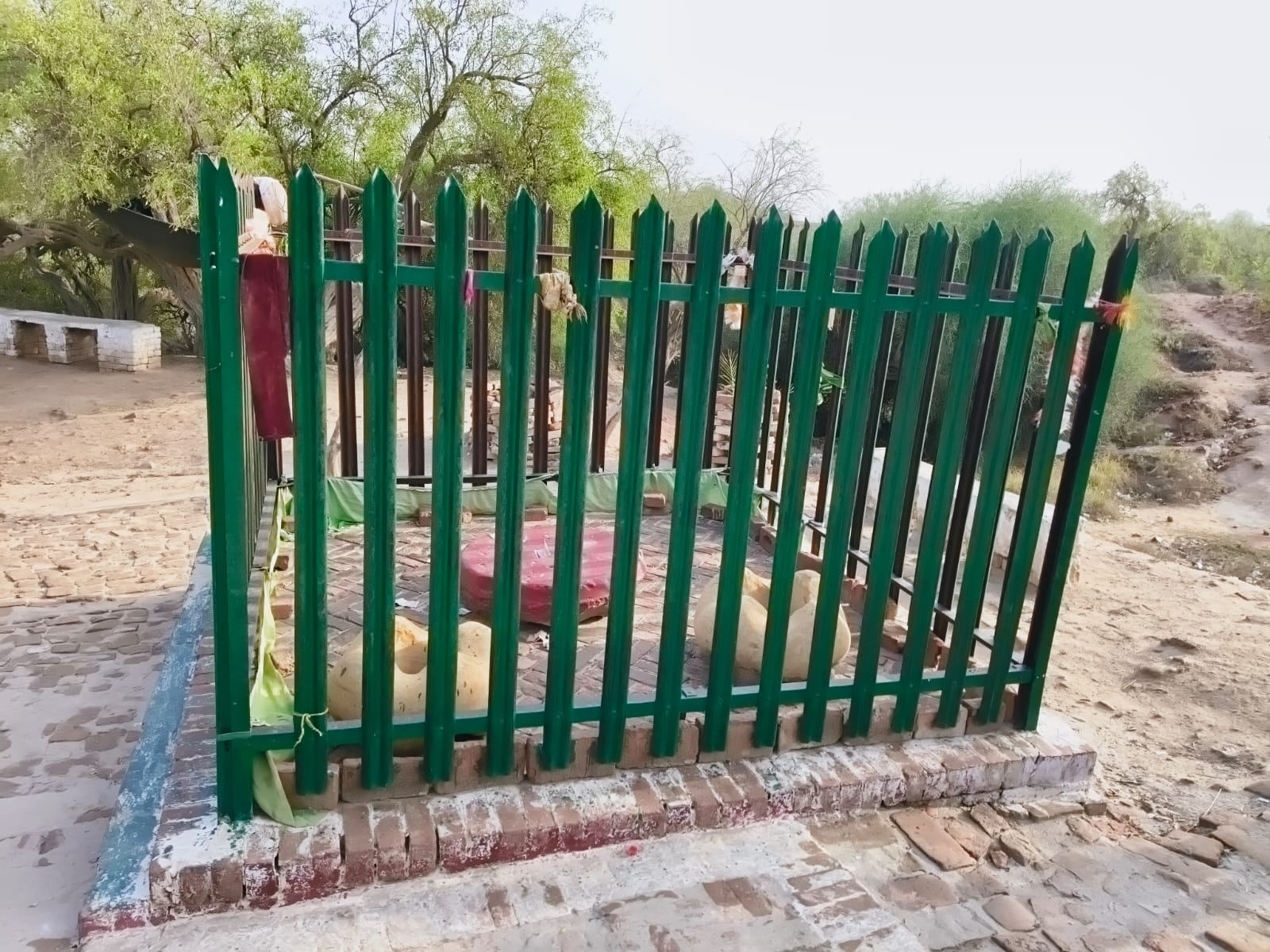
Rings of Hazrat Baba Noor Shah Waliullah
Standing at the court of Baba Noor Shah Waliullah, we can see the surrounding area because his court is built at a fairly high altitude. His shrine is on top of a mud mountain. Standing outside this shrine, we can see the ruins of Harappa from afar.
In front of the shrine of Hazrat Baba Noor Shah Waliullah, some stone seats have been made, on which you can sit and enjoy the view of this place. Behind them, there are thousands of years-old trees, which further enhance its beauty. These trees are such that we never get to see such trees in any other area. You can only see them in the ruins of Harappa.
| Old Trees With Sitting Place Outside Tomb of Hazrat Baba Noor Shah Waliullah | 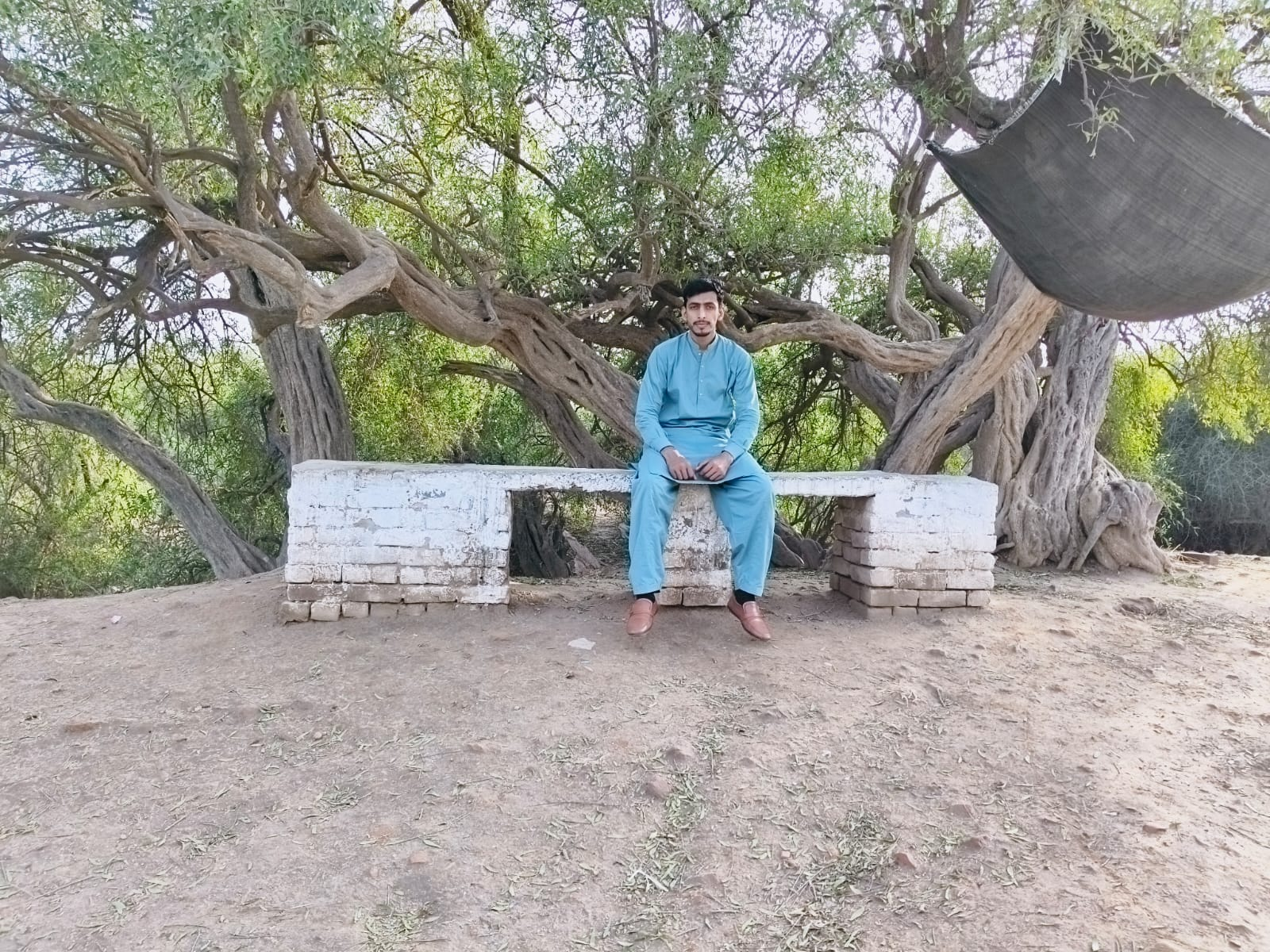 |
|---|---|
| Mud Mountains Everywhere | 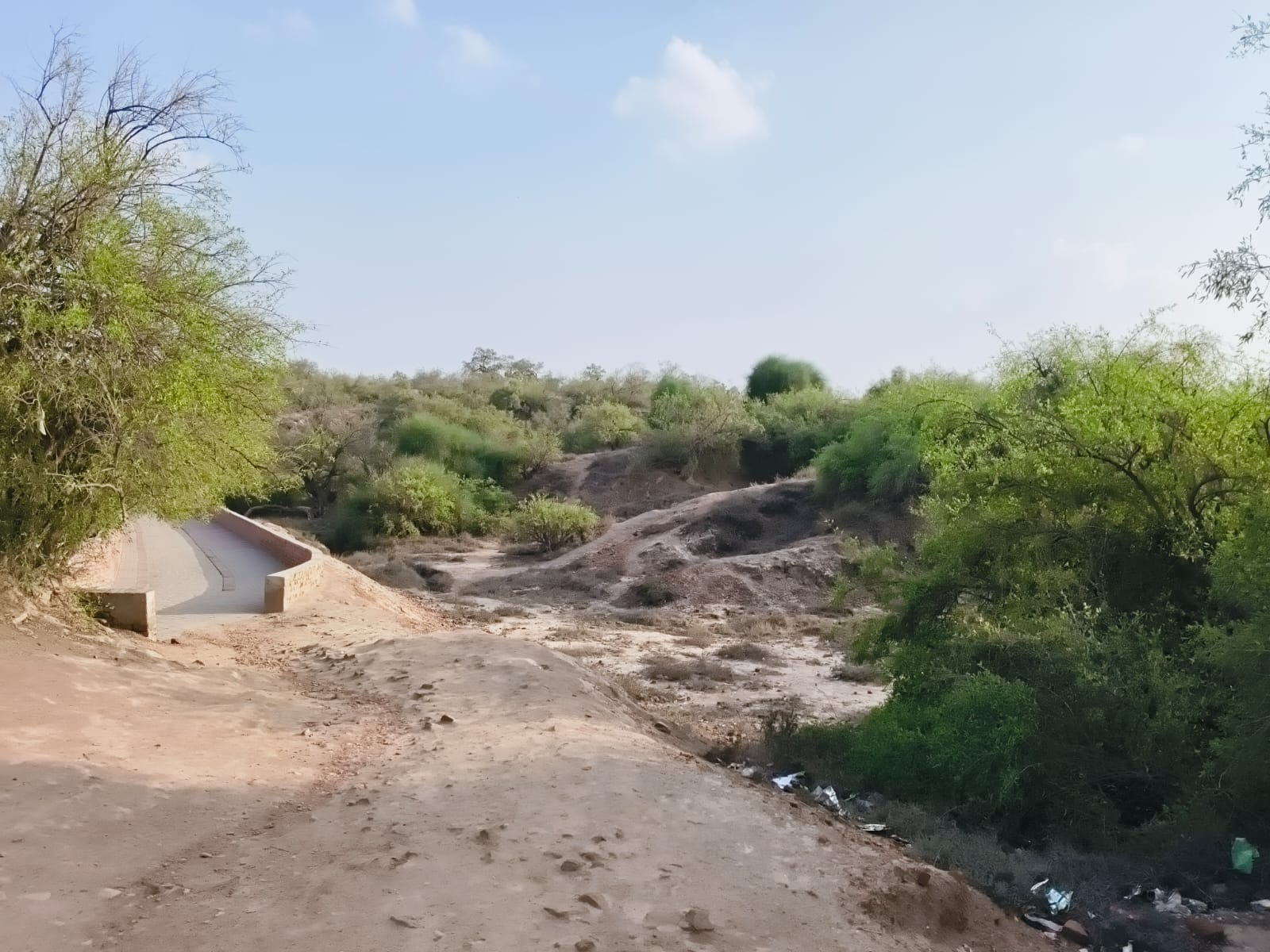 |
The court of Hazrat Baba Naw Shah Waliullah is at a high point, and then the slope starts again downwards. When I went up this slope, I saw an old mosque there, which was discovered during the same period. You can see the exterior of this mosque, which was also built with bricks, and its design was also beautifully prepared. The people of that era were architectural people and knew how to decorate themselves in the best way. They had made the best plan for this place, but due to the system of nature, it will be destroyed, but its structure is still standing.
By looking at this old mosque, one can also guess that the people of that era were Muslims and they used to worship God. It is estimated from the mosque here that those people were Muslims, but from the artifacts that I have heard lying inside the Harappa Museum, it can be estimated that the people here were of all kinds. Muslims, Hindus, Christians, and all people lived here, and they used to live their lives together here.
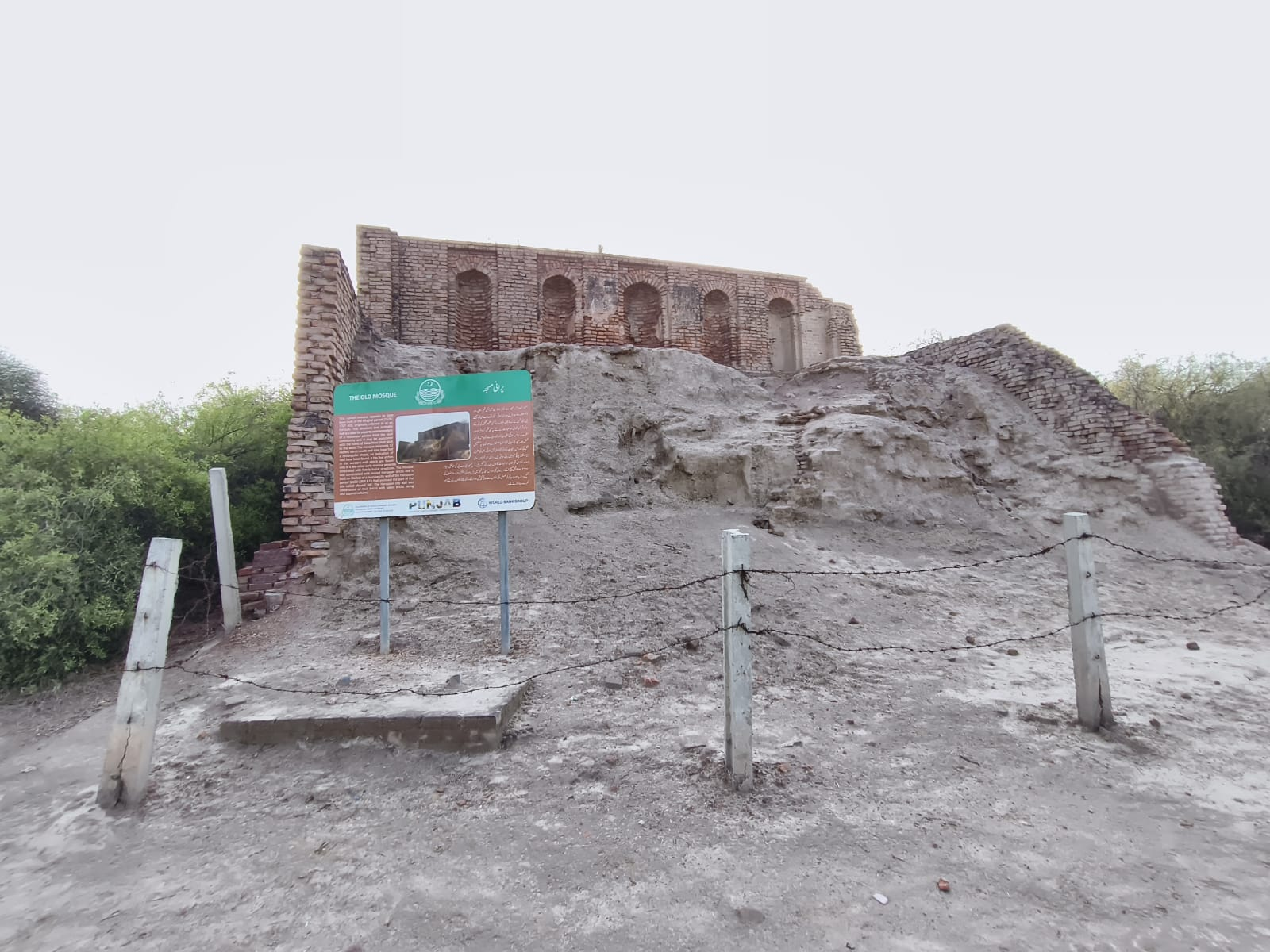
5500 Years Old Mosque
Five thousand years ago, various things were discovered here, including pottery, boats, and animals, including lions and bulls. All those things are now made by the people here themselves, and they have a stall here for sale. Many people who come from far away buy these things from here as souvenirs. These things are not very expensive; they are cheap things, they are made of clay, there are different types of animals, there are birds, there are pots, etc., and there are tools that they used during the war, all those things are made of clay here.
| Clay Toy Mostly Seen During Excavation | 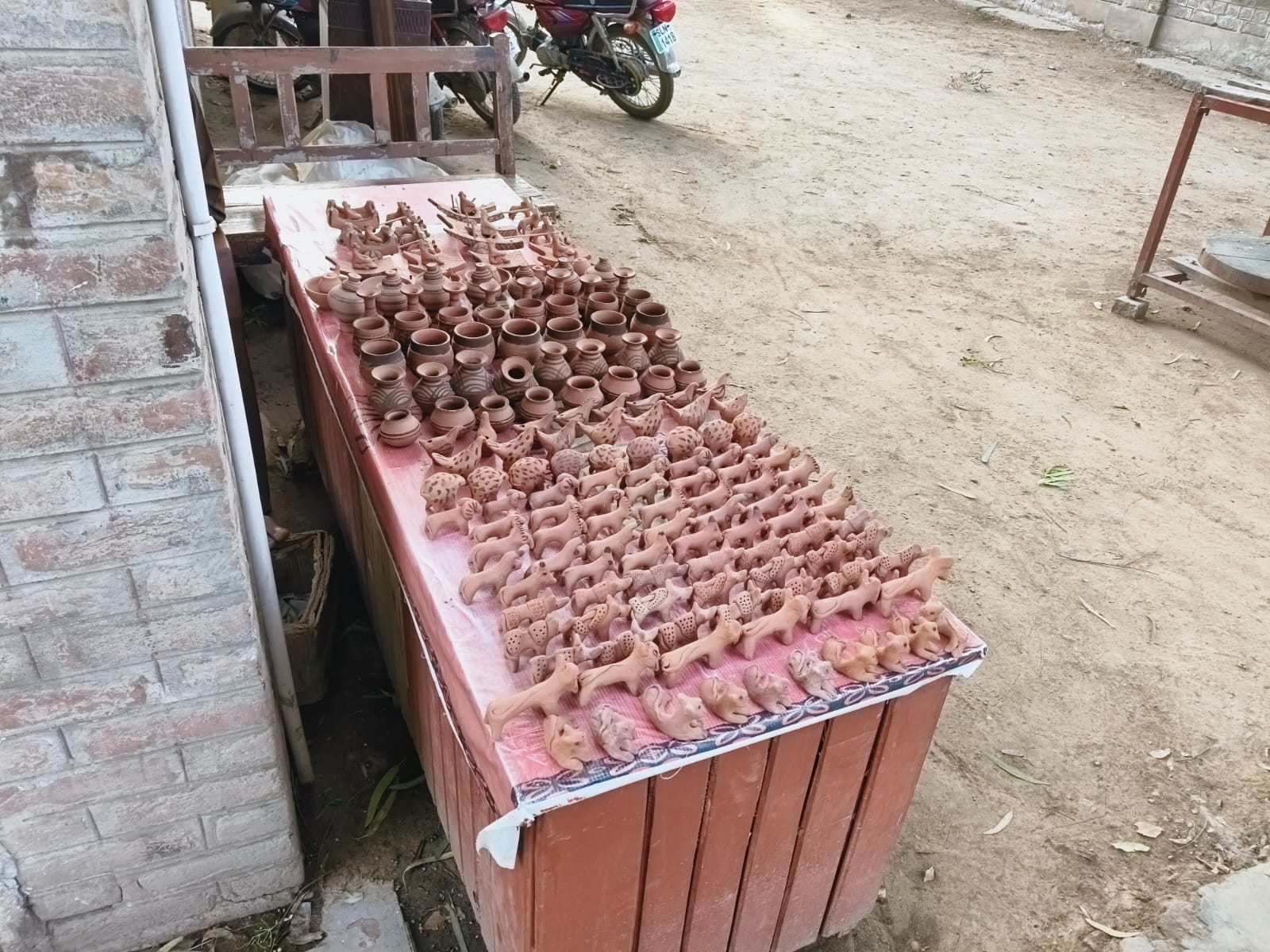 |
|---|
In the ruins of the Harappa Museum, you can see a tuck shop. This tuck shop provides us with different types of flavors, the most famous of which is Gol Gappa. You can also see a stall selling Gol Gappa and Finger Chips here. People who come here buy things from here and go ahead and enjoy them while sitting in the ruins.
Apart from this, a canteen has been set up here from which you can buy cold drinks, snacks, and various things. More ice cream has also been kept. In the summer season, when people visit here, they like to eat this ice cream more. Washrooms have been set up nearby. The cost of these washrooms is 20 rupees. When you go to this washroom, you will have to pay a ticket of 20 rupees because this is a government area and cleanliness is taken care of here. So, a person has been kept for cleaning, who is paid this fee.
To protect against dirt, trash cans have been placed at various places so that those who enjoy throwing things here and there can use this bin to throw away those things instead of wrapping them and keeping the surrounding environment clean.
| Tuck Shop Inside Harappa Ruins | 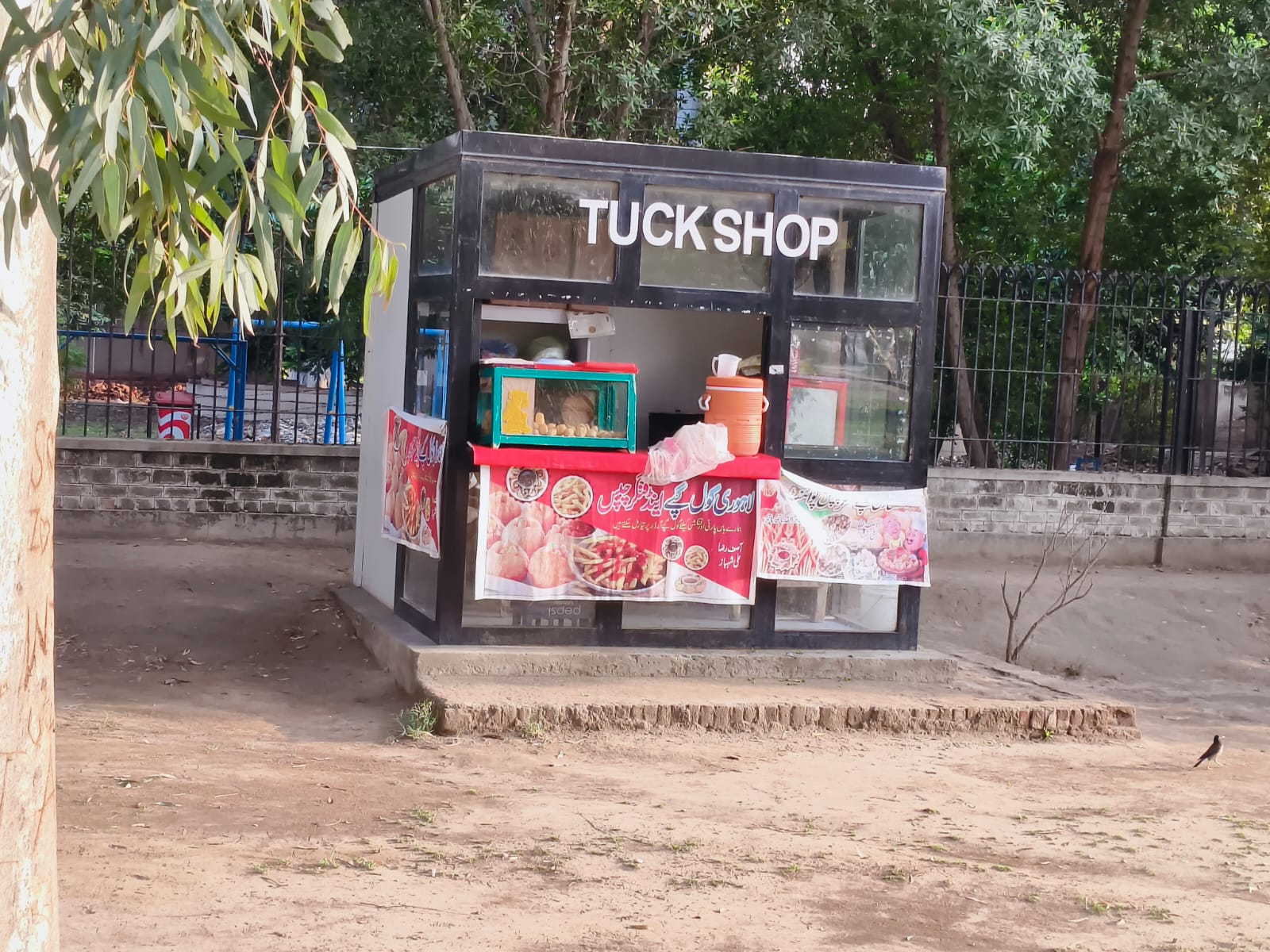 |
|---|---|
| Museum Kanteen & Washrooms | 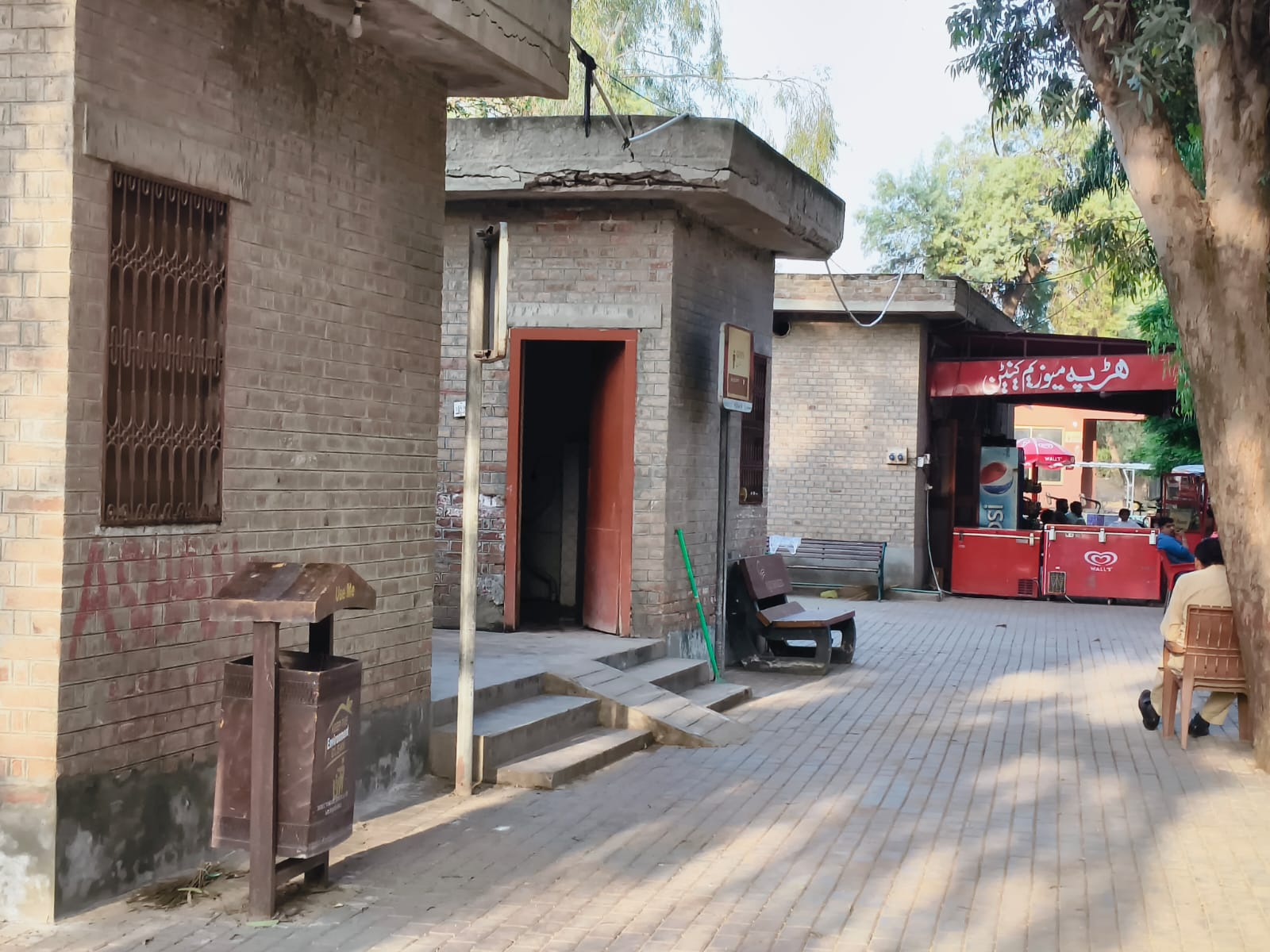 |
| Dustbin Everywhere | 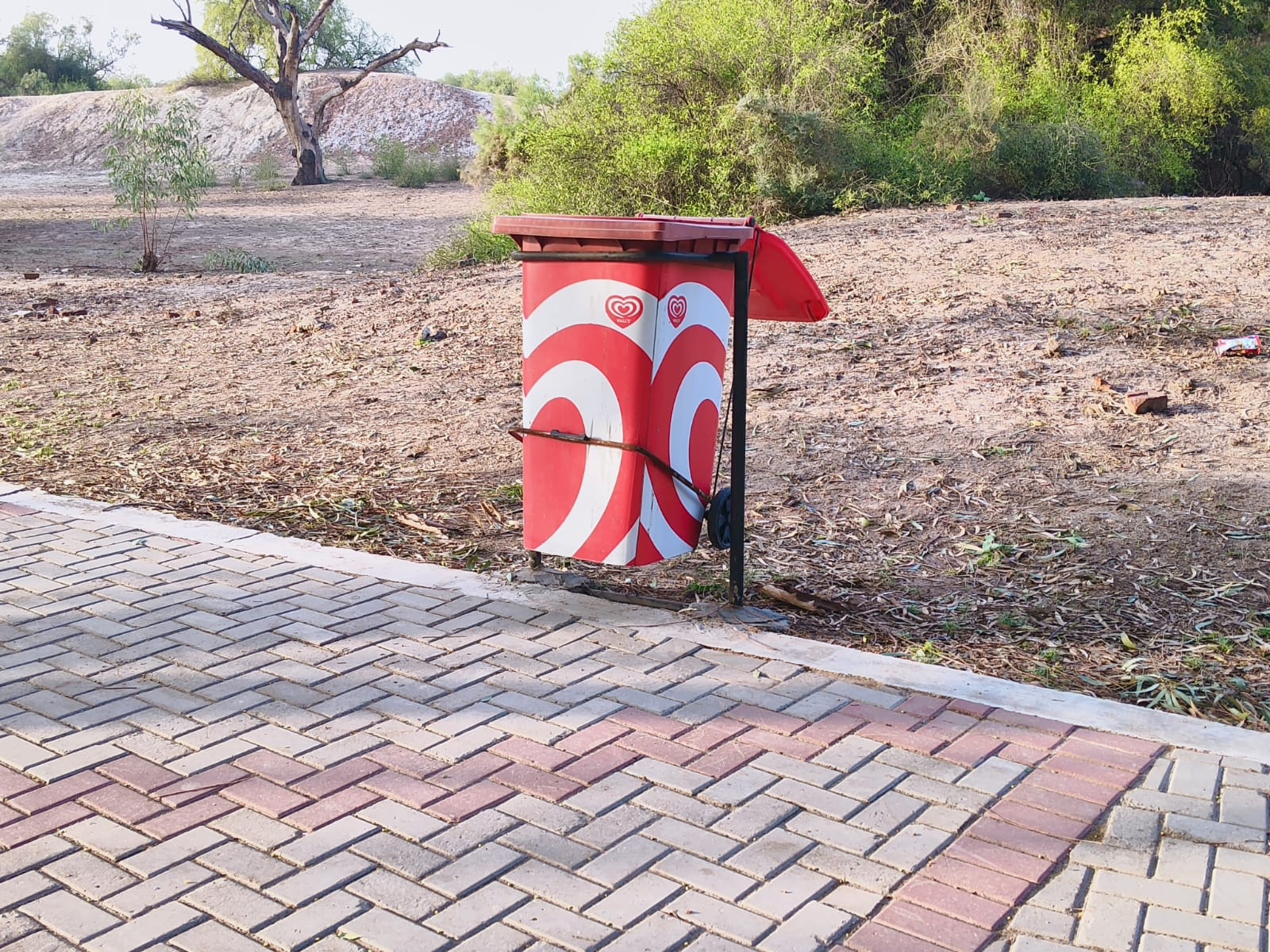 |
It will be different, but you get to see signboards that tell you the direction of everything, about the museum, about the cafe, about the mosque, about the parking lot, about the washroom, about the contrast; they point to everything so that people can easily reach this place.
| Sign Board For Ease To Find Direction | 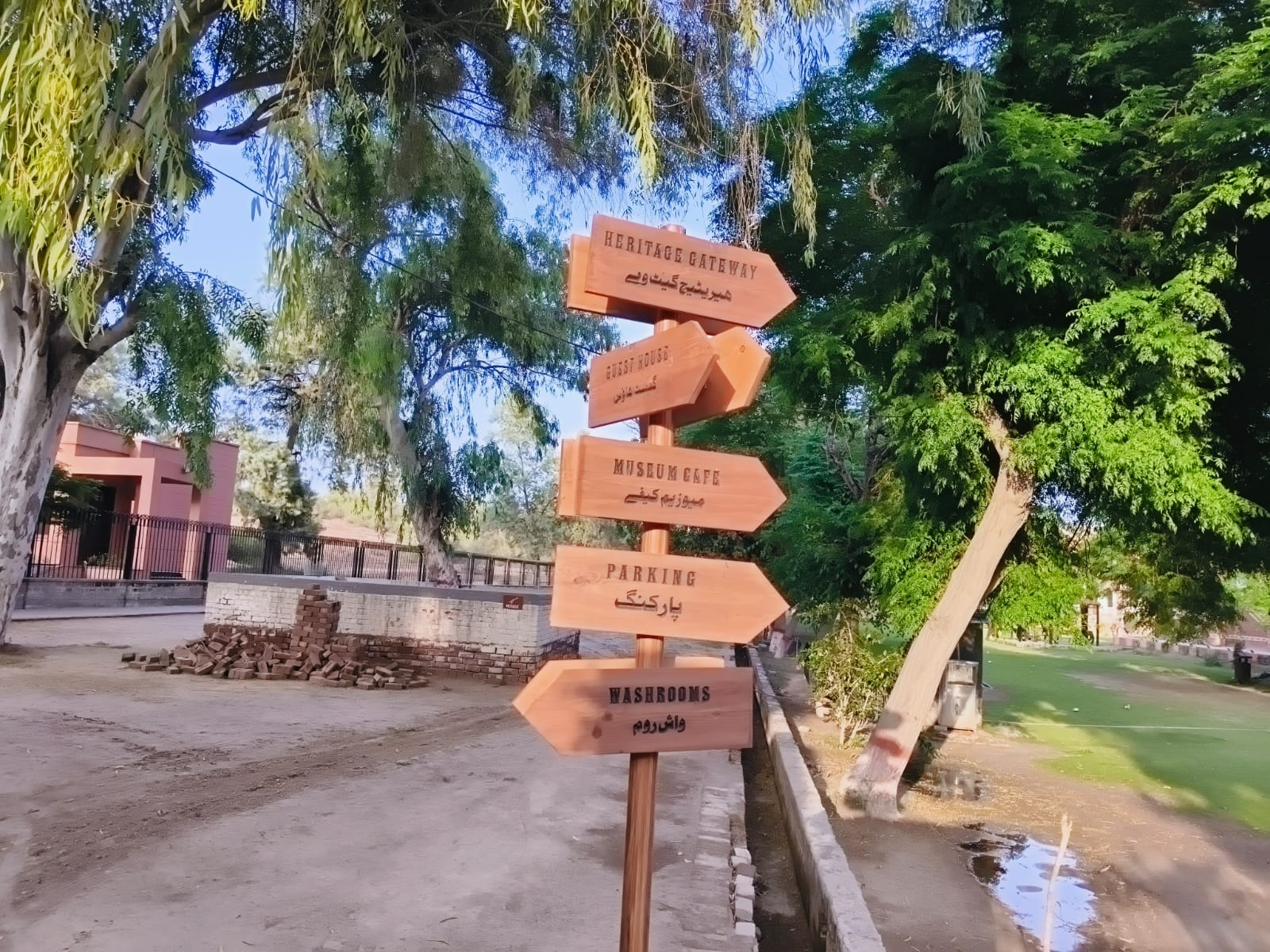 |
|---|
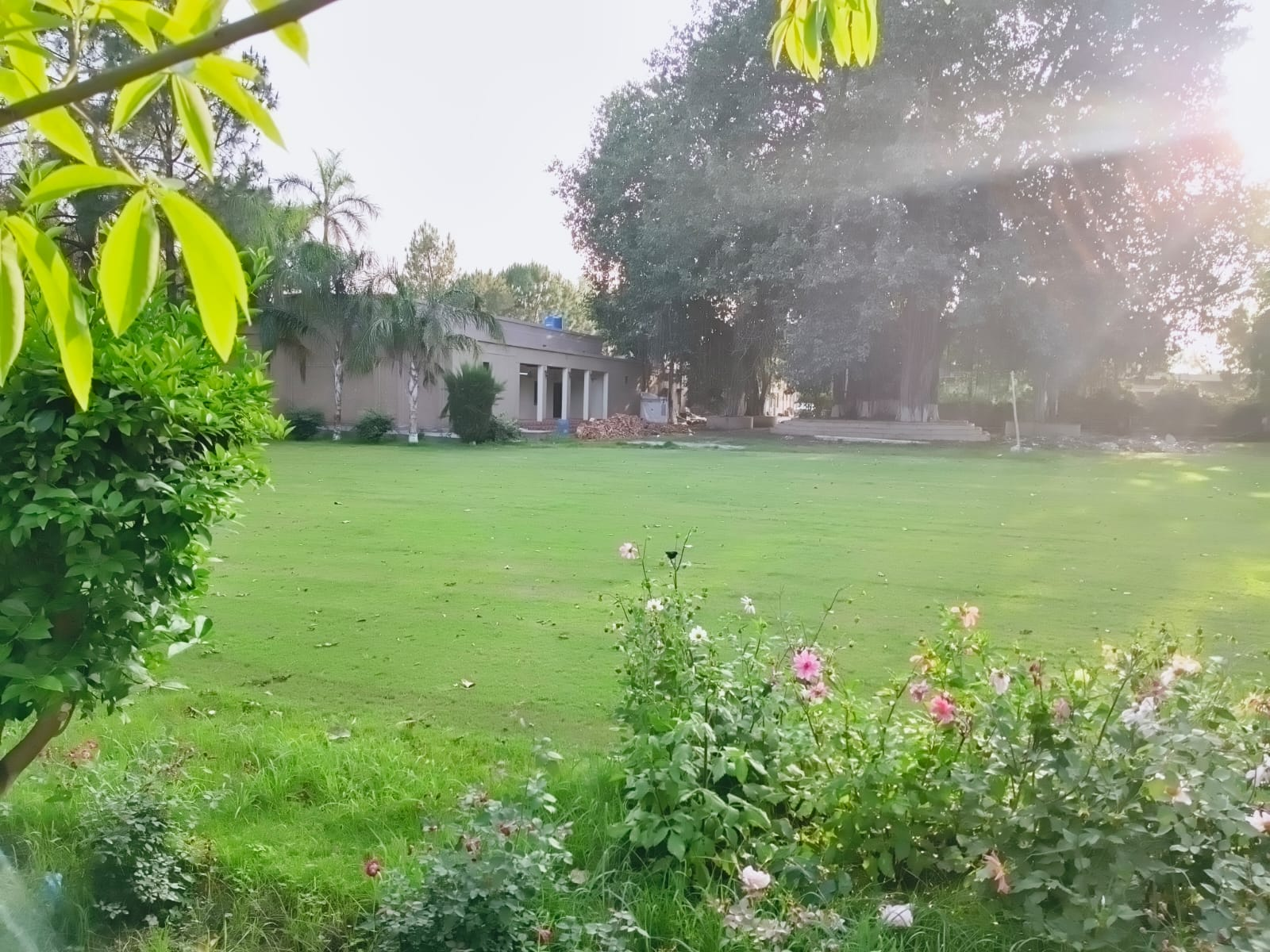
Beautiful large plots have been created in which green grass has been planted, and beautiful plants have been planted around it, which add to its beauty. Beautiful flowers have also been planted here. People often sit in these grounds and have picnics with their families. This is a spacious ground which has been created for children to play, for family picnics, and for sitting and chatting so that people can enjoy the atmosphere here.
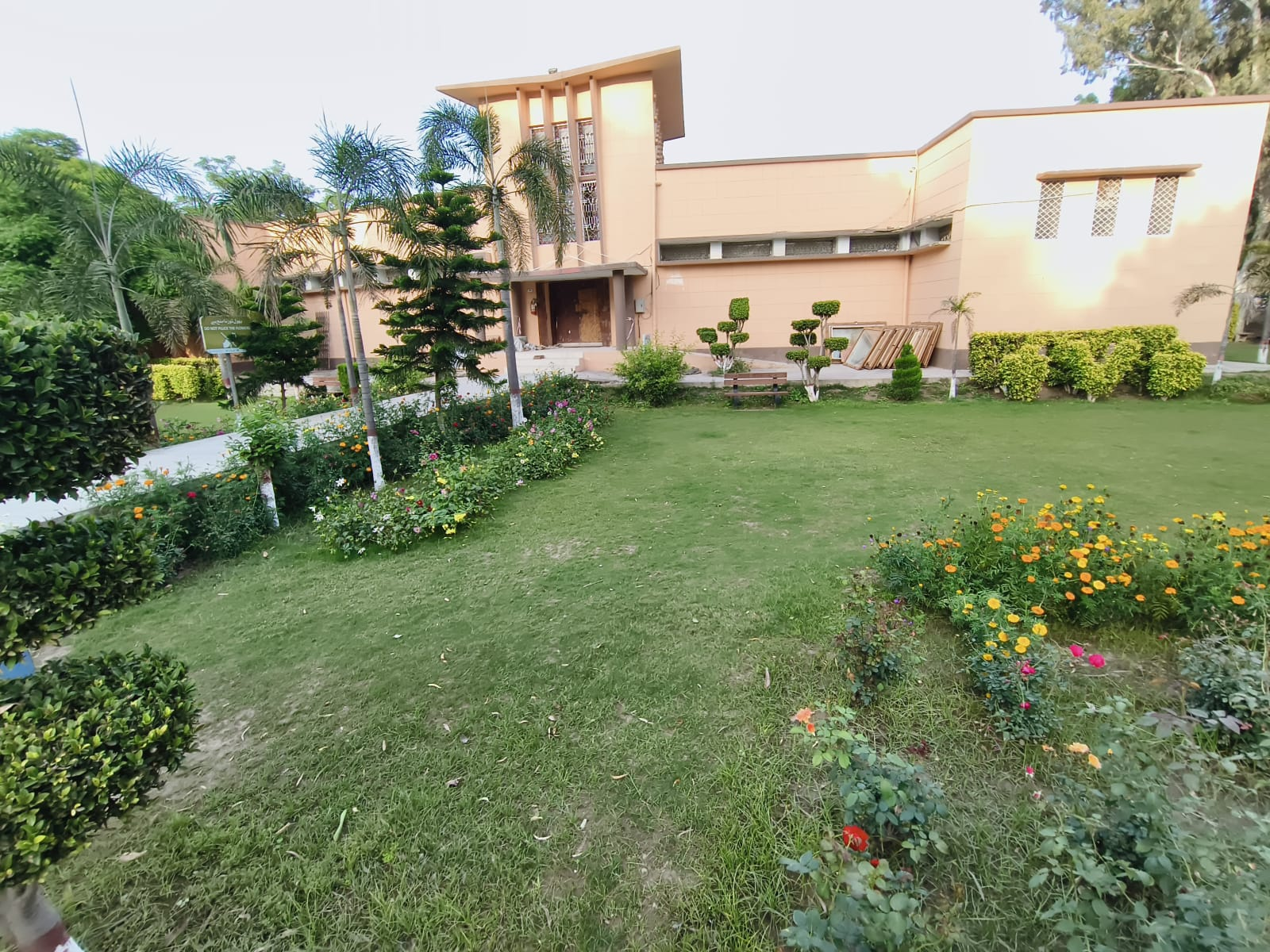 |  |
|---|
Full security arrangements have been made. A police room has been set up where police security guards are always present, and they are ready to give you all kinds of information. It is closed at 4 pm. Then the security guards go through all the ruins and tell everyone that their time is up. You can go now because it is not good to walk here in the dark of night, because it is a deserted area. Various types of animals, which are poisonous, come out in the evening, which is very important to avoid. Therefore, full security arrangements have been made.
| Police Guard Room For Security | 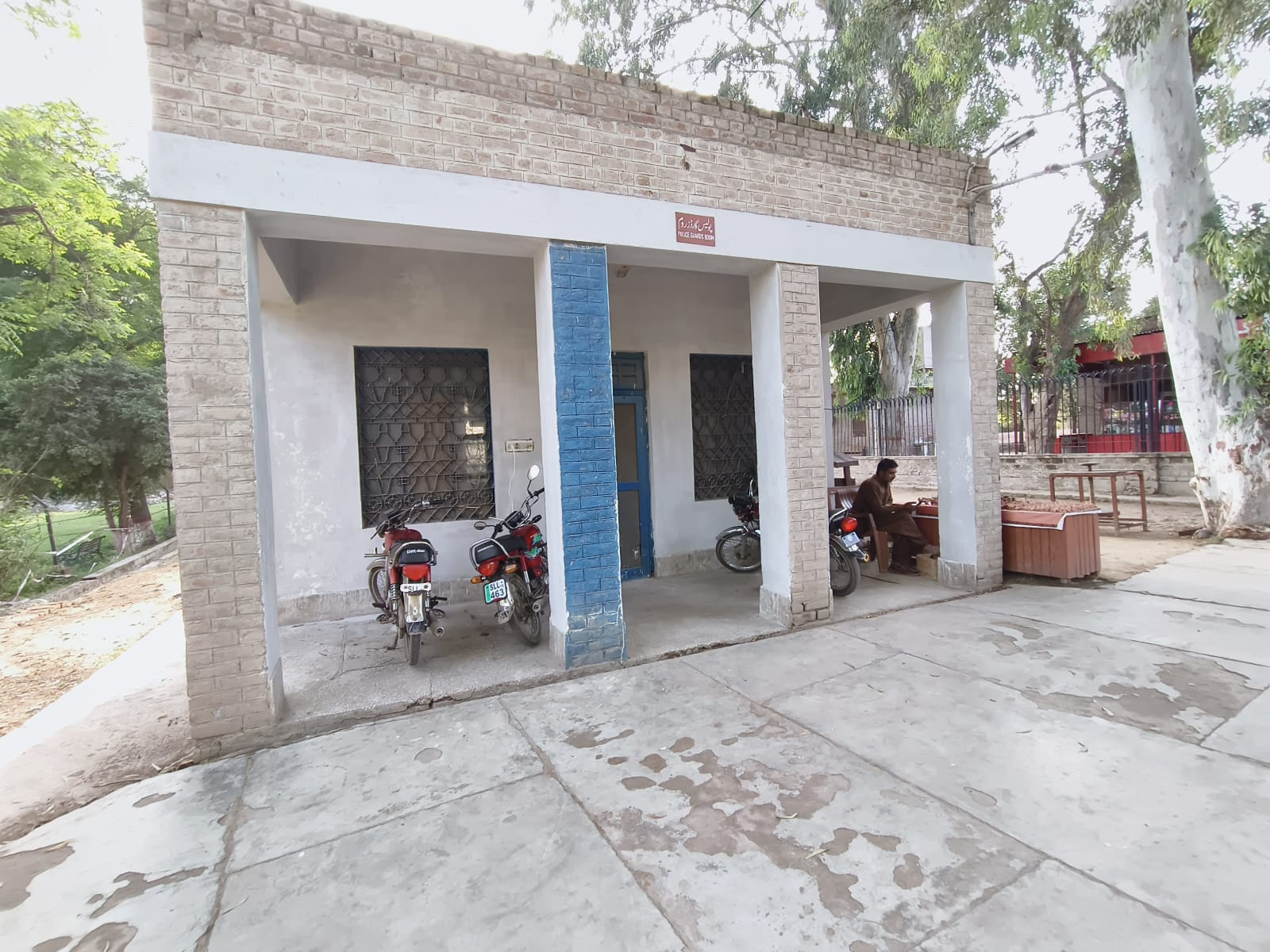 |
|---|
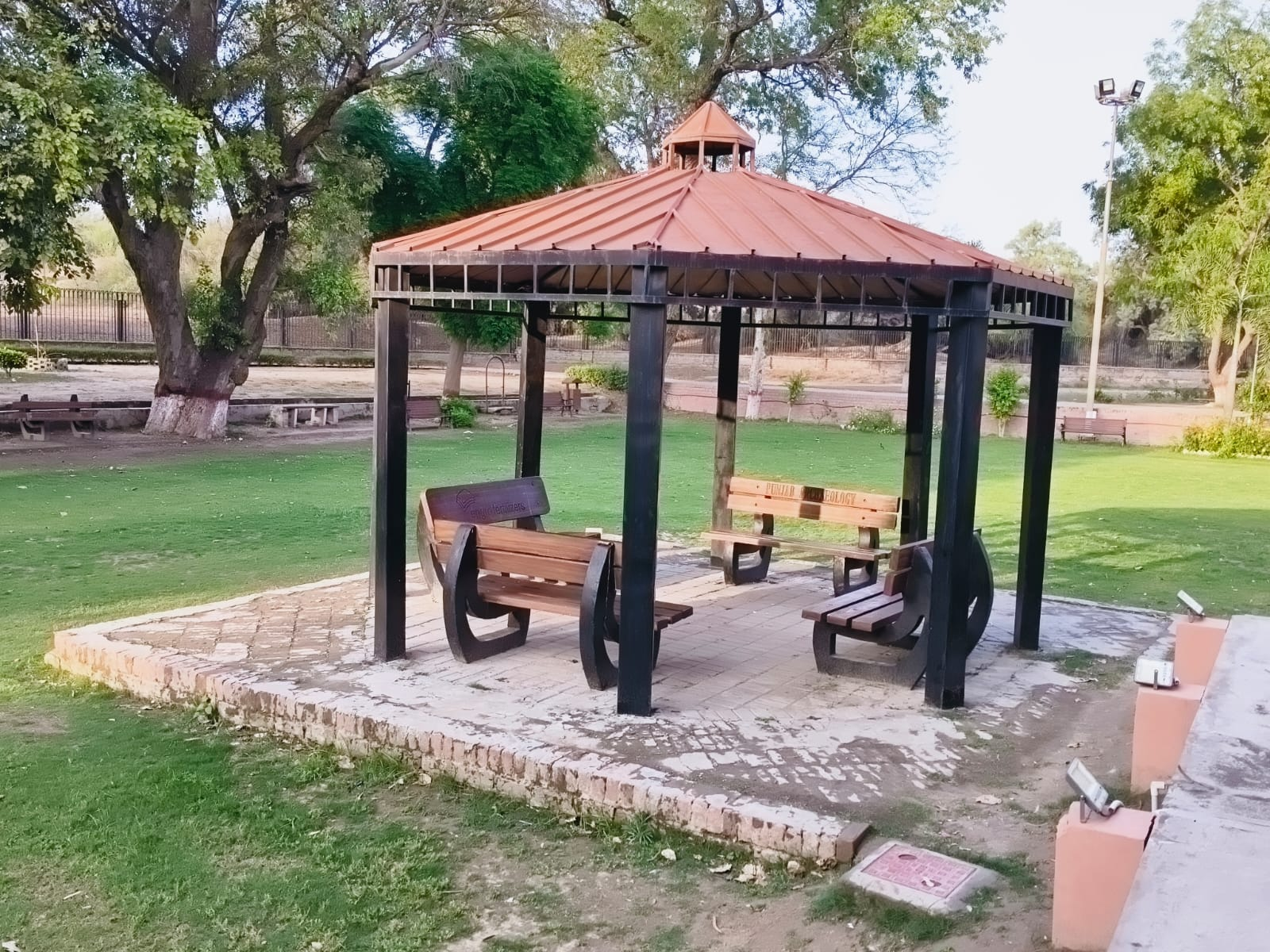
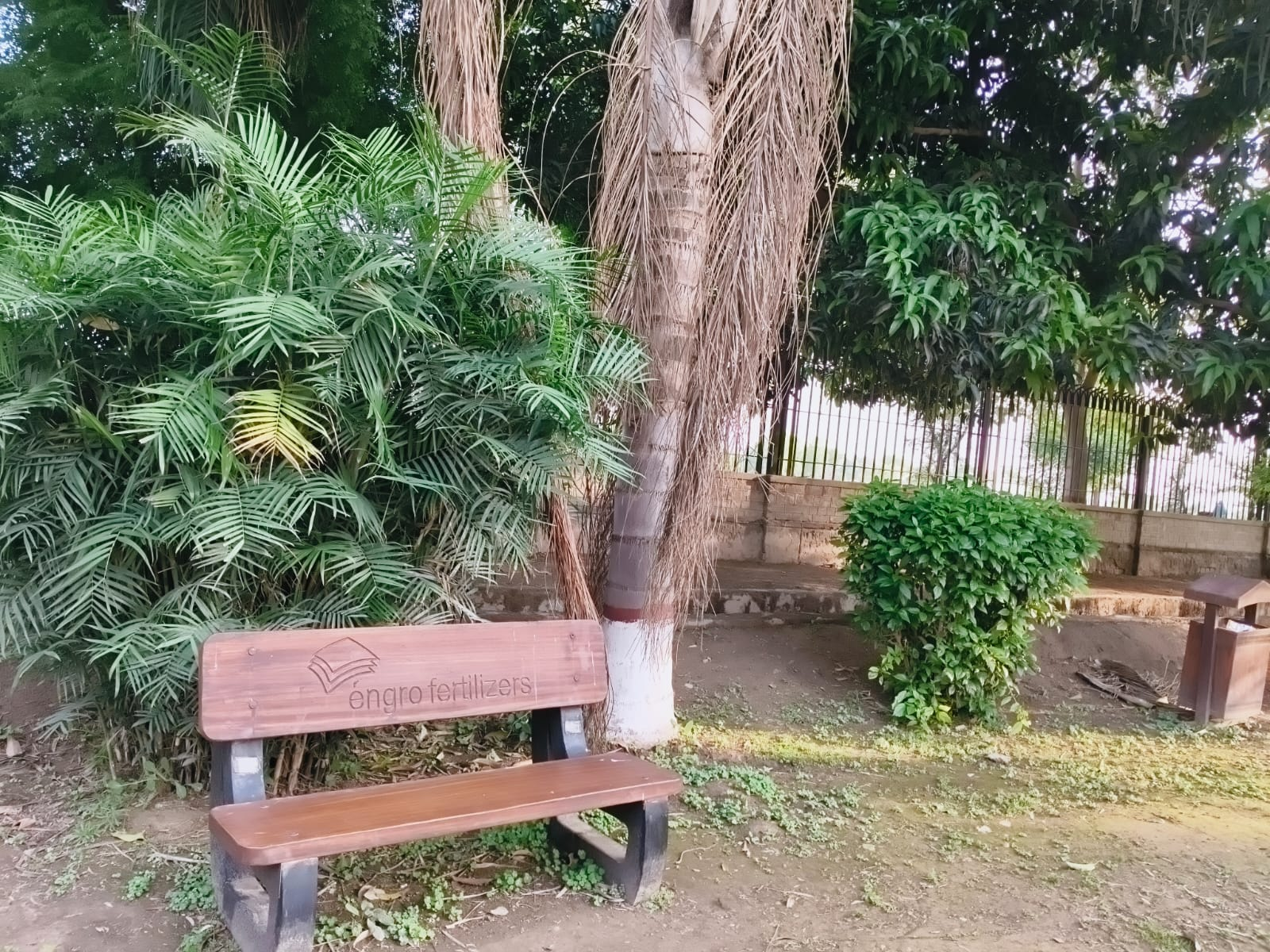
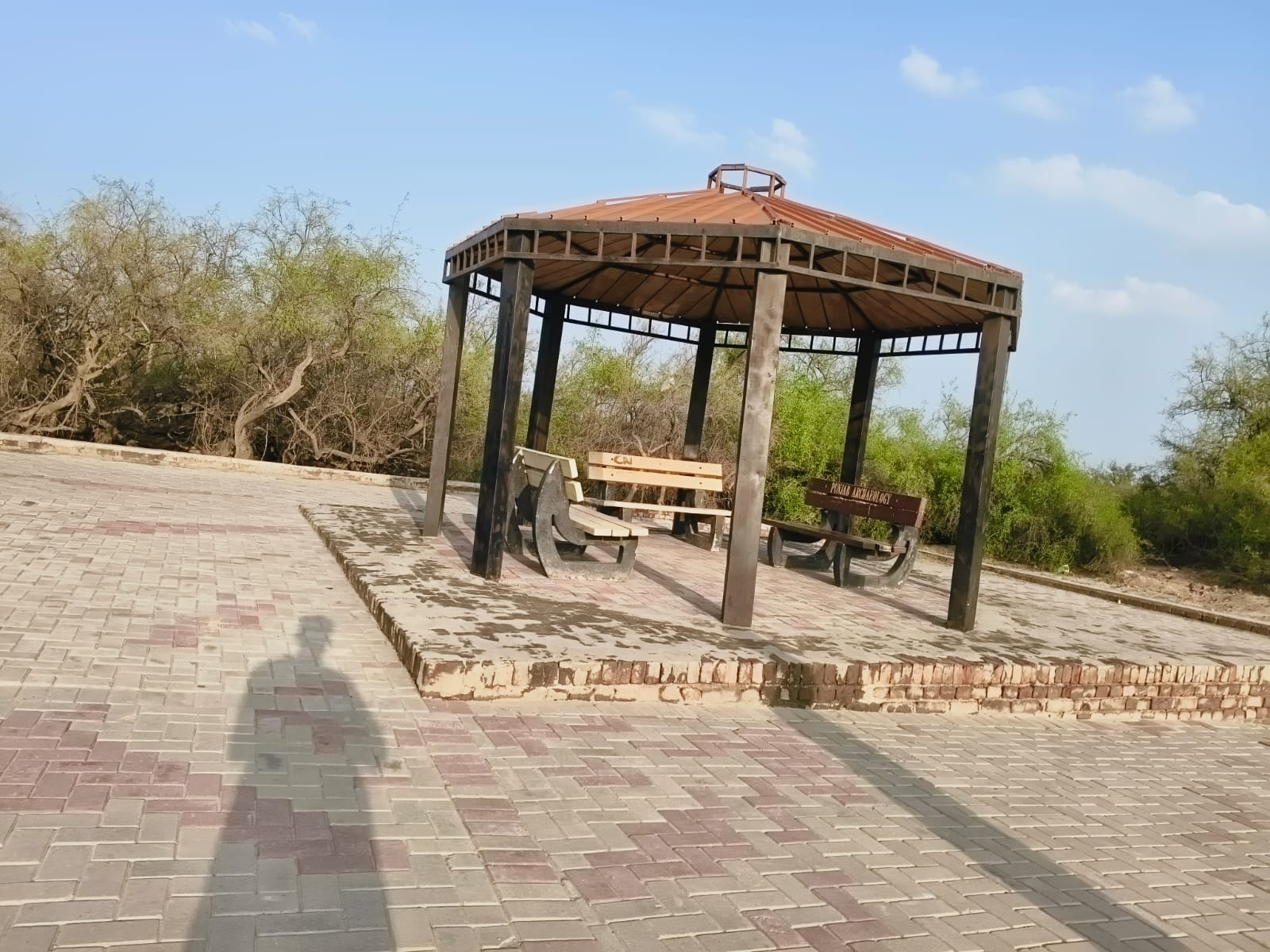
In the Harappa Museum, you can see benches to sit on in various places. Above these benches, you can see a shade which has been beautifully designed. This is a vast area, spread over four to five kilometers. Therefore, chairs and benches have been made here and there so that people can breathe peacefully and then continue their journey again. This is a good step that has been taken for the convenience of all the people, which is best for the development and prosperity of this place.
 |  |
|---|---|
 |  |
| My Self In Harappa Ruins | 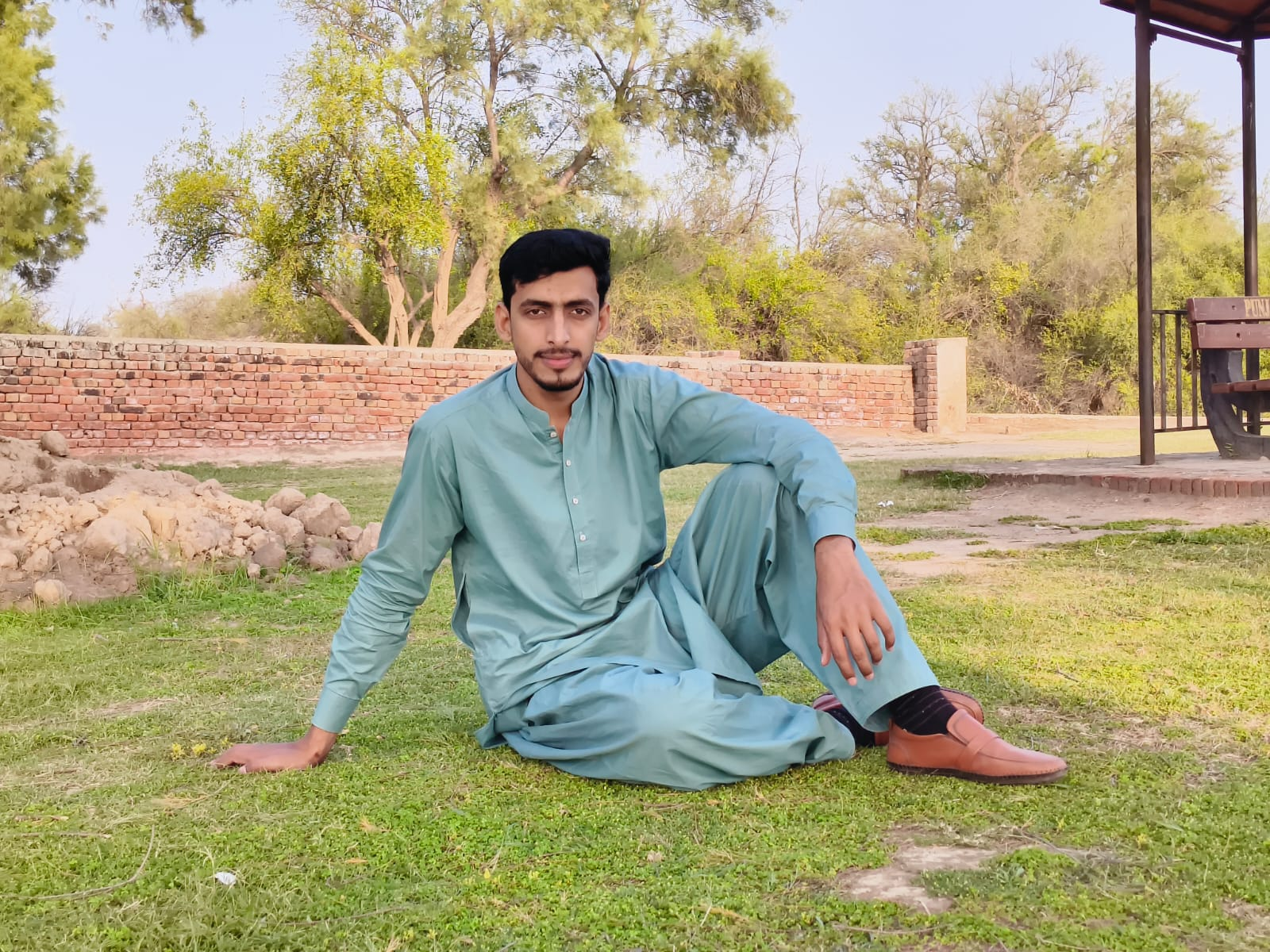 |
|---|
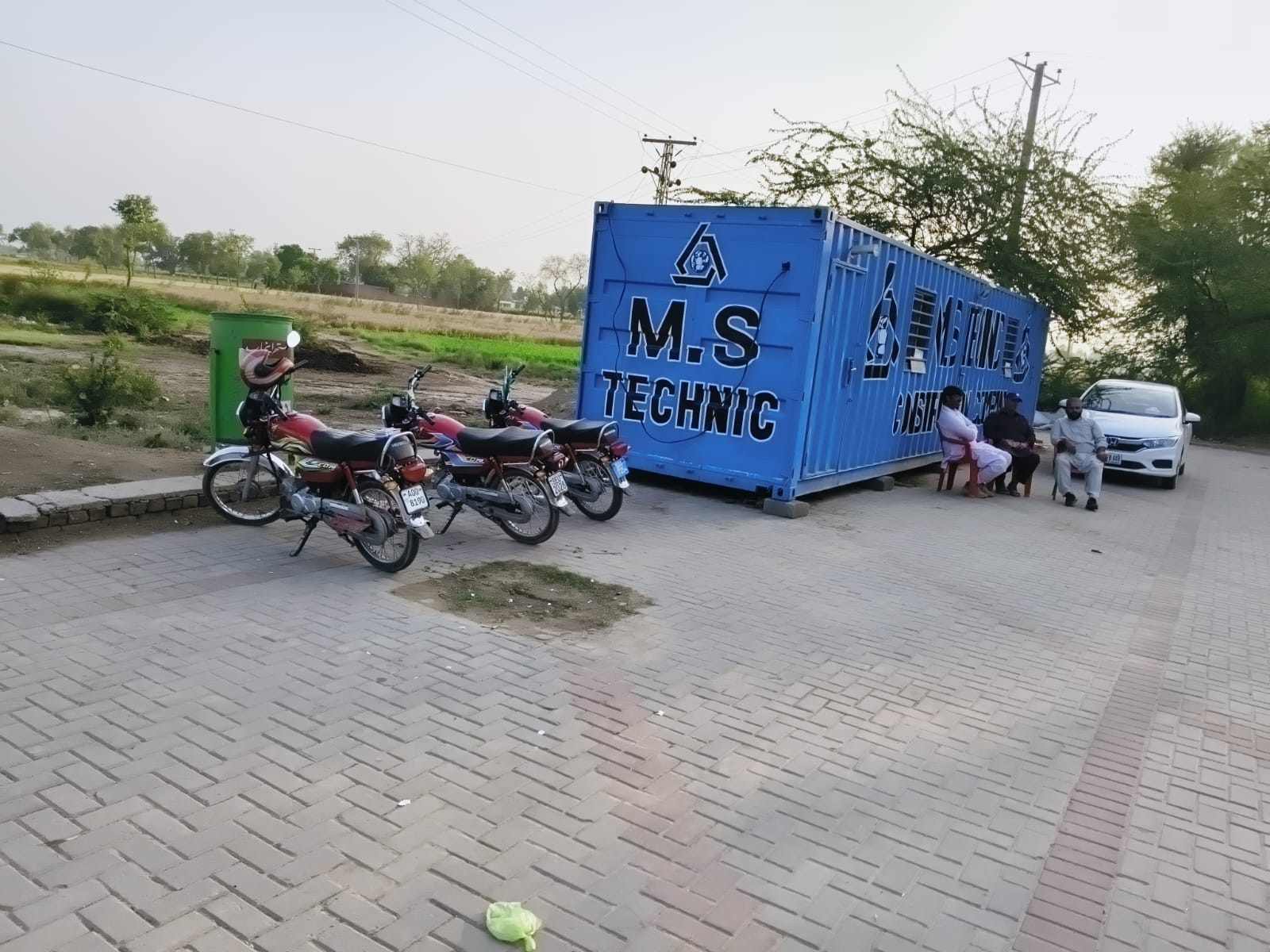
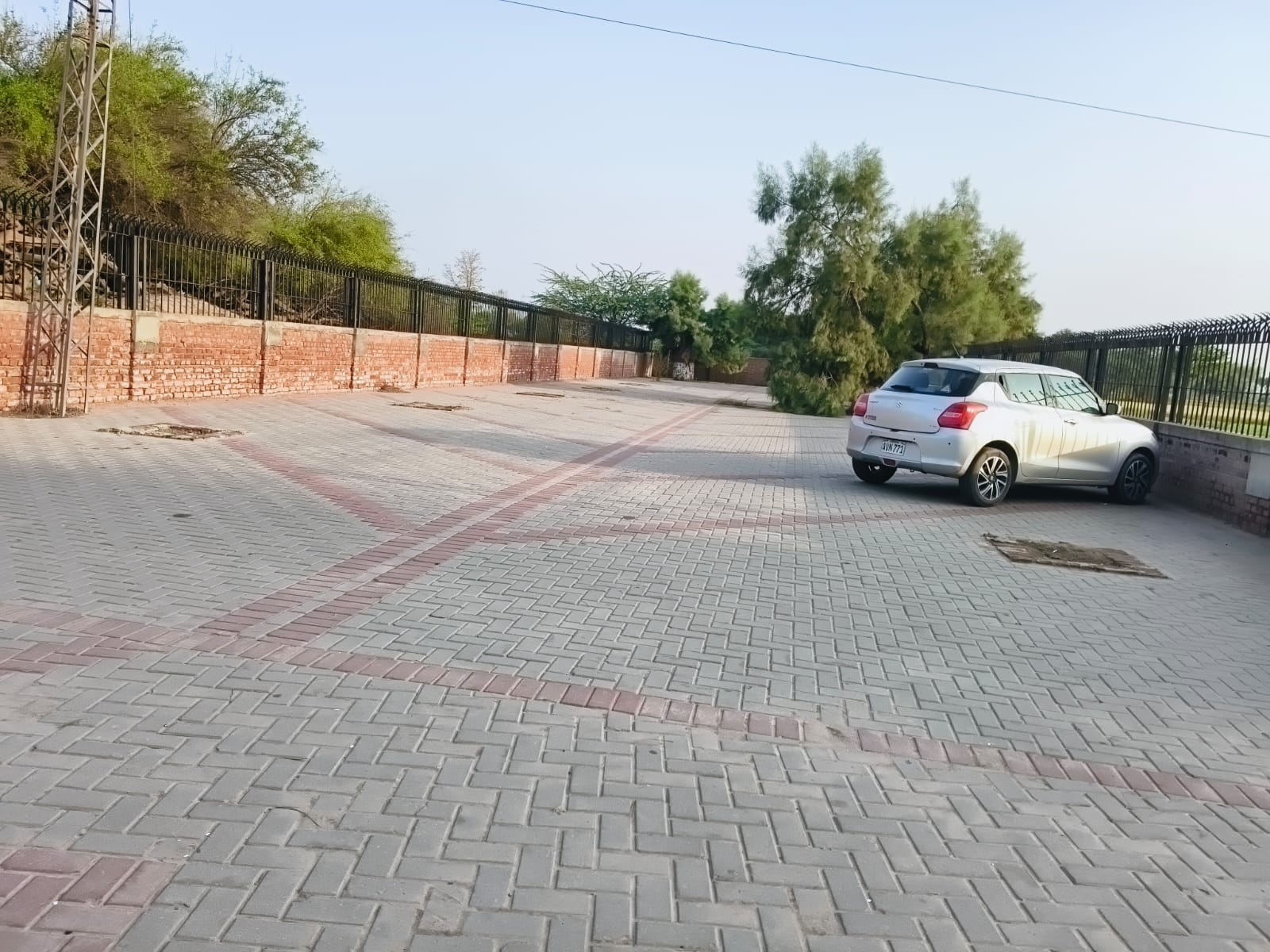
In front of the main gate of the Harappa Museum, you can see an open parking lot. There is a container in front of the parking lot, inside which a parking office has been built. People are sitting there. If you want to park your motorcycle or your car, you have to park your car in this parking lot and go to this counter, and from there you have to get a slip for your car. The fee for a motorcycle is 50 rupees, and the fee for a car is 100 rupees. You have to go inside with that slip and show that slip on your return and collect your car. In this way, your car is parked in safe hands. You no longer have to worry about your car, and you can enjoy the entire Harappa Museum with great peace of mind.
 |  |
|---|
Harappa is an important aspect of our country's history, representing the most ancient civilizations, which is the best representative of the Indus Valley civilization. We get to see how people of 5,000 years ago organized themselves, built strong houses, and built proper cities. It connects us with our ancestors, and we are proud that we see such a developed civilization in our land of Pakistan. This culture also teaches us about the rise and fall of civilizations over time.
Today, Harappan is preserved by the government as a historical site, in which its ruins, artifacts, and structures have been preserved so that people can learn about the Indus Valley Civilization. There is proper protection, museums, clear paths, and signboards for visitors. However, it no longer functions as a living city; instead, people work and live here. Rather, this place has become a beautiful place for education, tourism, and research. These are a discovery for visitors and play an important role in understanding the lifestyle of ancient people.
Every time I visit the Harappa Museum, I feel my roots there. Walking through the remains of the Indus Valley Civilization, one realizes how advanced and intelligent our ancestors were. There is an emotional and calm feeling there at the same time, as if we are talking to these ruins of the past. I feel a deep respect for all those who built this magnificent and amazing civilization, the legacy of which can still be seen today. These are all the impressions and thoughts that give me a great incentive to value my appreciation and preserve this history for our future generations.
I describe the energy of Harappa as powerful, peaceful, and ancient because every corner here tells of thousands of years of history that connects us to the Indus Valley Civilization. This open land, quiet ruins in a slow environment, makes us feel peaceful in something that allows us to think in a deep way. At the same time, it feels very powerful because it still contains the remains of a high-level civilization that shows the intelligence and power of the people there.
| Detail | Information |
|---|---|
| Category | Museum / Ruins |
| Name | Harappa Museum |
| Entry Fee | 30 pkr / 1.85 steem |
| Parking Fee | 50 - 100 pkr / 3.08 - 6.16 steem |
| Timing | 09:00 AM To 04:00 PM Locally |
| Website | https://www.harappa.com/museums |
| Facebook Page | Harappa Museum |
| Contact | 03008759912 |
| Google Map Address | JVG8+3FG, Chichawatni Harapa Road, Harappa, Pakistan Map |
| Steem Atlas Map Address | [//]:# (!steematlas 30.62519468 lat 72.86621676 long Harappa Museum d3scr) |
I would like to invite my friends @pandora2010, @wilmer1988, @suboohi, and @mahadisalim to join this challenge.
Cc:
@oswaldocuarta
Thank you!
X:
https://x.com/i/status/2047559661478629830
Realmente hay mucha historia en este museo y me alegra que la compartas en Steemit aprovechando el concurso de oswaldocuarta para hablar de lo vivido en años pasado, a veces quedó asombrada de escuchar tantas cosas que se ha vivido en un país determinado y de como a pesar de todo sigue saliendo adelante.
Le deseo éxitos.
Muchas Bendiciones.. 🙏🏻
This is a five thousand year old city whose name was Harappa. Harappa was destroyed at that time and after it was destroyed, the Pakistani government took it into its custody and after taking it into custody, it was named Harappa Museum because it was excavated and all the things were imprisoned in a closed room that people can see. That is why it is called Harappa Museum.
Thanks for your precious time to read and noticed.