Walking Nikko - Gorges, Bridges, Shrines and Demons 👹🍣🎎 Wonderful Japan

Japan is full of wonders. A country packed with history, culture and beauty. Whether man-made or formed by Mother Nature, there is something to discover and marvel at everywhere in the Land of the Rising Sun. Lively and modern cities and metropolises alternate with places where you can dive deep into the past, into a time when there were still samurai and shoguns. But even outside the towns, deep in the interior of the country, you won't have a chance to get bored.
Japan is a green country, the abundant rainfall throughout the year ensures a lush plant life. This is especially noticeable in the spring when everything starts to grow and green as if by command. I really enjoy driving through the mountains and forests and I am also happy to go out for a walk. A time out close to the green pulse of the country can work wonders and you should never turn something like that down.
Our last short trip had taken us to the Nikko region, whose center is the city of the same name, located about 140 kilometers north of Tokyo. Nikko is known, among other things, for the Tōshō-gū, a UNESCO World Heritage shrine dedicated to the first shogun of the Tokugawa dynasty, who ruled the country during the Edo period. The city of Nikko offers many historical buildings and monuments and is today a very popular destination for both domestic and foreign tourists.
But before we plunged into the past, we first wanted to listen to the green pulse of the country. Thanks to Google Maps, I was able to spot a suspension bridge near our lodging that would allow us to cross the Kinugawa River. Since the provided pictures were quite promising, we had thus quickly decided on our first stop, and that's where we were drawn to begin with in the late morning.
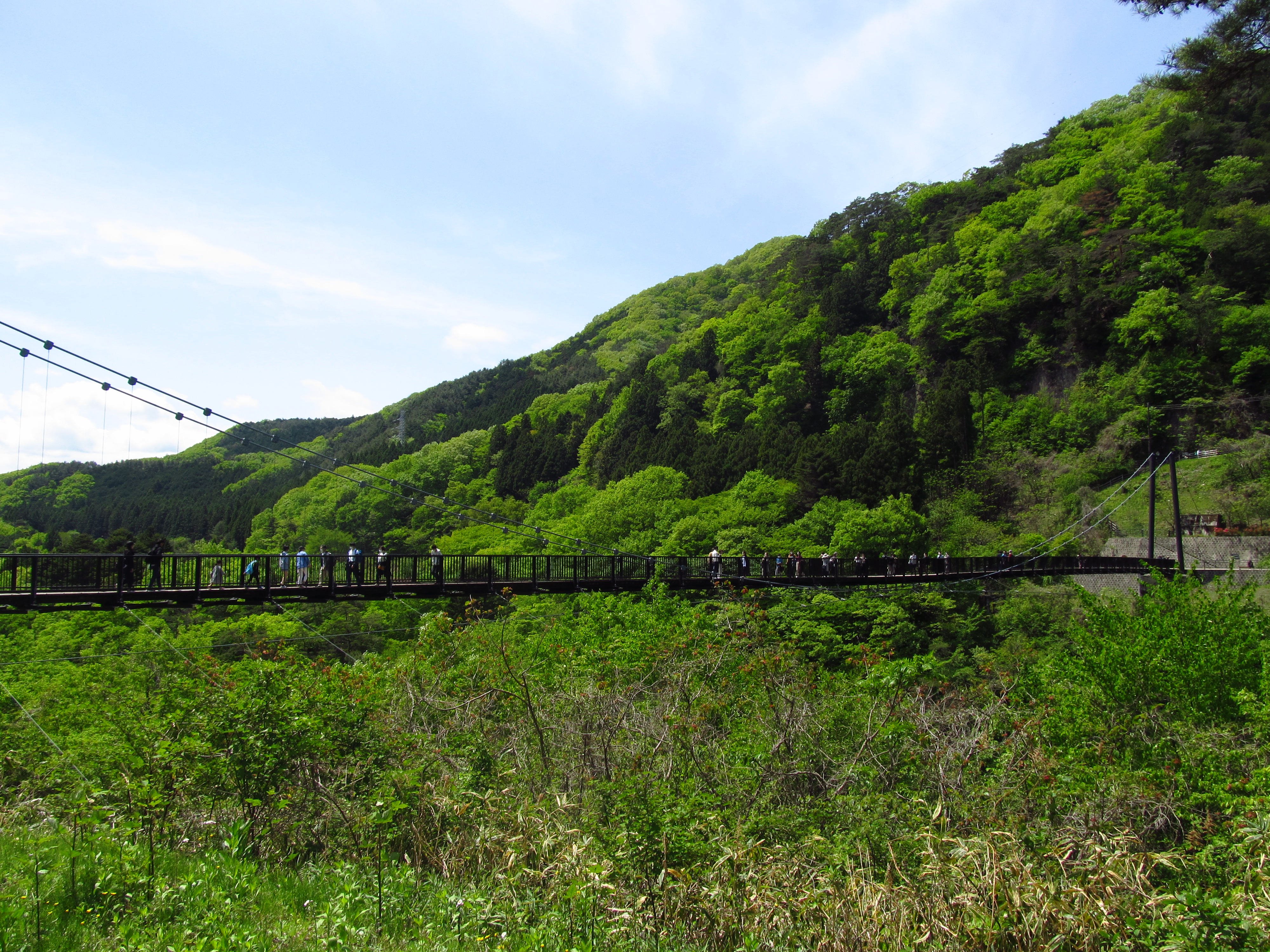
Our arrival day was accompanied by hours of continuous rain and we were all the more surprised and happy that this morning presented itself from its friendlier side. I didn't expect blue skies on that day, but a little sunshine was just the right thing for our first little hike.
That hike led us over the Kinutateiwaotsuri bridge into the mountains on the other side of the river. Completed in 1989, the 140-meter suspension bridge is for pedestrians only and is now a new landmark in the village of Kinugawa, which is best known for its onsen. When walking across the bridge, you are offered a magnificent view of the river's rapids and the surrounding green mountains.
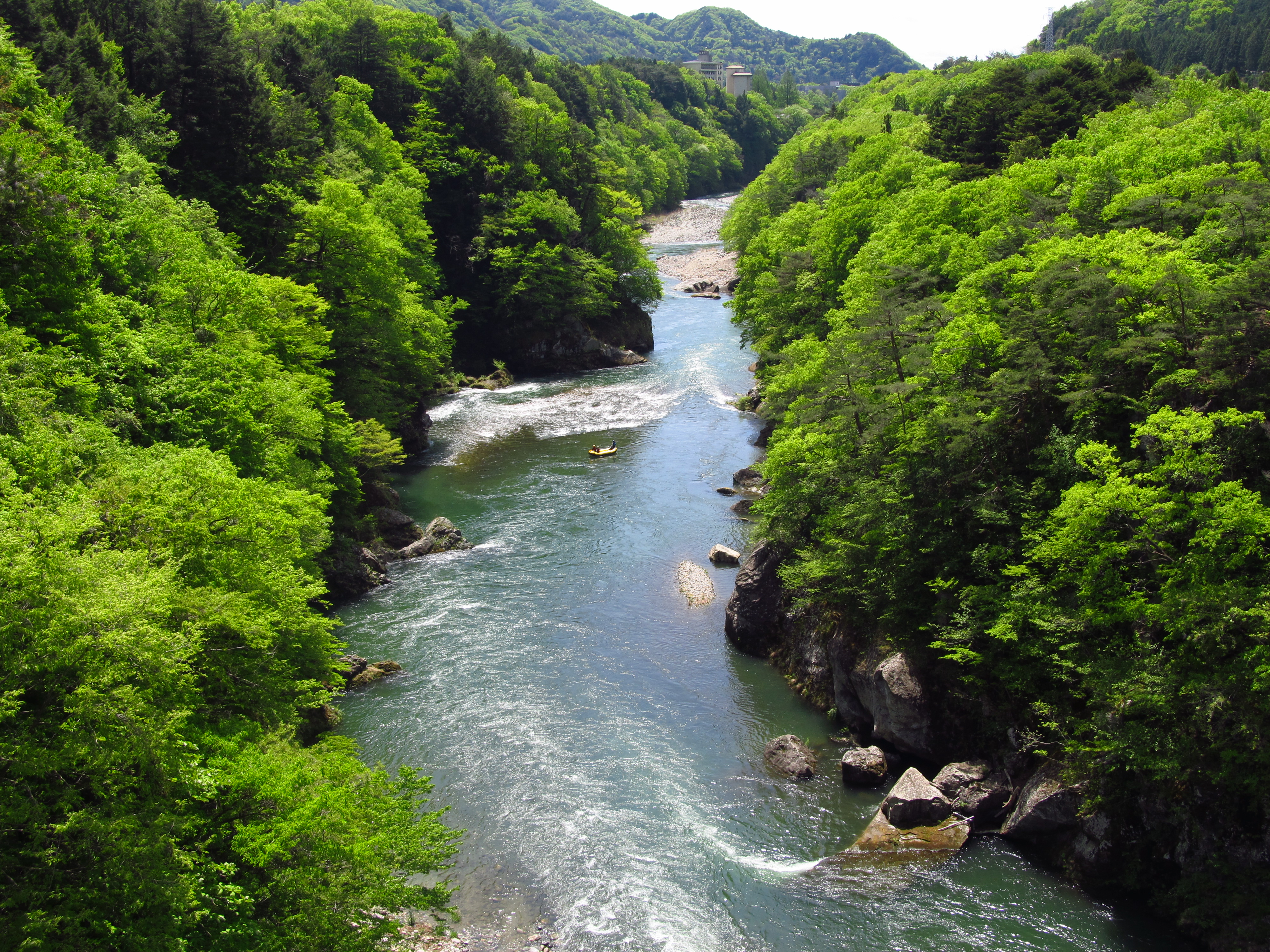
And that's exactly what we were in the mood for that day, and we continued our first round in the best mood ever. The bridge was kinda swinging and the many visitors made it sway quite a bit. That didn't bother me at all, I just kept enjoying the view into the gorge, which is bordered by dense forests. A really wonderful scene which made me want to see more of this area.
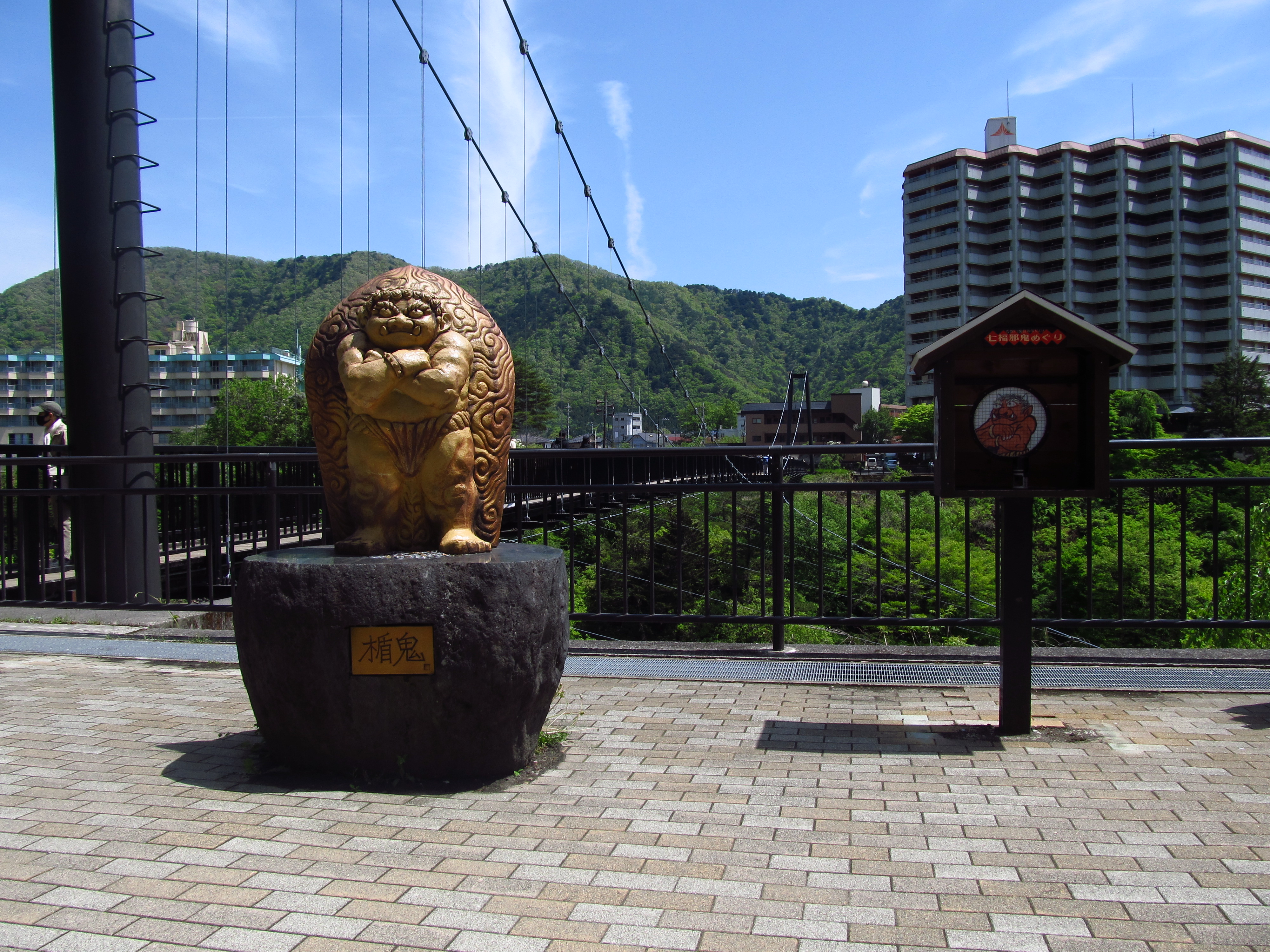
From the other side, you can clearly see the scenery of Kinugawa Onsen, with its large hotel complexes, most of which are directly connected to the many hot springs in the area. Along the Kinugawa River, there are several other places that boast hot springs, a resource that can be bound throughout Japan. Fortunately, I have managed to succumb to the charm that comes from an onsen myself and learned to appreciate this so special and so Japanese place.
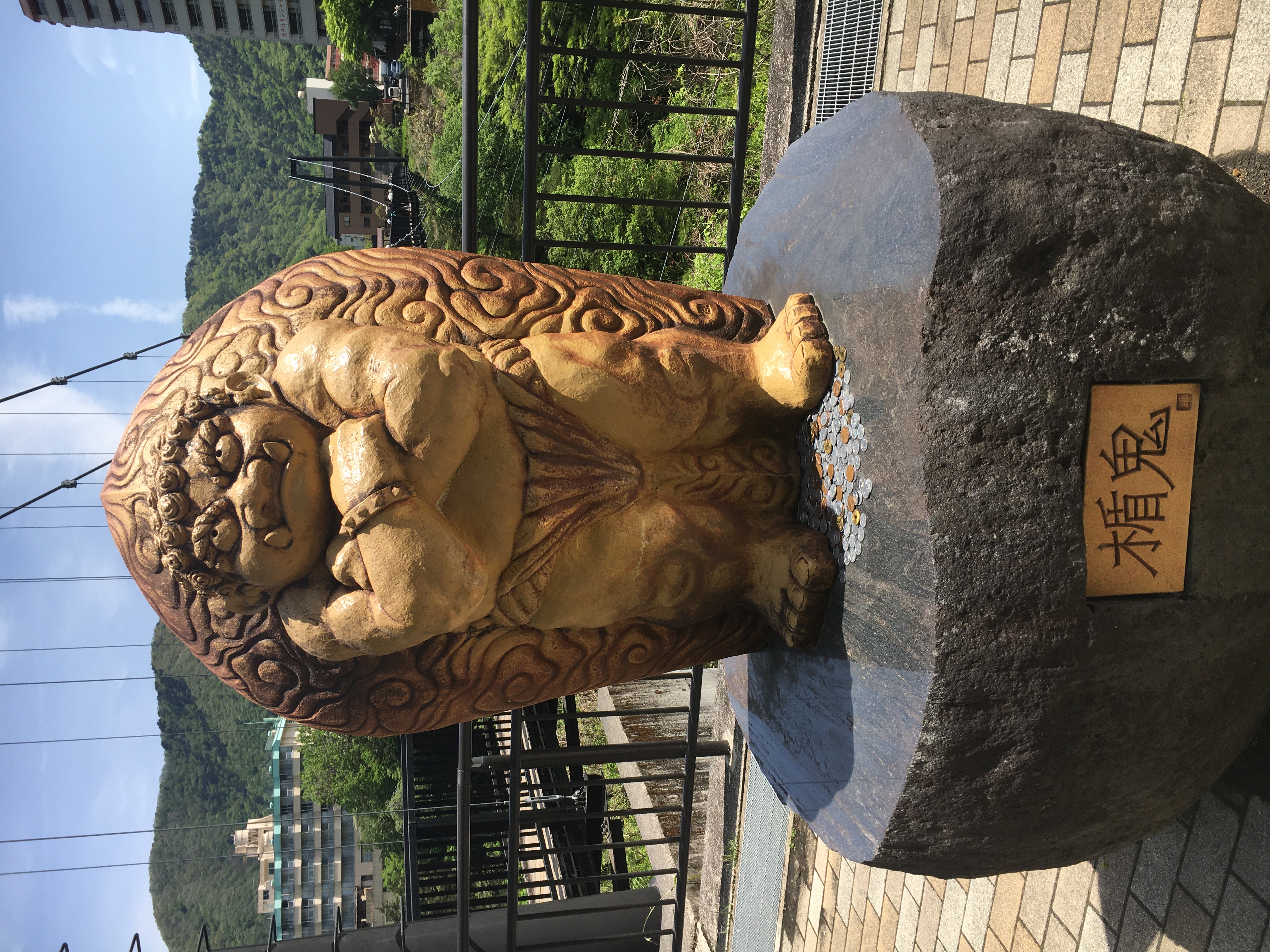
This friendly fellow was watching out on the other side of the bridge to make sure no one gets any ideas here. The name Kinugawa 鬼怒川, translates to "river of angry demons", and there seem to be quite a few of those around here. This one is called Tateki, and his determined look makes it clear that you'd better not mess with him.
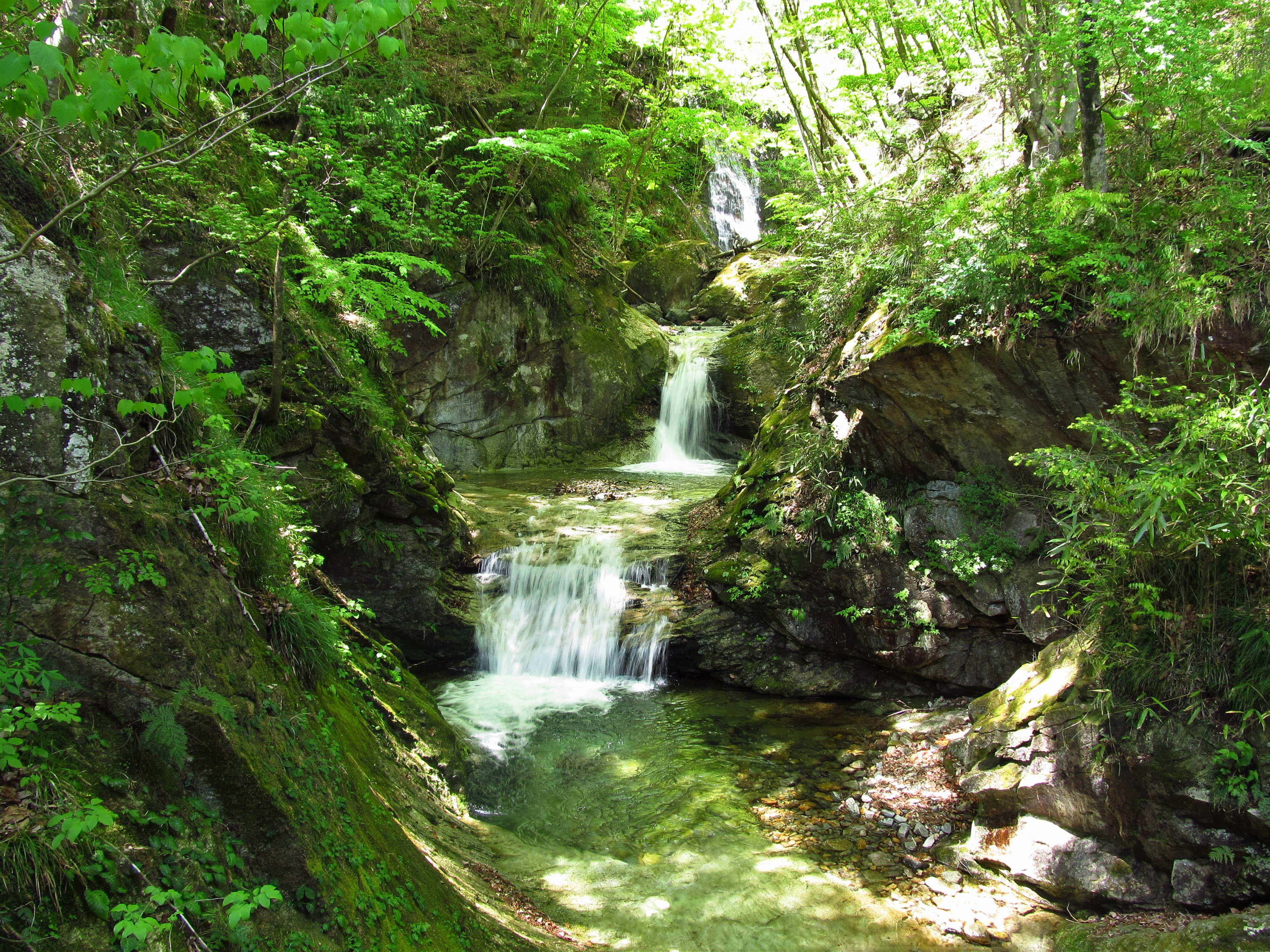
We then walked a little further down until we came to this waterfall. Furukawa Falls was beautifully framed by fresh green nature and besides this relaxing sight, it also offered us some shade. The sun was shining quite much so far and we could really need a little break now. Because from now on we had walk up, and while in the sun the thermometer made for pretty sweaty temperatures.
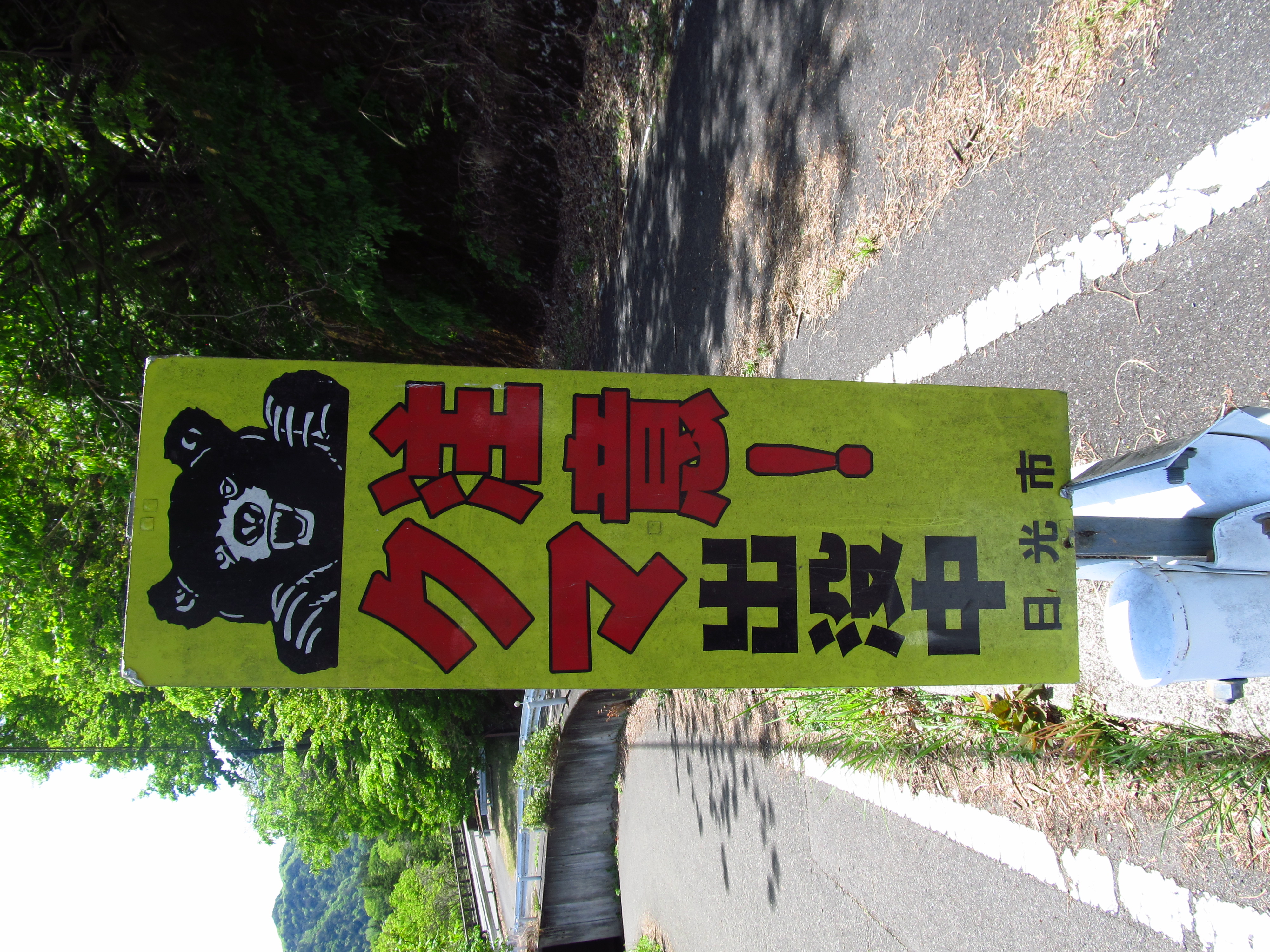
"Don't play with the bears!" - At one place we found this rather explicit warning, so we didn't only have to watch out for the demons, but also for some also for bears, who are supposed to be roaming around in the forests and mountains. Since I was already in the best company I could wish for, I wasn't eager for a meeting with this furry fellow either.
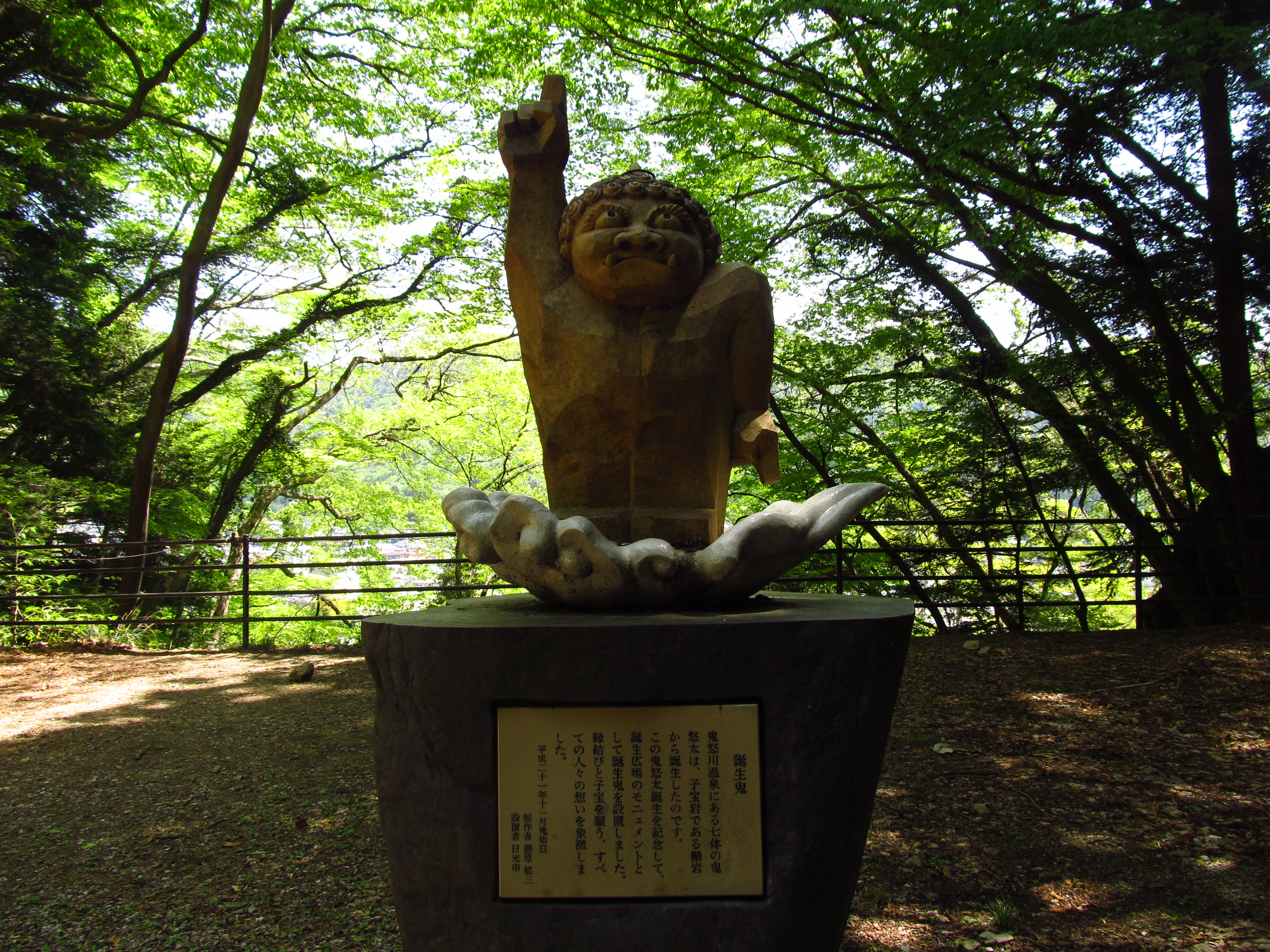
Further up we met another demon, which clearly seemed to indicate the further direction. Tanjoki was his name and he had made himself comfortable under the trees and found a pleasantly cool and shady place. But since we were in a bit of a hurry, we couldn't stay with him for long and soon moved on.
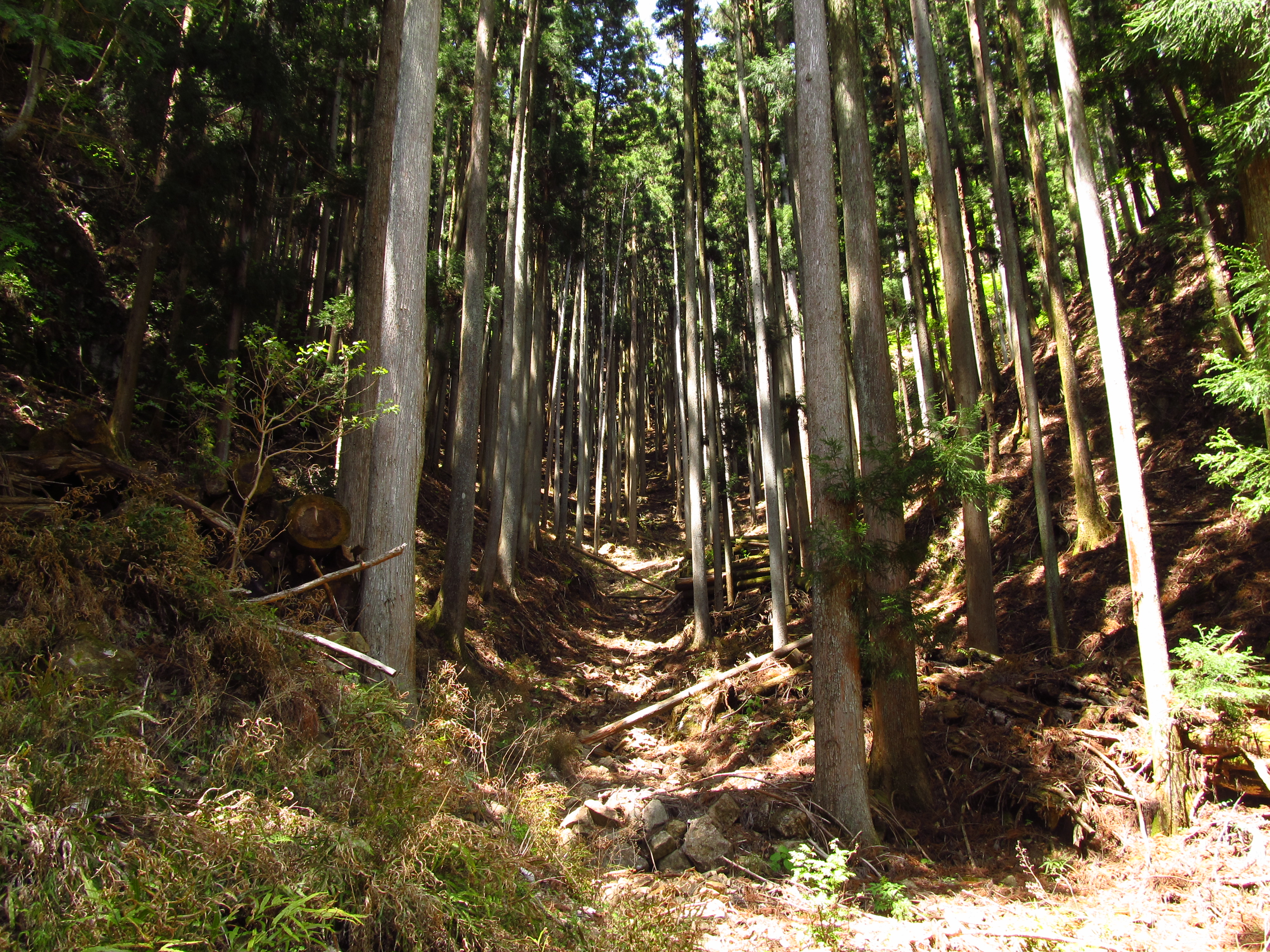
But not without checking here and there and having a deep look into the forest. The tall cedar trees always provide a great backdrop, showing the mystical side of the forest. Pure energy, stimulating and relaxing at the same time, emanates from such scenes, which always seem to attract me irresistibly. It is simply great in the forest, with all the trees and plants, the greenery and the fresh air. Sometimes you don't want to leave here.
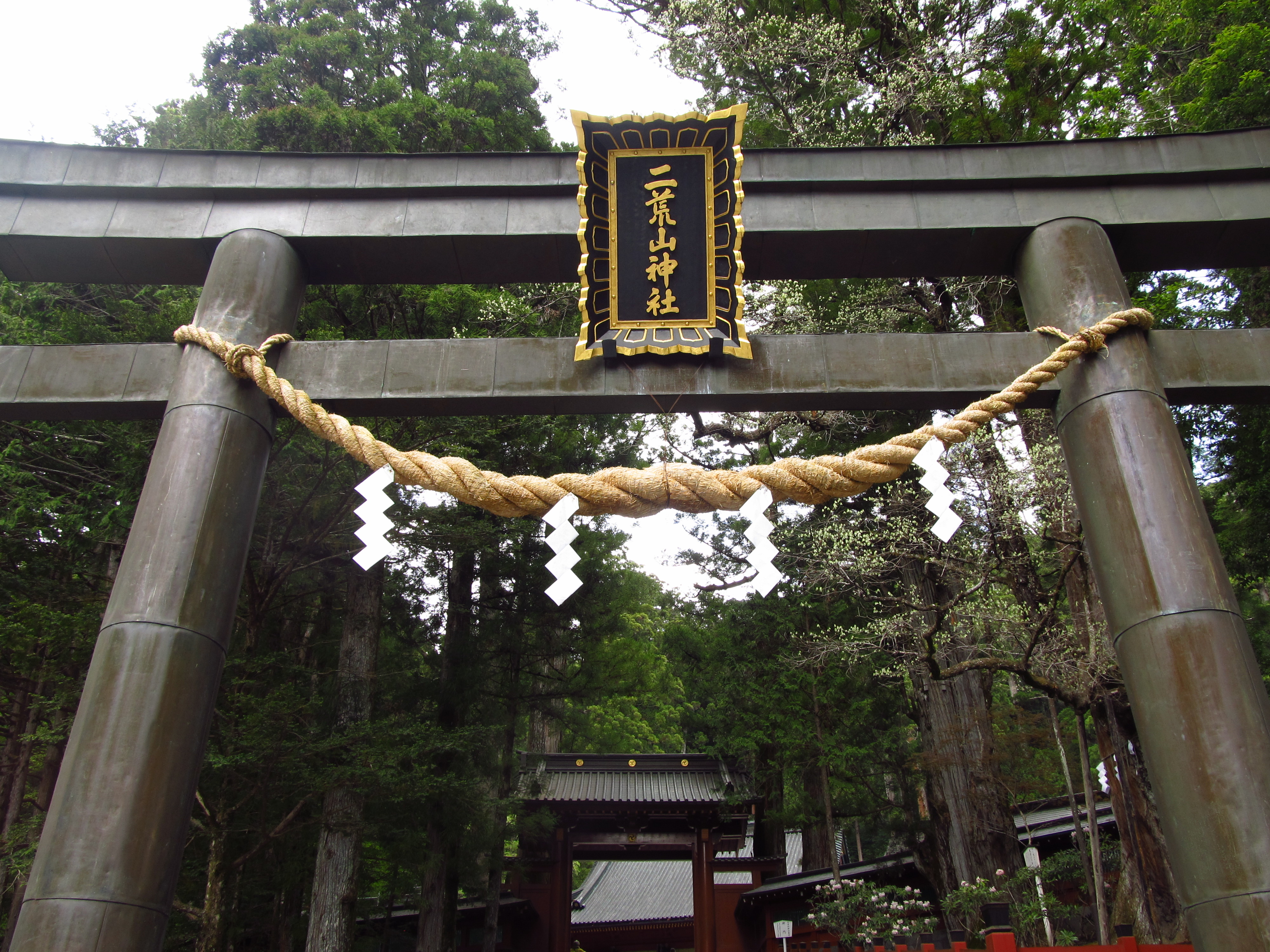
But since we still had some program planned for this day, of course we couldn't stay forever. Our route then took us directly to Nikko City, and there to the famous temple and shrine complex that follows behind the town, with dense forests and high mountains at their backs. Our next destination was Futarasan-jinja (二荒山神社), a Shinto shrine in the famous Nikko temple and shrine complex. Along with other shrines and temples, such as the Rinnō-ji or Tōshō-gū, this shrine is also a UNESCO World Heritage Site.
Unlike the better known and more famous Tōshō-gū shrine, which is dedicated to the first shogun of the Edo period, Tokugawa Ieyasu, Futarasan-jinja has a much longer history. The origins of the shrine date back to the 8th century, and the shrine is said to be dedicated to the deities of Nikko's three holiest mountains: Mount Nantai, Mount Nyoho and Mount Taro.
The Futarasan-jinja is located at the back of the extensive complex, and like most of the buildings and grounds here, it is surrounded by mighty cedars. The many tall trees contribute their part to the slightly mystical and attractive atmosphere that accompanies you at every turn. Behind this large bronze torii, the actual shrine area begins, with its various main buildings and outbuildings.
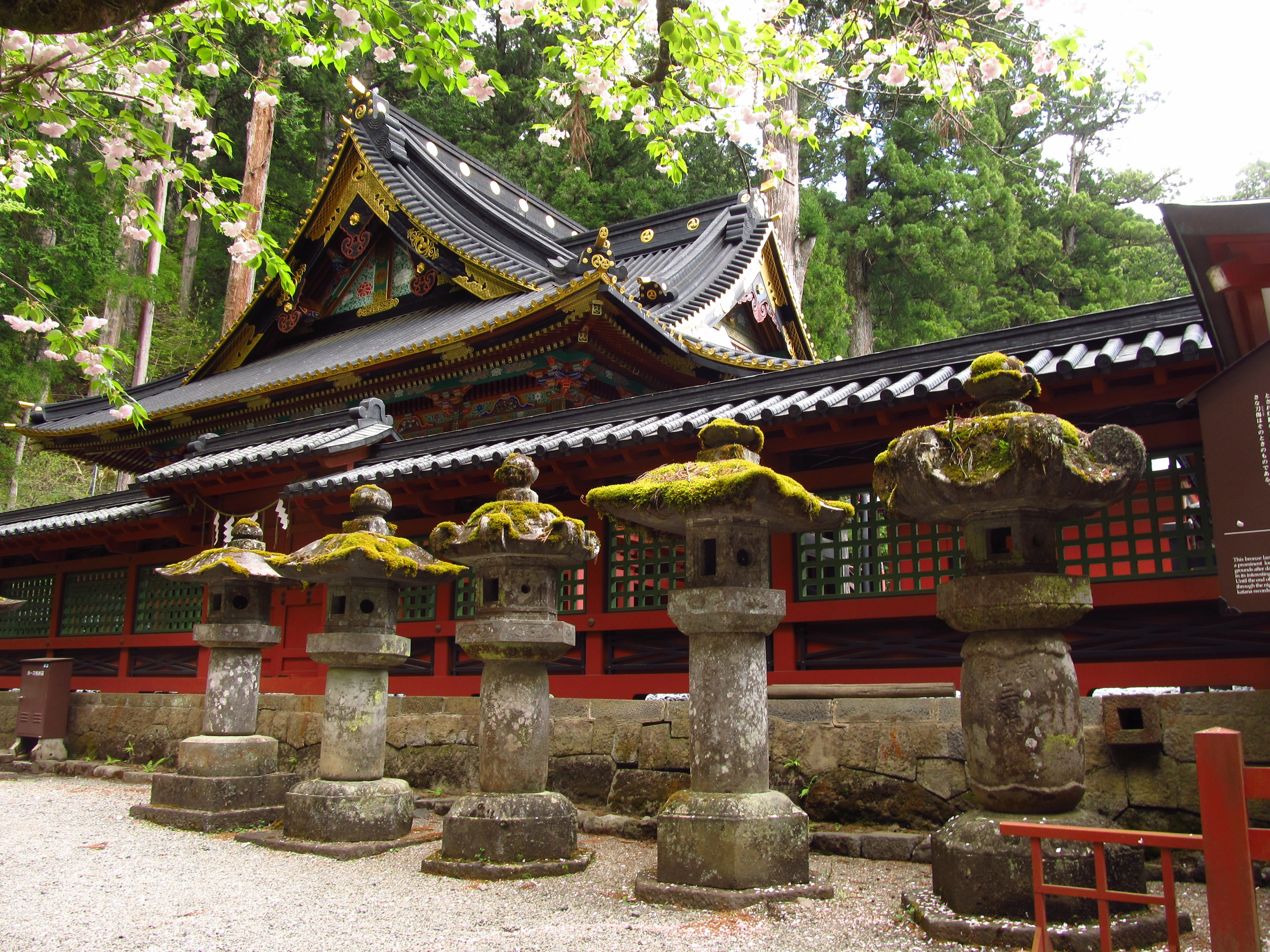
As usual, this very picturesque shrine quickly manages to cast its spell over us. The location is indeed well chosen and you feel far away from the stress that usually accompanies you all the time in everyday life. Although I don't consider myself religious, I also feel that special atmosphere that emanates from many shrines and temples here in Japan. A little mystical, and at the same time inspiring and relaxing. Wonderful places to do a little soul-searching and to switch off.
The Honden, the main hall is located in the back of the shrine, and is one of the areas of the site that cannot be visited for free. The small fee of 300 yen is well spent, however, and it's really worth taking a closer look here.
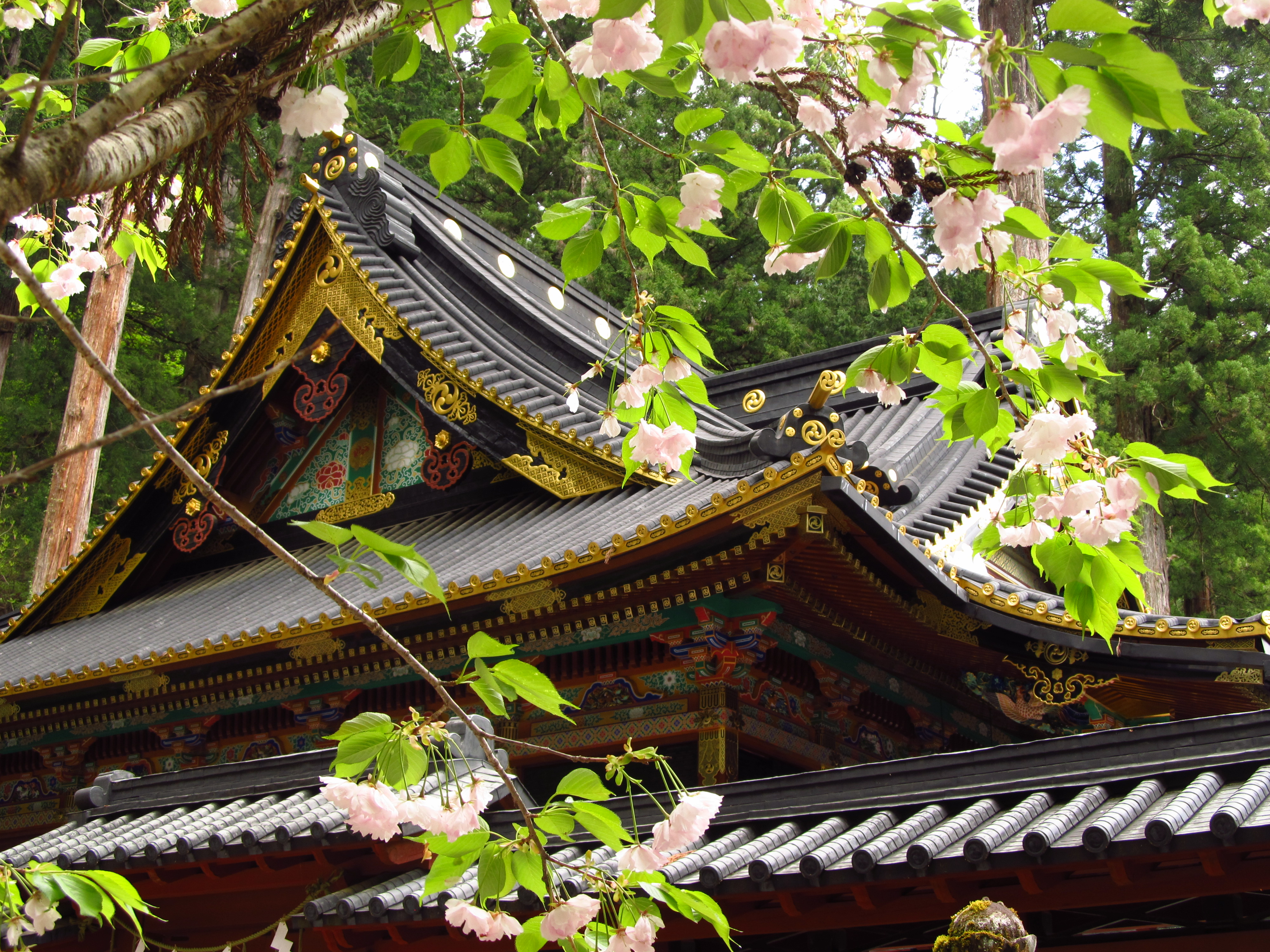
The actual cherry blossom was already over, but some yae-zakura trees still blossomed here and there and in some places presented themselves in a wonderful way. Together with the honden in the background they provided a great motif for every photografer and of course I couldn't resist to take some pictures either.
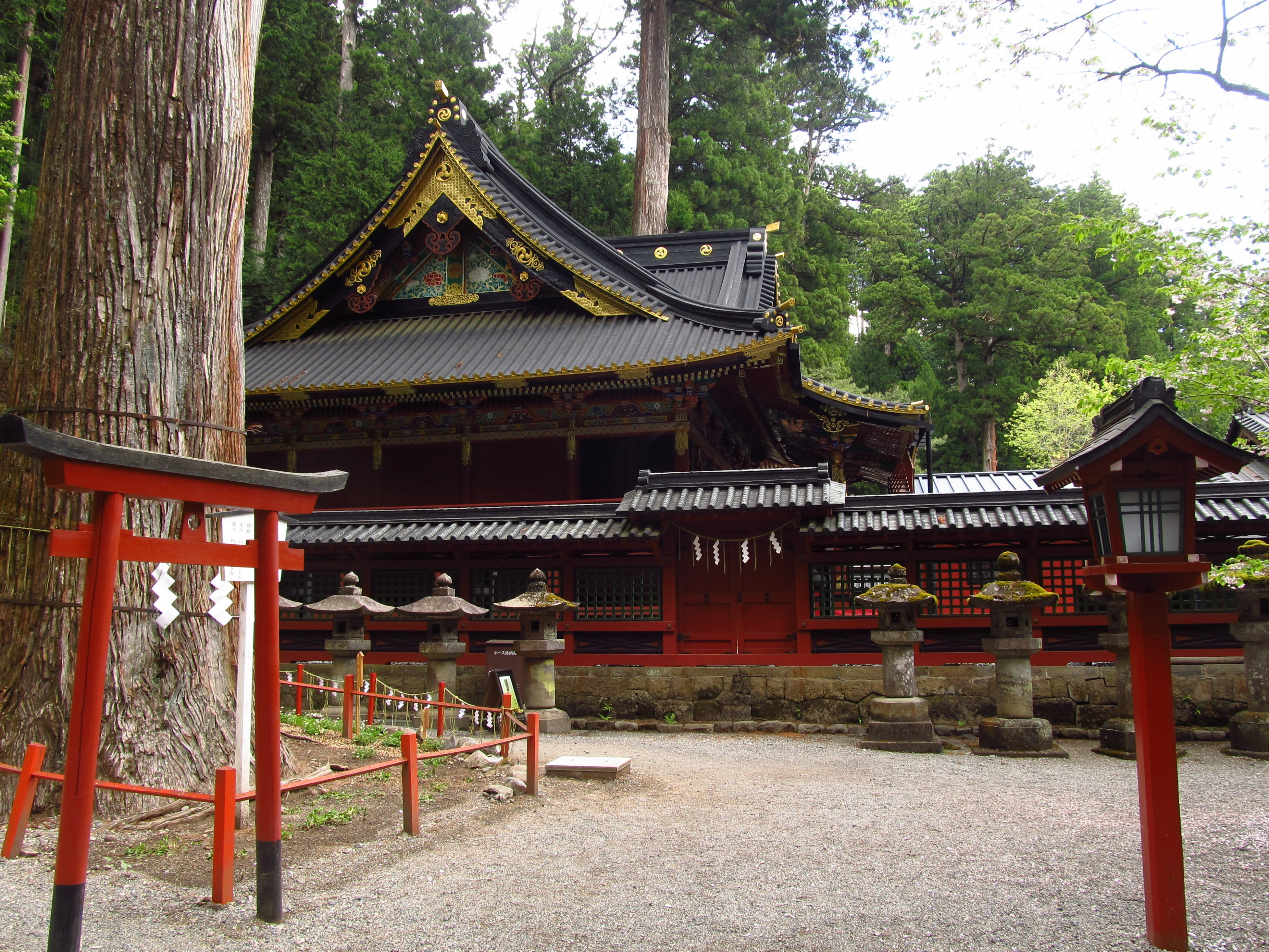
Since the whole complex is famous all over Japan and attracts tourists from all over the world all year round, we were not the only visitors that day. But with a little patience, sometimes you do manage to get a clear and unspoiled view and then you are able to dream and enjoy the scene almost for yourself.
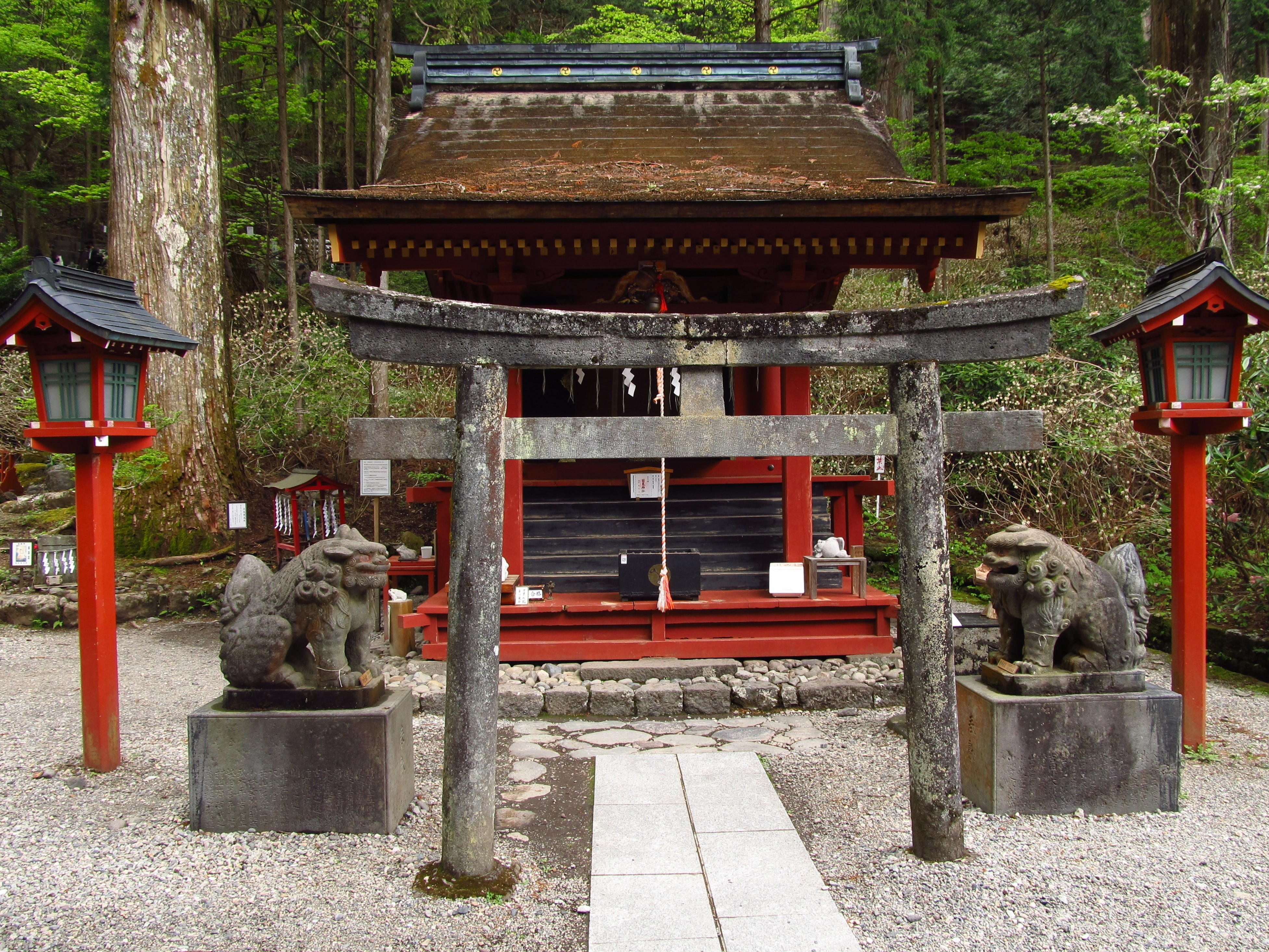
Further back, there are some outbuildings and smalerl shrines that complete the whole ensemble. As so often, this small shrine building is guarded by two stone lion dogs called Komainu. The obligatory red and the fresh green in the background create an atmospheric ambiance, which you can foind in many places of the complex.
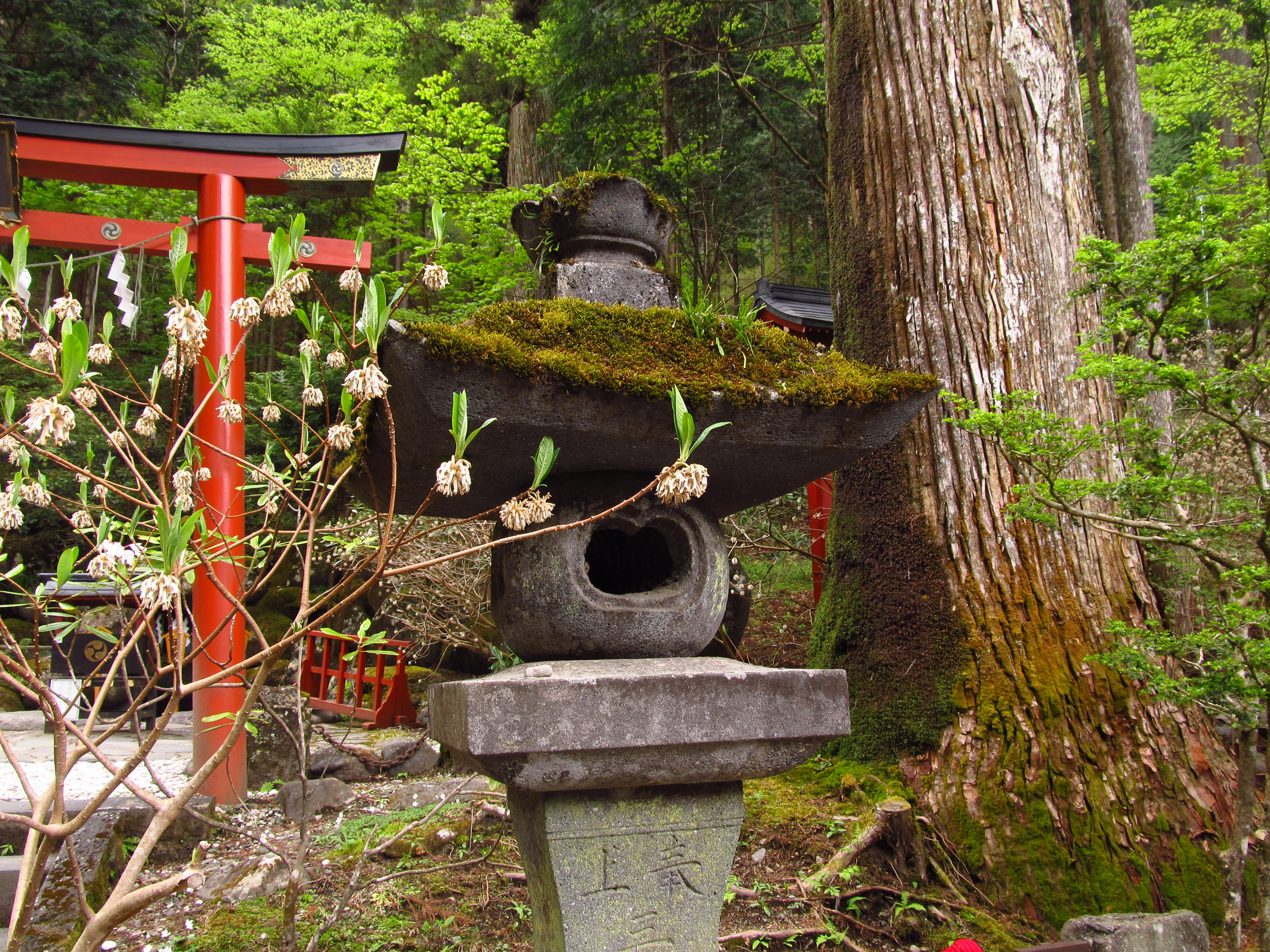
But of this special atmosphere is created by the various toro, stone lanterns, which can be found in most temples and shrines in Japan. They are often covered with moss and thus contribute their part to the slightly mystical feel that prevails all over the place.
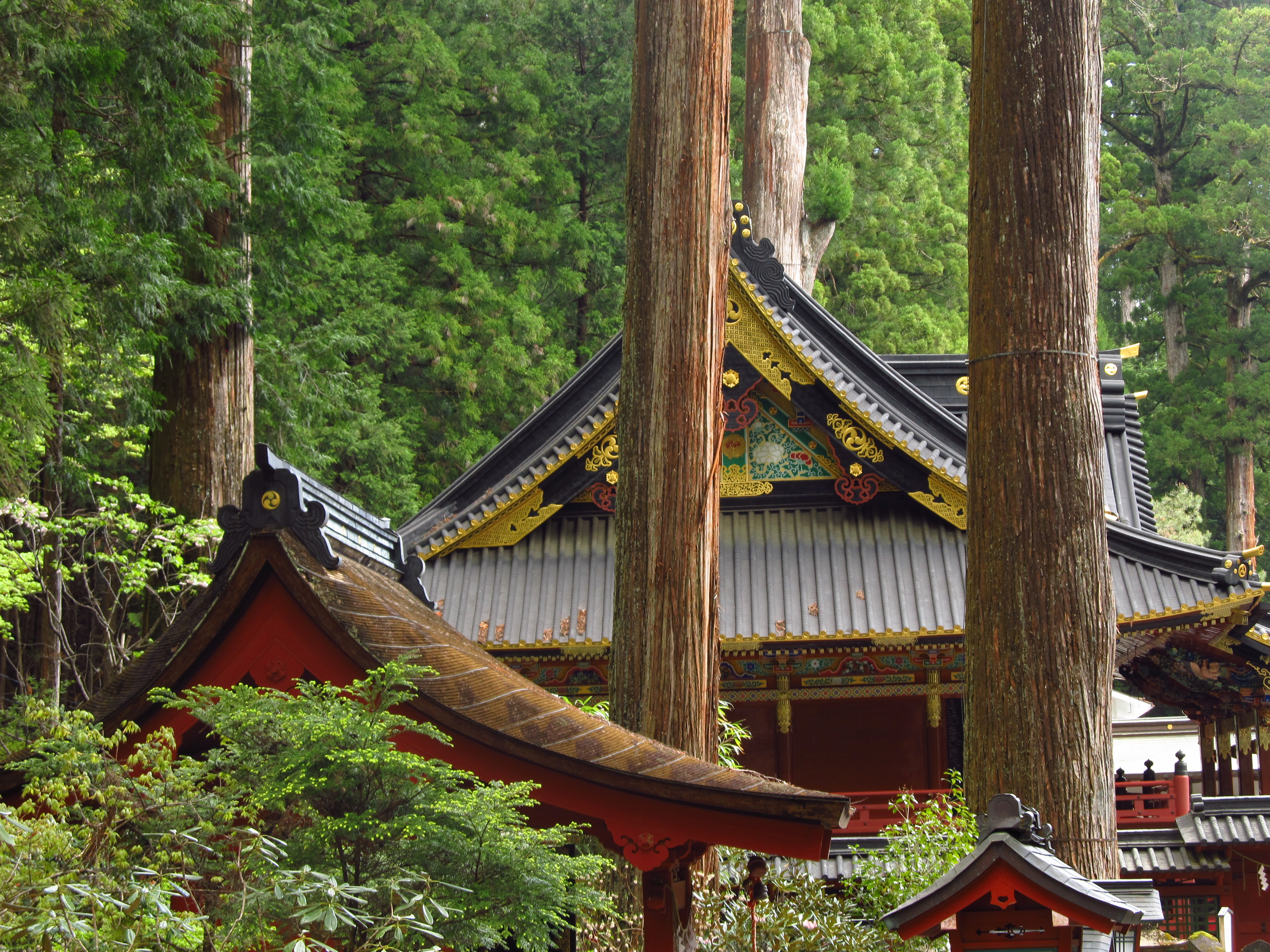
The huge cedar trees that surrounded and framed the shrine, plus all the green moss on the ground, create a very special mood and vibe that easily captured me. I could linger for a long time at such charming places to absorb the pure energy that emanates from here and store it within me. A long time ago, nature and shrine seemed to have entered into a symbiosis, which leads to time sometimes standing still here.
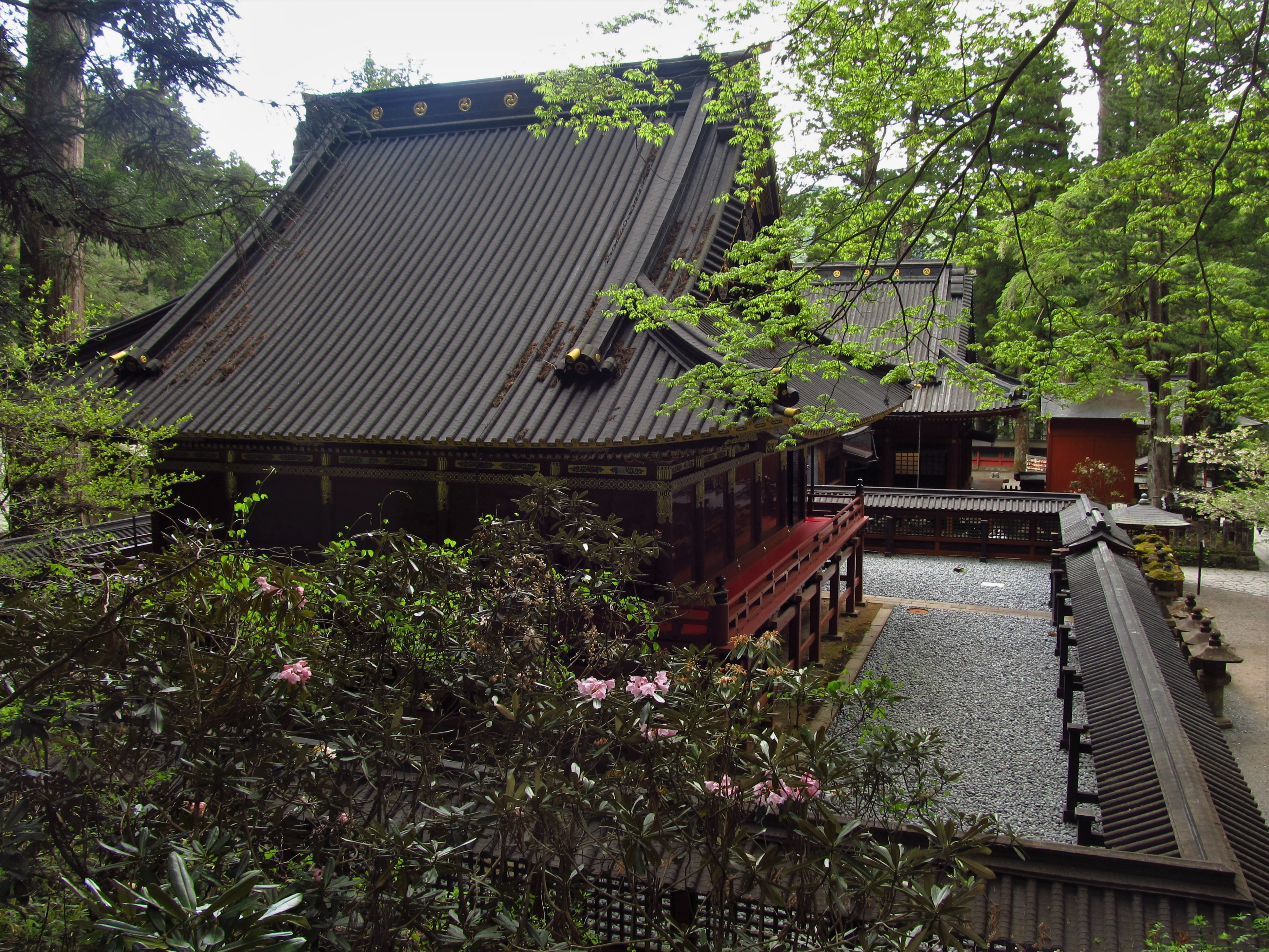
Our tour of the Futarasan-jinja was slowly coming to an end, but even from behind the shrine made a good impression. Although I'm not into Shintoism myself, shrines like this one easily manage to cast a spell on me. The atmosphere that emanates from such places is quickly infectious and inspiring. It is probably also the closeness of Shintoism to nature that makes such places so familiar. The gods worshipped as kami can be anywhere, in rocks and in trees, but also in rivers and in waterfalls. Sometimes I begin to understand what might have brought people to their beliefs.
Fortunately, our stay in Nikko was not over yet and we still had a little way to go. Unfortunately, the beautiful weather that had flattered us so much in the morning had left us and the sky kept closing in. The signs were pointing to more rain, but we wanted to enjoy at least this day dry and without an umbrella. But actually we were used to having rain in Nikko, it seems to be always waiting for us here.
What else was waiting for us in Nikko, you will see another time, when we make another round through this fascinating place. If you are interested in more impressions and pictures from the land of the rising sun, please check back soon.

I love the serene atmosphere in this photo, it captures the essence of a peaceful walk through Japan's beautiful natural surroundings. Your words transport me to the Land of the Rising Sun, can't wait to see more of your adventures! 🌳🏞️📸