How Autonomous Robotics Could Transform Education and Child Development in the Next Decade
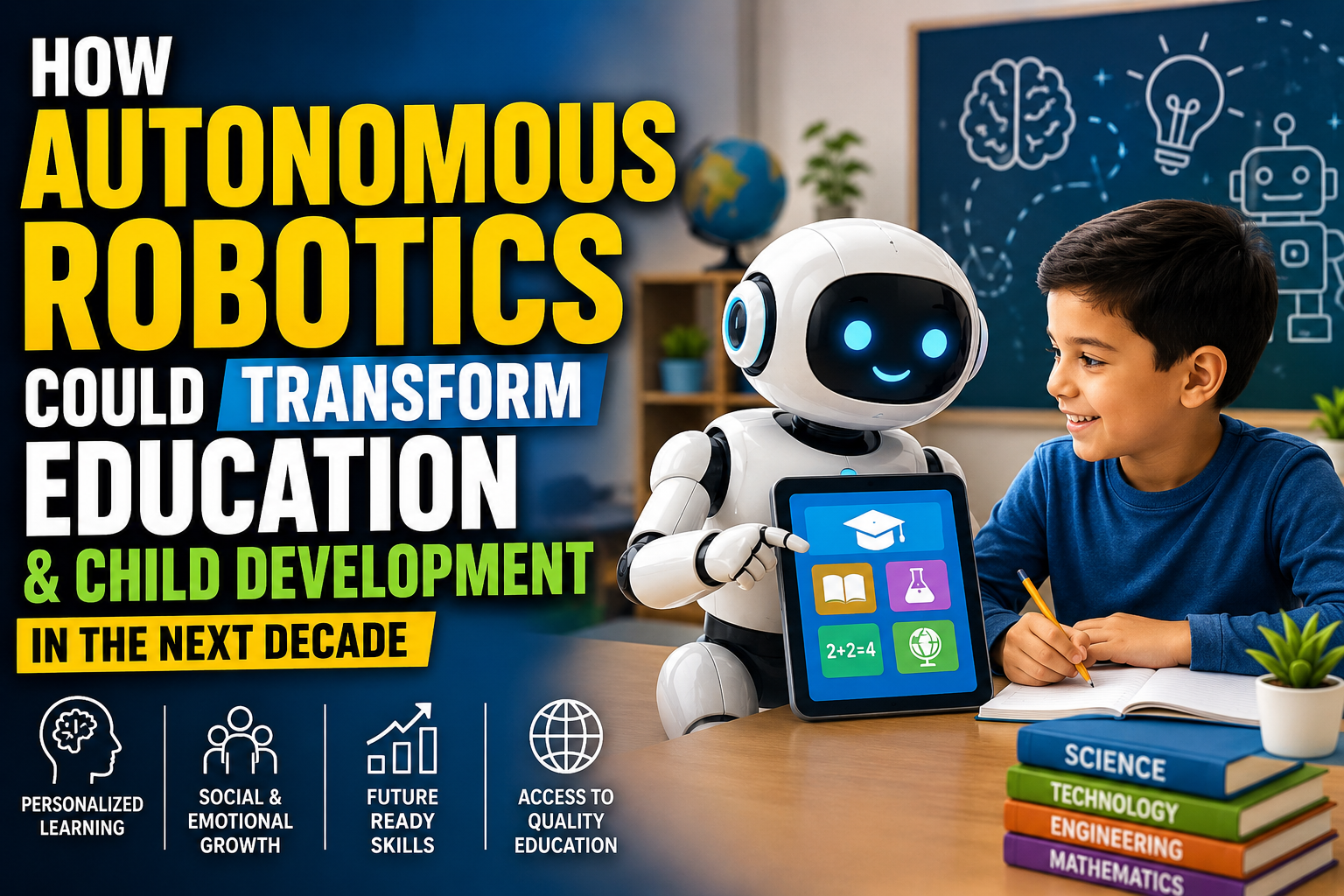
Technology has been evolving rapidly in the world and one of the most thrilling advancements is autonomous robotics. Autonomous robots are robots that can do work, make decisions and interact with humans without significant human control. These robots may have a significant impact on the future of education and child development in the coming ten years. They can be important learning partners for children who will learn faster, acquire new skills and be prepared for the future. I think the development of technology today would allow for the potential of a new learning revolution that is more interactive, individualized, and effective.
Personalized learning is one of the greatest potential ways that autonomous robotics can impact education. All children have differing learning styles. Students' learning speeds and abilities vary, with some learning quickly and others slowly and with additional needs. Teachers might have numerous students in their class and may not be able to attend to each and every student every time. Autonomous robots can be used to address this issue. They can learn about a child's learning style, understand their strengths and weaknesses, and design lessons to meet the individual needs of the child. This can aid in helping children to better understand difficult topics and boost their grades.
Robots can also enhance the learning experience and make it fun. Many children lose interest when lessons are taught in a traditional manner for extended periods. Games, Animations, Storytelling and Interactive Activities can help engage students with Robots. Children won't need to read from books to learn, but can learn through conversation and demonstrations using robots. This type of learning experience can stimulate children's curiosity and foster children's love for learning. I believe that children as learners are more likely to recall lessons if they are more involved in the teaching and learning.
One other significant advantage is that autonomous robots can give support to the kids having special educational needs. Some children have learning difficulties, autistic disorders, hearing impairments or other related difficulties that need special attention. These children can be patiently and consistently instructed by robots. They can support the areas of communication, social and learning skills. Robots are not tired and not frustrated so they can offer constant assistance that can help the children feel better in what they are learning and more comfortable and confident in it.
Autonomous robotics may also aid children in acquiring valuable future skills. Technology, artificial intelligence, and automation are becoming more and more essential to the world. Early exposure to educational robots can enhance children's problem-solving abilities, critical thinking, and digital literacy. They can gain knowledge of technology, and familiarize themselves with high-tech tools. These skills will be useful in careers of the future as many industries are forecast to heavily depend on robotics and artificial intelligence.
It is not just academic growth that could be impacted by autonomous robots; they also could positively affect child development. Children develop a wide range of skills for life by interacting and communicating. Teamwork, cooperation and creativity can be promoted by the use of educational robots. For instance, students can collaborate to solve problems with a robot or engage in collaborative projects with robots. These activities can help build social skills and teach the children the skills of working cooperatively with others. Children may become more confident and adaptable children because of these experiences.
Additionally, the autonomous robots would be able to track children's progress more efficiently, allowing parents and teachers to monitor them more efficiently. Robots can gather data on a child's learning preferences, preferences, difficulties, and successes. This information can be useful in making better decisions by the teachers and parents regarding the support of the child's development. Timely intervention can be provided if learning difficulties are identified early; this can prevent small problems from becoming big problems in the future.
Autonomous robotics could also help to increase access to quality education. Many countries have a lack of qualified teachers and education tools. To address these issues, educational robots may be able to fill in the gaps by delivering lessons and tutoring services, and educational support. Children residing in remote/underserved areas may benefit from learning opportunities that they might not be able to access otherwise. This may help to diminish educational disparity and provide additional opportunities for children to succeed.
While there are numerous benefits, there are also obstacles to take into account. Robots should not be used in place of human teachers. Emotional support and understanding and human connection that robots cannot replace is provided by teachers. Positive relationships with adults are essential to children's emotional and social development. So robots must be used to help teachers and not to replace them. Issues of privacy, data security and the expense of school application of robotic systems also exist. These issues can only be solved with a responsible collaboration between governments, education and technology companies.
Looking ahead, I can see how autonomous robotics will impact the education system and children's development. These smart machines can offer tailored learning, assist those with special needs, boost engagement, and teach future skills and extend learning opportunities. There are some challenges but with proper planning and responsible usage, the benefits can be maximized. Autonomous Robotics could be a significant aid in the education of children over the next decade in support of their learning, growth and preparation for a rapidly changing world. The classroom of the future may be very different from the classroom of today, and there is the possibility that the transformation will be brought about significantly by autonomous robots.