Movie Talk Episode 03 - Taxi Driver
Source
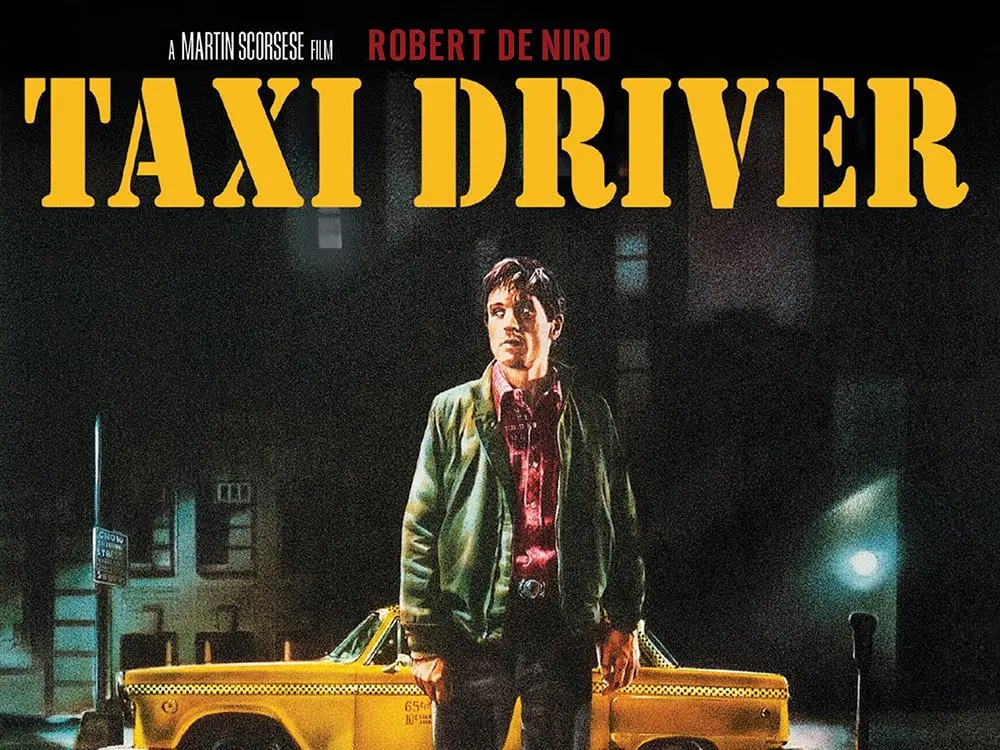
We have all felt lonely at some point in our lives. But how terrible is it to feel that loneliness while living in a huge city surrounded by thousands of people? The 1976 movie Taxi Driver directed by Martin Scorsese and written by Paul Schrader talks about this scary urban loneliness and the mental decline it causes. Starring Robert De Niro today we analyze how this movie portrays the human subconscious mind through its cinematography, colors, and music.
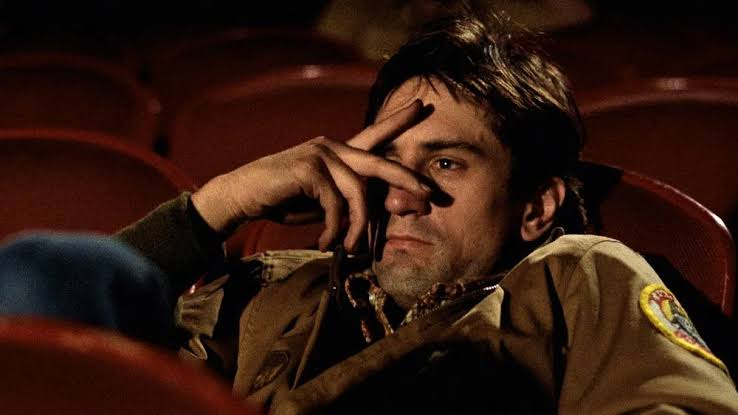
The main character of the movie, Travis Bickle, is a young man who suffers from insomnia after returning from the Vietnam War. Because he cannot sleep at night, he chooses a job as a night taxi driver in New York City. There is a famous quote by Travis in the script, Loneliness has followed me my whole life. In bars, in cars, everywhere. There's no escape. I'm God's lonely man. Even though he drives all over the city, he cannot build a real connection with society. Because of this mental stress, he looks at the people around him and the corruption in the city with great disgust. Seeing the world around him as a pile of garbage, he decides to become the messenger who cleans up this trash, which is a result of his mental breakdown.
Source
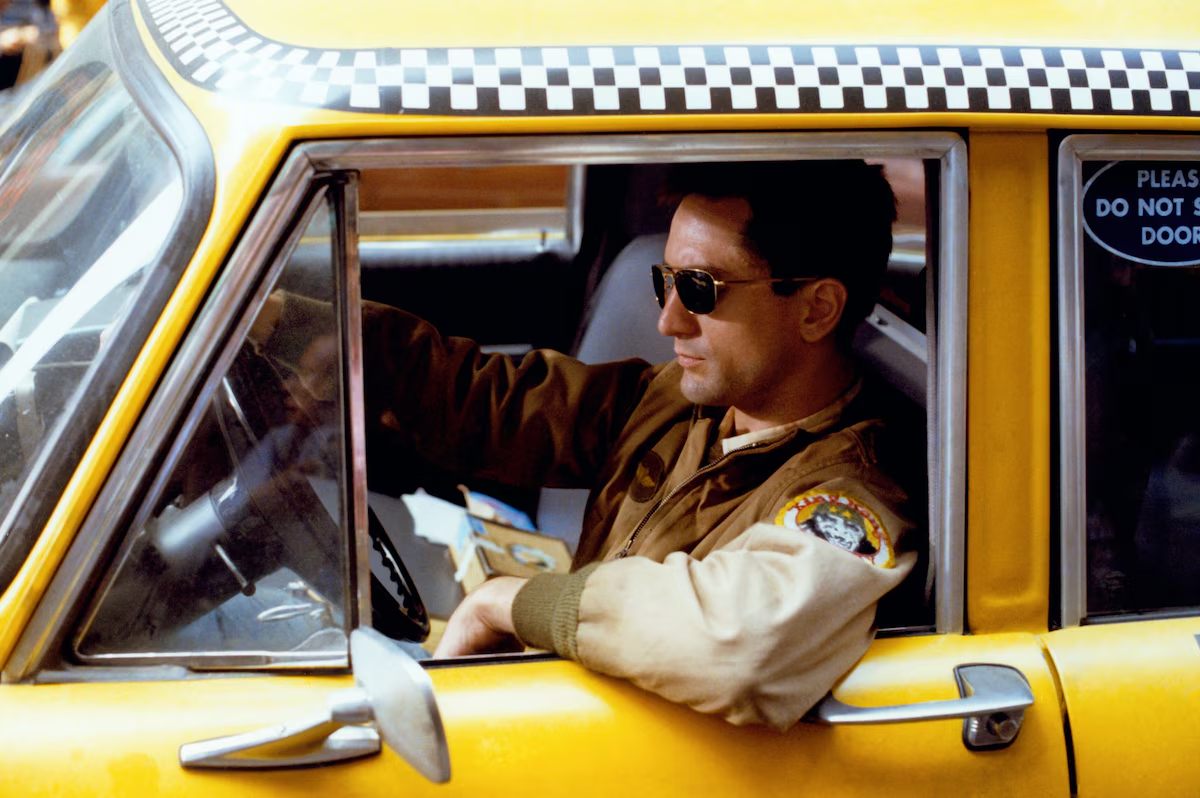
Cinematographer Michael Chapman makes the audience feel Travis's mental state through camera movements. Many of the movie's night scenes are shot through the taxi window or through Robert De Niro’s eyes looking into the rearview mirror. Travis looks at the New York streets, wet with rain and glowing with lights, as if he is watching from a completely different world. There is a scene where Travis calls Betsy, the woman he loves, from a phone booth to apologize for his mistakes. When he gets rejected, his shame and pain are so strong that the camera turns away from Travis's face and moves towards an empty hallway. These tricks, which suggest that even the camera is unwilling to show the character's pain directly, are very powerful in a cinematic way.
Martin Scorsese does not show 1970s New York City as a beautiful place, it looks like a nightmare. The movie mainly features dark red, bright yellow, and green colors. The yellow of the taxi and the red of the neon lights on the streets symbolize restlessness, danger, and anger. Even Travis's clothing, like the military jacket he wore as a soldier and the Mohawk hairstyle he gets at the end, visually shows that he is mentally preparing for war.
The background music of a movie can change its entire soul. The music for Taxi Driver was created by Bernard Herrmann, a giant in classical Hollywood cinema. This was the last musical creation of his life, as he passed away just a few days after the movie was finished. He used a sad jazz music with a saxophone sound for this. While Travis drives the taxi, this lonely music plays, but it is suddenly broken by scary drum and bass sounds. This beautifully shows the violence hidden inside Travis's calm surface through music.
Source
Did you know? One of the most famous dialogues in cinema history You talkin' to me? was not actually in the script. The script only said that Travis looks in the mirror and plays with his gun. But Robert De Niro improved that moment with his own acting talent during filming. It is the best example showing how Travis, completely isolated from society, talks to his own reflection and lives in a world of his own.
At the end of Taxi Driver, Travis kills a group of criminals and saves a young girl. The media and society describe him as a hero. But in the final seconds of the movie, it shows that the violence in Travis's mind has still not gone away. By showing that society celebrates a mentally ill person who is like a time bomb that could explode at any moment as a hero, Scorsese mocks the double standards of modern society.
Have you watched the movie Taxi Driver? In your opinion, is Travis Bickle a hero, or is he a victim of the social system?