Pick and Write [Agricultural Word]👉 #18
Source: Splach
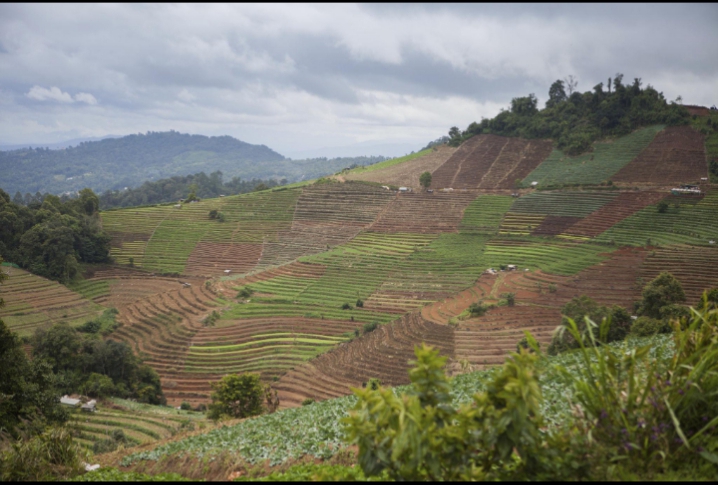
Terracing is a method of farming used on hills or sloping land where the ground is shaped into flat steps, like a staircase.
Imagine a farmer trying to plant crops on a steep hill. Whenever rain falls, the water rushes down quickly and carries the soil away. The crops may even get damaged. To stop this problem, the farmer cuts the hill into flat levels. These levels help slow down the movement of water and keep the soil from washing away.
Those flat steps are called terraces, and the process is known as terracing.
Terracing helps farmers:
prevent soil erosion,
conserve water,
and farm easily on hilly land.
A hillside with terraces usually looks like giant stairs made on a mountain or hill for farming.
Source: Unsplash
|-
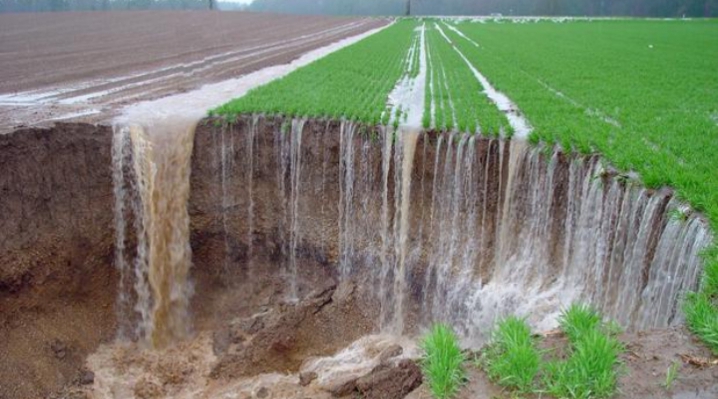
Farming is not always easy, especially during the rainy season. In many places, heavy rainfall washes away fertile soil from farmlands. This problem becomes worse in areas with hills or sloping land. Farmers can lose their crops and hard work within a short time because the soil is carried away by water. To solve this problem, many farmers practice what is called terracing.
Terracing is a farming method where farmers create step-like levels on a slope or hillside. These steps help to slow down water movement and prevent soil erosion. Instead of rainwater rushing down and washing away crops, the terraces hold the soil firmly and allow water to sink gradually into the ground.
I once watched a farming documentary where farmers living in hilly areas carefully divided their land into different flat steps. At first, I wondered why they farmed in such a pattern. Later, I understood that the method was helping them protect their farmland from being destroyed by rainfall. The terraces also made planting and harvesting easier for them.
One important benefit of terracing is that it helps to conserve soil fertility. When fertile soil is washed away, crops do not grow well. But with terracing, the soil remains in place and continues to support healthy plant growth. Another advantage is that water is managed better, which helps crops survive even when rainfall is not steady.
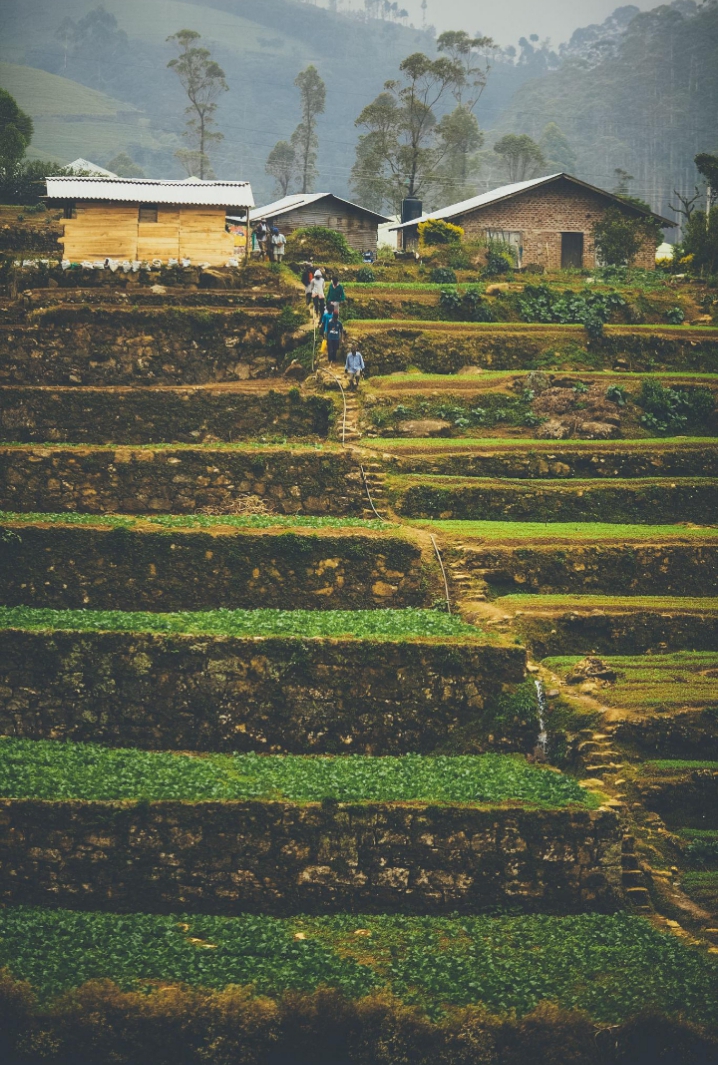
Terracing also makes hilly land useful for farming. Without terraces, farming on steep land can be difficult and risky. Through this method, farmers are able to grow crops successfully and increase food production.
|-
Source: Unsplash
- It prevents soil erosion
Terracing slows down fast-moving rainwater, stopping the soil from being washed away. - It helps conserve water
Water stays longer on each terrace instead of flowing away immediately, giving crops enough moisture. - It improves crop growth
Since the soil remains fertile and water is retained, crops grow better and produce more yield. - It makes farming possible on hillsides
Farmers can successfully farm on steep land that would normally be too difficult to use. - It reduces flooding and land damage
By slowing the movement of water, terracing helps protect the land from being destroyed during heavy rainfall. - It preserves soil fertility
The rich topsoil, which contains nutrients needed by plants, stays on the farm instead of being carried away.
So, terracing is a very important agricultural practice that helps farmers prevent erosion, protect their soil, and improve crop production. It is a smart method that supports farming, especially in areas affected by heavy rainfall and sloping land.
Inviting @joshdavid @wizzyking @xcool