Gandaki Province Makes History: Legalizes Regulated Cannabis Cultivation for Medicinal and Industrial Use in Nepal
A major breakthrough for Nepal's agriculture and economy?
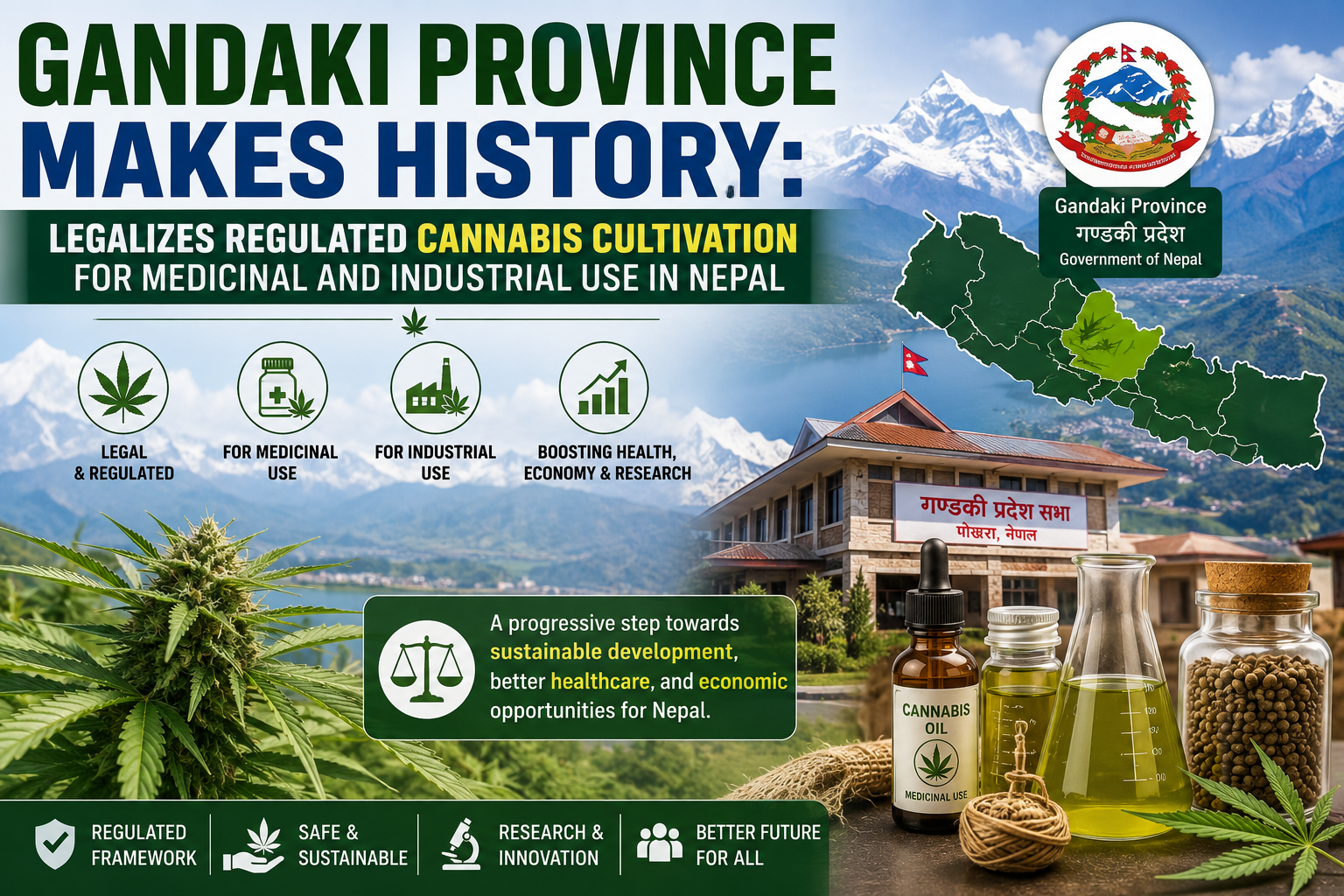
On July 9, 2026, the Gandaki Province Assembly unanimously passed the landmark bill regulating marijuana (cannabis) cultivation for medicinal and industrial purposes. This makes Gandaki the first province in Nepal to take such a decisive step toward legal, regulated cannabis farming.
While headlines and social media are buzzing with excitement, it is not a free-for-all where anyone can grow and sell marijuana for recreational use. The new law creates a strictly regulated framework focused on medicine, research, and industrial hemp.
Background: From Ancient Tradition to 1976 Ban
Cannabis has deep roots in Nepal. It has been used for centuries in Ayurvedic medicine, as a holy offering to Lord Shiva, and traditionally for fiber, seeds, and food in rural areas (especially in the hills and mountains).
In 1976, under international pressure (particularly from the US and UN), Nepal banned cultivation, sale, and consumption through the Narcotic Drugs (Control) Act. This criminalized what was once a valuable cash crop for many farmers. Illicit cultivation continued quietly in remote areas, but farmers lost a legitimate income source.
In recent years, national discussions on medicinal cannabis revived (notably around 2024), but progress at the federal level has been slow. Provinces like Gandaki have taken the lead.
What Exactly Did Gandaki Province Approve?
The bill, titled something like “Bill related to the management of regulation of marijuana farming for medicinal and industrial purposes”, was presented by Minister of Industry and Tourism Yasodha Rimal and passed with full consensus after committee review.
Key provisions include:
- Purposes allowed: Medicinal (including potential CBD products) and industrial (hemp for fiber, seeds, textiles, food, etc.).
- THC limits: Cultivation must keep psychoactive THC content low (reports mention below 3% for medicinal cannabis; industrial hemp typically capped at 0.3%).
- Licensing required: Only licensed individuals or companies can cultivate. Licenses are issued by a proposed Cannabis Regulation Board.
- Designated areas only: Cultivation permitted solely in government-notified districts, local units, or special zones.
- No direct sales by farmers: Producers must sell exclusively to the Cannabis Board or authorized entities (no open market sales).
- Strict oversight: Mandatory record-keeping, inspections, chemical testing (new labs planned), and measures to prevent diversion to illegal markets.
- Protections & rehab: Provisions for preventing abuse, treatment, and rehabilitation services.
- Local benefits emphasized: Chief Minister Surendra Raj Pandey and officials highlight that Gandaki’s climate and geography (all 11 districts) are ideal — the plant is climate-resilient, requires less water and pesticides, grows organically, and resists pests like monkeys that damage other crops.
Industrial hemp field — the low-THC variety that could boost textile, food, and material industries.
Why This Matters for Gandaki and Nepal
Economic potential:
- New cash crop for farmers in hilly and mountainous areas.
- Job creation in cultivation, processing, research, and value-added products (oils, textiles, medicines).
- Utilization of barren or marginal lands.
- Possible future export revenue if federal coordination improves.
Agricultural advantages:
Gandaki officials note the plant’s resilience to climate change and low input requirements — perfect for a province with diverse terrain from the Annapurna region to the hills around Pokhara.
Stunning landscapes of Gandaki Province (near Pokhara) — fertile land and favorable climate for new crops.
National context:
Other areas like Ilam Municipality have started small hemp pilots. Gandaki’s move could pressure the federal government to update the 1976 law or create clearer frameworks for provincial autonomy in agriculture and industry.
Important Caveats: It’s Regulated, Not Completely Free
- Recreational use remains illegal under federal law.
- Small individual farmers cannot simply start growing without licenses and approvals.
- There may still be legal tensions between provincial and federal laws (narcotics control is generally a federal matter).
- High license fees in earlier drafts (ranging from thousands to millions of rupees) suggest the framework favors organized farming and companies more than tiny backyard operations.
- Strong regulatory bodies and testing are essential to prevent misuse and ensure quality.
What’s Next?
The bill now moves toward implementation — setting up the Cannabis Regulation Board, notifying cultivation zones, creating licensing rules, and building testing infrastructure. Full success will depend on:
- Smooth coordination with the federal government.
- Clear standard operating procedures.
- Investment in research and processing facilities.
- Strong anti-diversion and public health measures.
Final Thoughts
Gandaki Province has taken a bold, historic step. By legalizing regulated cannabis cultivation for medicine and industry, it opens doors to economic revival for rural communities while respecting Nepal’s federal structure and public health concerns.
This is not the end of prohibition on recreational marijuana — but it is a significant modernization of policy that recognizes cannabis’s legitimate non-recreational value.
Will other provinces follow? Will the federal government create a national framework? Only time will tell. For now, Gandaki leads the way.
What do you think about this development? Should Nepal go further with national medicinal cannabis legalization?
Sources & Further Reading (based on recent reports from July 2026 and earlier drafts):
- Devdiscourse & Khabarhub reports on the July 9, 2026 unanimous passage.
- Detailed bill analysis from Ekantipur and Rising Nepal.
Stay tuned for updates as implementation begins!
#GandakiProvince #Cannabis #NepalAgriculture #MedicinalCannabis #IndustrialHemp #Legalization #Steemit #Pokhara #EconomicDevelopment
This article is for informational purposes based on publicly reported developments as of July 2026. Always check official government sources for the latest legal status.
I know this thread is a bit old, but I just came across it and wanted to add my two cents. How are local farmers in Gandaki reacting to the new licensing process? Are there any early reports of small-scale growers successfully applying for permits, or is the bureaucracy still a big hurdle?
This is a smart move for Gandaki. I deal with restless legs and have found restless legs natural relief to be a game changer for my sleep. Seeing provinces explore regulated plant-based options gives me hope for more accessible natural therapies.