Nepal's Gandaki Province Pioneers Cannabis Legalization for Medical and Industrial Use
In a groundbreaking move, the Gandaki Province government of Nepal has introduced legislation to legalize and regulate cannabis cultivation for medicinal and industrial purposes. The Cannabis Cultivation Regulation and Management Bill 2082 was formally presented in the provincial assembly, representing a significant shift in Nepal's approach to cannabis policy.
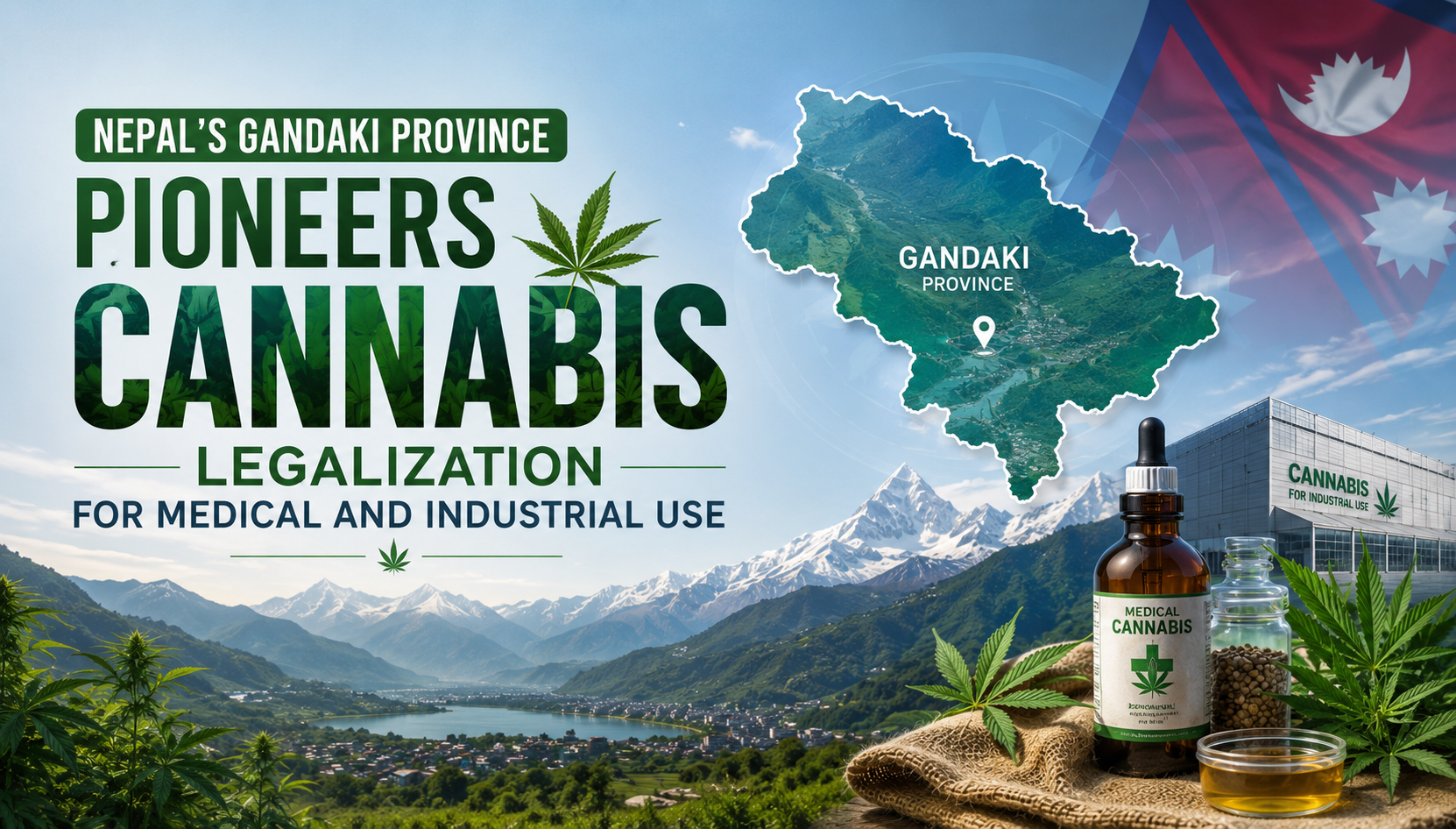
ChatGpt Used to create this image
Background and Legislative Journey
Cannabis grows abundantly across multiple districts in Gandaki Province, and discussions about leveraging this natural resource for economic development have been ongoing for years. The proposed legislation, registered by the Ministry of Industry and Tourism on September 22, was tabled for initial discussion during Monday's assembly session.
The bill aims to transform Nepal's relationship with cannabis by establishing a controlled, government-supervised cultivation framework that could generate revenue, create jobs, and utilize previously unproductive land.
Who Can Cultivate Cannabis Under the New Law?
Strict Eligibility Requirements
The proposed legislation takes a firm stance against individual cultivation. Only officially registered companies or agricultural farms with a valid Permanent Account Number (PAN) will be eligible to grow cannabis, and exclusively for two purposes:
- Medicinal applications
- Industrial uses
Land and Licensing Requirements
According to Clause 4 of the bill:
- Farms cultivating less than two ropanis of land will not receive approval
- Cultivation is permitted on owned, rented, or leased property
- Applicants must secure two levels of government authorization:
- Initial approval to prepare cultivation infrastructure
- Final license once facilities are operational
Application Documentation
Prospective cultivators must submit:
- Company registration certificates
- Local government recommendations
- Declared intended use of the cannabis
- Proof of purchase agreements for the final product
Regulatory Oversight Structure
New Monitoring Body
An independent Cannabis Regulation and Management Unit will be established under the Ministry of Internal Affairs to supervise the entire process. This unit will:
- Inspect proposed cultivation sites
- Issue permits valid for five years to suitable applicants
- Allow up to one year after initial approval for infrastructure development before granting final permission
Local Supervision Mechanism
A seven-member local monitoring committee, chaired by the ward chairperson, will oversee compliance at the community level. Farmers must notify three entities before harvesting, storing, or selling cannabis:
- The regulatory unit
- The nearest police office
- The local monitoring committee
Harvest Controls
- Harvest dates will be determined by inspection officers
- Unharvested crops can only be cut with written approval from the local committee coordinator
- Clause 14 mandates destruction of any cannabis not used for approved medicinal or industrial purposes to prevent misuse
Distribution and Sales Regulations
Controlled Commercial Framework
The bill establishes strict controls on cannabis commerce:
- Pre-approved buyers only: Cannabis can only be sold to buyers specified in formal agreements
- Sealed transport: After packaging, regulatory inspectors must seal products before transportation
- Alternative buyer protocol: If an agreed buyer refuses purchase, farms must obtain written approval from the regulatory director to sell to another authorized company
- Purpose restriction: Cannabis purchased for one approved purpose cannot be diverted to another use
From cultivation through final sale, every step remains under tight government supervision.
Penalties and Enforcement
Violation Consequences
Clause 21 outlines comprehensive penalties for non-compliance:
Criminal Prosecution:
- Unauthorized cultivation, sale, or distribution
- Farming outside approved areas
- These violations will be prosecuted under Nepal's existing narcotics laws
Administrative Fines:
Offenses including:
- Failure to maintain proper records
- Untimely data reporting
- Transporting cannabis without official sealing
- Engaging in unauthorized activities
Fines range from NPR 50,000 to NPR 500,000, with the regulatory director determining specific amounts based on inspection reports and offense severity.
License Revocation Grounds:
- Failure to renew licenses on time
- Selling to unauthorized buyers
- Not building required infrastructure
- Withholding data
- Violating license conditions
Federal Jurisdiction
Provisions regarding foreign investment, export, and sale of cannabis-based products will be governed by federal law, not provincial regulations.
Political Perspectives and Economic Vision
Cultural and Branding Opportunities
CPN-UML provincial assembly member Ganeshman Gurung highlighted cannabis's historical significance, noting it was one of the attractions that drew hippies to Nepal in the 1960s. He proposed an innovative branding strategy:
"We can promote it with a unique logo or trademark, even as the sacred herb of Lord Shiva originating in this province,"
Gurung suggested that Gandaki Province could position its cannabis for global markets with distinctive branding that leverages Nepal's cultural heritage.
Economic Development Potential
Nepali Congress lawmaker Dilliram Subedi emphasized the practical benefits:
- Utilization of fallow and barren land
- Increased provincial revenue generation
- Productive use of naturally growing cannabis
Government Vision
Presenting the bill, Minister for Industry and Tourism Mitralal Basyal outlined the broader economic objectives:
"It will create employment opportunities and encourage people to return to their villages, leading to economic revitalization,"
The minister positioned the legislation as a tool for provincial prosperity and rural development.
Legislative Process Ahead
The comprehensive bill, consisting of five chapters and 29 clauses, will now proceed to:
- Parliamentary committee review for detailed discussion and analysis
- Committee report preparation with recommendations
- Reintroduction in the next assembly session with the committee's findings
- Final endorsement vote by the provincial assembly
Context Within Nepal's Cannabis Policy
This provincial initiative represents one of the most concrete efforts to operationalize cannabis regulation within Nepal's legal framework. While Nepal's federal Narcotic Drugs Control Act (1976) generally prohibits unauthorized cannabis activities, it contains provisions allowing government-licensed cultivation for medicinal or scientific purposes.
Gandaki Province's bill demonstrates how subnational governments can work within federal frameworks to develop regulated cannabis industries that balance economic opportunity with public health safeguards.
Key Takeaways
✓ Individual cultivation remains prohibited – only registered companies/farms eligible
✓ Dual approval process ensures proper infrastructure before operations begin
✓ Five-year permits with local monitoring committee oversight
✓ Strict chain-of-custody from harvest to sale with sealed transport
✓ Significant penalties for violations including criminal prosecution
✓ Economic development focus with emphasis on rural employment and land utilization
This legislation positions Nepal's Gandaki Province at the forefront of cannabis policy reform in South Asia, potentially creating a model for regulated medicinal and industrial cannabis production that other regions could follow.
Qwen AI was used to rewrite this article based on local news reporting .