The Economic and Political Implications of Global Cryptocurrency Regulation
Cryptocurrency has actually ended up being among one of the most significant shifts in the financial landscape. The cryptocurrencies, such as Bitcoin, Ethereum, and others, are now utilized by millions of users in various countries. Some people use them for investment, some people use them to send money, some people use them to buy something that they need, some people use them to save for the future. With the increase in cryptocurrencies, governments are attempting to establish guidelines for their usage. These regulations are referred to as Cryptocurrency Regulations. I think there will be numerous economic and political changes that will be introduced in the world through the regulation of cryptocurrencies.
From an economic perspective, effective regulation can enhance the safety of the cryptocurrency market. Scams, hacking and fake investment websites are the reason many people are scared to invest in digital currencies. Governments can provide clear rules, which can make investors more at ease. This could boost investment, spur new businesses and generate more employment opportunities in the technology and finance industry. I believe it is one of the most useful advantages of regulation – it can benefit businesses as well as the general public.
Government can also use regulation to help it collect taxes on cryptocurrency transactions. If there are no clear guidelines, plenty of people could be dodging taxes on their digital assets. Governments can boost their revenues with sound regulations, and can allocate the funds to better roads, schools, hospitals, and other public services. Concomitantly, there are regulations in place to prevent illegal activities like money laundering, fraud and financing of criminal groups.
But excessive regulation can be harmful, too. In the event that the rules are made more stringent, numerous crypto organizations could relocate to nations with more relaxed guidelines. This may deter investment and slower innovation. It can also be challenging for small businesses and young developers to develop new blockchain projects. I feel governments should establish policies that allow people to be safe but not limit creativity and technological development.
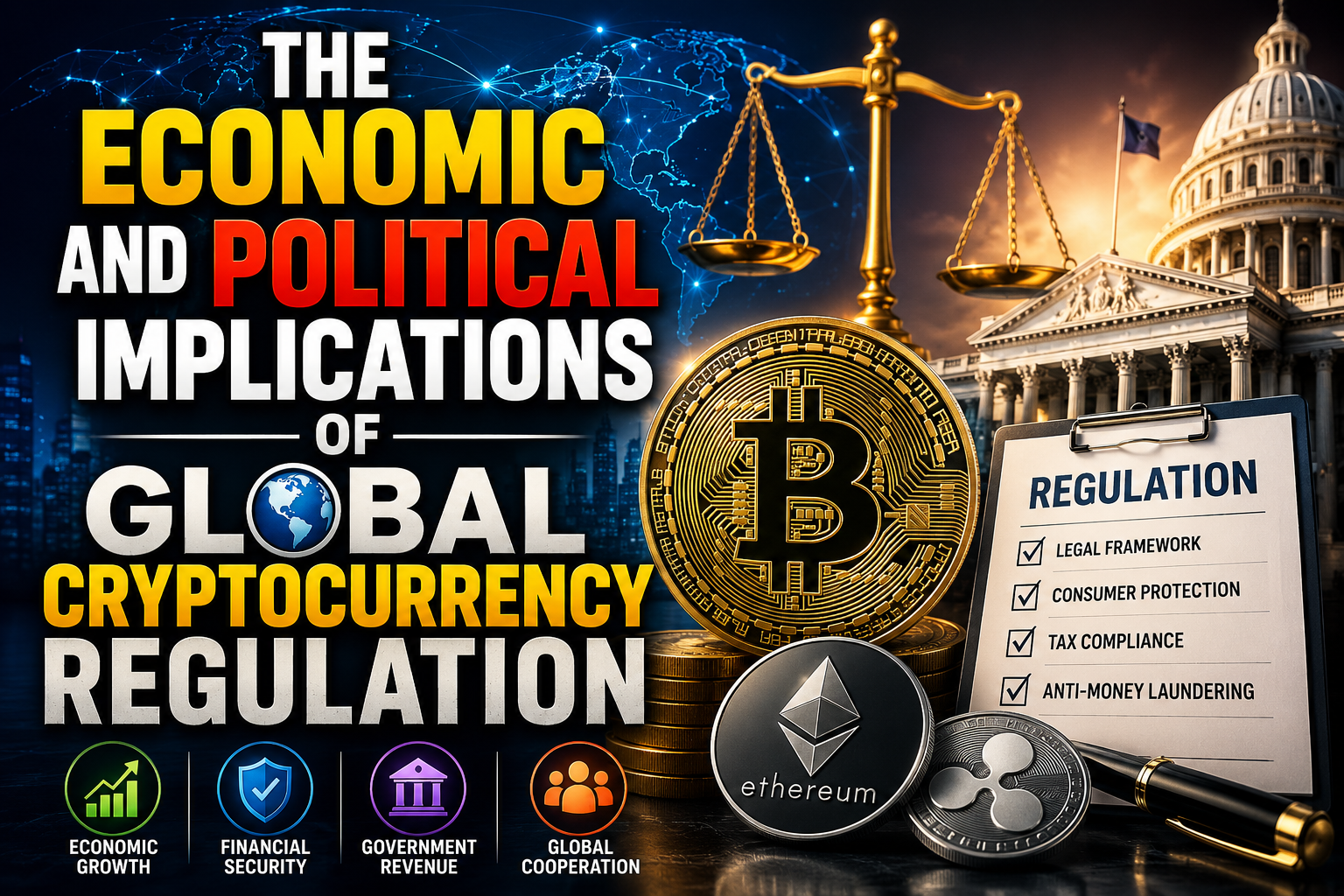
Cryptocurrency regulation can be used to foster inter-country cooperation on a political level. Digital currencies are not only transborder in nature, they also cannot fix all the problems. Countries should collaborate to share information, establish standards and combat financial crimes. Such cooperation can contribute to better international relations and enhanced global financial stability.
However, there are also political disagreements that can arise in the process of regulating cryptocurrencies. Several countries are propping up digital currencies due to the economic and innovative benefits, whereas some countries are scared of cryptocurrencies reducing their influence on the national economy. The various viewpoints make it hard to establish a common regulatory regime on a global scale.
To wrap up, the regulation of cryptocurrencies has economic and political impacts worldwide. It can help to enhance investor confidence, curb financial crimes, boost tax revenue and foster international cooperation. Simultaneously, it can dampen innovation if it is made too rigid, and can lead to conflicts between countries. The ideal option is to establish mutually beneficial policies to safeguard the interests of people and foster continued growth of technology and innovation. This can make cryptocurrencies a secure and advantageous investment in the worldwide monetary framework.