Feeling Pressured to Wear a Big Dress? Why More Brides Are Choosing Simple — and Not Regretting It
There is a version of a wedding dress that most people picture before they've ever tried one on. It has volume, structure, probably some lace. It fills a room. It makes an entrance.
For some brides, that's exactly what they want. For a growing number of others, it's not — and the gap between what they actually want and what they feel expected to wear is causing more stress than it should.
Where the Pressure Comes From
The expectation around wedding dresses is unusually durable. It shows up in bridal boutiques where consultants steer you toward gowns with more drama. In family opinions offered with the best intentions. In the sheer volume of editorial imagery that tends to favour the spectacular over the simple.
It can also show up internally — a nagging sense that choosing something understated means not trying hard enough, or not taking the day seriously enough. That a simple dress is somehow a lesser choice.
None of that is true. But the pressure is real, and it's worth naming before talking about why so many brides are pushing back against it.
What's Actually Changed
The shift toward simple wedding dresses isn't new, but it has accelerated noticeably. A few things are driving it.
Weddings themselves have changed. More couples are opting for smaller, more intimate ceremonies — backyard gatherings, beach settings, elopements, micro-weddings with twenty people they actually know. A cathedral-train ball gown and a barefoot ceremony on a cliff don't always make sense together. The dress follows the wedding, and the wedding has gotten more personal.
Brides are more confident in their own taste. The availability of bridal content online — real weddings, not just editorial shoots — has shown that a bride in a sleek satin column dress can look just as striking, and often more like herself, than one in a heavily embellished gown. Seeing real examples removes some of the pressure to default to convention.
The comfort question is real. A wedding is a long day. You're moving, hugging people, sitting in cars, dancing, possibly walking on grass or sand. Brides who've worn simple dresses consistently say the same thing: they forgot they were wearing a dress, in the best possible way. They were present for their day rather than managing their outfit.
What "Simple" Actually Means
It's worth being precise here, because simple is not the same as plain.
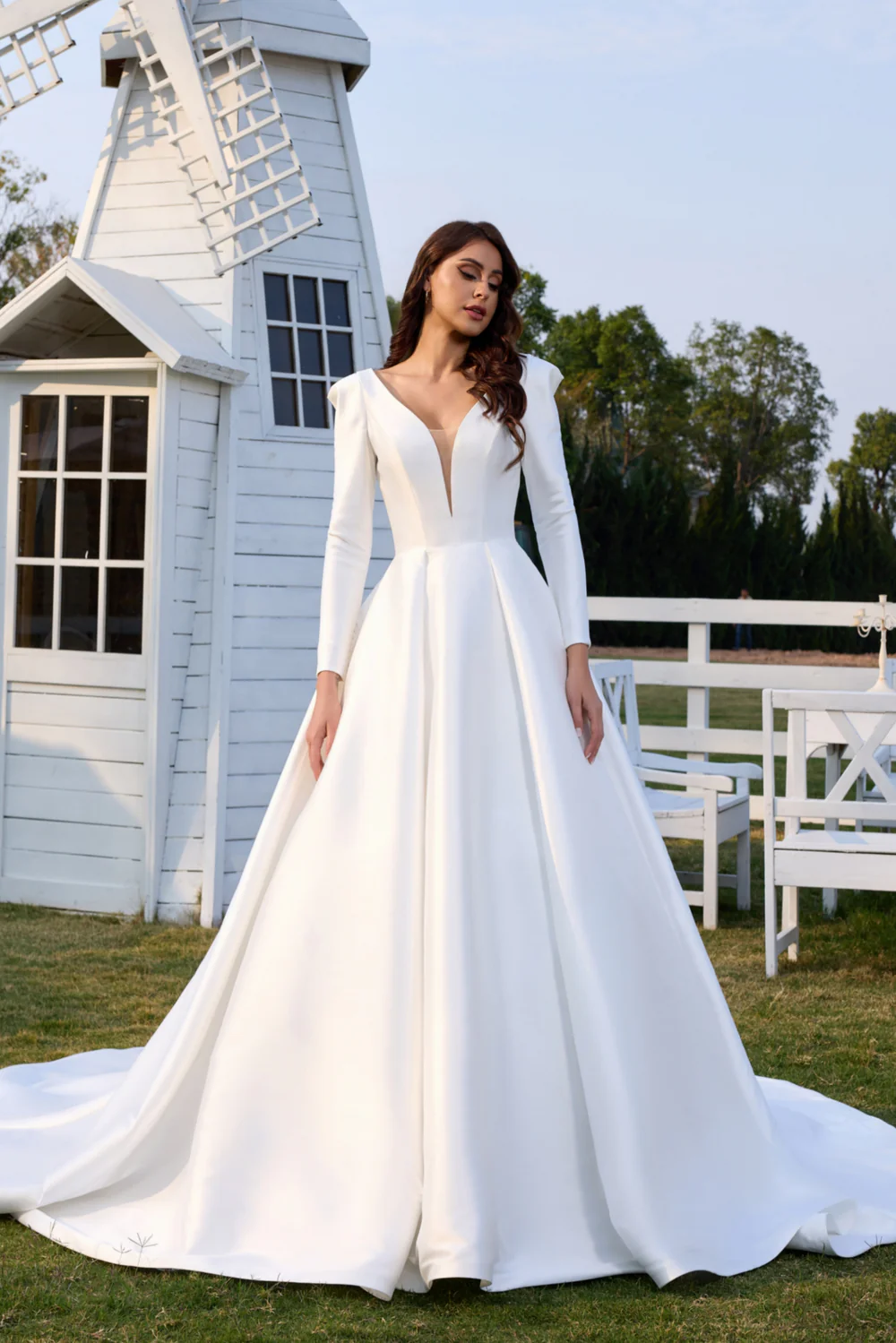
A simple wedding dress is defined by what it doesn't have — heavy beading, multiple layers of tulle, a structured underskirt — rather than what it lacks. The work goes into the cut, the fabric quality, and the silhouette. A well-cut satin column dress requires more precise construction than a heavily embellished gown, not less. The embellishment on an ornate dress hides a multitude of fitting sins. A simple dress does not.
This is actually why simple wedding dresses, when they're well made, look so good in photographs. There's nowhere to hide. The fabric drapes cleanly, the line of the body reads clearly, and the whole thing tends to age better in photos than a more trend-dependent style.
The Accessories Argument
One of the underappreciated advantages of a simple wedding dress is what it allows you to do with accessories.
A heavily embellished gown is largely finished. Adding significant jewellery or a dramatic veil competes rather than complements. A simple dress is a starting point. A long veil becomes a statement. A pair of distinctive earrings reads clearly. Bold shoes are visible and intentional. The bride gets to decide how much or how little she wants to add — which is a different kind of creative freedom than choosing between types of lace.
On Not Regretting It
The question brides most often ask about simple wedding dresses is some version of: will I wish I'd worn something more?
The honest answer is that regret in wedding dress choices tends to run in the opposite direction. Brides who felt pressured into more elaborate gowns and didn't feel like themselves are the ones who look back at their photos and feel a disconnect. Brides who chose something that felt right for them — whether that was simple or spectacular — largely don't.
The dress that feels most like you, worn on the day that is most about you, tends to be the one you don't regret.
A Practical Note on Timing and Pressure
If you're in the process of choosing a dress and finding that external opinions are pulling you away from what you actually want, it helps to be clear with yourself first about what that is. Bring someone to your appointment who will support your vision rather than project their own. And remember that the people offering opinions, however well-meaning, are not the ones who will be wearing the dress for twelve hours.
The right dress is the one that fits your body, your wedding, and your sense of yourself. For a lot of brides right now, that happens to be a simple one.
AND Bride's simple wedding dress collection includes satin, mikado, chiffon, and lace styles from $169, with global shipping available.