From a Quiet Forest to a World of Imagination — One Photograph, Four Stories
When Reality Meets Imagination
Sometimes, a photograph does not need to show a spectacular landscape to tell a story.
A simple walk through the forest can reveal something much more interesting: textures, roots, moss, fallen trees, changing light, and the mysterious atmosphere hidden between the trunks.
This photo series started with an ordinary forest scene. From there, I wanted to explore how the same place could feel completely different when imagination and digital editing are introduced.
I kept the images in the same visual sequence so the transformation can be followed step by step.
- The Original Photograph — Where the Story Begins
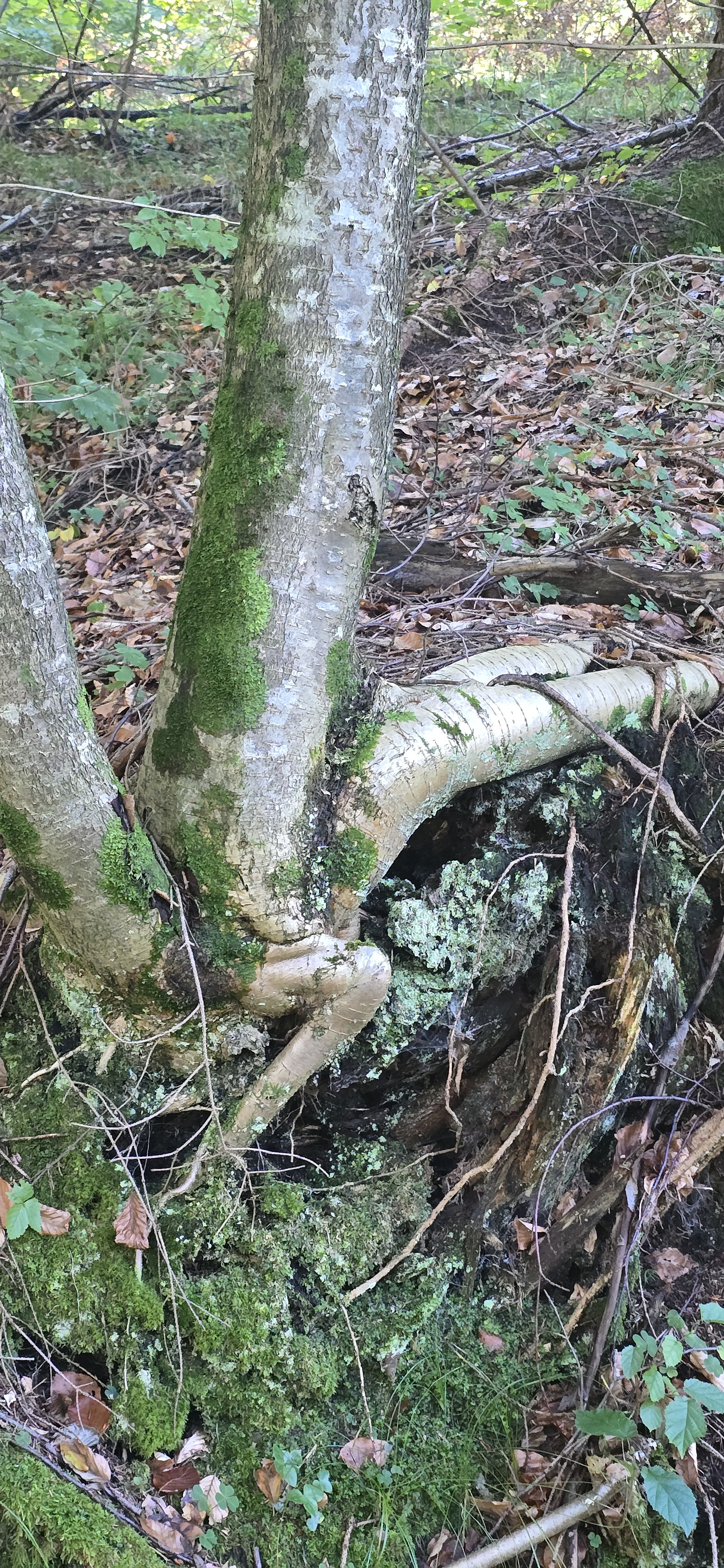
The first image is the original photograph, captured in a natural forest environment.
There is nothing artificial about this scene. The pale tree trunk covered with moss immediately becomes the central element, while the fallen birch, exposed roots, branches, leaves, and vegetation create layers of natural texture.
What I like most about the original image is that it already contains a quiet story.
The dark opening beneath the fallen tree almost feels like an entrance to another world. The roots look sculptural, and the forest floor is full of small details that become visible when you take the time to look.
For me, this is an important reminder that interesting photography does not always require a dramatic subject. Sometimes the atmosphere is already there — we simply have to notice it.
- The First Transformation — A Deer in the Mist
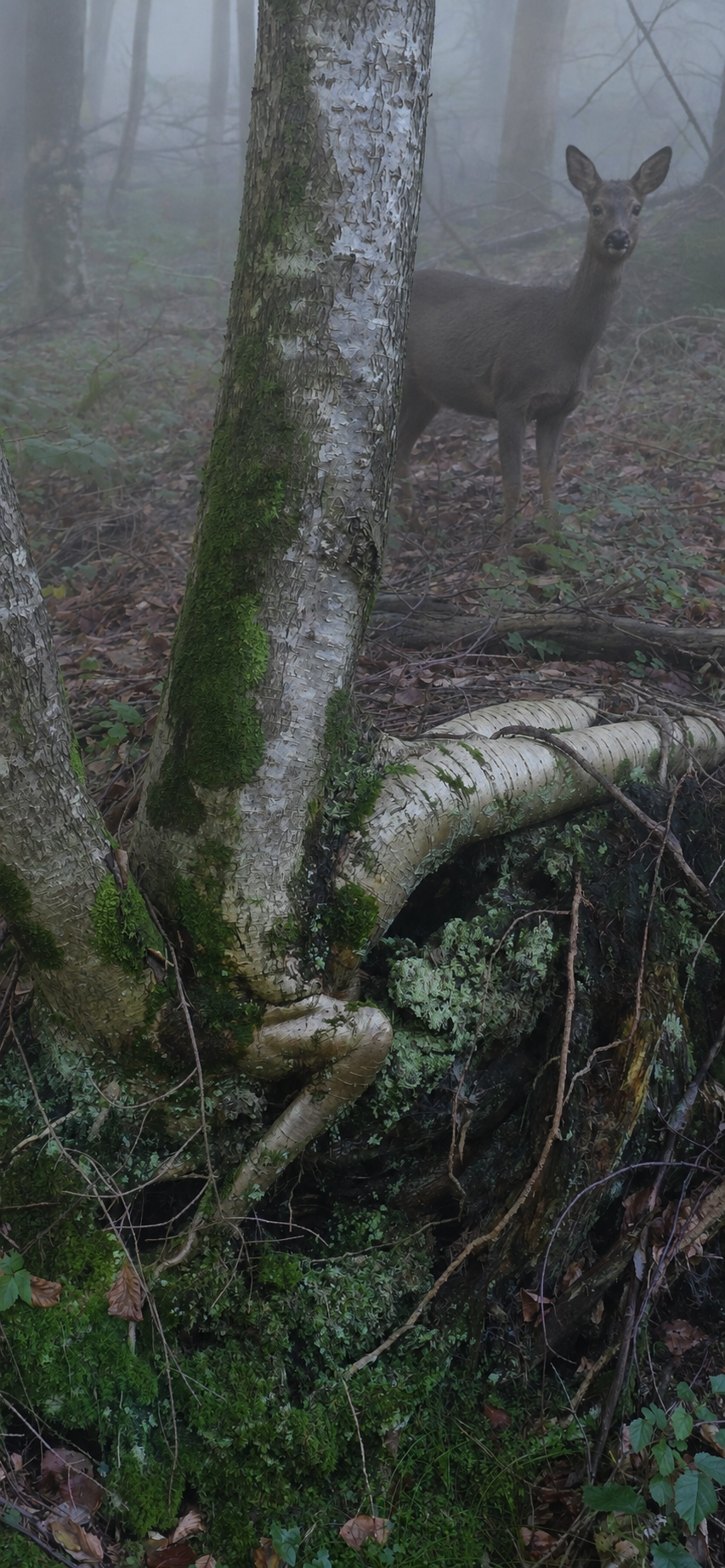
In the second image, the same forest receives a completely different atmosphere.
I introduced soft fog and placed a deer deeper inside the woodland.
The mist changes the sense of distance. Trees that were clearly visible in the original photograph now gradually disappear into the background, creating a stronger feeling of depth and mystery.
The deer becomes part of the environment rather than simply being placed in front of it.
This version feels peaceful and almost dreamlike. It reminds me of those quiet moments in nature when you suddenly notice movement between the trees and stop for a few seconds just to observe.
The forest has not really changed — but the story has.
- The Second Transformation — The White Wolf
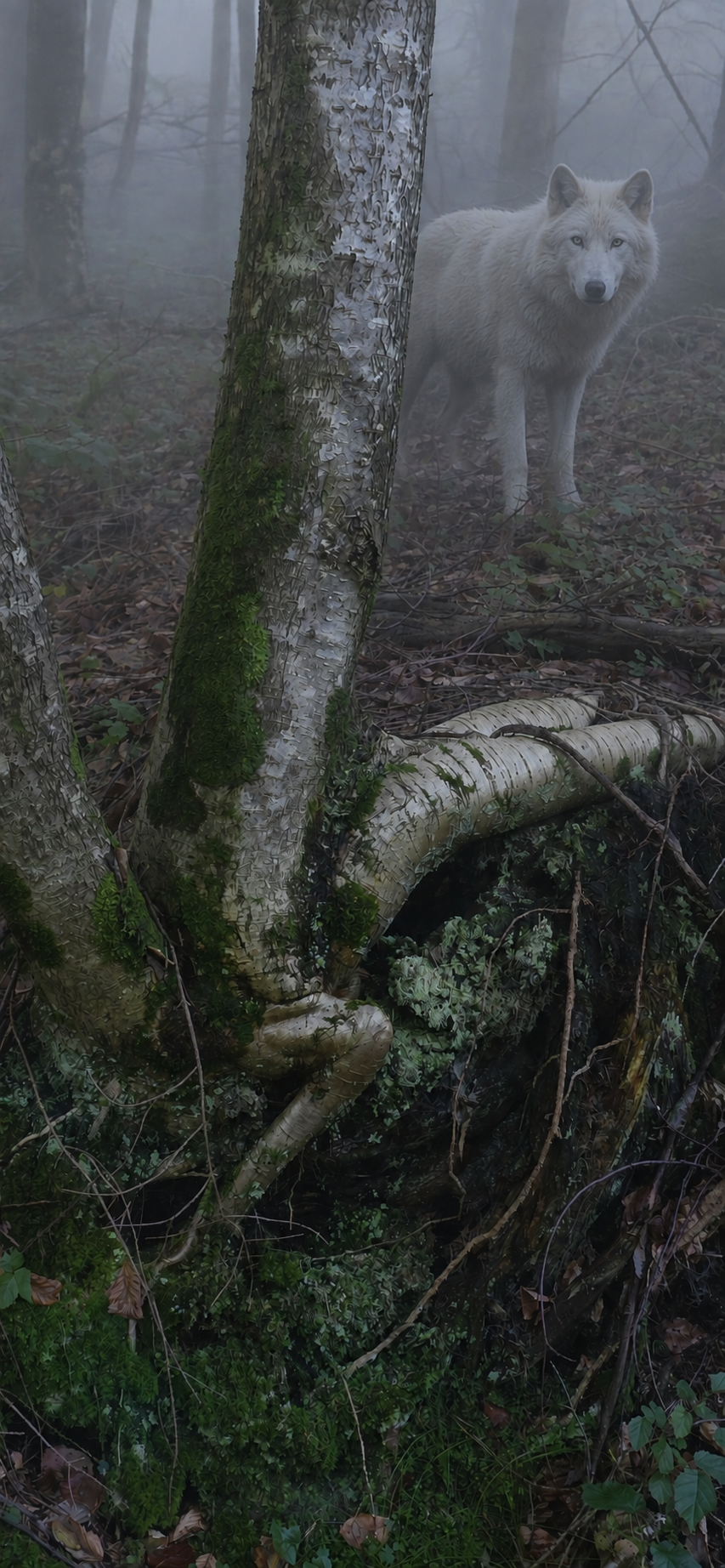
For the third image, I wanted to move away from the peaceful feeling of the deer and create something more mysterious.
The deer was replaced with a white wolf.
The wolf changes the emotional character of the scene immediately. Its pale fur connects naturally with the fog and the birch bark, while its presence creates a stronger sense of solitude and wilderness.
I wanted the animal to appear as if it belonged there, somewhere beyond the main tree, partially hidden by the mist.
This is where photography becomes more than documentation for me.
The original forest becomes a starting point for visual storytelling. The fog, the animal, the muted tones, and the surrounding trees work together to create a scene that feels almost cinematic.
It is still the same forest — but now it tells a different story.
- The Final Transformation — The Black Bear
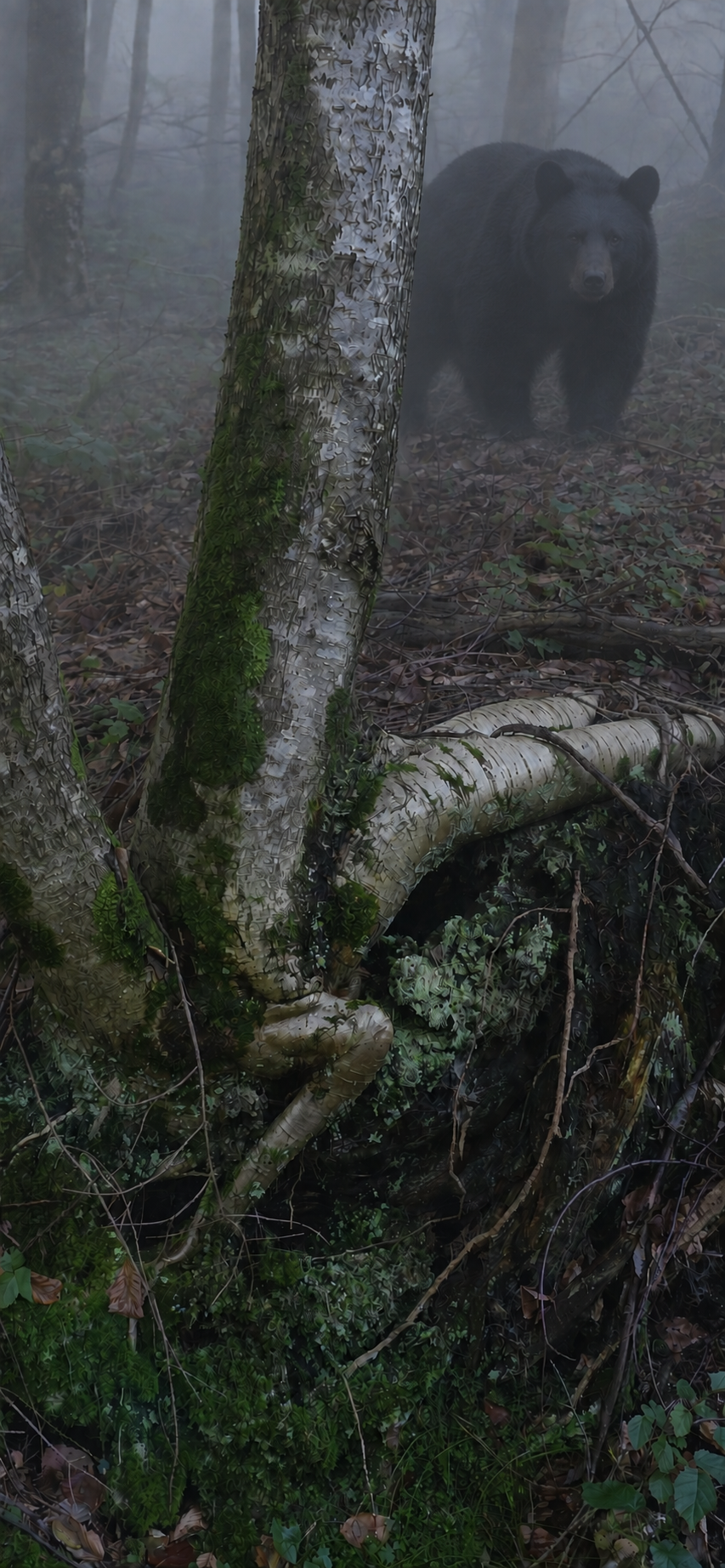
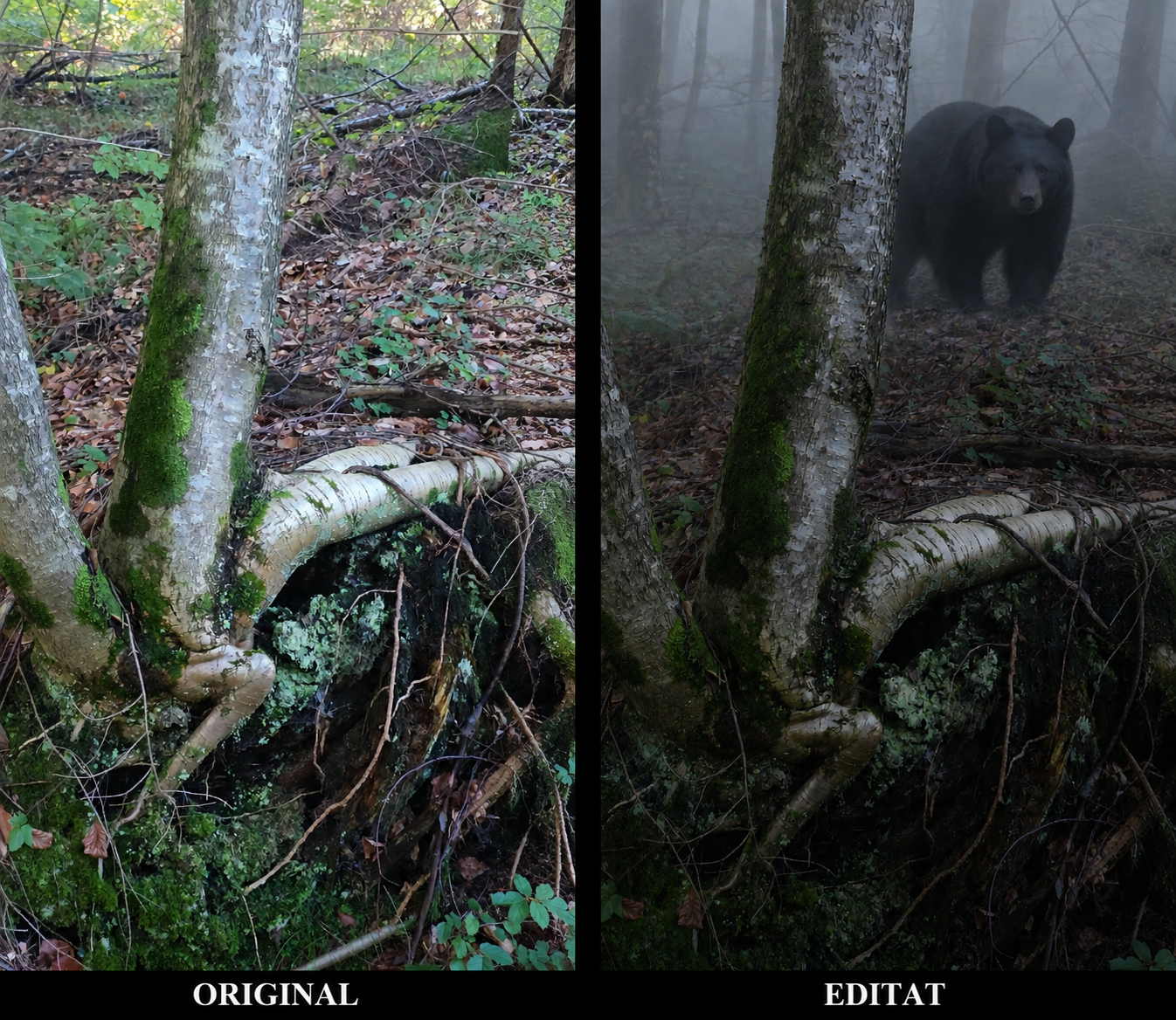
For the final version, I wanted the atmosphere to become darker and more powerful.
The white wolf was replaced with a black bear emerging through the fog.
The bear changes the scale and visual weight of the composition. Its dark silhouette contrasts with the pale tree trunk and the gray mist, making the animal immediately noticeable without making it look completely separate from its surroundings.
I wanted to keep the bear slightly mysterious rather than making it look like a staged wildlife photograph.
The fog helps achieve that feeling. Instead of presenting every detail clearly, it leaves something to the imagination.
This final version is probably the most dramatic of the four, but it still keeps the original forest structure: the moss-covered tree, the fallen birch, the exposed roots, the leaves, and the tangled vegetation.
What Changed — And What Stayed the Same?
The most interesting part of this experiment is that the foundation never changed.
The same forest remained at the heart of every image.
Only the atmosphere and the story evolved:
Original: reality and natural textures.
Deer: peaceful, quiet wilderness.
White wolf: mystery, solitude, and a more cinematic atmosphere.
Black bear: strength, darkness, and a deeper sense of wilderness.
This comparison shows how much emotion can be created by changing only a few visual elements.
For me, digital editing is most interesting when it does not completely erase the original photograph. Instead, it gives the original scene another interpretation.
A Small Visual Experiment
I also wanted to present these images as a progression rather than as four unrelated photographs.
The first image represents what I actually saw.
The next three represent what the same place could become through imagination.
That is what makes this little project special to me.
Photography captures a moment.
Editing can give that moment another atmosphere.
And imagination can turn a familiar place into a story.
Final Thoughts
Looking at all four versions together, I find it fascinating how differently the same forest can feel.
The original is natural and honest.
The deer version feels peaceful.
The white wolf version feels mysterious.
The black bear version feels darker and more powerful.
None of them needs to replace the others. Each one represents a different interpretation of the same starting point.
I would love to know which version speaks to you the most.
Which one would you choose: the original, the deer, the white wolf, or the black bear?
Leave your choice in the comments and tell me why. I am especially curious whether the atmosphere or the animal has the biggest influence on your decision.
Thank you for taking the time to look through the entire transformation.
Sometimes, one photograph is enough to begin a much bigger story.
Gracias por mostrar tu trabajo. Seguí creando y compartiendo.