Purple Majesty in the Wild: A Rare Spring Orchid Journey Through Nature’s Hidden Beauty
Introduction
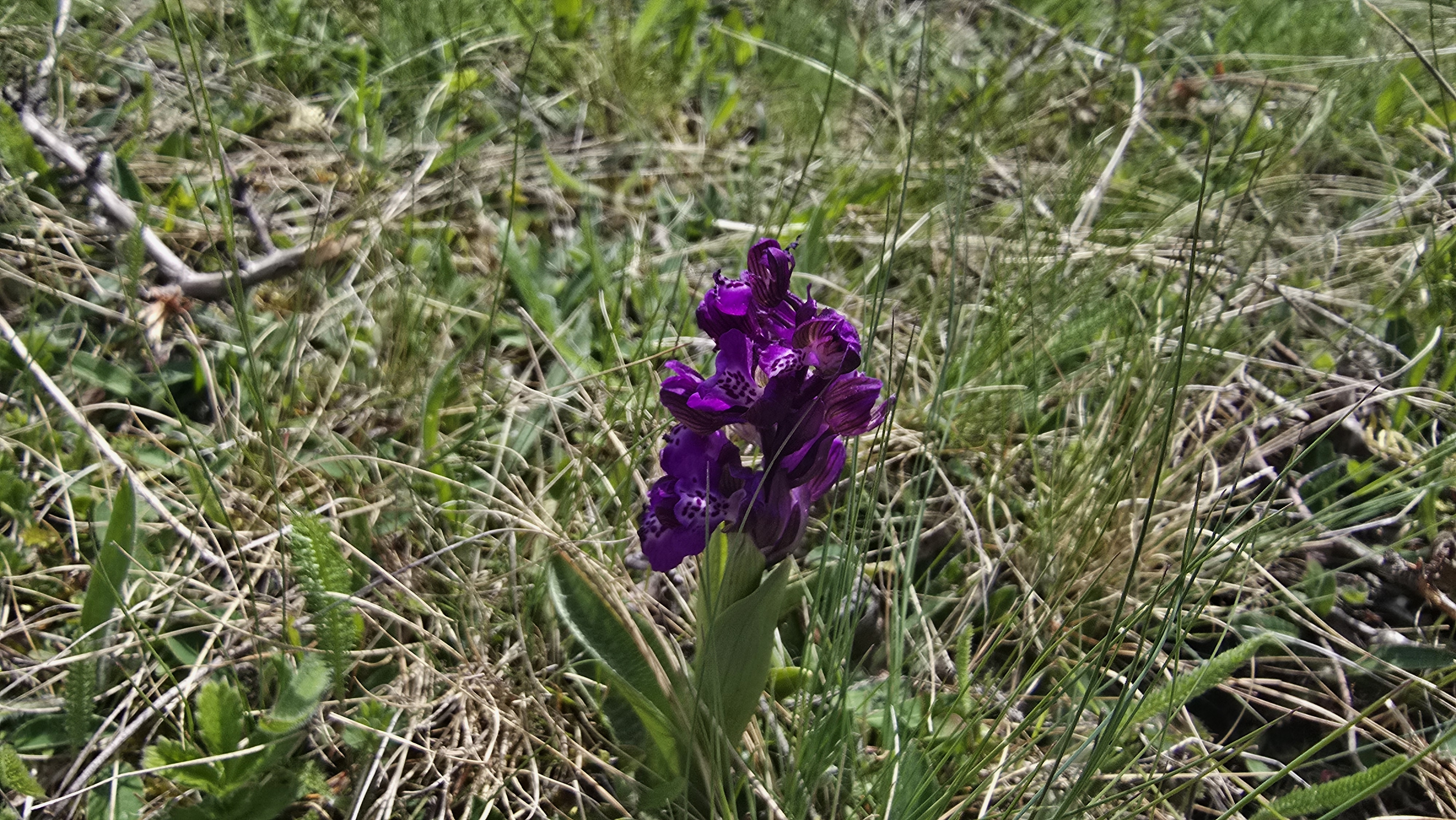
There are moments in nature that feel almost unreal. Moments when the ordinary landscape suddenly reveals something extraordinary. A quiet meadow, dry grass moving softly in the wind, sunlight touching the earth — and then, hidden among the wild textures of spring, a burst of deep purple life appears.
That is exactly what happened when I discovered this stunning wild orchid.
At first glance, many people would walk past it without noticing. It grows low to the ground, surrounded by grasses and natural camouflage. But once seen, it becomes impossible to ignore. Its rich violet petals, elegant patterns, and sculptural form transform a simple field into a place of wonder.
Wild orchids are among nature’s most fascinating creations. They represent patience, survival, adaptation, and beauty without excess. Unlike cultivated garden flowers that depend on human care, these blossoms thrive through instinct, resilience, and perfect timing.
Today I want to share this unforgettable encounter through three photographs, each one capturing a different perspective of this remarkable flower. Together, they tell a story not only about color and detail, but about the hidden treasures that still exist all around us.
The Silent Power of Wild Flowers
Modern life often teaches us to admire only what is large, loud, dramatic, or obvious. But nature follows another rule. Sometimes the greatest beauty is subtle. Sometimes the most valuable things are small and easily overlooked.
Wild flowers remind us of this truth.
They bloom without applause.
They exist without needing attention.
They flourish without permission.
This orchid did not grow for decoration. It bloomed because the season was right, because the soil allowed it, because sunlight reached the ground, because life found a way.
That quiet independence gives wild plants a special dignity.
The Discovery in the Meadow
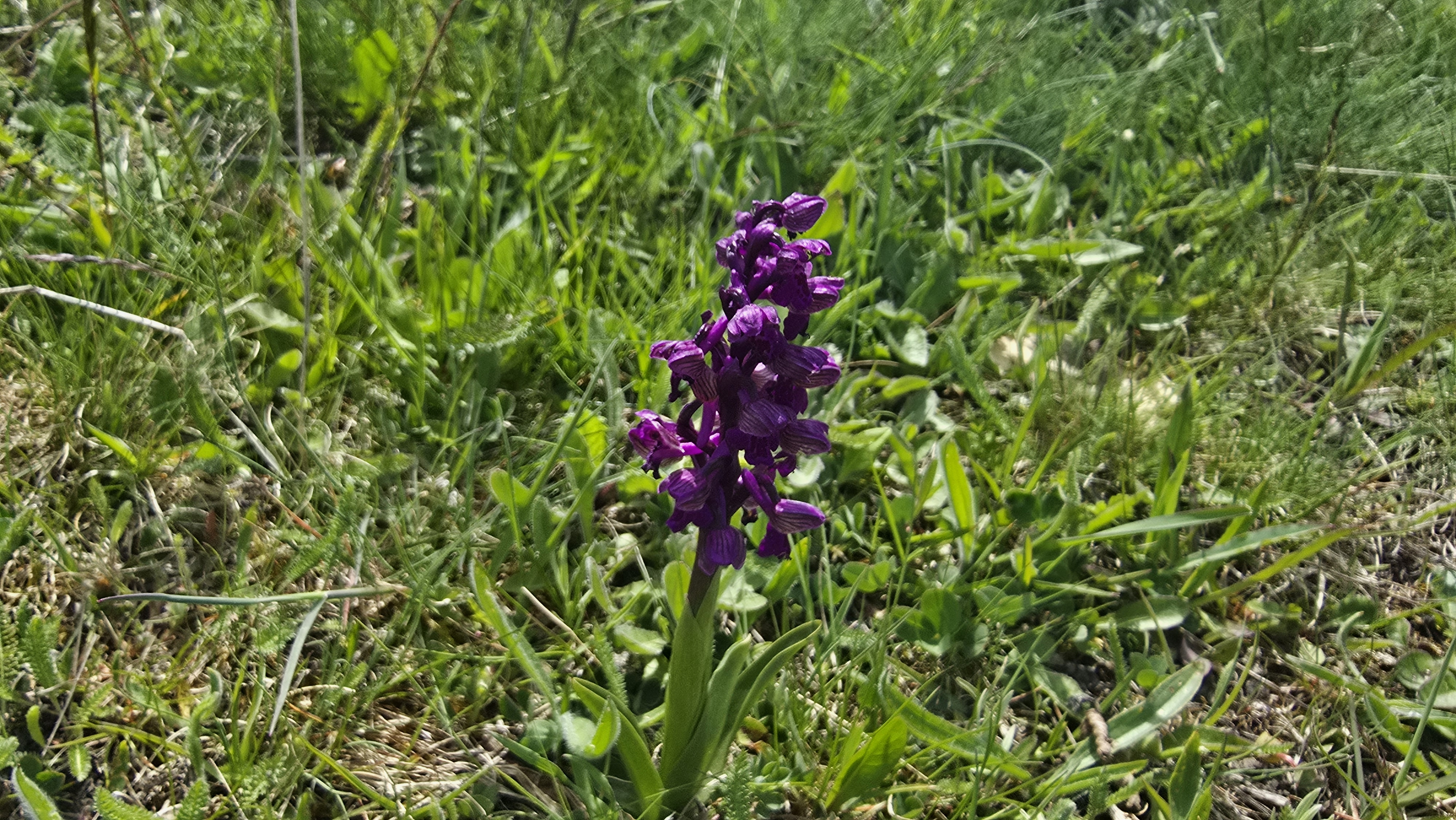
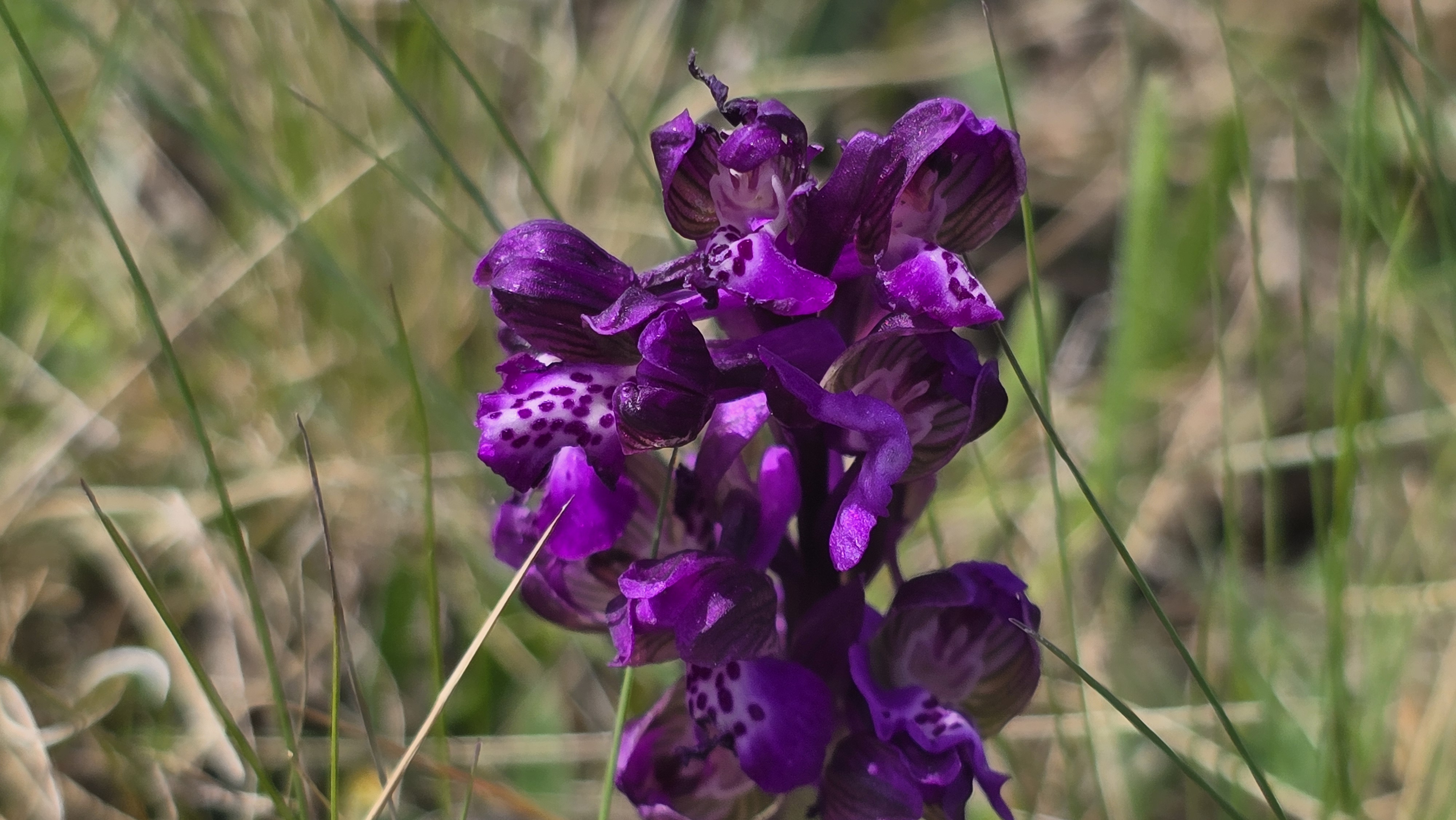
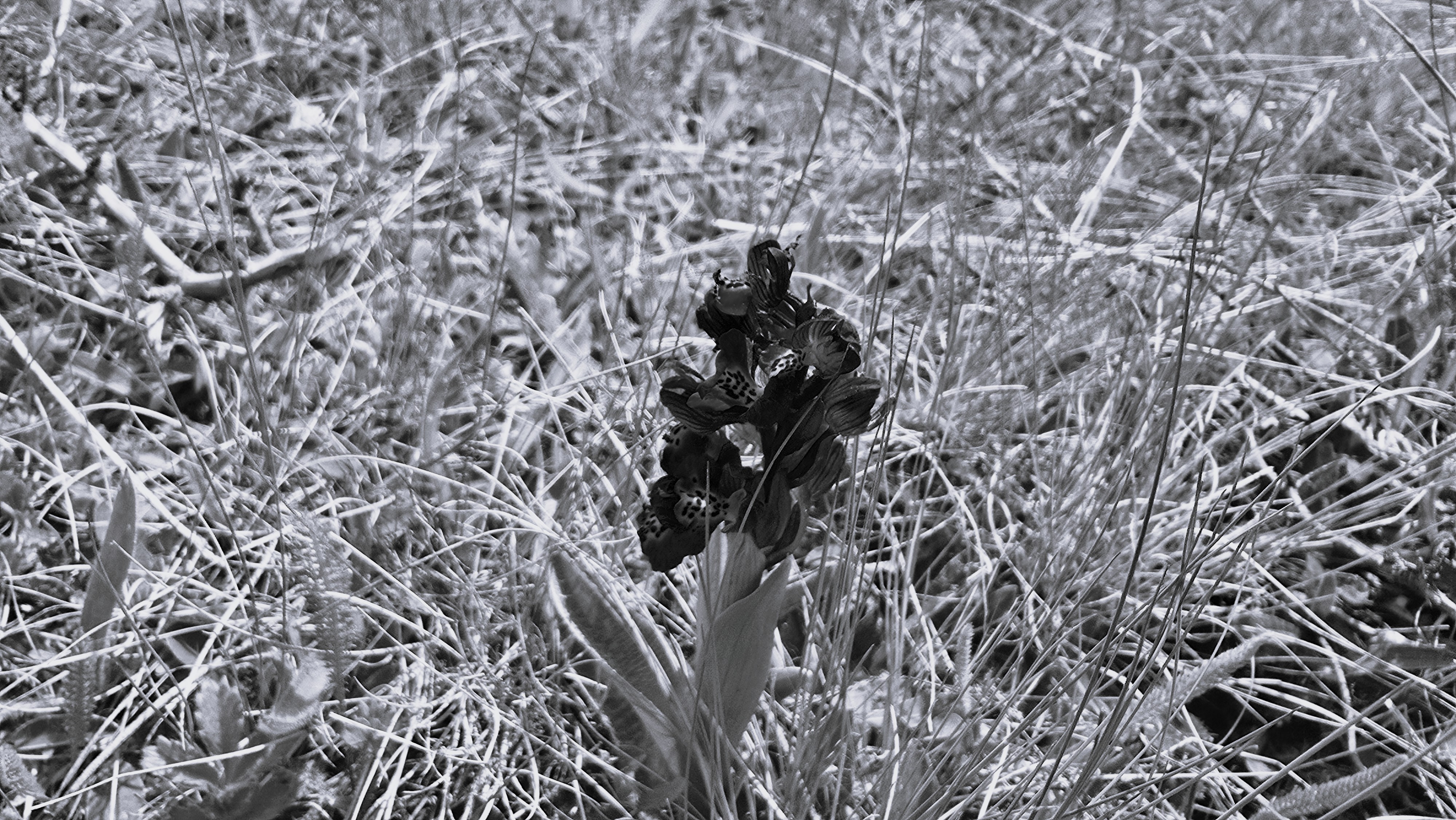
The first image captures the orchid in its natural environment.
Surrounded by dry grasses, fresh green shoots, scattered stems, and the rough textures of early spring, the flower rises like a royal flame from the earth. Its color contrasts beautifully with the muted landscape. Brown and green dominate the meadow, but the orchid introduces rich violet intensity.
This contrast is one of the reasons wild orchids feel magical.
They do not grow in manicured beds.
They do not wait beside pathways.
They appear where life is raw, untamed, and honest.
The flower stands upright, elegant and self-contained. Its leaves are broad and healthy, suggesting strong roots beneath the soil. The bloom itself forms a clustered tower of blossoms, each one carefully shaped.
There is something deeply symbolic in this scene.
The world around it looks rough.
The environment seems dry and imperfect.
Yet beauty rises anyway.
How often does life work the same way?
Some of the strongest people emerge from difficult seasons. Some of the most meaningful growth begins in places others dismiss. Some of the brightest color appears against the dullest background.
This orchid becomes more than a flower. It becomes a lesson.
The Meaning of Purple in Nature
Purple is rare in the natural world compared to green, yellow, or white. Because of that, it often feels precious and noble.
Historically, purple has symbolized:
mystery
creativity
wisdom
spirituality
royalty
transformation
When found in flowers, purple also suggests emotional depth and individuality.
This orchid seems to carry all of those meanings at once. It is mysterious because it hides in plain sight. It is creative because its shape looks almost designed by an artist. It is wise because it blooms only when conditions are right. It is transformative because it changes an ordinary field into a memorable place.
Entering the Heart of the Flower
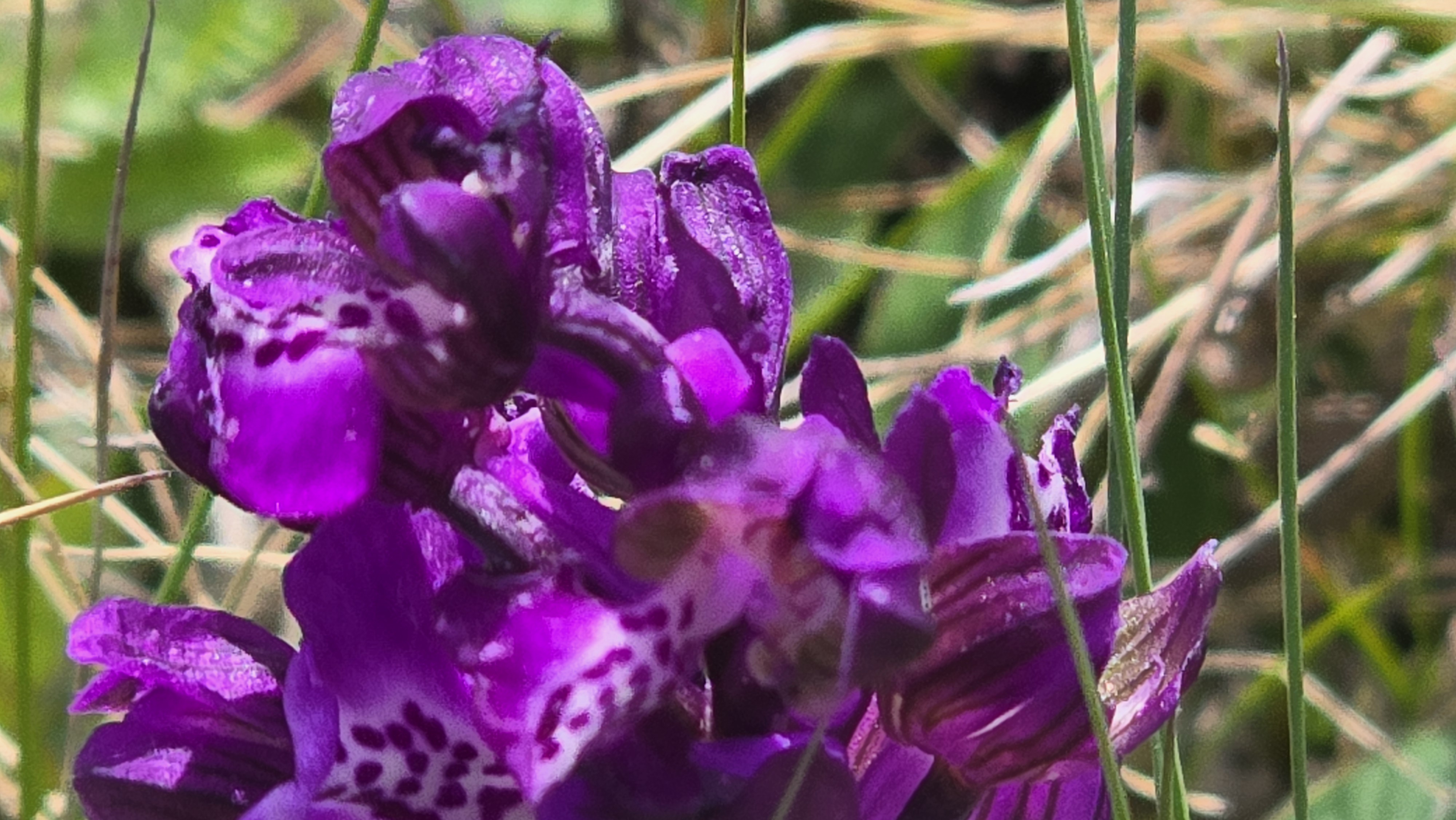
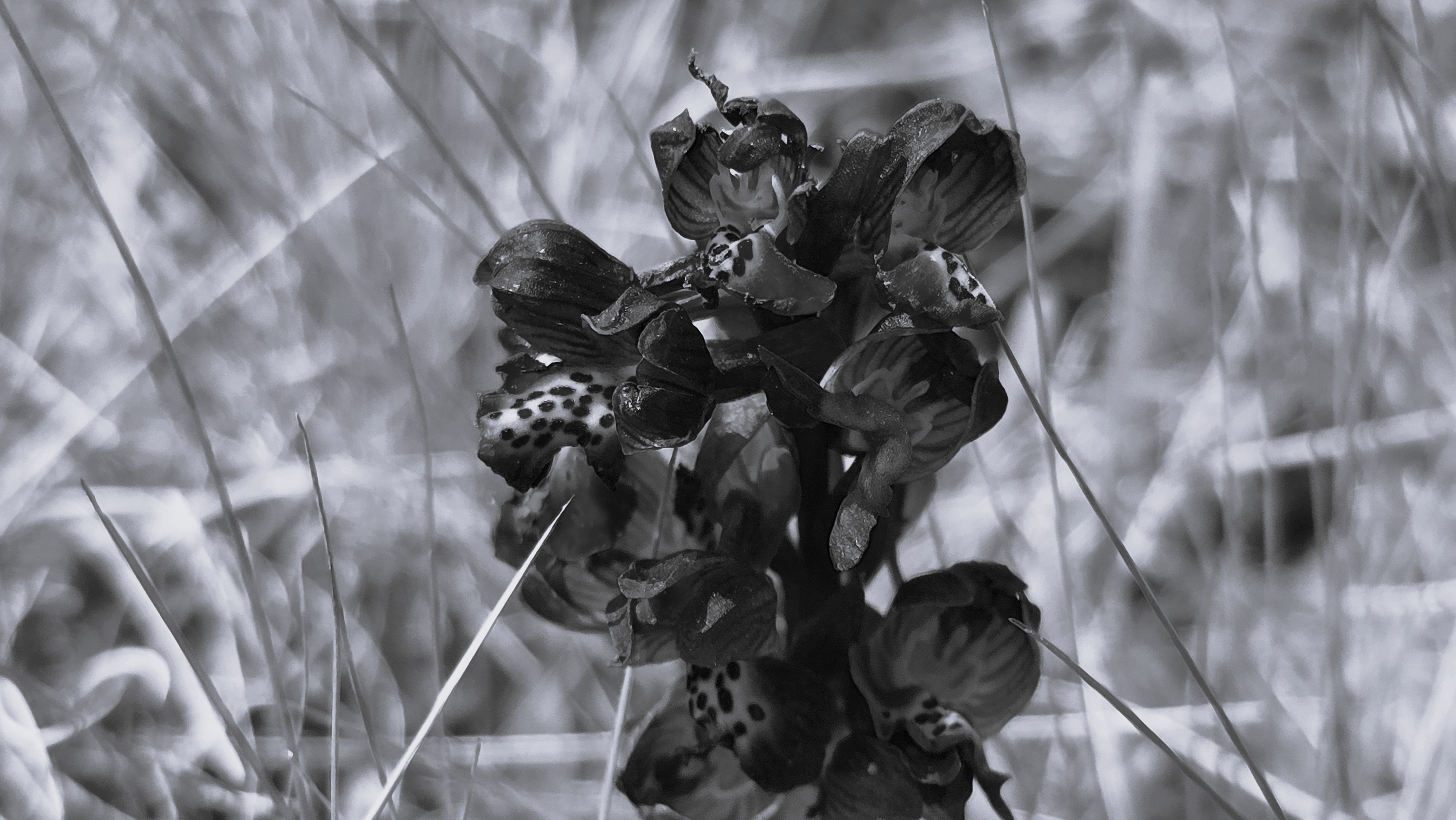
The second image moves much closer.
Now the orchid becomes an entirely different universe.
The petals reveal texture, folds, gradients of color, and intricate spotted patterns. White and magenta details emerge from the deeper violet tones. The inner structure resembles architecture, sculpture, and living design all at once.
Many people never see flowers this way.
From a distance, a flower is “pretty.”
Up close, it is engineering.
Every curve has purpose.
Every color shift attracts pollinators.
Every pattern communicates.
Every opening is strategically shaped.
Nature creates beauty through function.
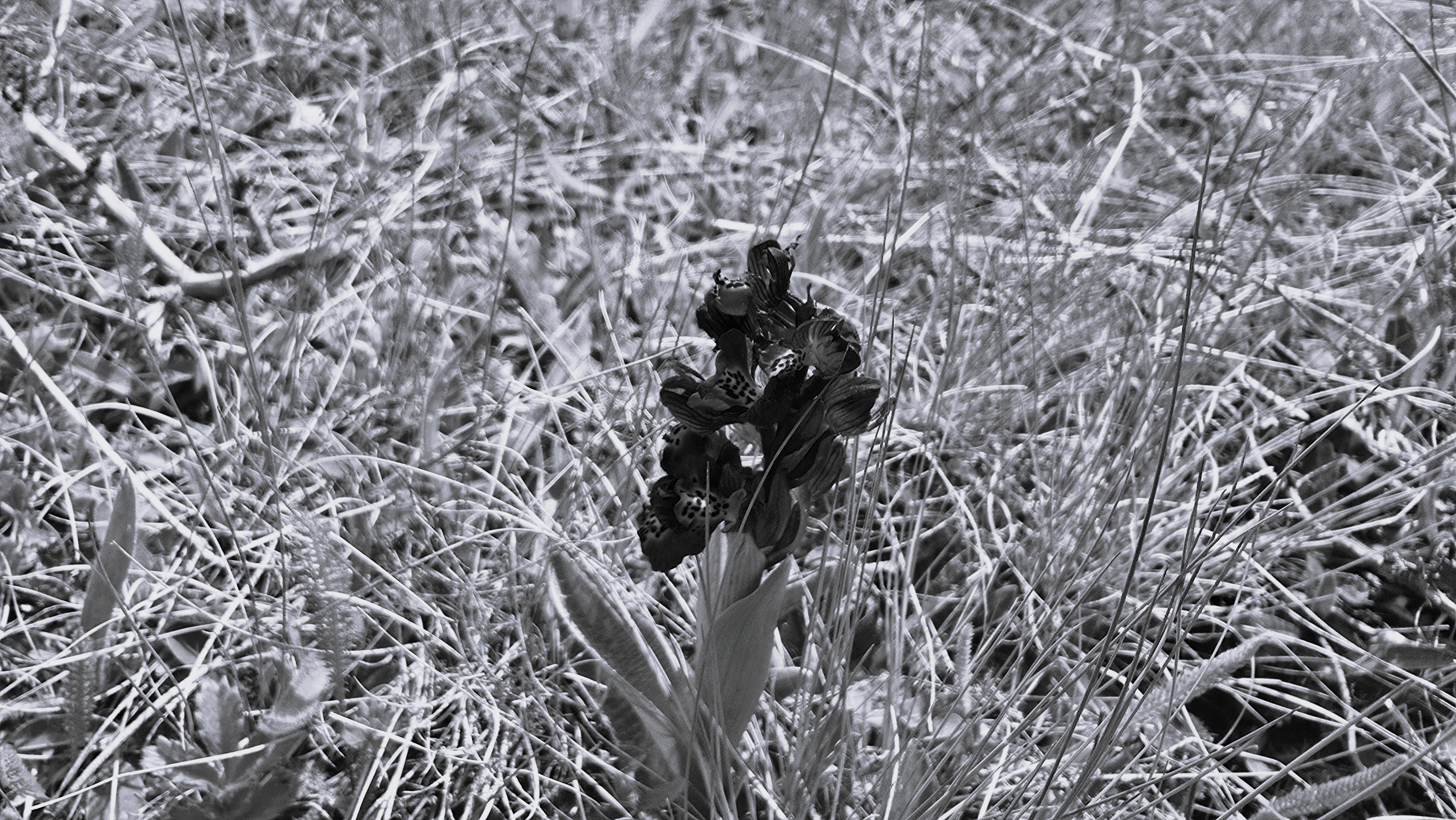
This macro perspective reminds us that the closer we look at life, the more complexity we find.
The same applies to people.
From far away, someone may seem ordinary. But when we listen closely, learn their story, understand their struggles, talents, humor, dreams, and scars — depth appears.
Attention creates appreciation.
The orchid teaches that lesson perfectly.
Hidden Geometry of Petals
Flowers often contain mathematical harmony. Symmetry, repetition, balance, spirals, spacing, proportion — all appear naturally.
In this orchid we can observe:
repeating petal arrangements
mirrored left-right forms
balanced clusters
strategic spacing between blooms
visual pathways guiding pollinators inward
Nature does not separate science from art.
It combines them effortlessly.
That is why flowers fascinate both botanists and poets.
Resilience Beneath the Surface
What we see above ground is only part of the story.
Below the surface lies the real work:
roots anchoring the plant
stored nutrients
moisture gathering
biological partnerships in soil
seasonal cycles unseen by the eye
The visible bloom is temporary.
The invisible system sustains it.
This is another life truth.
Success is often visible. Discipline is hidden.
Beauty is visible. Recovery is hidden.
Confidence is visible. Healing is hidden.
Achievement is visible. Preparation is hidden.
The orchid blooms because of everything no one sees.
Elegance in Detail
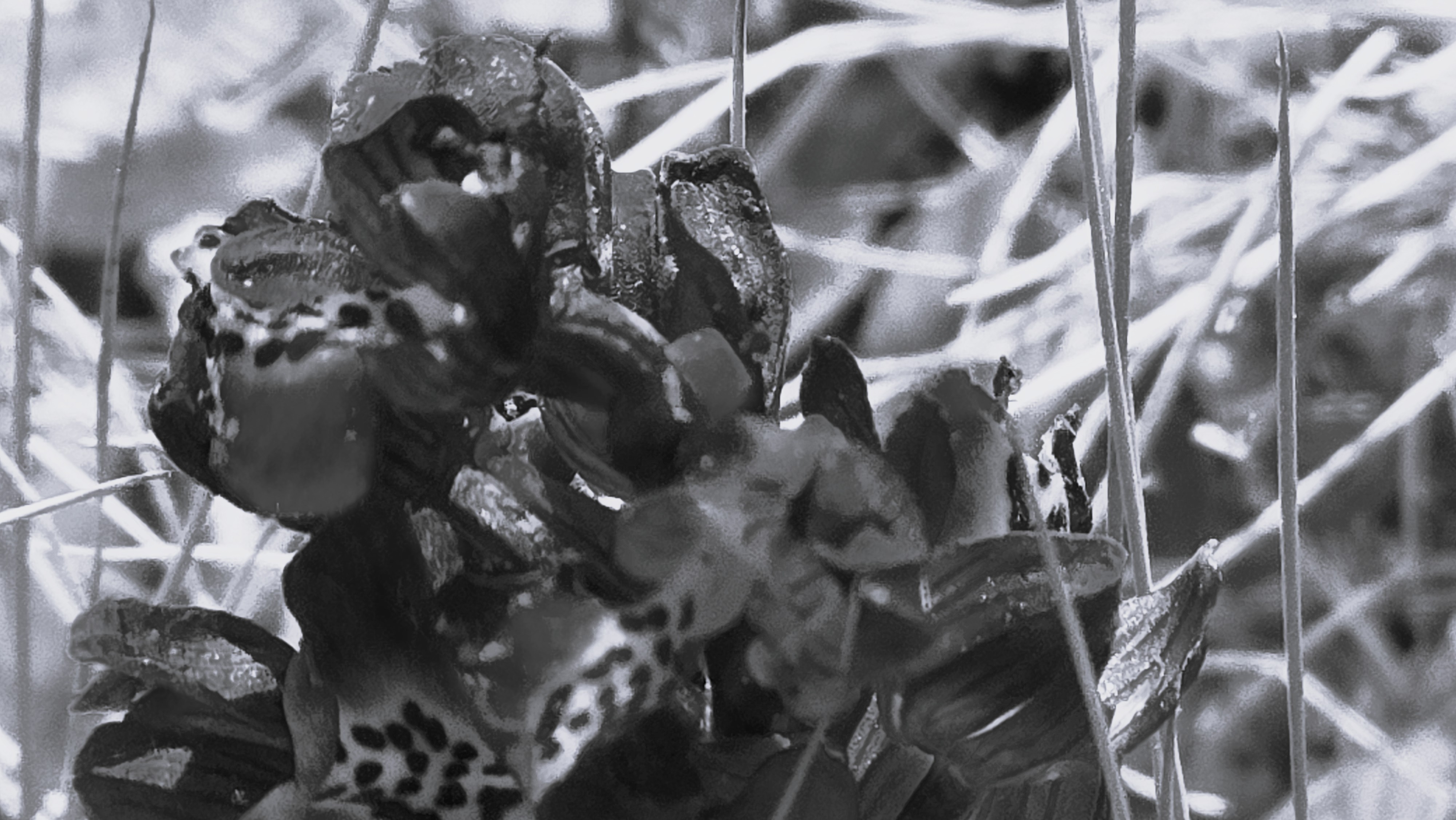
The third image offers a graceful side perspective.
Here the flower appears almost like a procession of miniature living sculptures stacked vertically along the stem. Each bloom has personality. Some open boldly. Others remain partially closed. Some turn outward. Others face inward.
Together they create movement and rhythm.
The spotted lower lips of the blossoms resemble painted velvet. The upper hoods fold elegantly like ceremonial garments. Deep shadows between petals create dramatic depth.
This is where the orchid stops looking like a simple plant and begins looking like art.
If someone sculpted this form by hand, people would admire the craftsmanship.
Yet nature does it silently.
Again and again.
Across forests, mountains, meadows, marshes, and forgotten corners of the world.
Why Wild Orchids Matter
Wild orchids are not just beautiful. They are ecologically significant.
They often indicate:
healthy habitats
balanced soil systems
low disturbance environments
rich biodiversity
long-term ecosystem stability
Many orchid species are sensitive to pollution, habitat destruction, and excessive land use. Their presence can signal that an area still retains natural integrity.
That makes sightings even more valuable.
To see one bloom is to witness both beauty and ecological hope.
The Patience of Seasonal Beauty
One reason spring flowers feel powerful is their timing.
They do not bloom all year.
They wait.
Through winter cold, storms, darkness, and dormancy, life gathers strength beneath the surface. Then one day conditions align, and color returns.
This rhythm mirrors human experience.
There are seasons of action.
There are seasons of waiting.
There are seasons of growth unseen.
There are seasons of visible flowering.
If you are in a waiting season now, remember the orchid.
Dormancy is not death.
Stillness is not failure.
Preparation is not wasted time.
Blooming often comes later than expected.
Photography and the Art of Noticing
Photography can be more than documentation. It can be a practice of attention.
These images capture something many passersby would miss. That matters.
To photograph nature well, we must slow down enough to notice:
unusual color among common textures
light on petals
patterns in shadow
contrast in habitat
moments of stillness
stories hidden in small details
The camera rewards patience.
So does life.
Emotional Response to Natural Beauty
Why do flowers move us emotionally?
Because beauty communicates without language.
A flower says:
Life continues.
Fragility can be strong.
Color belongs in difficult places.
Growth is possible.
Time is precious.
Moments are temporary.
When people feel calmer in gardens, happier in parks, or inspired in forests, this is not accidental. Human beings are deeply responsive to living beauty.
Nature restores attention, reduces mental fatigue, and reconnects us with rhythms larger than stress.
The Luxury of Simplicity
Modern culture often sells complexity.
More products.
More speed.
More noise.
More urgency.
More comparison.
But a single flower in a field can offer more peace than many expensive distractions.
This orchid asks nothing.
It simply exists beautifully.
There is luxury in that kind of simplicity.
A Lesson in Authenticity
The orchid does not try to be a rose.
It does not compete with tulips.
It does not imitate lilies.
It expresses its own design fully.
That is authenticity.
Much human unhappiness comes from imitation. Comparing timelines, appearance, status, popularity, or style can disconnect people from their own nature.
The orchid reminds us:
Your strength may not look like someone else’s strength.
Your timing may not match someone else’s timing.
Your beauty may not resemble common standards.
Bloom anyway.
Light, Texture, and Contrast
These photographs also demonstrate three key artistic principles:
- Contrast
Purple against green and beige instantly creates visual impact.
- Texture
Soft petals against dry grass heighten sensory depth.
- Focus
The subject draws the eye while background blur creates atmosphere.
This combination transforms simple nature photography into storytelling imagery.
The Quiet Drama of Meadows
Many people chase dramatic landscapes: mountains, oceans, cliffs, waterfalls.
Those places are magnificent.
But meadows contain another kind of drama — intimate drama.
Tiny species interactions.
Seasonal emergence.
Insect journeys.
Seed dispersal.
Color explosions at ground level.
Micro-worlds hidden in plain sight.
To kneel beside a meadow flower is to enter another scale of reality.
If Flowers Could Speak
If this orchid had a voice, perhaps it would say:
I survived cold nights you never saw.
I rooted in soil you ignored.
I grew while hidden.
I bloomed when ready.
I did not ask permission.
I did not announce myself.
I simply became what I was meant to be.
There is wisdom there.
Why We Need Encounters Like This
Many people today feel overstimulated, rushed, distracted, and mentally fragmented.
Encounters with wild beauty interrupt that pattern.
They remind us:
not everything valuable is digital
not everything meaningful is monetized
not every reward is immediate
not all beauty is manufactured
silence can still contain wonder
A flower in a field can reset perspective.
Gratitude for Small Discoveries
Big milestones matter, but life is often nourished by smaller joys:
unexpected sunlight
birdsong in the morning
fresh air after rain
a kind conversation
finding a rare flower in the grass
Gratitude grows through attention to small things.
The orchid becomes not just a subject, but an invitation to notice your own hidden blessings.
Closing Reflection
This wild orchid may be small, but its message is large.
Be resilient.
Be patient.
Be fully yourself.
Grow quietly when needed.
Bloom boldly when ready.
Bring color where others see only dryness.
Nature never stops teaching those willing to observe.
I feel grateful to have witnessed this moment and to share it with you today. If even one reader pauses after this post to notice a flower, a tree, a cloud, or a patch of sunlight with fresh appreciation, then the beauty of this orchid continues beyond the meadow.
Community Question
Have you ever discovered a beautiful flower or natural moment unexpectedly while walking outdoors? Share your story in the comments — I would love to read it.
Final Thank You
Thank you for stopping by, reading, and appreciating this small miracle of spring with me. Support for nature photography and original content means a lot.
Wishing you peace, growth, and many beautiful discoveries ahead.
Posted with Speem
Hi friend
#play
Speem Video Watcher Team @ninapenda
High-Yield Curation by @steem-seven
Your content has been supported!
Maximize your passive income!
Delegate your SP to us and earn high rewards
Click here to see our Tiered Reward System
We are the hope!
Your post have been rewarded by the Speak on Steem curator team!
Now become a plus member delegating at least 500 SP
Ways to support us:
Curated by @kibreay001