The original "trade dollar": 1897
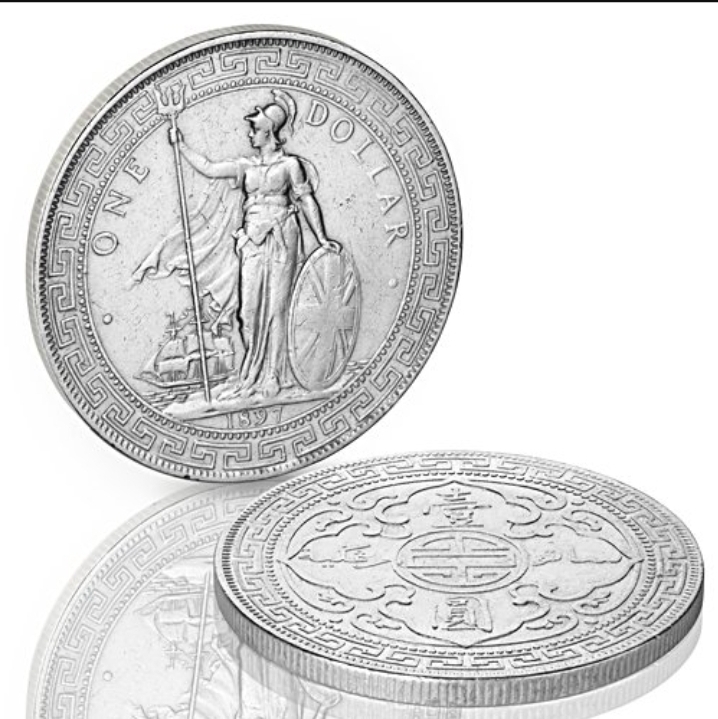
In 1897, the primary silver trade dollar in circulation was the British Trade Dollar, as the United States had stopped production of its official Trade Dollar in 1885.
Minted primarily at the Bombay Mint (marked with a tiny 'B' on the trident) and the Calcutta Mint, these coins were used for trade in British colonies in East Asia.
If you are looking at an 1897 silver trade dollar, you most likely have a British Trade Dollar. By 1897, the United States had long ceased production of its own Trade Dollars, making the British version the dominant silver coin for commerce in East Asia. These coins were minted primarily in Bombay and Calcutta and are easily identified by the striking image of a standing Britannia holding a trident and shield. The reverse is unique for its time, featuring the denomination in both Chinese characters and Malay script, reflecting its use in international shipping and trade hubs like Hong Kong and Singapore.
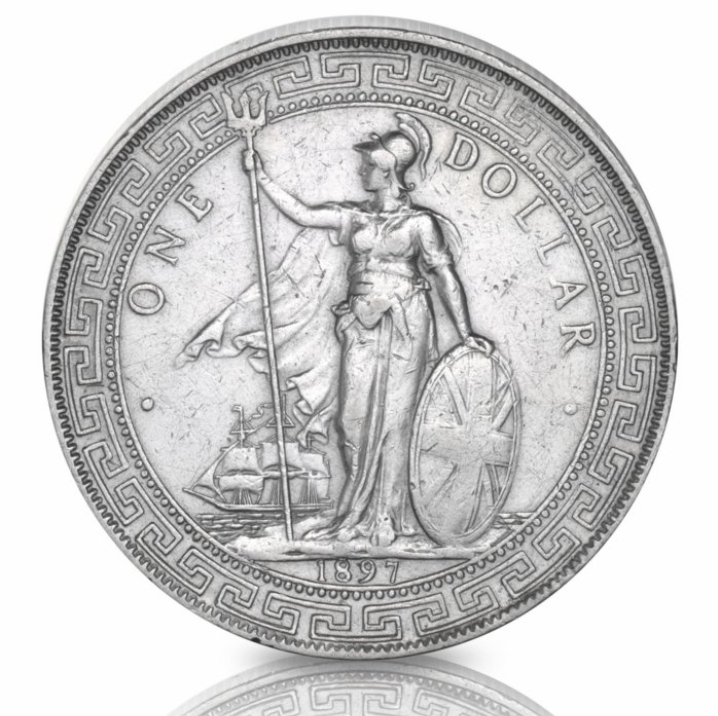
In terms of value, a genuine 1897 British Trade Dollar in average circulated condition generally sells for between £55 and £160, though high-quality specimens with original mint luster can reach £500 or more. It is also possible you have a Japanese 1-yen coin that was countermarked in 1897 with a circular "Gin" (silver) stamp; these are highly sought after by collectors and can be quite valuable. However, if your coin has "Trade Dollar" written on it but looks like a U.S. coin with a seated figure of Liberty, it is almost certainly a modern replica or counterfeit, as the U.S. mint did not produce any Trade Dollars after 1885.