Ford Edge – Advancements in Comfort, Safety, and Capability
The Ford Edge is a midsize crossover SUV produced by Ford. First introduced in 2006 for the 2007 model year, it was positioned between the Ford Escape and Ford Explorer. The Edge was designed as a family-oriented SUV offering comfort, practicality, and modern features in a five-seat, five-door configuration.
Over the years, the Ford Edge has evolved significantly in design, performance, and technology. Below is a summary of its key generational changes.
2007 – 2014 (First Generation)
The first-generation Ford Edge debuted with bold styling and a focus on comfort and practicality. It was offered in SE, SEL, Limited, and Sport trims.
The exterior featured a three-bar chrome grille, distinctive headlights, a high beltline, and compact-looking side windows. At the rear, dual exhaust outlets added a sporty touch.
Inside, the Edge offered a well-organized dashboard with analog gauges and a simple center console layout. Depending on trim, features included cloth or leather upholstery, supportive seating, reclining seats, and practical storage spaces. The SUV provided comfortable seating for five passengers with generous cargo space and a low loading floor.
Power came from a 3.5-liter V6 engine producing 256 hp, paired with a 6-speed automatic transmission. Front-wheel drive was standard, while all-wheel drive was optional.
2010 Mid-Cycle Update (2011 Model Year)
A major refresh improved styling, technology, and performance.
The exterior gained a revised grille inspired by the Ford F-150, updated headlights, and new wheel designs up to 22 inches on Sport trims. The Sport variant also featured blacked-out styling elements.
Inside, the dashboard was redesigned with a more modern layout. A new instrument cluster added a digital display between analog gauges, and the MyFord Touch system introduced an 8-inch touchscreen infotainment unit.
Engine upgrades included a new 2.0-liter EcoBoost turbocharged engine (240 hp), a 3.7-liter V6 (305 hp), and an updated 3.5-liter V6 (276 hp). All engines were paired with a 6-speed automatic transmission.
2015 – 2018 (Second Generation)
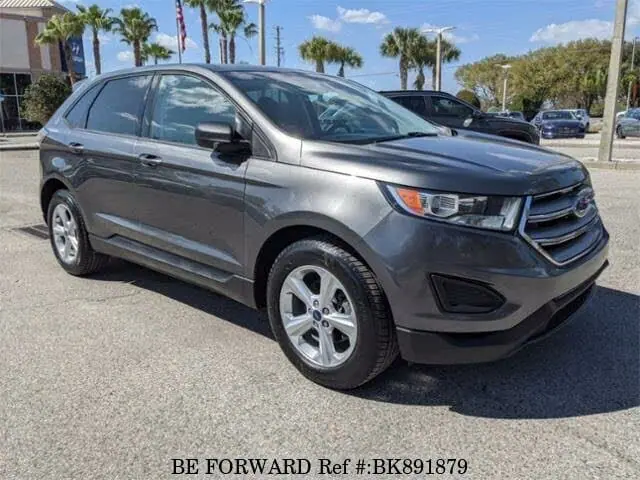
The second-generation Edge, launched in 2014 for the 2015 model year, was built on the Ford Fusion platform. It became larger, more refined, and more technologically advanced.
Exterior styling included a wider stance, a trapezoidal grille, sleeker headlights, and full-width LED taillights. A rear spoiler improved aerodynamics, while dual exhaust outlets remained.
Inside, the cabin quality improved significantly with soft-touch materials and a more premium layout. The instrument cluster combined analog dials with a digital display, while the center console featured Ford’s updated infotainment system.
Engine options included a 2.0-liter EcoBoost turbo (250 hp), a 2.7-liter EcoBoost V6 (315 hp), and a diesel option in some markets. An 8-speed automatic transmission was later introduced, replacing older gearboxes. All-wheel drive remained optional with improved torque distribution.
2018 Mid-Cycle Refresh (2019 Model Year)
The 2019 refresh introduced improved technology and safety features.
Inside, the Edge received the Sync 3 infotainment system, a quieter cabin, and improved materials. Standard features included a rearview camera, Bluetooth, USB connectivity, and automatic headlights.
Higher trims added leather upholstery, heated seats, premium audio systems, ambient lighting, and larger touchscreen displays. The Titanium trim offered luxury-level refinement with upgraded interior finishes.
Safety systems became a major highlight, including blind-spot monitoring, lane-keeping assist, adaptive emergency braking, and rear cross-traffic alert.
Power came from a 2.0-liter EcoBoost engine (250 hp), while the performance ST trim used a 2.7-liter twin-turbo V6 producing 335 hp. A 3.5-liter V6 was discontinued. All engines were paired with an 8-speed automatic transmission.
2021 Update
The 2021 refresh focused mainly on technology upgrades. The biggest improvement was the introduction of the Ford Sync 4 system with a 12-inch touchscreen, enhanced voice control, and wireless Apple CarPlay and Android Auto.
Styling changes were minimal. Mechanically, the Edge continued with the 2.0-liter EcoBoost engine paired with an 8-speed automatic transmission.
Looking for parts? Explore options for this model here
Conclusion
Since its introduction, the Ford Edge has grown into a well-balanced midsize SUV offering comfort, space, and modern technology. It has evolved from a simple family crossover into a more refined and performance-capable vehicle with advanced safety and infotainment systems.
Today, the Edge remains a strong competitor in its segment, appealing to drivers seeking practicality with a touch of performance.
At BE FORWARD, over 175 used Ford Edge units are available, offering buyers a wide selection of reliable and well-equipped SUVs. [Discover the Ford Edge stocklist and pick your favorite today](https://www.beforward.jp/stocklist/sortkey=n/keyword=Ford%20Edge/kmode=and/